

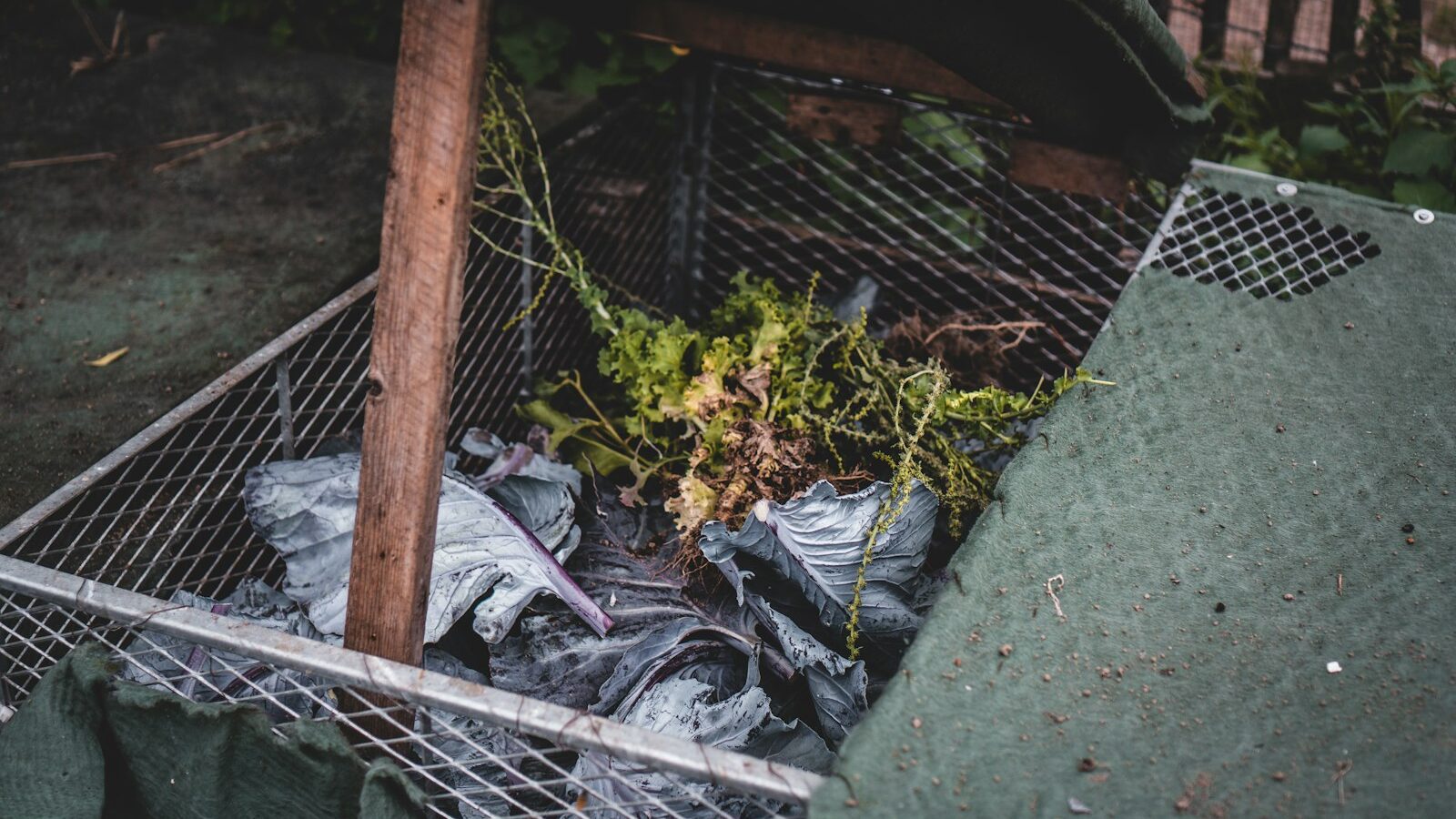
Turning kitchen scraps and yard waste into rich, crumbly “black gold” starts with picking the right bin for your space, your patience level, and how much waste you actually generate. A sprawling backyard composter is wasted on a studio apartment, and a tiny countertop unit will never keep up with a busy household that mows a half-acre lawn. To save you the trial and error, we tested and researched the most popular models across every category for 2026 and narrowed the field to seven standout picks, from spin-it-yourself tumblers to worm bins and plug-in countertop recyclers.
As an Amazon Associate we earn from qualifying purchases.
Our top picks
- Best overall: FCMP Outdoor IM4000 Dual Chamber Tumbling Composter
- Best tumbler: Miracle-Gro Large Dual Chamber Compost Tumbler (55.4 gal.)
- Best stationary / outdoor: Geobin Expandable Compost Bin
- Best budget: VIVOSUN Outdoor Tumbling Composter (43 gal.)
- Best indoor / countertop: Lomi by Pela Electric Kitchen Composter
- Best worm bin: Worm Factory 360 Vermicomposter
- Best for small spaces: TeraGanix Bokashi Compost Bin Kit
| Bin | Type | Capacity | Best for |
|---|---|---|---|
| FCMP Outdoor IM4000 | Dual-chamber tumbler | 37 gal. (2 chambers) | Best overall |
| Miracle-Gro Large Dual Chamber | Dual-chamber tumbler | 55.4 gal. (2 x 27.7) | Best tumbler |
| Geobin | Stationary, open | Up to 216 gal. | Best stationary / outdoor |
| VIVOSUN Tumbler | Dual-chamber tumbler | 43 gal. (2 chambers) | Best budget |
| Lomi by Pela | Electric countertop | ~3 L per cycle | Best indoor / countertop |
| Worm Factory 360 | Stacking worm bin | 4 trays (expandable to 7) | Best worm bin |
| TeraGanix Bokashi | Fermentation bucket | 2.5 gal. | Best for small spaces |
The 7 best compost bins for 2026
FCMP Outdoor IM4000 — best overall
The FCMP Outdoor IM4000 has been a category leader for years, and it still earns the top spot in 2026 because it nails the fundamentals. It’s a 37-gallon dual-chamber tumbler, which means you can let one side finish curing into usable compost while you keep tossing fresh scraps into the other. That “batch” workflow is the single biggest reason tumblers outperform a static pile: you never contaminate nearly-finished compost with this morning’s coffee grounds.
Build quality is a step above the budget crowd. The drum is made from BPA-free post-consumer plastic with a UV inhibitor so it won’t fade or grow brittle after a couple of summers in direct sun, and it stands 36 inches tall with 13.5 inches of ground clearance, noticeably higher than competing dual-chamber units. That clearance matters more than it sounds: it lets you slide a wheelbarrow or bucket directly underneath to catch finished compost instead of stooping and scooping. Adjustable air vents on each side let you dial in airflow, opening them to add oxygen and dry out a soggy mix, or closing them to retain moisture during a dry spell. Turn it every two or three days and a hot batch can finish in a few weeks. Reviewers who ran it for two years straight still rated it a great value.
Pros
- Dual chambers enable true continuous batch composting
- High 13.5″ ground clearance makes emptying easy
- UV-stabilized, BPA-free recycled plastic holds up for years
- Adjustable vents let you control moisture and airflow
Cons
- Assembly takes patience and a bit of muscle
- 37 gallons fills fast for households with heavy yard waste
Miracle-Gro Large Dual Chamber Compost Tumbler — best tumbler
If your problem is volume rather than space, the Miracle-Gro Large Dual Chamber Tumbler is the one to beat. With two 27.7-gallon chambers for a total of 55.4 gallons, it holds roughly 50% more than our top pick, so it’s the natural choice for larger gardens, big households, or anyone who composts heavily in the growing season. Like the FCMP, the dual-chamber layout lets you cure one side while loading the other, and Miracle-Gro markets a four-to-six-week turnaround when conditions are right.
The “Easy-Turn” design and large sliding doors make loading and unloading genuinely simple, and most users report producing finished compost with the texture of thick mud that smells like fresh earth, exactly what you want. It also sits well off the ground, so it isn’t an open invitation to rodents the way a ground-level pile can be. Our one caution: this is a high-volume unit, and a few long-term reviewers noted the leg sockets or door clips can crack under sustained weight if you overfill it. Don’t pack both chambers to the brim with heavy, wet material and it should serve you well.
Pros
- Huge 55.4-gallon total capacity for serious composters
- Easy-Turn drum and wide sliding doors simplify loading
- Elevated design keeps rodents out
- Advertised 4–6 week turnaround in warm weather
Cons
- Leg sockets and door clips can crack if overloaded
- Large footprint needs a dedicated spot
Geobin Expandable Compost Bin — best stationary / outdoor
The Geobin proves that the best tool isn’t always the fanciest one. At around $30, this expandable plastic enclosure creates a composting area of up to a staggering 216 gallons, by far the largest capacity on this list and a fraction of the price of any tumbler. It assembles in about five minutes thanks to keyhole slots, and you can adjust the diameter to suit how much material you have, shrinking it for a small bin or opening it wide for a season’s worth of leaves and grass clippings.
This is the classic “cold composting” approach: build a big pile, turn it occasionally with a fork, and let nature work over several months. It’s perfect for gardeners with abundant yard waste who aren’t in a rush. The heavy-duty perforated plastic holds the heap in a tidy column and the perforations provide some passive airflow. The trade-offs are exactly what you’d expect at this price: it isn’t insulated for fast hot composting, it won’t win any design awards, and the open design offers no real barrier to curious rodents, so keep meat, dairy, and oily food out of it. For pure capacity-per-dollar, nothing here comes close.
Pros
- Enormous expandable capacity up to 216 gallons
- Cheapest pick by a wide margin
- Assembles in about five minutes; adjustable diameter
- Heavy-duty perforated plastic for passive aeration
Cons
- Open design can attract rodents
- No insulation or built-in turning mechanism — slower, hands-on composting
VIVOSUN Outdoor Tumbling Composter — best budget
For shoppers who want the convenience of a tumbler without the premium price, the VIVOSUN 43-gallon Dual Rotating composter is one of Amazon’s best sellers for good reason. It regularly lands around $89–$110, undercutting the name-brand tumblers while delivering the same continuous-composting workflow: two chambers so you can finish one batch while filling the next. Despite the low price, owners consistently describe it as remarkably sturdy, with a galvanized-steel frame and PP-plastic drum.
In use, the 360-degree rotation is smooth and genuinely effortless even when the drum is full, and deep internal fins break up clumps as you spin it so the mix aerates evenly. At 26 x 23.6 x 36.5 inches it’s compact enough for a modest yard or patio corner, which makes it pull double duty as a small-space option too. Two honest caveats: assembly is fiddly and frustrating for some buyers, and the vents can let rainwater in, so it composts best under an eave or covered area where you control the moisture.
Pros
- Tumbler convenience at a budget price
- Dual chambers for continuous batches
- Smooth 360° rotation with clump-breaking internal fins
- Compact footprint suits small yards and patios
Cons
- Assembly is fiddly and time-consuming
- Vents can let rain in — best kept under cover
Lomi by Pela — best indoor / countertop
Not everyone has a yard, and not everyone wants to manage a pile. The Lomi electric composter is the slickest answer for kitchen-only composting: drop in food scraps, press a button, and a few hours later you have a dry, dirt-like soil amendment with no smell and no fuss. In head-to-head testing against the Vitamix FoodCycler, reviewers found Lomi the more versatile and capable machine, breaking scraps down more thoroughly and handling a wider range of materials.
Three modes cover different needs. Eco-Express finishes in as little as three hours for the fastest turnaround; Grow mode runs longer to produce a gentler output you can mix straight into potting soil; and Lomi Approved mode can process certified bioplastics and packaging with a LomiPod tablet. It runs at a quiet ~45 dB, so it won’t dominate a small kitchen. Strictly speaking, the output is dehydrated and ground rather than fully mature compost, and it does use electricity and occasional filter and LomiPod replacements, so it costs more to run than a bin. But for apartment dwellers who want to keep food waste out of the landfill with zero outdoor space, nothing is more convenient.
Pros
- Odorless, hands-off processing in as little as 3 hours
- Three modes for speed, soil-ready output, or bioplastics
- Quiet (~45 dB) and compact enough for a countertop
- Ideal where there’s no outdoor space at all
Cons
- Output is dehydrated pre-compost, not fully matured
- Higher purchase price plus ongoing power, filter, and pod costs
Worm Factory 360 — best worm bin
Vermicomposting, letting red wigglers do the work, produces some of the richest castings you can put on a plant, and the Worm Factory 360 is the gold standard for doing it at home. The system is built to grow vertically: it ships with four stacking trays and expands to seven, so it packs roughly three cubic feet of composting capacity into a tidy 16 x 16-inch footprint. That makes it equally at home in a garage, basement, or balcony.
The stacking design is the clever part. Worms migrate upward toward fresh food in the top tray, leaving finished castings below for easy harvesting, and each full tray weighs only about 12.5 pounds so rearranging them is no strain. Made in the USA from recycled plastic and backed by a five-year warranty, it includes bedding and accessories to get started. Managing it takes under 15 minutes a week; the first tray takes about three months to finish, and subsequent trays can complete in as little as a month. The learning curve is real, you’re keeping livestock, after all, so you’ll need to watch moisture and avoid overfeeding, but the payoff is premium worm castings and liquid “worm tea” for your garden.
Pros
- Produces premium worm castings and liquid fertilizer
- Vertical stacking trays save floor space; expandable to 7 trays
- Worm migration makes harvesting nearly effortless
- USA-made recycled plastic with a 5-year warranty
Cons
- You’re managing live worms — moisture and feeding take attention
- Lower throughput than a big outdoor bin
TeraGanix Bokashi Compost Bin — best for small spaces
Bokashi is the secret weapon of small-space composters, and the TeraGanix Bokashi Bin is our favorite way in. Instead of decomposing waste with oxygen, bokashi ferments it in a sealed, airtight bucket using beneficial microbes and an inoculated bran. The result: it handles everything a normal compost bin can’t, including meat, dairy, and cooked food, while keeping odors fully contained, and it ferments scraps in just two to four weeks.
What makes the TeraGanix unit ideal for tight quarters is its size and design. At just 2.5 gallons it’s significantly more compact than most competitors, slipping easily under a sink or into a cupboard, and its modern, minimalist look with a folding plunger lid means you won’t mind having it on display. A spigot lets you drain off nutrient-rich “bokashi tea” to dilute and feed plants. The one thing to understand going in: bokashi produces fermented pre-compost, not finished soil, so the fermented material still needs to be buried in a garden bed, mixed into a larger pile, or fed to a worm bin to fully break down. For an apartment, that’s a small price for being able to compost literally all your food waste indoors.
Pros
- Airtight fermentation handles meat, dairy, and cooked scraps
- Compact 2.5-gallon size fits under a sink
- Odor-free; ferments in just 2–4 weeks
- Spigot drains nutrient-rich bokashi tea for plants
Cons
- Output must be buried or added to a pile to finish composting
- Requires ongoing purchases of bokashi bran
How to choose the right compost bin
The best compost bin is the one that matches your space and habits, so start by figuring out where composting will actually happen before you compare features.
Tumbler vs. stationary vs. indoor
Tumblers (FCMP, Miracle-Gro, VIVOSUN) are enclosed drums you spin to mix and aerate. They compost faster than a static pile, keep pests out because they’re sealed and elevated, and a dual-chamber design lets you run continuous batches. They cost more and have limited capacity. Stationary bins (Geobin) are the cheap, high-capacity workhorses for gardeners with lots of yard waste who don’t mind turning a pile by hand and waiting months. Indoor systems split into electric units (Lomi) that dehydrate and grind scraps in hours, fermentation buckets (bokashi) that handle all food waste in a sealed container, and worm bins (Worm Factory) that produce premium castings. If you have no outdoor space, those indoor three are your lane.
Capacity
Match volume to your waste stream. A countertop unit or small bokashi bucket suits an apartment producing mostly kitchen scraps. A 37–55 gallon tumbler fits a typical household with a garden. If you generate heavy yard waste, grass, leaves, prunings, jump to a large stationary bin like the Geobin or you’ll be emptying a tumbler constantly. Remember that a “full” tumbler also needs to be turnable, so don’t size up beyond what you can comfortably spin.
Aeration and speed
Compost needs oxygen. Tumblers aerate every time you turn them and often have adjustable vents to manage moisture, which is why they finish in weeks rather than months. Stationary piles rely on perforations and manual turning with a fork, so they’re slower. Hot composting, achieved with the right carbon-to-nitrogen balance and regular turning, can produce finished compost in four to six weeks, while cold composting takes several months but needs almost no effort. Electric units are fastest of all but produce pre-compost rather than fully matured soil.
Pests and placement
If rodents are a concern, choose a sealed, elevated tumbler or an indoor system rather than an open stationary bin, and never add meat, dairy, or oily food to an open pile. Bokashi and electric composters sidestep the pest issue entirely because they’re closed and indoors. Wherever you put an outdoor bin, partial sun helps drive the heat that speeds decomposition, and keeping a tumbler under cover prevents rain from waterlogging the mix.
Once your bin is producing finished compost, pair it with the right gear and growing space. See our guide to the essential garden tools for turning and harvesting, brush up on technique with composting for beginners, and put that black gold to work in the best raised garden beds.
Frequently asked questions
How long does a compost bin take to make finished compost?
It depends on the method. A well-managed hot tumbler with the right balance of greens and browns can finish a batch in four to six weeks. An open stationary pile composted “cold” typically takes several months. Electric countertop units produce a dirt-like amendment in a few hours, but that output is dehydrated pre-compost that benefits from a short maturing period before use.
Is a tumbler or a stationary bin better?
Tumblers compost faster, keep pests out, and are tidier, making them ideal for typical households and smaller yards. Stationary bins like the Geobin hold far more material for a fraction of the price, so they’re better if you generate lots of yard waste and don’t mind turning the pile by hand and waiting longer.
Can I compost in an apartment with no outdoor space?
Absolutely. An electric composter like the Lomi dehydrates and grinds scraps indoors with no smell, a bokashi bucket ferments all food waste, including meat and dairy, in a sealed container, and a Worm Factory 360 fits in a closet or on a balcony to make rich worm castings. All three are designed for indoor or small-space use.
How do I keep rodents and pests out of my compost?
Use a sealed, elevated tumbler or a closed indoor system rather than an open pile, and never add meat, dairy, oils, or cooked food to an open bin. Keeping the mix balanced with plenty of carbon-rich “browns” and burying fresh food scraps in the center of the pile also reduces odors that attract pests.
What can’t I put in a regular compost bin?
Avoid meat, fish, dairy, bones, oily or greasy food, pet waste, and diseased plants in a standard tumbler or stationary bin, as they cause odors, attract pests, or introduce pathogens. The exception is a bokashi system, whose airtight fermentation is specifically designed to handle meat, dairy, and cooked food that conventional composting can’t.