

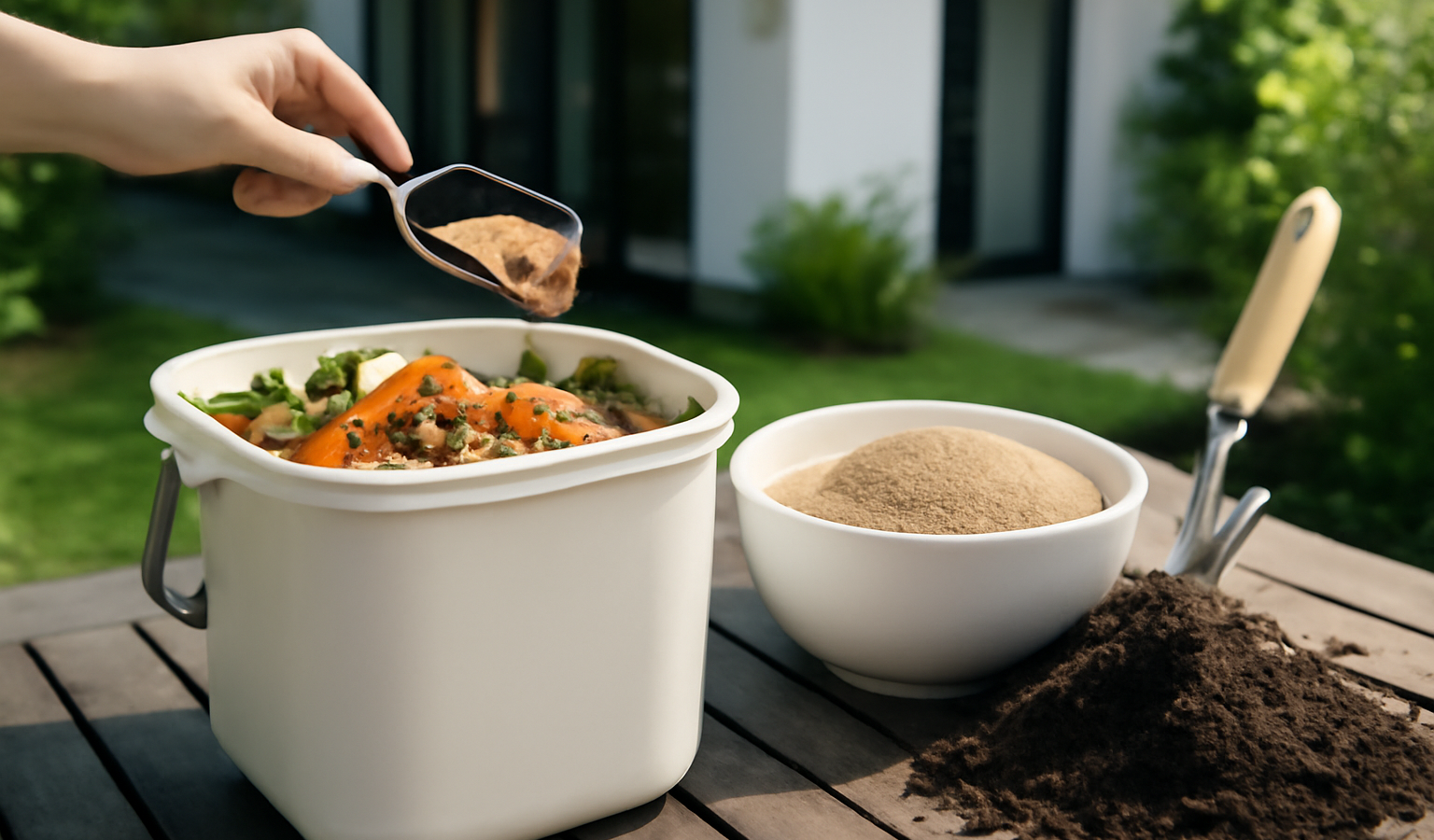
Bokashi is composting turned on its head. Where a traditional pile relies on oxygen and heat to slowly rot material, bokashi uses the opposite: an airtight bin and a dose of beneficial microbes that ferment kitchen waste, the same way sauerkraut or kimchi is made. The result is fast, odor-controlled, and able to handle the very things a backyard bin cannot, including meat, dairy, and cooked food. It is the ideal system for apartments, small kitchens, and anyone who wants to compost indoors year-round. This guide explains the anaerobic process, the bokashi bran that drives it, how to run the bin day to day, and the all-important final step of burying the fermented “pre-compost” to finish it into soil.
Key Takeaways
- Bokashi is anaerobic fermentation, not rotting. An airtight bin and inoculated bran ferment scraps without smell or heat.
- It accepts what normal compost cannot: meat, fish, dairy, cooked food, and citrus, making it ideal for indoor kitchen waste.
- Layer scraps with a sprinkle of bokashi bran, press out air, and keep the lid sealed between additions.
- Drain the “bokashi tea” liquid every few days; diluted 1:100 it is a potent plant feed, or pour it down drains to clean them.
- Fermented bokashi is “pre-compost,” not finished compost. Bury it in soil or add to a regular pile, where it breaks down in 2 to 4 weeks.
How Bokashi Fermentation Works
The word “bokashi” is Japanese for “fermented organic matter.” The system relies on effective microorganisms (often abbreviated EM), a consortium of beneficial bacteria, yeasts, and fungi dominated by lactobacillus, the same lactic-acid bacteria that ferment yogurt and pickles. These microbes are cultured onto a carrier, usually wheat bran, to make bokashi bran. When you bury kitchen scraps in an airtight bin with this bran, the microbes go to work in the absence of oxygen, pickling the food rather than rotting it.
Because the process is anaerobic (no air) and acidic, it does not produce the putrid smells of rotting food or the heat of a hot compost pile. Properly run, a bokashi bin smells sour and tangy, like pickles or cider vinegar, not foul. The fermentation breaks the food down chemically and pre-digests it, so that once it goes into soil it is consumed by earthworms and soil life astonishingly fast.
What You Need
The kit is simple. You need a bokashi bin: an airtight bucket with a tight-fitting lid, a perforated inner false floor that lets liquid drain away from the solids, and a spigot at the bottom to tap off that liquid. Bins are sold in pairs so one can ferment while you fill the other. You also need bokashi bran (buy it or make your own by culturing EM onto bran), and a masher or plate to press air out of each layer. That is the whole system. Two bins, a bag of bran, and a spot under the kitchen sink.
Running the Bin Day to Day
- Start with bran. Sprinkle a layer of bokashi bran across the bottom of the empty bin.
- Add scraps. Tip in your kitchen waste, ideally chopped small. You can include meat, fish, dairy, cooked leftovers, and citrus, things a normal bin forbids, alongside the usual fruit and vegetable scraps. Avoid only large bones, liquids, and moldy food.
- Sprinkle bran on top. Add a generous tablespoon or two of bran for every inch or two of scraps. More food means more bran.
- Press out the air. Use the masher or a plate to compress each layer firmly. Removing air pockets is what keeps the process anaerobic and stops the wrong microbes taking hold.
- Seal the lid. Close the bin airtight after every addition. The less you open it, the better it ferments. Keep filling in layers until the bin is full.
Draining the Bokashi Tea
As the scraps ferment, they release a liquid that collects below the false floor. Drain this “bokashi tea” through the spigot every two or three days so it does not pool and turn the bin anaerobic in the wrong way. The liquid is a valuable byproduct. Diluted heavily, about 1 part tea to 100 parts water, it makes an excellent liquid feed for houseplants and garden beds, rich in nutrients and beneficial microbes. Undiluted, it is also a great drain cleaner: pour it down sinks and toilets, where the microbes help break down organic buildup and keep septic systems healthy. Use the tea fresh; it does not store well.
Fermenting and Finishing
Once a bin is full, leave it sealed to ferment for about two weeks (a little longer in cold weather), draining the tea as it forms. During this time, start filling your second bin. You will know fermentation has gone well when the contents look pickled rather than rotten, smell sour and vinegary, and often show a white surface mold, which is the good Aspergillus yeast. A blue, green, or black mold or a putrid smell means air got in or it was too wet; that batch should be discarded.
Here is the key point many beginners miss: fermented bokashi is not finished compost. It is acidic, pickled “pre-compost” that still looks like recognizable food. It needs a second stage in soil to become humus.
How to Bury the Pre-Compost
You have two good options. Trench it directly into the garden: dig a trench 8 to 12 inches deep in an empty bed, tip in the fermented contents, mix lightly with soil, and cover with at least 8 inches of soil. Because it is acidic at first, keep it away from plant roots for two to three weeks and do not plant directly into that spot immediately. Soil microbes and worms break it down in two to four weeks, leaving rich, neutral soil. Alternatively, add it to a regular compost pile or a soil-filled “finishing” container, where it will likewise disappear quickly. After it has cycled through the soil, the area is ready to plant and noticeably more fertile.
Bokashi Versus Traditional Composting
Bokashi and a backyard pile are partners, not rivals. Bokashi excels at the cooked and animal-based kitchen waste that a traditional bin cannot safely take, and it works indoors through winter with no turning. A hot compost pile excels at bulky yard waste, leaves, prunings, and grass, and produces ready-to-use compost without the burial step. Many gardeners run both: bokashi handles the daily kitchen scraps, and its pre-compost gets buried near, or added into, the outdoor system. If you have garden space, set up a conventional bin too; see our guide to building a compost bin for that side of the operation, and finished compost from either route is the perfect feed for raised beds and in-ground plots. More soil and composting guides live on the Outdoor Living hub.
Troubleshooting
It smells putrid, not sour. Air or excess liquid got in. Drain the tea more often, press layers harder, and keep the lid sealed. Blue or black mold. That is the wrong fungus; discard the batch and start cleaner and drier. No tea is draining. Your scraps may be dry, which is fine; not every batch produces much liquid. Fruit flies. The lid is not sealing or scraps are sitting exposed; tighten the lid and always finish with a layer of bran. Run consistently, a bokashi system is one of the most forgiving, low-odor ways to keep all your kitchen waste out of the landfill and in your soil.
Frequently Asked Questions
Can you put meat and dairy in bokashi?
Yes. Unlike a traditional compost bin, bokashi ferments anaerobically and can handle meat, fish, dairy, and cooked food along with fruit and vegetable scraps. Avoid only large bones, liquids, and already moldy food. This is one of bokashi’s biggest advantages for indoor kitchen composting.
How long does bokashi take to ferment?
Once a bin is full, leave it sealed to ferment for about two weeks, slightly longer in cold weather. After that, the contents are fermented pre-compost that must be buried in soil or added to a regular pile, where it breaks down fully in another two to four weeks.
What is bokashi tea and how do I use it?
It is the liquid that drains off the fermenting scraps. Tap it from the bin’s spigot every two or three days. Diluted about 1 part tea to 100 parts water, it is a nutrient-rich plant feed; undiluted, it works as a drain and septic cleaner. Use it fresh because it does not store.
Why does my bokashi bin smell bad?
A sour, pickled, vinegary smell is normal and healthy. A foul, putrid smell means oxygen or too much liquid got in. Drain the tea more frequently, press each layer firmly to remove air, keep the lid sealed between additions, and finish each layer with a sprinkle of bran.
Do I have to bury bokashi compost?
Yes. Fermented bokashi is acidic pre-compost that still looks like food; it is not finished compost. Bury it in a soil trench 8 to 12 inches deep or add it to a regular compost pile. Soil microbes and worms then convert it to rich, neutral soil within two to four weeks.