

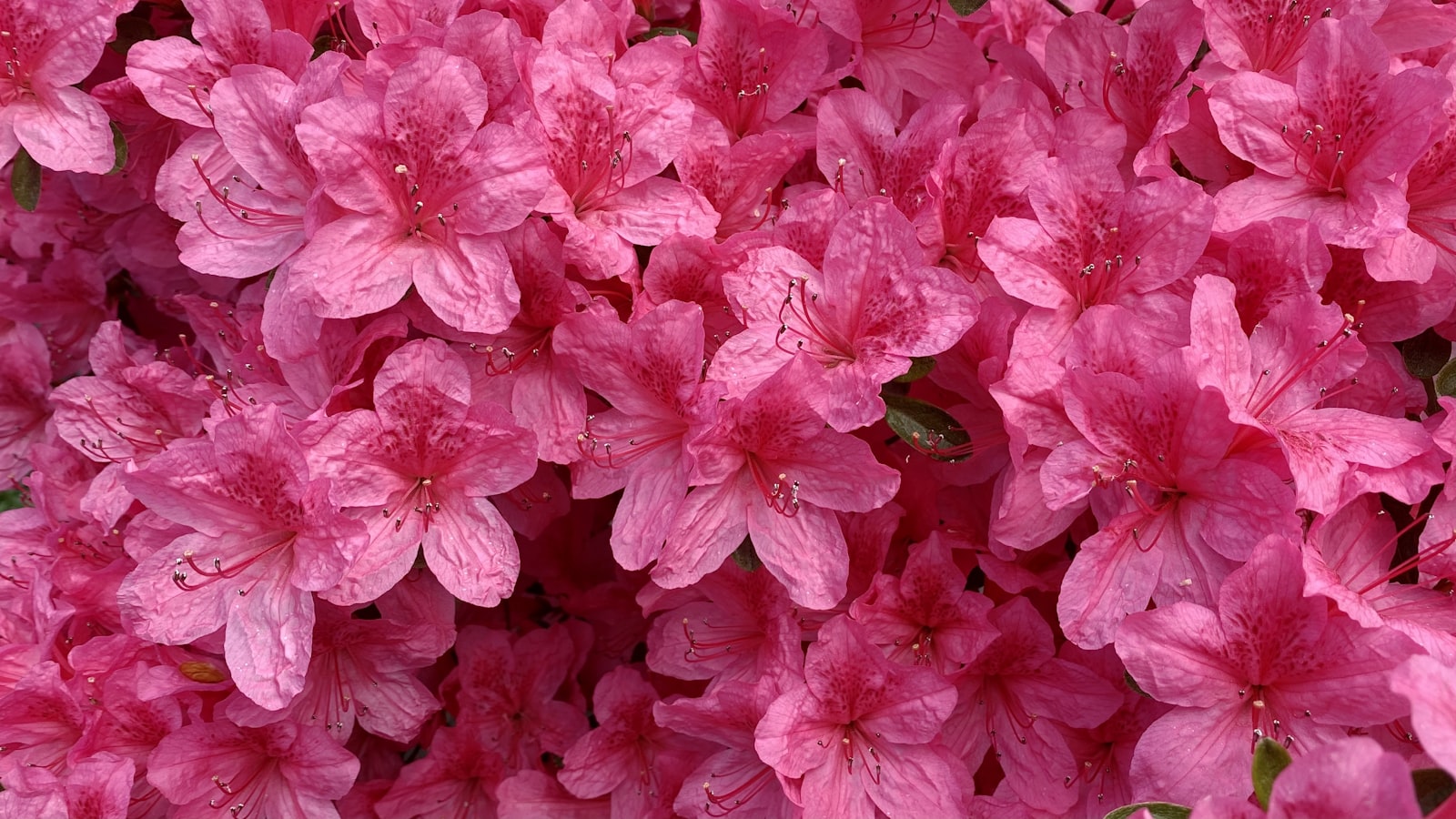
Few shrubs put on a spring show like azaleas. Whether they cloak a woodland edge in white and pink or glow scarlet against an evergreen backdrop, these members of the rhododendron family reward gardeners who give them the three things they crave: dappled light, acidic well-drained soil, and shallow roots that never dry out completely. Get those right and an azalea can bloom faithfully for decades.
Azalea quick facts
- Light: part shade / dappled
- Soil: acidic, well-drained
- USDA zones: 4-9 (by type)
- Bloom: spring
- Prune right after flowering
As an Amazon Associate we earn from qualifying purchases.
Evergreen, deciduous, and the rhododendron connection
Here is the botanical twist that confuses almost everyone: all azaleas are rhododendrons. They belong to the genus Rhododendron, but nurseries and gardeners separate “azaleas” from “rhododendrons” by their looks. Azaleas tend to be smaller-leaved, often deciduous, with funnel-shaped flowers carrying five (sometimes more) stamens. True rhododendrons usually have large, leathery evergreen leaves and ten or more stamens per bloom. When you understand they share the same family, their identical care needs make perfect sense.
Evergreen azaleas
Evergreen azaleas (such as the Southern Indica, Kurume, Satsuki, and Encore groups) keep most of their foliage through winter and shine in milder climates, roughly USDA zones 6 to 9. They are the classic foundation shrubs of the American South. The reblooming Encore series, bred to flower again in summer and fall, has made evergreen azaleas popular far beyond their traditional range.
Deciduous azaleas
Deciduous azaleas drop their leaves in fall and are generally far hardier, with many native North American species and Northern Lights hybrids surviving USDA zone 4. They often carry warm flame tones of orange, yellow, and gold that you rarely see in evergreen types, and many are wonderfully fragrant. If you garden in a cold climate, deciduous azaleas are usually the smarter choice. Either way, plan the rest of your beds with our plant & flower care guide so the azaleas have good company.
Light: the part-shade sweet spot
Azaleas evolved at the edges of woodlands, so they thrive in filtered or dappled light rather than baking full sun or deep shade. The ideal spot gets morning sun and afternoon protection, or the broken light cast by tall deciduous trees. This balance produces lush foliage and abundant flowers while shielding leaves from scorch.
- Too much sun: leaves bleach or burn at the edges, plants wilt by midday, and they become magnets for lace bugs.
- Too much shade: growth gets leggy and open, and bloom counts drop sharply.
- Just right: high, dappled shade or a half-day of gentle morning sun.
Deciduous azaleas tolerate a bit more sun than evergreen types, especially in cooler northern gardens where the light is less intense. The same dappled conditions also suit camellia care, which is why the two are so often planted together.
Acidic, well-drained soil
If there is one non-negotiable for azaleas, it is acidic soil. They want a pH between roughly 4.5 and 6.0. In that range their roots can absorb iron and other nutrients freely; push the pH toward neutral or alkaline and the plant literally starves in fertile-looking ground, showing yellow leaves with green veins (more on that chlorosis below).
Testing and amending
- Test first. An inexpensive soil pH test kit tells you exactly where you stand before you plant.
- Lower pH with elemental sulfur or a soil acidifier worked in ahead of planting, then maintain it over time.
- Improve drainage by blending in plenty of organic matter such as composted pine bark or peat. Azaleas have fine, fibrous surface roots that rot in soggy, heavy clay.
- Raise the bed if your soil is dense clay; planting into a mounded, bark-rich bed solves both drainage and acidity at once.
You can buy young plants and amendments together with a quick search for azalea plants online if your local nursery is limited.
Planting shallow and watering right
The single most common way to kill an azalea is planting it too deep. Because their roots run shallow and need oxygen, the top of the root ball should sit slightly above the surrounding soil line, never buried. Dig a hole no deeper than the root ball but two to three times as wide, loosen the matted roots, and backfill with the bark-amended soil. Then mulch over the top of the root ball without piling against the stems.
Watering
- Keep evenly moist, never waterlogged. Aim for consistent moisture in the top several inches of soil.
- Water deeply once or twice a week rather than a daily splash; shallow roots still need water to reach below them.
- Watch the first two years. New plantings are vulnerable to drought stress until established.
- Use rainwater if you can. Hard tap water is often alkaline and slowly nudges soil pH upward over the years.
Like azaleas, thirsty hydrangea care rewards steady moisture, so the two pair nicely in the same irrigation zone.
Mulching and feeding
A 2 to 3 inch layer of organic mulch is almost a substitute for good fortune with azaleas. It keeps shallow roots cool and moist, suppresses weeds that would otherwise compete, and slowly acidifies the soil as it breaks down. Pine bark, pine straw (pine needles), and shredded leaves are ideal. Keep the mulch pulled back an inch or two from the trunk to prevent rot, and top it up each spring.
Feeding with acid fertilizer
- Use an acid-forming fertilizer formulated for azaleas, rhododendrons, and camellias. These supply nutrients while helping hold soil pH down.
- Feed lightly in spring just as new growth begins, after flowering. A second light feeding in early summer is fine; stop by midsummer.
- Never feed in fall. Late nitrogen pushes tender growth that winter will kill.
- Less is more. Azaleas are not heavy feeders, and excess fertilizer burns their delicate roots.
A bag of acidic azalea fertilizer plus a refill of pine bark mulch each spring covers most of an azalea’s annual needs.
Pruning right after bloom
Timing is everything with azalea pruning. They set next year’s flower buds in summer on the current season’s growth, so the moment to prune is right after the flowers fade in spring. Prune later than early summer and you will be cutting off the buds that would have become next year’s blooms.
- Shape lightly by tipping back wayward shoots to a leaf or branch junction.
- Renew old, leggy plants by removing up to a third of the oldest stems near the base; evergreen azaleas tolerate hard renovation pruning well.
- Remove the three Ds any time: dead, damaged, and diseased wood.
- Skip the shears for natural shapes. Hand pruning preserves the graceful, layered look most azaleas have.
Growing azaleas in containers
Azaleas make excellent container plants, and a pot is the easiest way to give them perfect acidic soil even if your garden ground is alkaline. Choose a wide container with generous drainage holes and fill it with an ericaceous (acid-loving) potting mix or a blend of bark, peat, and compost.
- Water more often. Pots dry out fast, and azaleas hate drying out completely, so check moisture frequently in summer.
- Feed lightly with a diluted acid fertilizer through the growing season, since potting mix has limited reserves.
- Protect roots in winter. Container roots are far more exposed to cold than those in the ground; move pots to a sheltered spot or insulate them in hard-freeze zones.
- Repot every couple of years with fresh acidic mix to keep the plant vigorous.
Common problems and how to fix them
Lace bugs
Lace bugs are the number-one pest of azaleas, especially those planted in too much sun. They feed on the undersides of leaves, leaving a stippled, silvery-gray or bleached look on the upper surface and dark, varnish-like spots beneath. Hose off light infestations, encourage predators, and move plants into more shade if practical; horticultural oil or insecticidal soap applied to the leaf undersides controls heavier outbreaks. Healthy, properly sited azaleas suffer far less.
Leaf gall
In cool, wet spring weather a fungus (Exobasidium) can cause thick, pale, fleshy swellings on leaves and flowers known as leaf gall. It looks alarming but is rarely serious. Simply pick off and destroy the galls before they turn powdery white and release spores, and improve air circulation around the plant. Fungicides are seldom necessary in a home garden.
Chlorosis from alkaline soil
If you see leaves turning yellow while the veins stay green, the culprit is almost always iron chlorosis caused by soil that is too alkaline. The iron is present but locked away from the roots at high pH. The real fix is to lower the soil pH with sulfur or an acidifier over time and to mulch with acidic materials; a chelated iron product gives faster but temporary green-up. Avoid alkaline tap water and lime near the root zone, and the problem usually resolves.
Frequently asked questions
Are azaleas and rhododendrons the same plant?
Botanically, all azaleas are rhododendrons, both in the genus Rhododendron. Gardeners use “azalea” for the smaller-leaved, often deciduous types with five stamens per flower, and “rhododendron” for the large leathery-leaved evergreens with ten or more stamens. Their care needs are essentially identical.
How much sun do azaleas need?
Part shade is ideal. Aim for filtered or dappled light, or morning sun with afternoon shade. Too much sun scorches leaves and invites lace bugs, while deep shade reduces flowering. Deciduous azaleas tolerate a little more sun than evergreen types, especially in cooler climates.
Why are my azalea’s leaves turning yellow?
Yellow leaves with green veins point to iron chlorosis from soil that is too alkaline. Lower the pH with sulfur or a soil acidifier, mulch with pine bark or pine straw, and avoid hard tap water near the roots. Chelated iron offers a quick temporary fix while the pH comes down.
When should I prune azaleas?
Prune right after the flowers fade in spring. Azaleas set next year’s buds in summer, so pruning later than early summer removes the coming year’s blooms. Light shaping and removing dead or crossing branches is all most plants need.
Can I grow azaleas in pots?
Yes. Containers are a great way to give azaleas perfect acidic soil. Use a wide pot with good drainage and an ericaceous potting mix, water more often than in-ground plants, feed lightly with acid fertilizer, and protect the roots from hard winter cold.