

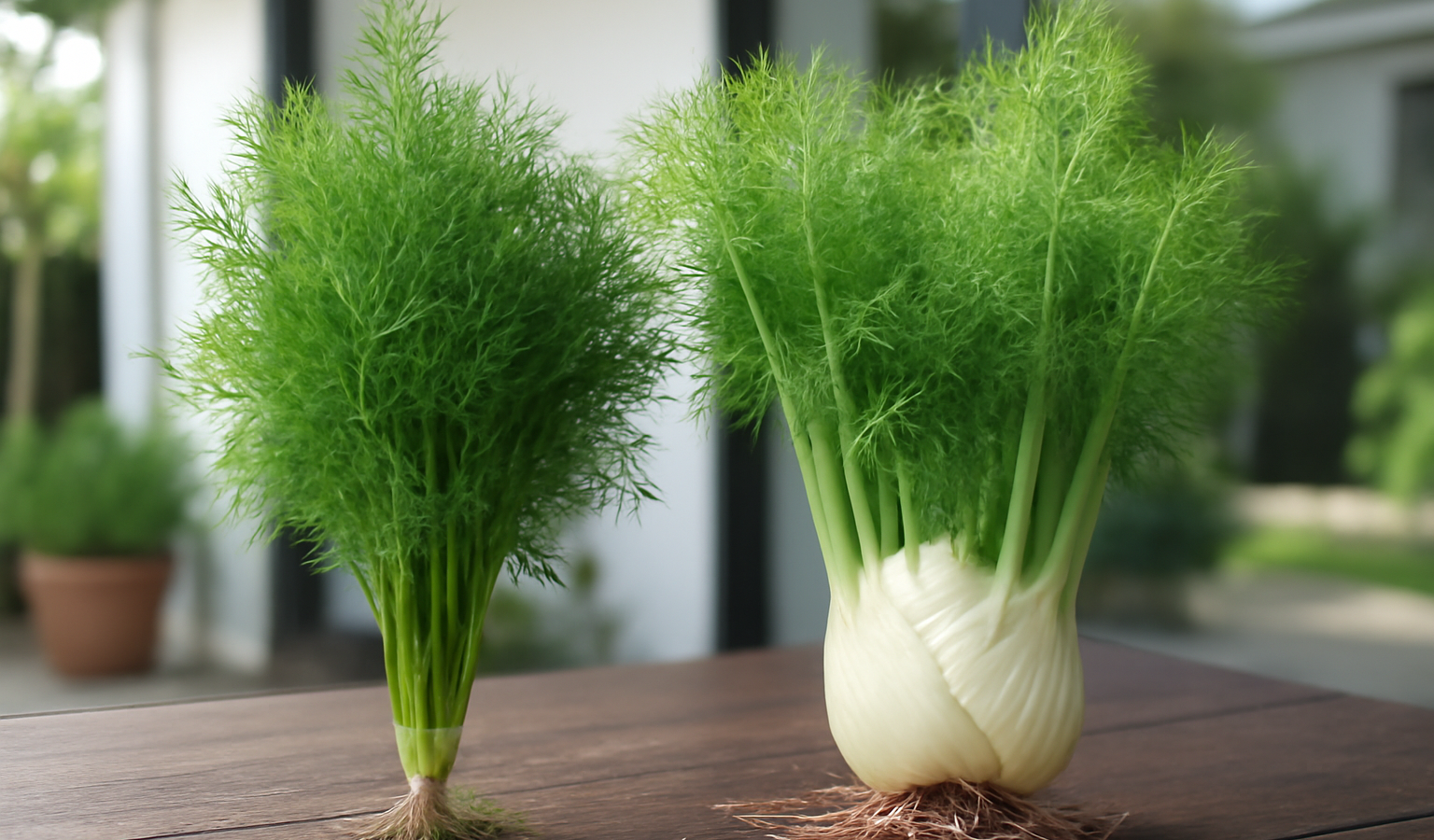
Dill and fennel look like near-twins in the garden — both have soft, feathery, blue-green foliage and flat yellow flower umbels — so it’s easy to mix them up, and easy to plant them in ways that ruin both. But they’re distinct plants with different flavors, different life cycles, and different culinary roles. Dill (Anethum graveolens) is an annual herb grown for its tangy, grassy, slightly citrusy leaves (“dill weed”) and its pungent seeds, the soul of pickles, fish dishes, and creamy dips. Fennel (Foeniculum vulgare) is a perennial (often grown as an annual) with a sweet, unmistakable anise/licorice flavor; some types form a fat, crunchy edible bulb at the base, while others are grown for their feathery fronds and seeds. They also famously dislike each other in the garden. This guide shows you exactly how to tell dill from fennel by leaf, smell, and structure, what each tastes like and is best for, how to grow both, and why you should never plant them side by side.
In this guide
Key Takeaways
- Dill is an annual with tangy, grassy, citrusy leaves and seeds — the classic pickling and fish herb.
- Fennel is a perennial with a sweet anise/licorice flavor; Florence fennel forms an edible bulb.
- The fastest tell is to crush a leaf: dill smells fresh and tangy; fennel smells distinctly of licorice.
- Both are easy from direct-sown seed and both attract beneficial insects and swallowtail caterpillars.
- Don’t plant them near each other — they cross-pollinate and can produce weak, off-flavored seedlings.
| Feature | Dill | Fennel |
|---|---|---|
| Botanical name | Anethum graveolens | Foeniculum vulgare |
| Life cycle | Annual | Perennial (often grown as annual) |
| Flavor | Tangy, grassy, slightly citrusy | Sweet anise/licorice |
| Edible bulb | No | Yes (Florence fennel) |
| Foliage | Soft, fine, single thread-like leaves; blue-green | Very fine fronds; can have bronze types |
| Stems | Hollow, single-ish, slender | Stout, often a swollen base; glossy |
| Best for | Pickles, fish, dips, potatoes, dressings | Roasting, salads, sausage, fish, seeds |
Dill
Dill (Anethum graveolens) is an annual herb in the carrot/parsley family, grown for both its leaves and its seeds. The foliage — “dill weed” — is soft, finely divided into thread-like segments, and blue-green, carried on slender, hollow, mostly single stems that top out around 2–4 feet before the plant sends up flat yellow flower umbels and sets seed. Its flavor is fresh, tangy, and grassy with a faint citrusy, anise-adjacent note, but it lacks the bold licorice sweetness of fennel. Because it’s an annual, dill races through its life cycle in a single season: it germinates, leafs out, flowers, sets seed, and dies, often bolting quickly in summer heat.
In the kitchen, dill is indispensable for pickling (the seeds and flowering heads flavor classic dill pickles), and the fresh leaves shine with fish (especially salmon), in creamy dips like tzatziki and ranch, on potatoes and eggs, and in salad dressings. Both the leaf and the seed are used, with the seed being more pungent and concentrated. Dill is best added fresh near the end of cooking, since its delicate flavor fades with prolonged heat. There’s no bulb to eat — dill is all about the leaves and seeds.
Fennel
Fennel (Foeniculum vulgare) is a perennial in the same family (hardy in roughly USDA zones 4–9), though it’s frequently grown as an annual, especially the bulbing type. Its defining trait is a pronounced sweet anise/licorice flavor running through every part of the plant. There are two main forms: Florence fennel (finocchio), grown for the swollen, crisp, white-to-pale-green bulb at its base, and herb/sweet fennel, grown for its feathery fronds and aromatic seeds rather than a bulb. The foliage is even finer and more thread-like than dill’s, the stems are stouter and glossier (often with a thickened base), and bronze-leaved ornamental varieties exist. Plants can reach 4–6 feet when allowed to flower, producing large yellow umbels.
Fennel is versatile in the kitchen precisely because of that licorice sweetness. The bulb is sliced raw into salads for crunch, or roasted, braised, and caramelized until mellow and sweet; the fronds are used like an herb to garnish fish and salads; and the seeds are a baking and sausage-making staple and a common after-meal digestive. It pairs famously with fish, pork, and citrus. Because the perennial herb fennel can self-sow aggressively and is considered invasive in some regions (notably parts of California and coastal areas), check local guidance and deadhead before it seeds if that’s a concern where you live.
How to tell them apart
Because the feathery foliage looks so similar, lean on these tells. Crush and smell a leaf — this is the single most reliable test: fennel smells unmistakably of licorice/anise, while dill smells fresh, tangy, and grassy without that sweet licorice punch. Check the base of the plant: Florence fennel develops a swollen, bulb-like base where the stems overlap, which dill never does; even herb fennel tends to have a stouter, glossier stem than dill’s slender hollow one. Note the life cycle and size: a robust, returning, large plant is likely fennel, while dill is a fast annual that bolts and dies in one season. Look at the stems: dill stems are slender and hollow, fennel stems are thicker and more solid-feeling. Taste, if you’re sure of the plant’s identity, seals it — sweet anise is fennel, tangy-grassy is dill.
How to grow dill
Dill resents transplanting because of its taproot, so direct-sow the seed where it will grow, after the last frost. Scatter seeds and barely cover them (they need some light to germinate), in full sun and well-drained, average soil; thin seedlings to about 8–12 inches apart. Dill germinates in 1–2 weeks and grows fast. Water moderately to keep it from drying out, but avoid soggy soil. Because dill bolts (rushes to flower) in heat, sow successively every 2–3 weeks through spring and early summer for a steady supply of leaves, and harvest the foliage young and often by snipping from the top. Let a few plants flower and set seed for pickling — and for self-sowing, since dill readily reseeds and may pop up on its own next year. Tall plants may need staking in wind. Watch for aphids, and welcome the black swallowtail caterpillars that feed on it (move them rather than spray if you want the butterflies).
How to grow fennel
Fennel also dislikes root disturbance, so direct-sow it too, in full sun and fertile, well-drained soil. For Florence (bulbing) fennel, timing matters: sow in cool weather (spring or, in hot climates, late summer for a fall crop), because heat and long days trigger premature bolting before a good bulb forms. Thin plants to 8–12 inches apart, keep them evenly watered (drought stress causes bolting and stringy bulbs), and mound soil up around the developing bulb to blanch it sweet and white. Harvest the bulb when it’s about the size of a tennis ball, before it gets tough. Herb/sweet fennel is more forgiving — grow it for fronds and seeds, give it room, and cut fronds as needed; collect seed heads once they brown. As a perennial, herb fennel can return for years and self-sow vigorously, so deadhead if you want to control its spread. For getting any direct-sown crop off to a strong start, our comparison of raised bed soil vs potting soil covers the soil side.
Why you shouldn’t plant them together
Here’s the practical warning that trips up new gardeners: keep dill and fennel well apart. They’re closely enough related that they can cross-pollinate when flowering near each other, and the resulting self-sown seedlings can be weak, with muddled, off-flavors that are neither good dill nor good fennel — a real problem if you save seed or let plants reseed. Beyond cross-pollination, fennel is somewhat allelopathic and a notoriously poor companion: it tends to inhibit the growth of many nearby plants (including dill and a long list of vegetables), so it’s often recommended to grow fennel off on its own, in a separate bed or container. The simplest rule is to site fennel away from your other edibles and to keep your dill in a different part of the garden so the two never flower side by side. If you want feathery herbs near your vegetables, dill is the friendlier companion; let fennel keep its own corner. For more on edible-flower and companion-plant pairings, see our guide on marigold vs calendula.
The verdict
They look alike but they’re not interchangeable. Grow dill if you want a fast, easy annual herb for pickling, fish, dips, and dressings — tangy and grassy, all leaf and seed, with no bulb. Grow fennel if you want that sweet anise flavor, whether for a crunchy roasted or raw bulb (Florence fennel) or for fronds and seeds (herb fennel); just remember it’s a perennial that can self-sow aggressively and plays badly with neighbors. To tell them apart, crush a leaf and smell for licorice (fennel) versus fresh tang (dill), check for fennel’s swollen bulb base and stouter stems, and note that dill is a one-season annual while fennel returns and gets large. Whatever you grow, keep the two apart so they don’t cross-pollinate into weak, off-flavored seedlings — and give fennel its own bed, since it suppresses the plants around it. Get the ID and the spacing right and both will reward you with feathery foliage, pollinator-friendly blooms, and a steady kitchen harvest.
Frequently Asked Questions
How do I tell dill and fennel apart?
Crush a leaf and smell it — fennel has a distinct sweet licorice/anise scent, while dill smells fresh, tangy, and grassy. Also look for fennel’s swollen bulb-like base and stouter, glossier stems, versus dill’s slender hollow stem and faster, single-season annual life cycle.
Can I plant dill and fennel next to each other?
It’s best not to. They can cross-pollinate when flowering nearby, producing weak, off-flavored self-sown seedlings, and fennel is allelopathic, tending to suppress dill and many other plants. Grow fennel in its own bed or container, well away from your dill and other vegetables.
Does dill have a bulb like fennel?
No. Dill is grown only for its leaves and seeds and never forms a bulb. The edible bulb belongs to Florence fennel (finocchio), the bulbing type of fennel. Herb/sweet fennel doesn’t form much of a bulb either — it’s grown for its fronds and aromatic seeds.
Is fennel an annual or a perennial?
Herb fennel is a perennial, hardy in roughly USDA zones 4–9, and can return and self-sow for years. Florence (bulbing) fennel is usually grown as an annual for its bulb. Dill, by contrast, is always an annual that completes its life cycle in a single season.
Why does my fennel keep bolting before forming a bulb?
Bulbing fennel bolts when stressed by heat, long days, or uneven watering. Sow it in cool weather (spring or late summer for a fall crop), keep the soil evenly moist, and mound soil around the base to blanch the bulb. Choosing bolt-resistant Florence fennel varieties also helps.