

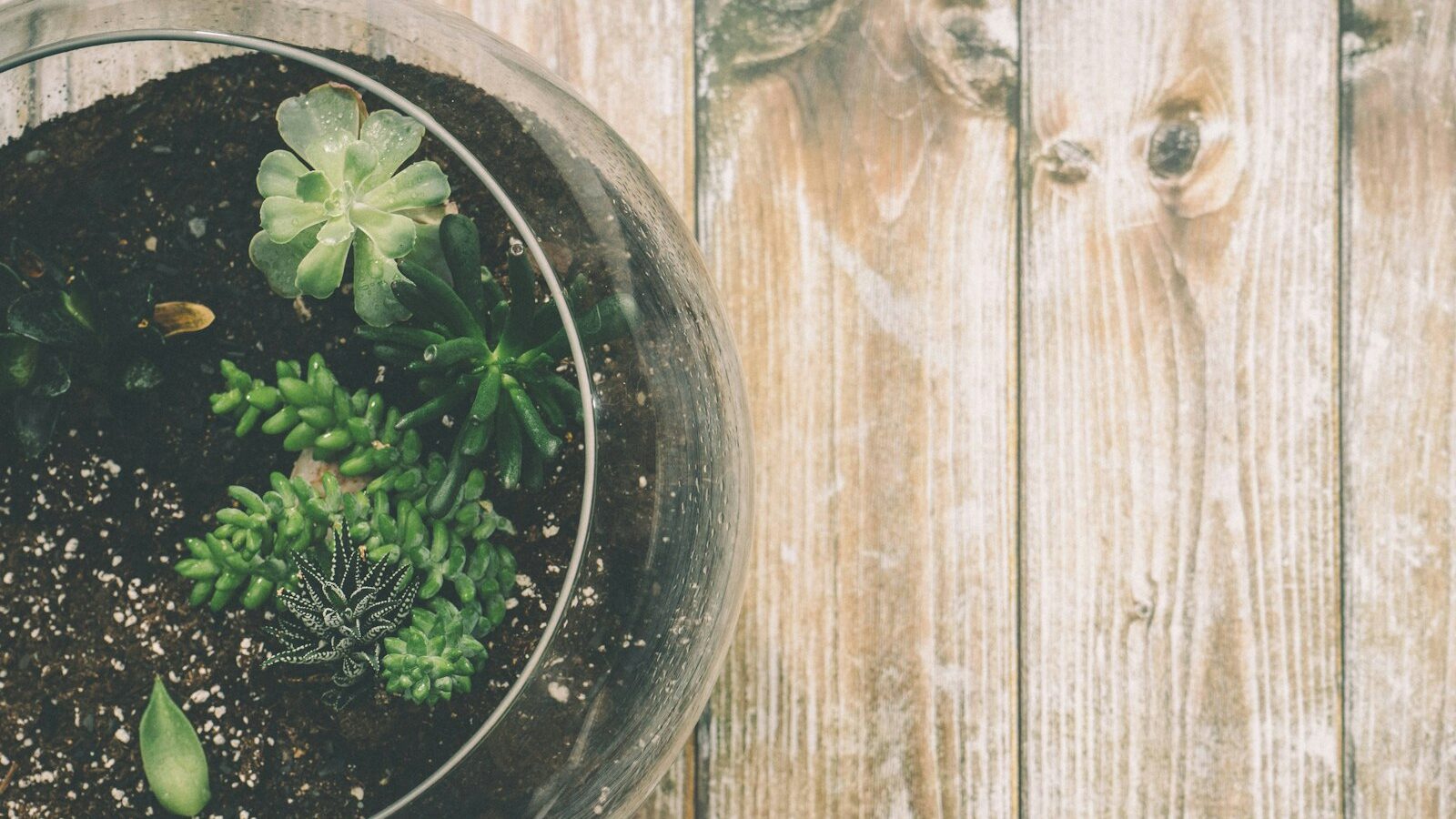
A terrarium is a tiny living world under glass, and building one is one of the most satisfying weekend projects a plant lover can take on. The trick is matching the right plants to the right kind of container: a closed terrarium recreates a humid, rainforest-like microclimate for ferns and mosses, while an open terrarium suits the dry, airy conditions that succulents and cacti crave. This guide walks you through both, layer by layer, so your miniature garden thrives for years.
Key takeaways
- Closed = humidity lovers; open = succulents/cacti
- Layer: gravel, charcoal, soil
- Use small, slow-growing plants
- Bright indirect light, never direct sun
- Closed terrariums rarely need watering
As an Amazon Associate we earn from qualifying purchases.
Closed vs open terrariums: which should you build?
Before you buy anything, decide which type of terrarium you want, because the choice drives everything else: the container, the plants, and the watering routine. The two styles create opposite environments, so you cannot mix moisture-loving ferns with desert succulents in the same jar and expect both to survive.
Closed terrariums
A closed terrarium has a lid or narrow opening that traps moisture. Water evaporates, condenses on the glass, and drips back down, creating a self-sustaining water cycle that can run for weeks with almost no input from you. These are ideal for tropical, humidity-loving plants such as ferns, fittonia, mosses, and mini ivy. If you want the lowest-maintenance option and love a lush, green jungle look, build a closed terrarium.
Open terrariums
An open terrarium has no lid, so air circulates freely and excess moisture escapes. This dry, breezy environment is perfect for succulents, cacti, and air plants, which rot quickly in trapped humidity. Open terrariums need a bit more frequent watering than closed ones but reward you with sculptural, low-water plants and endless arranging possibilities. If you love types of succulents and want a sun-friendly display, go open.
Choosing your container
Almost any clear glass vessel can become a terrarium, but the shape and opening matter. Clear glass lets in the most light and shows off your layers, while colored or frosted glass starves plants of light. Match the container to your terrarium type and the plants you plan to use.
How to pick the right vessel
- For a closed terrarium, choose a jar, cloche, or bottle with a lid or stopper to trap humidity.
- For an open terrarium, choose a bowl, dish, or wide-mouthed jar that lets air flow.
- Pick a wide opening if you have large hands or want to plant easily; narrow bottles are charming but require tweezers and patience.
- Make sure the glass is clear, not tinted, so plants get adequate light.
- Allow enough height for your tallest plant plus a few inches of headroom for growth.
You can repurpose a cookie jar, vase, or even a wine glass, or buy a purpose-made vessel. Browse a glass terrarium container if you want a ready-made shape designed for the job.
Building the layers
Terrariums have no drainage holes, so the layered base does the work of carrying water away from the roots and keeping the soil fresh. Build these layers from the bottom up before you add any plants. A good rule is to keep the total substrate to about one-third of the container’s height, leaving room for plants and air.
The layers, step by step
- Drainage gravel: Add a 1 to 2 inch layer of pebbles, aquarium gravel, or LECA clay balls at the bottom. This reservoir keeps water away from the roots so they never sit in a puddle.
- Mesh (optional): Lay a thin piece of fine mesh or landscape fabric over the gravel to stop the soil from sifting down into the drainage layer over time.
- Activated charcoal: Sprinkle a thin half-inch layer of horticultural activated charcoal. It filters the water, absorbs odors, and fights bacteria and fungus, which is especially important in humid closed terrariums.
- Soil: Add 2 to 3 inches of the right potting mix. Use a peat-rich tropical mix for closed terrariums and a fast-draining cactus or succulent mix for open ones.
Charcoal is the layer people most often skip, but it keeps the enclosed environment from turning swampy. A bag of activated charcoal horticultural grade lasts across many projects.
Best plants for each type
Choose small, slow-growing plants so your terrarium does not outgrow its glass in a few months. Group plants with the same light and water needs, and pick varieties whose mature size suits your container.
Plants for closed terrariums
- Ferns: Button fern, maidenhair, and other miniature ferns love the constant humidity. See our picks for the best ferns for humid setups.
- Fittonia (nerve plant): Compact, colorful veined leaves that thrive in moisture and stay small.
- Moss: Cushion and sheet mosses carpet the surface and hold humidity beautifully.
- Mini ivy: Small-leaved trailing ivy adds height and softens the edges of the glass.
Plants for open terrariums
- Succulents: Echeveria, haworthia, and sedum store water and shrug off dry air.
- Cacti: Small globular and columnar cacti suit sunny, open dishes.
- Air plants (Tillandsia): These need no soil at all and can simply rest on top of decorative stones.
Many of these double as air-purifying plants. If you are buying online, a curated set of terrarium plants takes the guesswork out of matching sizes.
Planting and decorating
With your layers built and plants chosen, it is time to plant. Work slowly and start with the largest plant to anchor the design, then fill in around it. For narrow containers, long tweezers, a spoon, and a small brush are your best friends.
How to plant and style
- Dig a small hole in the soil with a spoon or your finger for each plant.
- Gently remove each plant from its nursery pot and tease away excess soil from the roots.
- Set the largest or tallest plant first, usually toward the back or center, then position smaller plants around it.
- Firm the soil gently around each root ball so plants stand upright.
- Add decorative touches such as pebbles, driftwood, figurines, or sheet moss to fill bare spots and hide soil.
- Brush stray soil off the leaves and glass with a soft brush for a clean finish.
Leave a little space between plants; they will fill in as they grow. Resist the urge to overcrowd, which causes poor airflow and faster mold in closed setups.
Placement, light, and watering
Where you put your terrarium decides whether it flourishes or fries. Glass magnifies sunlight, so direct sun can cook the plants inside, especially in a closed jar. Get the light and water right and your terrarium will need very little attention.
Light and placement
- Place terrariums in bright, indirect light such as near an east- or north-facing window.
- Never put a terrarium in direct sun; the glass acts like a greenhouse and scorches the foliage.
- Rotate the container every week or two so all sides grow evenly toward the light.
- If natural light is limited, a small LED grow light works well a foot or so above the terrarium.
Watering
- Closed terrariums barely need watering. Once established, the recycling water cycle may keep them moist for weeks or months. Add a little water only if condensation stops appearing.
- Open terrariums dry out faster. Water succulents and cacti lightly every couple of weeks, letting the soil dry fully between drinks.
- Use a spray bottle or a small squeeze bottle to control the amount and avoid flooding the drainage layer.
- When in doubt, underwater. Most terrarium failures come from too much water, not too little.
For a deeper look at light, soil, and seasonal care across all your houseplants, see our full plant & flower care guide.
Troubleshooting common problems
Even a well-built terrarium will hit a few bumps. Most issues trace back to moisture or light, and they are easy to fix once you know what to look for.
Fixes for the usual issues
- Mold or white fuzz: Remove affected material immediately, take off the lid for a few days to dry things out, and make sure you included the charcoal layer. Overcrowding and too much water are the usual culprits.
- Heavy condensation: A little fogging is normal in a closed terrarium. If the glass is constantly dripping and you cannot see inside, remove the lid for a few hours to release excess moisture, then re-cover.
- No condensation at all: The closed terrarium is too dry; add a small amount of water and replace the lid.
- Yellowing or leggy leaves: Usually too little light. Move to a brighter indirect spot or add a grow light.
- Rotting succulents: Too much water or humidity. Switch to an open container and a gritty, fast-draining mix.
Frequently asked questions
How often should I water a closed terrarium?
Rarely. A sealed terrarium recycles its own moisture, so it can go weeks or even months without watering. Only add a small amount of water if condensation stops forming on the glass, which signals it is drying out.
Can I put succulents in a closed terrarium?
No. Succulents and cacti need dry, airy conditions and will rot in the trapped humidity of a closed terrarium. Use them in an open container with a fast-draining cactus mix instead.
Do I really need the charcoal layer?
It is strongly recommended, especially for closed terrariums. Horticultural activated charcoal filters the water, absorbs odors, and helps prevent the bacteria and fungus that cause mold in a sealed, humid environment.
Why is there so much condensation in my terrarium?
Light fogging is normal and shows the water cycle is working. If the glass is constantly streaming with water and you cannot see inside, remove the lid for a few hours to vent excess moisture, then close it again.
How much light does a terrarium need?
Bright, indirect light is ideal. Avoid direct sunlight, which turns the glass into an oven and scorches the plants. If your space is dim, a small LED grow light placed above the terrarium keeps plants healthy.