

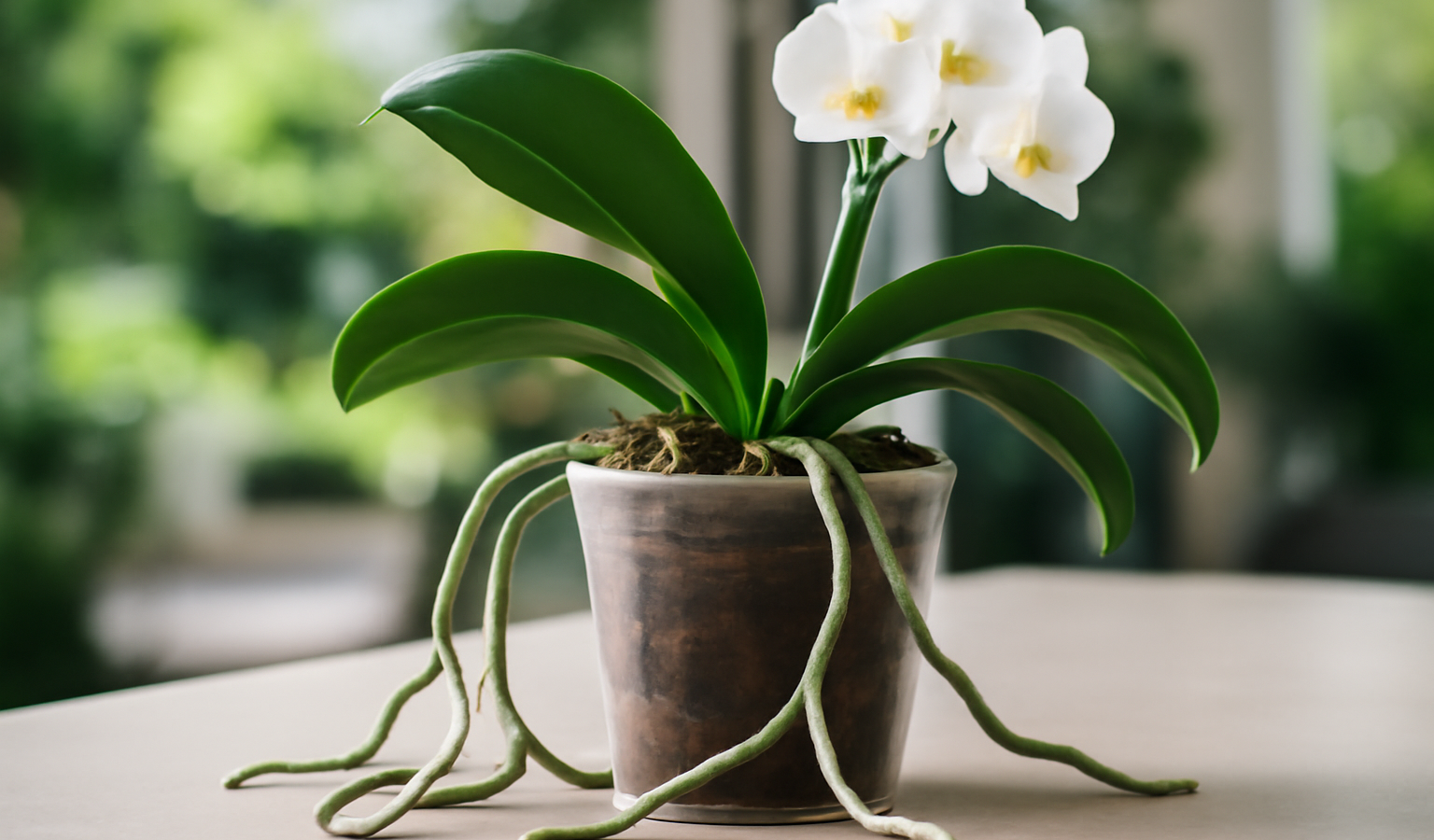
If your orchid is sending silvery-green roots snaking out over the rim of the pot and into the air, your first reaction is probably alarm — but in most cases this is completely normal and even a sign of a healthy plant. Moth orchids (Phalaenopsis) and many other common orchids are epiphytes: in the wild they grow on tree branches, anchoring with aerial roots that absorb moisture and nutrients from the air and rain. Those wandering roots are doing exactly what they evolved to do. That said, roots escaping the pot can sometimes signal that it’s time to repot, that the plant is overcrowded, or that the potting medium has broken down. This guide explains the four reasons orchid roots grow out of the pot, how to tell harmless from meaningful, and what to do in each case.
Key Takeaways
- Aerial roots growing out of the pot are normal and healthy for epiphytic orchids — don’t cut them off.
- Healthy aerial roots are firm and silvery-green (turning bright green when wet); leave them be.
- Lots of escaping roots can be a hint that the orchid is ready to repot, usually every 1 to 2 years.
- A root-bound, overcrowded pot pushes roots out and is a cue to size up or divide after flowering.
- Broken-down, mushy medium suffocates roots and drives them out — refresh the bark when it breaks down.
Cause 1: Normal aerial roots (usually nothing to fix)
The most common reason orchid roots grow out of the pot is simply that this is how orchids grow. Phalaenopsis and similar orchids are epiphytes that naturally produce aerial roots — roots that grow above the medium, into the air, to absorb humidity and grab onto surfaces. Seeing several silvery roots arching over the pot rim is not a problem; it’s a sign the plant is vigorous and growing. These roots help the orchid take up moisture from the air and would, in nature, anchor it to a tree.
How to diagnose it
Look at the color and firmness of the wandering roots. Healthy aerial roots are plump and firm, silvery-green or grayish when dry, and turn bright green when wet or watered — that color shift means they’re alive and absorbing well. White, firm roots with green tips are also healthy. If the escaping roots look like this, the plant is fine and there’s nothing to fix. Only roots that are brown, mushy, hollow, shriveled, or papery are dead or dying.
How to fix it
For healthy aerial roots, the answer is to leave them alone. Do not cut them off — they’re functional, and removing them stresses the plant and opens wounds to infection. You don’t need to stuff them back into the pot either; they’re meant to be in the air. To keep them happy, mist them occasionally or let them catch water when you water the plant, and maintain decent humidity (around 50 to 70%). Only trim a root if it’s clearly dead — brown, mushy, or dried-out and hollow — using sterilized scissors. Otherwise, enjoy them as a sign of a thriving orchid.
Cause 2: The orchid is ready to repot
While aerial roots are normal, an abundance of roots escaping the pot can also be a gentle hint that the orchid is due for repotting. Orchids generally need fresh medium every 1 to 2 years, and a plant that’s been in the same pot for a while — with roots increasingly spilling over the edges and filling the surface — is telling you it’s been there long enough. Repotting isn’t always urgent, but lots of wandering roots combined with old medium is a good prompt to check.
How to diagnose it
Consider timing and the state of the pot. When did you last repot? If it’s been more than 1 to 2 years, the medium is likely overdue. Check whether the surface is crowded with roots, whether the medium looks old and compacted, and whether the plant has finished blooming — the ideal time to repot is right after flowering, when the orchid puts out new root and leaf growth. A plant in active bloom should generally be left alone until the flowers fade.
How to fix it
Repot after the orchid finishes blooming. Gently remove the plant, shake off the old medium, and trim away any dead (brown, mushy) roots with sterilized scissors, keeping all the firm, healthy ones — including the aerial roots, which you can loosely tuck in or leave out. Repot into fresh orchid bark or a coarse orchid mix in a pot with excellent drainage (many growers use clear pots so they can monitor the roots). Choose a pot only slightly larger than the root mass, or the same size if it isn’t crowded. Water well and resume normal care. Repotting on this 1-to-2-year rhythm keeps the roots aerated and the plant healthy.
Cause 3: The pot is overcrowded or root-bound
An orchid that has outgrown its container pushes roots out because there’s simply no more room inside. When the pot is packed solid with roots — root-bound — the plant runs out of space below the medium and starts sending roots over the top and out the drainage holes. A mature orchid may also have produced offshoots (keikis) or multiple growths that have crowded the pot. This overcrowding is a clear cue to size up or divide.
How to diagnose it
Look at how tightly the roots fill the pot. If roots are densely packed, circling, bulging the pot, or pushing the plant upward out of the medium, it’s root-bound. A clear pot makes this easy to see. Multiple fans of leaves or visible keikis crammed into one container also indicate overcrowding. The plant may seem to be lifting itself out of the pot as the root mass expands.
How to fix it
Repot into the next size up, or divide a large plant — again, doing this after flowering. To repot up, move the orchid into a container an inch or so larger with fresh bark, spreading the roots and settling them in. To divide, separate the plant into clumps that each have several healthy roots and at least a few leaves (or a growth), and pot each separately. Trim any dead roots as you go with sterilized scissors. Giving the roots room to breathe again restores healthy growth and reduces the overflow. Don’t over-pot, though — orchids prefer a snug fit, so go up only one size.
Cause 4: The potting medium has broken down
Orchid bark and other media decompose over time, breaking down from chunky, airy pieces into a fine, dense, soil-like material that holds too much water and chokes off airflow. Orchid roots need air as much as moisture, and when the medium turns compacted and soggy, the roots inside suffocate or rot — so the plant drives roots upward and outward into the air where they can actually breathe. Escaping roots paired with old, mushy medium often means the bark has simply worn out.
How to diagnose it
Inspect and smell the medium. Broken-down bark looks dark, fine, and compacted rather than chunky and open; it stays wet for a long time and may smell sour or musty. The roots inside the pot may be brown and rotting while the aerial roots stay healthy — a telltale sign that the medium has gone bad and the plant is escaping it. If you can crumble the bark to mush between your fingers, it’s overdue for replacement.
How to fix it
Repot into fresh medium promptly. Remove all the old, decomposed bark, rinse the roots, and cut away every rotted (brown, mushy) root back to firm tissue with sterilized scissors, keeping the healthy silvery ones. Repot into fresh, coarse orchid bark (or a bark-and-perlite-and-charcoal mix) in a well-draining pot. Going forward, refresh the medium every 1 to 2 years before it breaks down, and water in a way that keeps the bark moist but never waterlogged — let it approach dryness between waterings. Fresh, airy medium lets the in-pot roots thrive again, which usually reduces the urge for roots to flee the pot. For more on container choices and watering rhythm, see our flowering houseplant care guides.
How to manage orchid aerial roots going forward
The most important takeaway is that orchid roots growing out of the pot are usually a feature, not a flaw — epiphytic orchids are built to grow this way, and firm, silvery-green aerial roots should be left alone, not cut or buried. Treat escaping roots as a prompt to do a quick health check: are they healthy aerial roots (leave them), is the plant overdue to repot on its 1-to-2-year schedule, is the pot root-bound and crowded (size up or divide after flowering), or has the medium broken down (refresh the bark)? Keep humidity around 50 to 70% so aerial roots stay plump, water with the bark’s moisture cycle rather than a calendar, repot only after blooming, and use a snug, well-draining pot with coarse medium. Manage those basics and your orchid’s wandering roots become a sign of vigor rather than a worry. For broader indoor-plant troubleshooting, browse our Plants & Flowers guides.
Frequently Asked Questions
Should I cut off orchid roots growing out of the pot?
No. Healthy aerial roots — firm and silvery-green, turning bright green when wet — are normal and functional for epiphytic orchids, so leave them. Cutting them stresses the plant and risks infection. Only trim roots that are clearly dead: brown, mushy, shriveled, or hollow, using sterilized scissors.
Should I push the aerial roots back into the pot?
You don’t have to, and forcing them in can snap them. Aerial roots are meant to grow in the air. When you repot, you can loosely tuck a few in if you like, but it’s perfectly fine to leave them outside the pot. Just keep humidity up so they stay plump and healthy.
How do I know if my orchid needs repotting?
Repot every 1 to 2 years, or sooner if the medium has broken down into fine, soggy, sour-smelling material, or the pot is densely root-bound with roots spilling everywhere. Always repot after the orchid finishes blooming, never during active flowering, so you don’t shock it into dropping blooms.
Why are the roots inside the pot rotting but the aerial roots fine?
That pattern usually means the potting medium has broken down and gone waterlogged, suffocating the in-pot roots while the air-exposed aerial roots stay healthy. Repot into fresh, coarse orchid bark, trim the rotted roots, and water so the bark stays moist but never soggy.
What color should healthy orchid roots be?
Healthy orchid roots are firm and silvery-green or grayish when dry, turning bright green when wet — a sign they’re actively absorbing water. White roots with green growing tips are healthy too. Brown, black, mushy, hollow, or papery roots are dead or dying and can be trimmed away.