

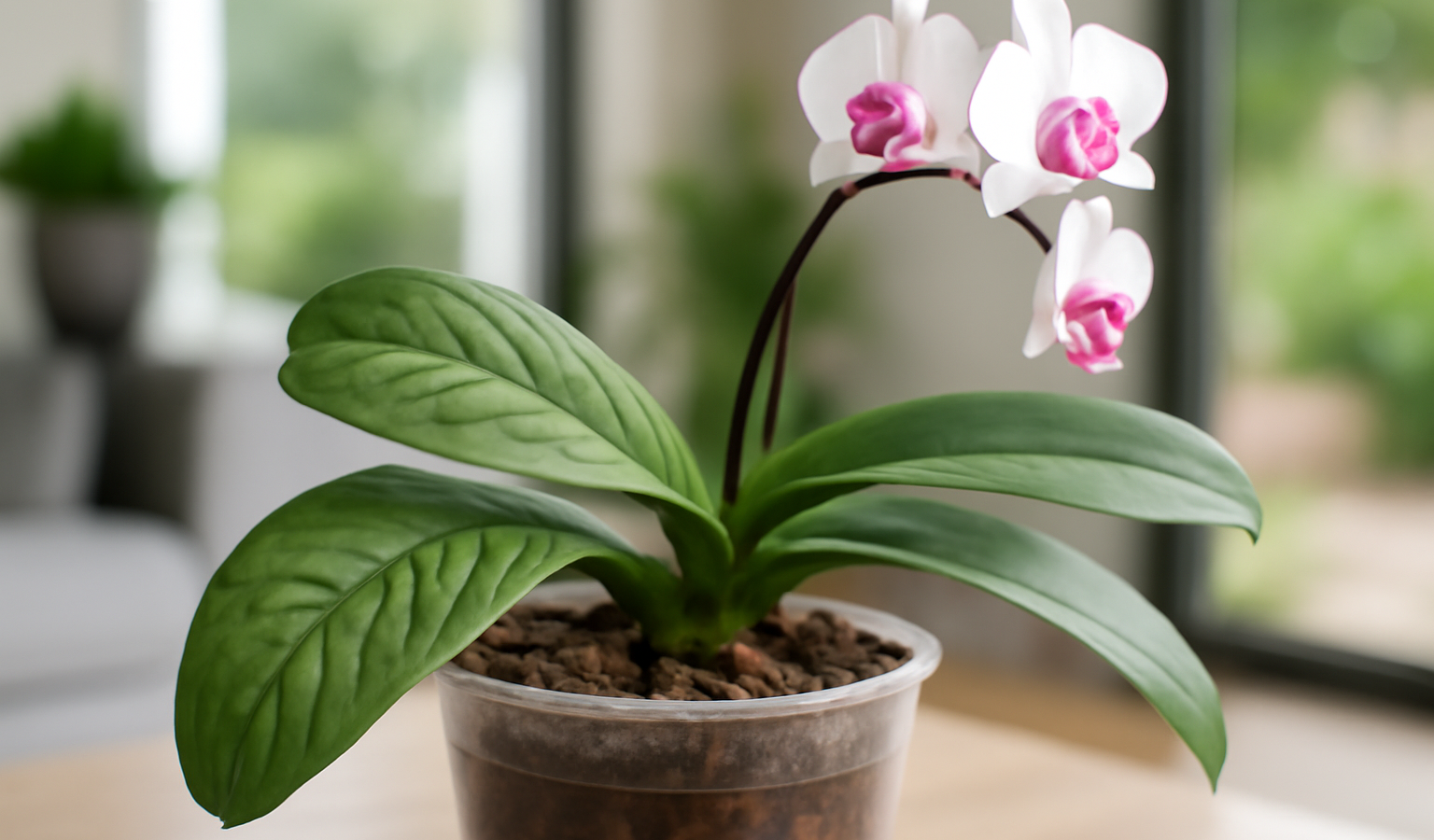
When a phalaenopsis orchid’s leaves go from firm and glossy to limp, leathery, and wrinkled, it’s tempting to assume the plant is simply thirsty and to water more. Resist that urge. Wrinkled, floppy orchid leaves are nearly always a sign that the roots can’t deliver water to the leaves — and the most common reason roots fail is too much water, not too little. The wrinkling you see is the leaf drawing on its own stored moisture because the root system isn’t supplying any. To fix it you have to look below the surface, at the roots inside the pot. This guide shows you how to diagnose the real cause and restore plump, healthy leaves.
Key Takeaways
- Wrinkled, limp orchid leaves mean the roots aren’t delivering water — it’s a root problem, not just a thirsty leaf.
- The leading cause is root rot from overwatering or stale, broken-down media, which kills roots so they can’t drink.
- Diagnose by inspecting the roots: silvery-green and firm are healthy; brown, mushy, or hollow are dead.
- Underwatering and dehydration can also wrinkle leaves, but only if the roots are still healthy and the medium is bone-dry.
- Fix by repotting into fresh orchid bark, trimming dead roots, and watering correctly — leaves firm up over weeks, not days.
Why Wrinkled Leaves Are Really About the Roots
Orchid leaves are reservoirs. When the roots can’t supply enough water, the plant pulls moisture out of its leaves to survive, and the leaves lose volume and wrinkle, going soft and floppy or thick and leathery. So the leaf is the symptom; the roots are the story. The single most useful thing you can do is get the orchid out of its pot (or look through a clear pot) and inspect the roots. Healthy orchid roots are plump, firm, and silvery-green to white when dry, turning bright green when wet. Unhealthy roots are brown, black, soft, mushy, hollow, or stringy and brittle. The ratio of healthy to dead roots tells you almost everything.
Cause 1: Root Rot From Overwatering
This is the most common cause of wrinkled orchid leaves and the most counterintuitive. Orchids are epiphytes — in nature their roots cling to trees and dry quickly between rains. Sitting in soggy media starves the roots of air and rots them. As roots die, fewer remain to absorb water, so the leaves wrinkle even though the pot is wet. Many owners then water more, drowning the few surviving roots and finishing the job.
How to diagnose
The medium feels constantly damp or soggy, and yet the leaves are wrinkling. When you unpot the orchid, you find brown, black, or mushy roots that may collapse or pull apart when squeezed — a hollow, thread-like core remains when the outer layer slips off. There may be few firm roots left. The base of the plant may feel soft. A sour smell from the medium confirms rot, as does media that has broken down into a dense, water-holding sludge.
How to fix it
Repot and trim. Remove the orchid from its pot and clear away all the old medium. With sterilized scissors, cut off every brown, mushy, or hollow root back to firm, healthy tissue. Don’t worry if you remove a lot — a few good roots can rebuild the plant. Repot into fresh, chunky orchid bark mix (or sphagnum if that’s your system) in a pot with ample drainage, ideally a clear pot so you can watch the roots and moisture. Then water sparingly and correctly: let the medium approach dryness between waterings. Because the plant has to grow new roots before it can rehydrate its leaves, expect the wrinkling to improve slowly over several weeks as new roots establish — not overnight.
Cause 2: Underwatering and Dehydration
Less common, but real: an orchid with healthy roots that simply isn’t getting enough water will also wrinkle. This happens if you water too infrequently, if the bark has dried out so completely that water runs straight through without soaking in, or in very hot, dry, or breezy conditions where the plant transpires faster than it drinks.
How to diagnose
The medium is bone-dry and lightweight, and crucially, the roots are firm and silvery — healthy, just dry. Roots may look shriveled and grayish rather than plump green. There’s no rot smell and no mushiness. If the leaves are wrinkled, the roots are intact, and the bark is dust-dry, dehydration is the cause.
How to fix it
Rehydrate thoroughly. The best method is to soak: set the pot in a bowl or sink of room-temperature water for 10–15 minutes so the dry bark fully absorbs moisture, then let it drain completely. Dry bark often repels a quick pour from the top, so soaking ensures the roots actually get wet. After this, water more regularly — typically once a week, when the medium is nearly dry — and the leaves should gradually plump back up over a couple of weeks as the healthy roots resume delivering water. Increasing humidity around the plant also reduces moisture loss from the leaves.
Cause 3: Watering Mistakes That Stress the Roots
Beyond chronic over- or underwatering, a few specific watering habits quietly damage orchid roots and lead to wrinkled leaves. Watering on a rigid weekly schedule regardless of whether the bark is actually dry keeps the medium too wet in cool or humid conditions and too dry in hot ones. Letting water collect in the crown — the center where the leaves meet — invites crown rot, which kills the growing point. Using very cold water or heavily softened (salty) water can shock or burn the roots over time, reducing their ability to absorb. And leaving the pot sitting in a saucer or decorative cachepot that traps runoff keeps the roots standing in water long after you’ve watered.
How to diagnose
Think through your routine. If you water by the calendar rather than checking the bark, pour water into the center of the plant, use cold tap or softened water, or leave a cachepot full after watering, your habits may be stressing otherwise-healthy roots. White crusty mineral buildup on the medium or pot points to salt accumulation from fertilizer or hard water; a soft, dark spot in the crown points to crown rot from trapped water.
How to fix it
Water only when the bark is nearly dry, judged by weight and color rather than a fixed day. Apply water to the medium, not the crown, and tip the plant gently afterward to drain any water that pools among the leaves. Use room-temperature water — rainwater, distilled, or filtered is gentler than hard or softened tap water — and flush the pot with plain water every month or so to wash out fertilizer salts. Empty the cachepot or saucer within minutes of watering so the roots never sit in standing water. These small corrections protect the roots that keep the leaves plump.
Cause 4: Old, Broken-Down Media
Orchid bark decomposes over one to two years, collapsing from chunky and airy into a dense, soggy, fine material that holds water against the roots and chokes off air. This quietly causes root rot even if your watering habits haven’t changed, and it’s a frequent hidden reason for wrinkled leaves on an orchid you’ve had for a while.
How to diagnose
If it’s been more than a year or two since repotting and the medium looks compacted, dark, and fine rather than chunky — or it stays wet far longer than it used to — the medium has broken down. You’ll often find rotting roots alongside it.
How to fix it
Repot into fresh, coarse orchid bark, trimming any dead roots as you go. Plan to refresh the medium every one to two years as routine maintenance to keep roots aerated and prevent this cycle from repeating.
Preventing Wrinkled Orchid Leaves
Water orchids only when the medium is nearly dry — usually about once a week, less in winter — and water thoroughly, then let it drain so no water pools in the bottom of the cachepot. Never let the orchid sit in standing water. Grow in chunky, well-draining bark in a pot with good drainage, and use a clear inner pot so you can monitor root color and moisture at a glance. Provide bright, indirect light and moderate humidity. Repot with fresh medium every one to two years before the bark breaks down. Above all, learn to read the roots: firm silvery-green roots mean a healthy, well-watered plant, and that’s the surest insurance against wrinkled leaves. For related care, see our guides on cleaning houseplant leaves and pruning houseplants, and browse more in Plants & Flowers.
Frequently Asked Questions
Should I water more if my orchid leaves are wrinkled?
Not until you check the roots. Wrinkling is usually caused by rotted roots from overwatering, in which case more water makes it worse. Only water more if the roots are firm and silvery and the medium is bone-dry — true dehydration.
How do I tell healthy orchid roots from rotted ones?
Healthy roots are plump and firm, silvery-green when dry and bright green when wet. Rotted roots are brown, black, soft, mushy, or hollow, and the outer layer slips off leaving a thread inside. Dehydrated-but-healthy roots are firm but shriveled and gray.
Will wrinkled orchid leaves recover?
If you fix the root issue, new healthy roots will rehydrate the leaves and they firm up over several weeks. Severely collapsed leaves may not fully plump again, but they can stay functional. Recovery is slow because the plant must regrow roots first.
How often should I water a phalaenopsis orchid?
Roughly once a week, only when the bark is nearly dry, watering thoroughly and letting it drain. Less in winter. Soak dry bark for 10–15 minutes if water runs straight through. Never leave the orchid sitting in water.
Why do orchid leaves wrinkle even when the pot is wet?
Because the roots have rotted and can no longer absorb water. The leaves draw on their own moisture and wrinkle while the medium stays soggy. Unpot and inspect — you’ll likely find brown, mushy roots needing trimming and a repot.