

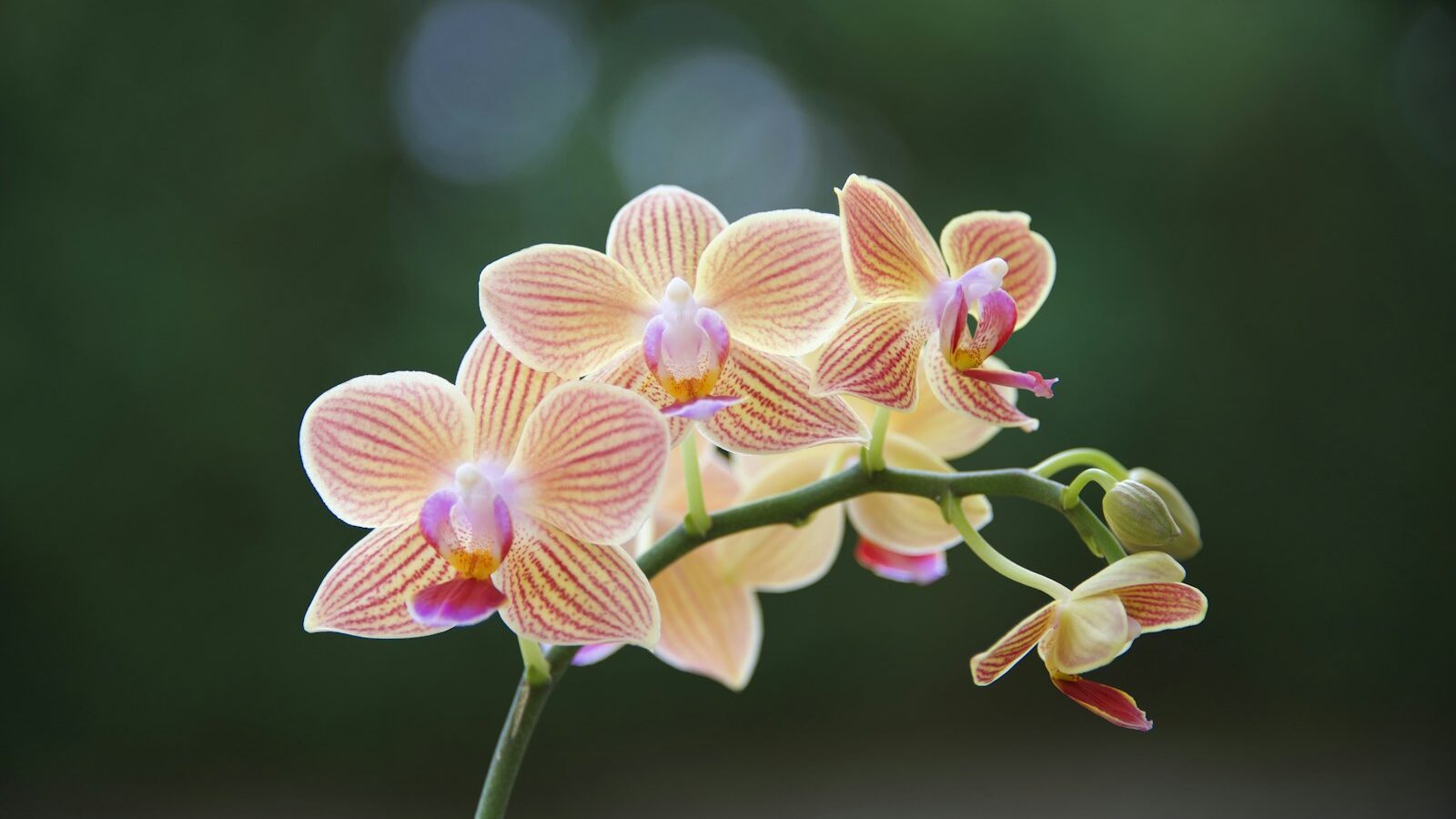
Few places on earth suit orchids quite like Singapore. Our warm temperatures, year-round humidity and dappled tropical light recreate the very conditions many orchids evolved in, which is precisely why these blooms thrive on HDB balconies, landed gardens and condominium corridors across the island. It is no accident that our national flower is the Vanda Miss Joaquim, a hybrid orchid first bred right here in Singapore.
Orchid quick care (Singapore)
- Light: bright, filtered
- Water: frequent in our heat
- Humidity: ideal here
- Feed: weekly, weakly
- Great types: Vanda, Dendrobium, Mokara
Why Singapore is ideal for growing orchids
Most cultivated orchids originate from tropical and subtropical Asia, and Singapore sits comfortably within their natural comfort zone. Where gardeners in temperate climates fuss over heated greenhouses and grow lights, we simply step onto the balcony. Daytime temperatures of 28-33°C, nights that rarely drop below 24°C, and relative humidity often above 80% mean our climate does much of the work for us.
This heritage runs deep. The Vanda Miss Joaquim, chosen as our national flower in 1981, was the world’s first registered orchid hybrid and remains a symbol of Singapore’s multicultural resilience. Orchid breeding has been part of our national story for over a century, and the Singapore Botanic Gardens’ National Orchid Garden holds one of the largest displays in the world. Growing orchids here is, in a real sense, a continuation of local tradition.
What our climate gives you for free
- Constant warmth — no risk of cold damage that plagues growers elsewhere.
- High humidity — ideal for the aerial roots of Vanda and other epiphytes.
- Long, even daylight — roughly 12 hours year-round drives steady growth.
- Frequent rain — rinses leaves and roots, mimicking the orchids’ rainforest origins.
Popular orchid types to grow in Singapore
Not every orchid is equally suited to our conditions. The following types reward local growers most reliably, from sun-loving showpieces to gentler indoor options.
Vanda
The classic Singapore orchid. Vanda are monopodial, growing upward from a single stem with thick aerial roots that dangle freely. They love strong, bright light and high humidity, making them perfect for a sunny landed garden or an exposed balcony rail. Grown in slatted timber baskets with little or no medium, they produce some of the most striking blooms you can grow at home.
Dendrobium
Among the most forgiving and widely grown orchids in Singapore. Dendrobium tolerate a range of light levels, flower freely and are inexpensive to start with. Their tall cane-like stems carry sprays of long-lasting flowers, and they are happy in standard pots with a bark or charcoal mix.
Mokara
A vigorous man-made hybrid (a cross involving Vanda, Arachnis and Ascocentrum) bred specifically for tropical cut-flower production. Mokara flower almost continuously in our climate and love full sun, making them excellent for landed gardens and the cut-flower trade.
Phalaenopsis
The “moth orchid” you see in supermarkets and gift shops. Phalaenopsis prefer lower light and cooler, shadier spots, so they suit air-conditioned interiors or a sheltered north-facing balcony rather than full tropical sun. Their elegant arching sprays last for months.
Oncidium
Known as “dancing lady” orchids for their clusters of small, frilly yellow blooms. Oncidium enjoy bright filtered light and good airflow, and reward you with abundant sprays. They appreciate a slightly drier rest between waterings compared with the thirstier Vanda.
For a deeper look at day-to-day routines once you have chosen your plants, see our full guide on how to care for orchids.
Mounting versus potting
How you grow an orchid matters as much as which one you choose. Most orchids are epiphytes — in the wild they cling to tree branches rather than rooting in soil — so the goal is fast drainage and plenty of air around the roots. Never use ordinary garden soil.
Mounting
- Best for Vanda and other orchids with thick aerial roots.
- Grown in open timber baskets or tied to a slab of bark or driftwood, with little to no medium.
- Roots dry quickly, so it suits our humid climate where they stay moist from the air.
- Needs more frequent watering — sometimes daily in dry spells — because there is no medium to hold moisture.
Potting
- Best for Dendrobium, Phalaenopsis and Oncidium.
- Use a chunky, free-draining mix of bark, charcoal and broken brick or perlite.
- Choose pots with generous drainage holes; many growers prefer clear plastic so they can watch the roots.
- Holds moisture longer, so it is more forgiving if you cannot water every day.
Light, watering and feeding in the tropics
Light
Bright but filtered light is the rule. Direct midday Singapore sun can scorch leaves, turning them yellow or leaving brown burn patches. Sun-lovers like Vanda and Mokara can take morning sun and bright conditions; shade-lovers like Phalaenopsis need protection. A good test: healthy orchid leaves should be a light, grassy green. Dark green means too little light; reddish or bleached leaves mean too much. Sheer curtains or 50% shade cloth solve most problems on an exposed balcony.
Watering
Because our heat dries roots quickly, orchids here are usually watered more often than the textbooks (written for cooler climates) suggest. Mounted Vanda may need watering daily, while potted orchids might need it every two to three days. Water in the morning so the plants dry before nightfall, which reduces fungal and bacterial rot. Always let excess drain away — standing water suffocates roots.
Feeding
The golden rule is “weekly, weakly”. Use a balanced orchid fertiliser diluted to about a quarter or half the recommended strength, applied once a week during active growth. A common routine is to switch to a high-phosphorus “bloom booster” formula when you want to encourage flowering. Always flush with plain water between feeds to prevent salt build-up on the roots.
Humidity and airflow
Humidity is rarely a worry here — it is one of our greatest advantages. The bigger concern is airflow. Stagnant, sticky air encourages fungal disease, so position orchids where a breeze can reach them and avoid cramming pots together.
Getting orchids to rebloom
The most common disappointment is an orchid that flowers once and then refuses to repeat. In our climate the issue is almost never temperature — it is usually light or feeding.
- Give more light. Insufficient light is the number one reason orchids stop blooming. Move shy bloomers to a brighter (but still filtered) spot.
- Feed for flowers. Switch to a higher-phosphorus fertiliser as the plant matures to nudge it into bloom.
- Be patient with spikes. For Phalaenopsis, do not cut a green flower spike — it may branch and bloom again.
- Let it build strength. A plant putting out healthy new growth and roots is storing energy for the next flush of flowers.
Common orchid problems and fixes
- Yellowing leaves — often too much direct sun or overwatering. Move to filtered light and check drainage.
- Wrinkled, limp leaves — usually a root problem; the plant cannot take up water. Inspect for rotted (brown, mushy) roots and repot.
- Black spots or rot — fungal or bacterial, encouraged by poor airflow and evening watering. Improve ventilation and water in the morning.
- Pests — mealybugs, scale and red spider mites are common locally. Wipe off with a damp cloth or treat with a mild horticultural soap or neem solution.
- Sooty mould — a black film that follows sap-sucking pests; clear the pests and the mould fades.
Growing orchids on balconies and garden walls
You do not need a landed garden to grow orchids well. With a little planning, a high-rise balcony can host a thriving collection.
Balconies
- Match the orchid to the aspect: east and west-facing balconies suit sun-lovers like Vanda; shadier balconies suit Phalaenopsis.
- Hang baskets from sturdy rails or brackets to maximise space and airflow.
- Mind your neighbours below — use trays or water mindfully so run-off does not drip onto lower units.
- On very exposed, windy balconies, clip baskets firmly so they cannot fall.
Garden walls and green walls
Orchids mounted on bark slabs or fixed into a vertical planting system make spectacular living walls, and our humidity keeps them happy. A wall of Vanda or Dendrobium turns a plain boundary or feature wall into a showpiece. Vertical greenery does, however, need reliable irrigation and secure mounting, which is where professional help pays off. Pair your orchids with other tropical favourites from our list of the best plants for Singapore gardens, and consider booking a garden maintenance service to keep larger displays in top condition.
Frequently asked questions
Which orchid is easiest for beginners in Singapore?
Dendrobium is the most forgiving choice. It tolerates a range of light, flowers freely in our climate and is inexpensive, so it is the ideal first orchid before you progress to fussier types.
How often should I water orchids in Singapore’s heat?
More often than guides from cooler countries suggest. Mounted Vanda may need daily watering, while potted orchids usually want it every two to three days. Always water in the morning and let excess drain away.
Can I grow orchids on an HDB balcony?
Yes. Match the orchid to your balcony’s light, hang baskets securely from the rail for airflow, and water mindfully so run-off does not drip onto units below. Many of Singapore’s keenest growers garden entirely on balconies.
Why won’t my orchid flower again?
The most common cause is too little light, followed by under-feeding. Move it to a brighter filtered spot and switch to a higher-phosphorus fertiliser as it matures. Reblooming can take several months, so be patient.
Is the Vanda Miss Joaquim easy to grow at home?
Our national flower is a Vanda hybrid that loves strong light and high humidity, both of which Singapore offers in abundance. Grown in an open basket on a sunny, breezy spot and watered generously, it can do very well at home.