

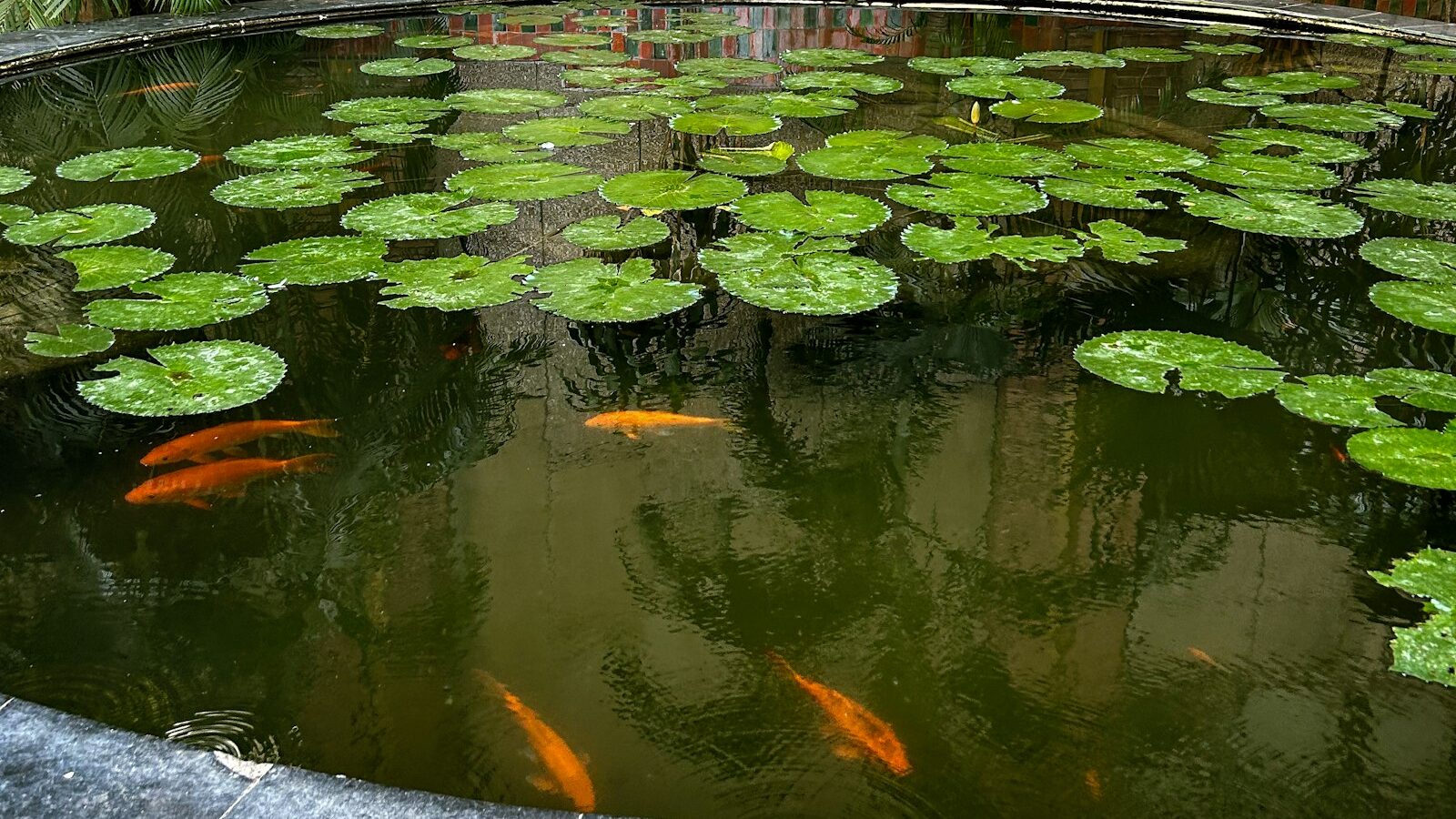
A koi pond turns any corner of a Singapore home into a living, moving water feature, but the price tag can swing wildly depending on size, build method and the kit you choose to fight our tropical heat. Whether you have a landed garden in Bukit Timah or a tight condo balcony in the East Coast, knowing the real costs upfront helps you avoid nasty surprises. This guide breaks down koi pond costs in SGD, the feng shui rules that matter locally, and how to keep your pond healthy in the heat.
Key takeaways
- A modest koi pond in Singapore starts around S$3,000 to S$6,000, while large concrete landed-home builds run S$20,000 and up.
- Filtration, pumps and aeration are the biggest cost drivers and the difference between clear water and a green, smelly mess.
- Feng shui favours placing a koi pond to the front or left of the main door, with auspicious fish counts such as 9 koi.
- The tropics bring constant algae and heat stress, so budget for ongoing running costs of roughly S$60 to S$200 a month.
- Choose a builder who understands Singapore conditions, BCA drainage rules and koi health, not just general landscaping.
How much does a koi pond cost in Singapore?
There is no single price for a koi pond because the term covers everything from a preformed liner pond tucked into a condo planter to a bespoke concrete feature with a viewing window. As a rough guide, expect to spend anywhere from S$3,000 for a small starter pond to well over S$30,000 for a large, architect-designed installation at a landed property. The build method, the filtration system and the finishing materials are what move the needle most.
Smaller homes and condos often opt for liner or fibreglass ponds because they are quicker to install and far cheaper. Landed-home owners with space tend to go for poured concrete, which lasts decades and supports the deeper water koi need to thrive in our climate. The table below gives realistic SGD ranges for typical Singapore projects.
| Pond type / size | Typical SGD range |
|---|---|
| Small preformed / liner pond (under 1,000L, condo or patio) | S$3,000 – S$6,000 |
| Medium fibreglass or liner pond (1,000 – 3,000L) | S$6,000 – S$12,000 |
| Medium concrete pond with proper filtration (landed garden) | S$12,000 – S$20,000 |
| Large concrete koi pond (5,000L+, multi-stage filter) | S$20,000 – S$35,000 |
| Premium bespoke pond (viewing window, bottom drains, UV, automation) | S$35,000 – S$70,000+ |
| Monthly running and maintenance cost | S$60 – S$200 / month |
These figures include design, materials, equipment and basic landscaping around the pond, but exclude koi fish themselves, which can range from S$20 for a small commercial-grade fish to several thousand dollars for a championship Japanese koi. For a guided quote on your exact space, see our koi pond & water feature service.
What drives the cost: filtration, pumps and build method
The single biggest factor separating a healthy koi pond from an expensive headache is filtration. Koi are heavy waste producers, and in Singapore’s year-round warmth their metabolism runs fast, meaning more feeding and more waste. A proper multi-stage system, mechanical filtration to trap solids plus biological filtration to convert ammonia, typically adds S$2,000 to S$8,000 depending on pond volume. Skimping here is the most common and costly mistake local owners make.
Pumps and aeration are the next big spend. Your pump needs to circulate the entire pond volume roughly every one to two hours, and it runs 24/7, so an energy-efficient model saves real money on your SP utility bill over time. Aeration is non-negotiable in the tropics because warm water holds less dissolved oxygen, and oxygen-starved koi become sick koi. Budget S$500 to S$2,500 for pumps and air systems combined.
On build method, the choice between liner and concrete shapes everything:
- Liner ponds are cheapest and flexible in shape, but liners can puncture and generally last 10 to 15 years before replacement.
- Fibreglass offers a smooth, easy-clean finish and a long life, sitting in the mid-price band.
- Concrete is the gold standard for serious koi keeping in Singapore, allowing depth, bottom drains and a permanent structure, but it is the most expensive and slowest to build.
A UV clarifier is a small but worthwhile add-on of around S$200 to S$600 that controls the green-water algae our climate constantly encourages. If you are weighing a DIY route for a smaller water feature, our backyard pond guide walks through the basics.
Feng shui koi pond placement and fish numbers
Koi ponds are deeply tied to feng shui in Singapore, where many homeowners see them as a way to attract prosperity and smooth, flowing chi. In classical practice, water represents wealth, so the placement of the pond relative to your main door matters. A common guideline is to position the pond to the front of the home or to the left of the main entrance as you look out, allowing the energy of moving water to flow towards the house rather than away from it.
Avoid placing a pond directly behind the house in a way that suggests wealth draining away, and steer clear of sharp pond edges pointing at the front door. Moving water from a small waterfall or spout is considered more auspicious than still water, and it doubles as essential aeration, a neat overlap of culture and koi health.
The number of koi also carries meaning. Many practitioners recommend keeping nine fish: eight in lively colours plus one black koi believed to absorb negative energy. Other auspicious counts include single odd numbers, while combinations involving the unlucky number four are usually avoided. That said, never overstock just to hit a number, because a crowded pond in our heat quickly becomes unhealthy. Match your fish count to your pond volume first, then choose an auspicious number within that limit.
Maintenance and running costs in the tropics
A koi pond is not a fit-and-forget feature, and the warm climate means maintenance demands are higher here than in temperate countries. Expect monthly running costs of roughly S$60 to S$200, covering electricity for the pump and UV unit, koi food, water treatments and filter media. Larger ponds with automation sit at the upper end, while a small liner pond may cost just S$60 to S$80 a month to run.
Routine upkeep includes weekly partial water changes of 10 to 20 percent, regular cleaning of the mechanical filter, checking water parameters such as ammonia and pH, and clearing leaves and debris that fall in during our frequent rain. Many busy owners pay for a monthly servicing visit, typically S$100 to S$300 depending on pond size, which keeps water quality stable and koi healthy without the weekend chore.
Factor in occasional bigger spends too: replacing UV bulbs annually, topping up beneficial bacteria, and the eventual liner or pump replacement. Browse our full range at all Singapore services if you would rather hand over the ongoing care entirely.
Common tropical problems: algae and heat
Singapore’s combination of intense sun, warm water and year-round growing conditions makes algae the number-one challenge for koi pond owners. Green water and stringy blanketweed thrive when sunlight and excess nutrients combine, and a pond that turns pea-soup green within days is a familiar frustration. Controlling it comes down to limiting direct sun, balancing nutrients, running a UV clarifier and not overfeeding your koi. Our natural pond algae guide covers practical fixes without harsh chemicals.
Heat is the second tropical hazard. As water temperature climbs, it holds less oxygen just as the fish need more, so strong aeration and adequate depth become critical. Deeper ponds, ideally 1.2 metres or more for serious koi, stay cooler at the bottom and buffer temperature swings. Partial shade from a pergola, sail or strategic planting helps, and it conveniently reduces algae at the same time. Building in these measures from the start costs far less than retrofitting them after your first fish loss.
How to choose a koi pond builder in Singapore
Plenty of general landscapers will happily dig you a pond, but koi keeping is a specialist craft. Look for a builder with a portfolio of working koi ponds, not just decorative water features, and ask to visit a few of their older installations to see how the water and fish are faring years on. A good specialist will talk confidently about turnover rates, biological filtration and dissolved oxygen rather than just tiles and rocks.
Ask how they handle waterproofing and drainage, since leaks and poor overflow planning cause expensive problems in Singapore’s heavy downpours and can run afoul of BCA and drainage requirements. Get an itemised quote that separates the pond structure, filtration, pumps, plumbing and landscaping so you can compare like for like. Be wary of suspiciously cheap quotes that quietly omit proper filtration, as that gap will cost you far more in dead fish and rebuilds later.
Finally, ask about aftercare. The best builders offer a maintenance plan and remain reachable when something goes wrong, which matters most in the vulnerable first few months as your pond’s ecosystem matures.
Frequently asked questions
What is the cheapest way to build a koi pond in Singapore?
A small preformed or liner pond with a basic external filter and pump is the most affordable route, starting around S$3,000 to S$6,000. It suits condos and compact gardens, though you will need to keep the koi count low and stay on top of water quality given the warm climate.
How many koi can I keep in my pond?
A common rule is around 100 to 250 litres of water per koi, but in Singapore’s heat err on the generous side because warm water holds less oxygen. For an auspicious count of nine koi, you would want a pond of at least 1,500 to 2,000 litres with strong filtration and aeration.
Where should I place a koi pond for good feng shui?
Classical feng shui favours placing the pond to the front of the home or to the left of the main door as you look outward, with gently moving water flowing towards the house. Avoid sharp edges pointing at the entrance and avoid positioning that suggests water draining away from the property.
Why does my koi pond keep turning green?
Green water is caused by algae thriving in our strong sun and nutrient-rich water, often worsened by overfeeding. A UV clarifier, some shade, balanced feeding and good filtration usually bring it under control. See our pond algae guide for natural methods.
How much does koi pond maintenance cost per month?
Most Singapore owners spend roughly S$60 to S$200 a month on electricity, food, treatments and filter media. A professional monthly servicing visit typically adds S$100 to S$300 depending on pond size.
Featured project by Gensou Aquascaping
Get free koi pond quotes in Singapore
Tell us about your space and we’ll match you with vetted local pond specialists island-wide. Free, no obligation.