

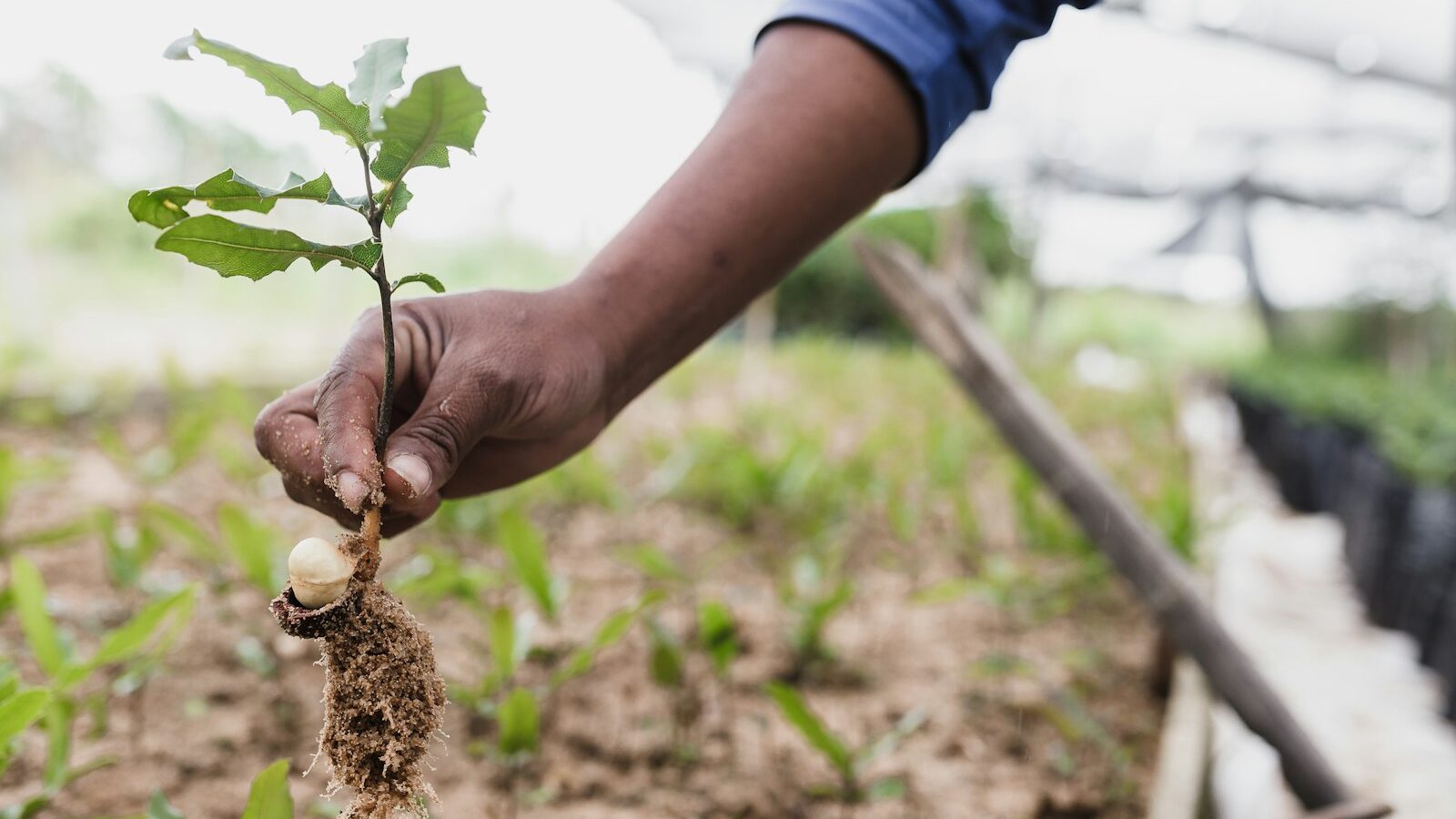
Planting a tree looks simple, but most trees that struggle or die young were doomed the day they went in the ground, usually from being planted too deep, in a hole that was too narrow, or with the burlap and wire left on. The good news is that getting it right is mostly about a few key decisions you make before and during planting. This guide walks you through every step, from picking a healthy tree to first-year care, so your new tree settles in fast and thrives for decades.
As an Amazon Associate we earn from qualifying purchases.
Key takeaways
- Dig wide, not deep; plant at the root flare
- Call 811 before you dig (US)
- Don’t over-amend the backfill
- Mulch in a donut, never a volcano
- Water deeply through the first year
When is the best time to plant a tree?
The best planting windows are when the tree is dormant or close to it and the soil is workable but not frozen or waterlogged. In most of the US and temperate regions, that means fall or early spring. Fall is often ideal because warm soil encourages root growth while cool air reduces stress on the canopy, giving roots a head start before the next summer.
How to time it right
- Fall: Roughly 6 weeks before the ground freezes, so roots establish before winter.
- Early spring: After the ground thaws but before the tree leafs out fully.
- Avoid midsummer: Heat and drought stress make establishment much harder.
- Container trees: More forgiving and can be planted through the growing season if you water diligently.
- Bare-root trees: Must go in while fully dormant, late winter to early spring.
Whatever the season, plant on a cool, overcast day if you can, and never let the roots dry out between buying and planting. For more on shaping a healthy canopy after establishment, see our guide on when to prune trees and shrubs.
How to choose a healthy tree
Trees are sold in three main forms, and each has trade-offs. The single most important thing, regardless of type, is to find the root flare, the point where the trunk widens and the first main roots spread out. A healthy tree has a visible flare, sound bark, and no circling roots strangling the trunk.
B&B vs container vs bare-root
- Balled-and-burlapped (B&B): Dug from a field with a soil ball wrapped in burlap, often inside a wire basket. Great for larger trees but heavy; the flare is frequently buried in the ball.
- Container-grown: Grown in a pot. Convenient and widely available, but check for circling or pot-bound roots that must be loosened or cut before planting.
- Bare-root: Sold dormant with no soil. Lightweight, affordable, and easy to inspect the roots, but only available in late winter and early spring and must be planted promptly.
What to look for
- A trunk that flares at the base rather than going straight into the soil like a telephone pole.
- Healthy, evenly spaced branches and no large wounds or cracks in the bark.
- Firm, moist roots (bare-root) or a solid, intact root ball (B&B and container).
- No girdling roots circling the trunk near the surface.
- A species suited to your climate zone, soil, and the mature size your space allows. Flowering choices like a magnolia need room to spread.
Call 811 and check for utilities first
Before any shovel hits the dirt, call 811 (the national “Call Before You Dig” number in the US) or use your local equivalent. It’s free, and it has utility companies come out to mark buried gas, electric, water, and communication lines so you don’t dig into something dangerous or expensive. Outside the US, contact your local utility-locating service.
Before you dig checklist
- Call 811 at least a few business days before planting (timing varies by state).
- Wait for the locate crew to mark lines with paint or flags.
- Look up too: keep large trees clear of overhead power lines at maturity.
- Check your distance from foundations, septic fields, sidewalks, and pipes.
- Confirm the mature canopy and roots won’t crowd structures or neighbors.
Free, no-obligation quote · Connect with a local pro
How to dig the planting hole
The golden rule is dig wide, not deep. Roots spread outward far more than down, so a wide hole with loosened sides lets them establish quickly. Digging too deep is a classic mistake because the loosened soil settles and the tree sinks, suffocating the flare.
Step-by-step
- First, find the root flare. On B&B and container trees you may need to scrape away soil from the top of the root ball until you see where the first main roots emerge.
- Measure the root ball from the flare down to the bottom. This is your target hole depth, no deeper.
- Dig the hole 2 to 3 times as wide as the root ball, with gently sloping sides.
- Leave the bottom-center of the hole firm and undug so the tree sits on solid ground and won’t sink.
- Roughen (don’t glaze) the sides of the hole with your shovel so roots can grow outward into native soil.
Set the unplanted tree in the hole and check the depth: the root flare should sit slightly above the surrounding grade, never below it. Adjust before you remove any wrapping.
How to plant at the right depth
Now remove the wrappings and set the tree. This is where many trees fail, so take your time. The flare must stay visible at the soil line, and the root ball needs to sit on firm ground.
Removing burlap, wire, and containers
- Container: Slide or cut the pot off. If roots circle the ball, slice them vertically in a few places or tease them outward so they don’t keep girdling.
- B&B: Once the tree is in the hole at the right height, cut away and remove the twine, then fold down or cut off the top half to two-thirds of the wire basket and burlap. Remove as much as you safely can without collapsing the ball; never leave burlap exposed above ground where it wicks moisture away.
- Bare-root: Build a small cone of firm soil in the center and spread the roots evenly over it, keeping the flare at grade.
Don’t over-amend the backfill
It’s tempting to fill the hole with rich compost or bagged planting mix, but heavily amended backfill can do more harm than good. Roots can stay coddled in the soft “pot” of amended soil and refuse to push into the surrounding native ground, and the texture difference can hold water and rot roots. Backfill mainly with the native soil you removed. If your soil is poor, blend in only a modest amount of compost or a quality tree planting mix, no more than about 10 to 20 percent.
- Backfill halfway with native soil, then firm it gently with your hands (don’t stomp) to remove big air pockets.
- Water to settle the soil and eliminate remaining air gaps.
- Finish backfilling to grade, keeping the flare exposed.
- Build a low ring or “berm” of soil around the edge of the root ball to hold water.
Watering, staking, and mulching
With the tree in place, three finishing tasks set it up for success: a deep first watering, staking only if truly needed, and a proper mulch ring.
Water it in deeply
- Give the root ball a slow, deep soak right after planting, enough to fully saturate the root zone.
- For the first few weeks, water deeply and infrequently rather than a little every day.
- A slow-release tree watering bag makes consistent deep watering easy, especially in hot climates.
Stake only if needed
Most trees don’t need staking, and trees allowed to sway a little develop stronger trunks and root systems. Stake only if the tree is top-heavy, bare-root, or planted in a windy, exposed site.
- Use a flexible tree staking kit with broad, soft straps, never wire or rope that can cut the bark.
- Allow some movement; don’t lash the trunk rigidly.
- Remove stakes after one growing season so the tree doesn’t become dependent.
Mulch in a donut, not a volcano
Mulch conserves moisture, moderates soil temperature, and keeps mowers and string trimmers away from the trunk. But piling mulch up against the bark, the dreaded “mulch volcano,” traps moisture, invites rot and pests, and can kill a tree slowly. Mulch in a flat donut shape instead.
- Spread 2 to 3 inches of organic wood mulch in a wide ring out to the edge of the canopy if possible.
- Keep a mulch-free gap of a few inches around the trunk so the flare stays exposed and dry.
- Refresh as it breaks down, but never let depth creep past 3 inches. For full detail, see our mulching guide.
Free, no-obligation quote · Connect with a local pro
First-year care
The first year is make-or-break. A newly planted tree has lost much of its root system and is essentially on life support until new roots grow out into the soil. Consistent watering is the single most important thing you can do.
- Water: Keep the root zone evenly moist (not soggy) through the first growing season, deep-watering once or twice a week in the absence of rain, and more in heat.
- Hold the fertilizer: Don’t push heavy fertilizer the first year; let the tree focus on roots. A light topdressing of compost is plenty.
- Prune minimally: Remove only dead, damaged, or crossing branches the first year. Save structural pruning for later, and time it well using our pruning guide.
- Protect the trunk: Use a guard against rodents, sun-scald, and string trimmers if needed.
- Monitor: Watch for wilting, scorch, or pests, and adjust watering accordingly.
Get these basics right and your tree will reward you for generations. A well-placed shade tree cools your home, lifts curb appeal, and anchors the whole yard, the kind of upgrade we cover throughout our outdoor living and backyard landscaping guide.
Frequently asked questions
How deep should I plant a tree?
Plant so the root flare, where the trunk widens into the first main roots, sits slightly above the surrounding soil. The hole should be no deeper than the root ball measured from the flare. Planting too deep is the most common reason young trees decline.
How wide should the planting hole be?
Two to three times the width of the root ball, with sloping, roughened sides. A wide hole lets roots spread outward into loosened soil and establish faster, which matters far more than depth.
Should I add compost or fertilizer to the planting hole?
Keep it minimal. Backfill mainly with the native soil you removed; over-amending can keep roots from spreading and cause drainage problems. Skip heavy fertilizer the first year so the tree can focus on growing roots.
Do I need to stake a new tree?
Usually not. Trees that sway a little develop stronger trunks and roots. Stake only top-heavy, bare-root, or wind-exposed trees, using soft straps, and remove the stakes after one growing season.
How often should I water a newly planted tree?
Water deeply and infrequently. Soak the root zone right after planting, then keep the soil evenly moist through the first growing season, typically a deep watering once or twice a week without rain, and more during heat. A slow-release watering bag helps.
Need a pro for big trees or planting?
Compare free, no-obligation quotes from vetted local tree & landscaping pros near you.