

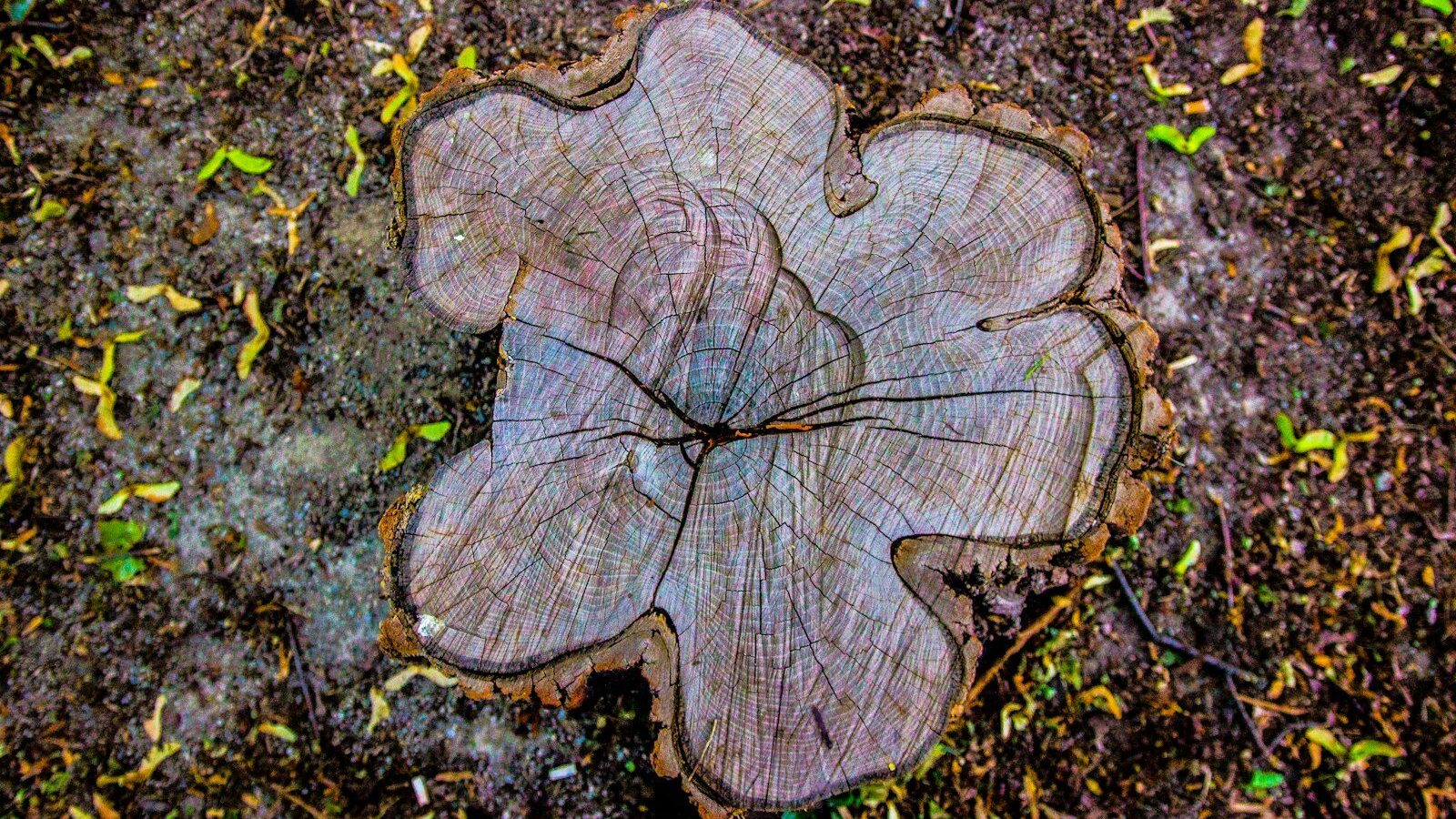
Killing a tree stump is a different job from removing it. Removal gets the wood out of the ground; killing makes sure the stump and its root system are biologically dead so it cannot send up an army of suckers around your lawn. Many species—silver maple, poplar, willow, elm, black locust, and tree-of-heaven among them—will resprout vigorously from a freshly cut stump, and if you ignore that, you end up fighting a thicket where a tree used to be. The fastest, surest kill happens when you treat the stump immediately after cutting. This guide covers the timing that makes or breaks the job, the natural methods (Epsom salt, copper, smothering), the chemical methods (cut-and-paint herbicide), and how to speed the rot once the stump is dead.
Key Takeaways
- Timing is everything. Treat a freshly cut stump within minutes to hours—the open wood draws herbicide straight into the roots.
- Many trees resprout from cut stumps. Killing the roots is the only way to stop the suckers for good.
- Natural route: Epsom-salt drilling, smothering with a tarp, or repeatedly cutting suckers slowly starves the roots over months.
- Fast route: the cut-and-paint method with concentrated glyphosate or triclopyr kills most stumps and roots reliably.
- Best season: late summer to fall, when the tree moves energy—and herbicide—down into its roots.
- A dead stump still rots slowly; drill, add nitrogen, and keep it moist to crumble it away faster.
Why timing and resprouting matter
The single biggest factor in killing a stump is how fresh the cut is. Within hours of felling, a stump’s vascular system is still actively pulling moisture and nutrients down toward the roots. Apply herbicide to that fresh, exposed cambium—the living ring just inside the bark—and the plant carries the chemical into its root system for you. Wait a few days and the surface seals over, drastically reducing uptake. If your stump was cut long ago, you can refresh it by slicing off a thin disk to expose live wood before treating.
Resprouting is the other half of the problem. Energetic species push new shoots (suckers) from the stump and roots, and a single ignored stump can become a dense clump of saplings. Killing the root system—not just cutting the top—is what stops this permanently. If you only want the stump gone physically, pair this with our companion guide on how to remove a tree stump.
Natural methods to kill a stump
If you prefer to avoid synthetic herbicides—near a vegetable garden, water, or just by choice—these approaches work, though they ask for more patience. The common principle is to deprive the roots of energy or moisture until they die.
Epsom salt (or rock salt) drilling
Salts pull moisture out of the wood and roots, dehydrating the stump over time. Drill a grid of holes 8 to 12 inches deep and about an inch wide into the top of the stump, pack them with Epsom salt (magnesium sulfate, gentler on surrounding soil than rock salt), add just enough water to dissolve it, and cover with a tarp to keep rain from washing it out. Refill the holes every few weeks. Over one to several months the stump dries, dies, and begins to rot. Use Epsom salt rather than sodium-based rock salt near plants you want to keep, because sodium can poison the soil.
Smothering (light deprivation)
Cut the stump as low as possible, then cover it completely with a heavy black tarp or plastic, weighted down and excluding all light. Without sunlight the stump cannot photosynthesize through any sprouts, and the roots slowly run out of stored energy. This takes several months but requires almost no effort and no chemicals.
Cut the suckers relentlessly
For a resprouting species, simply removing every new shoot the moment it appears starves the roots the same way it does with perennial weeds. Each sprout you cut forces the roots to spend more reserves; keep it up through a full growing season and the roots eventually exhaust themselves. It is slow, but it is free and fully organic.
Fast method: cut-and-paint herbicide
When you want a reliable, relatively quick kill that stops suckering, the cut-and-paint (also called cut-stump) method is the gold standard arborists use. It places a small amount of concentrated systemic herbicide exactly where the plant will absorb it, with minimal exposure to the rest of your yard.
- Cut the stump level and fresh. If it was cut more than a day or two ago, shave off a thin slice to expose live wood.
- Identify the cambium ring. This living layer just inside the bark is where the herbicide travels down to the roots—it is the target.
- Apply concentrated herbicide immediately, within minutes. Paint or spray a concentrated glyphosate or triclopyr product onto the outer ring (and the whole cut on smaller stumps) using a disposable brush. Triclopyr is especially effective on woody, hard-to-kill species; glyphosate works well across the board.
- Do not dilute for this method. Cut-stump treatment uses the concentrate, not a hose-end spray rate—follow the product label’s cut-stump instructions for the exact strength.
- Watch for resprouts over the next weeks and dab any new growth. A thorough first treatment usually does it.
Best season: late summer through fall, when the tree is naturally translocating sugars down to its roots; the herbicide rides along for a deeper kill. Spring treatments work but can be less effective because sap is flowing upward. Keep children and pets off the treated stump until it dries, and avoid this method where roots may be grafted to a desirable tree you want to keep, since the chemical can travel between connected root systems.
Speed up rotting once the stump is dead
Killing the stump stops the suckers, but the dead wood can sit for years if you leave it alone. To make it crumble away faster so you can dig it out or mow over it:
- Drill more holes and pack them with a high-nitrogen source or commercial stump-remover granules (potassium nitrate), which feed the decay fungi.
- Keep it moist and covered. Soak the holes, lay a tarp over the stump, and re-wet periodically. Fungi need consistent moisture to break down lignin.
- Add a fungal jump-start. Some gardeners pack the holes with shredded organic matter or inoculate with mushroom spawn to colonize the wood.
- Chip away the softened wood with an axe or mattock every few weeks as it punks out. Removing crumbled material exposes fresh surfaces to the fungi.
A dead, treated stump kept moist and fed with nitrogen can soften enough to break apart within several months to a year, versus the many years untreated heartwood can take. Once it is punky, the cavity backfills easily with topsoil for reseeding.
Safety and what to avoid
A few precautions keep this job safe and prevent collateral damage to the rest of your landscape.
- Wear gloves and eye protection when handling concentrated herbicide, and avoid skin contact and breathing spray drift.
- Do not pour large amounts of salt or herbicide on the open ground around the stump—it can leach to nearby plants and sterilize soil. Keep treatments inside the drilled holes or on the cut surface.
- Skip bleach, motor oil, and diesel. These do not reliably kill roots, contaminate soil and groundwater, and can be illegal to dump.
- Mind grafted roots. Trees of the same species planted close together can share root grafts, so a systemic herbicide in one stump can injure its neighbor.
- Read every label. Observe setbacks from edibles, water features, and desirable plantings.
Pick natural methods when you have time and want zero chemicals, or cut-and-paint when you need a fast, certain kill that stops resprouting. For replanting and restoring the area afterward, browse our outdoor living and landscaping guides.
Frequently Asked Questions
Does Epsom salt really kill a tree stump?
Yes, given time. Epsom salt drilled into the stump and kept topped up draws moisture out of the wood and roots, dehydrating and killing them over one to several months. It works more slowly than herbicide but is gentler on surrounding soil than sodium-based rock salt, making it a popular natural choice.
What is the fastest way to kill a tree stump?
The cut-and-paint method: cut the stump fresh and immediately brush concentrated glyphosate or triclopyr onto the cambium ring. Done within minutes of cutting and in late summer or fall, it pulls the herbicide into the roots for a reliable kill that also stops suckering. It is the method professional arborists use.
Why does my stump keep growing new shoots?
Many species—maple, poplar, willow, elm, locust, tree-of-heaven—resprout from a cut stump and its roots. Cutting the trunk does not kill the living root system, so it pushes new suckers. To stop it, you must kill the roots, either by treating the fresh cut with systemic herbicide or by relentlessly removing every sprout for a full season.
When is the best time of year to kill a stump?
Late summer through fall. During this period trees naturally move sugars down into their roots to store energy for winter, and systemic herbicide travels along the same path for a deeper kill. Spring treatments are less effective because sap is flowing upward into new growth.
Can I use bleach or gasoline to kill a stump?
No. Bleach is unreliable on roots and harms soil, while gasoline and diesel contaminate groundwater, are illegal to dump in most places, and create a serious fire hazard. Stick to Epsom salt, smothering, or a labeled stump-killing herbicide applied to the cut surface.