

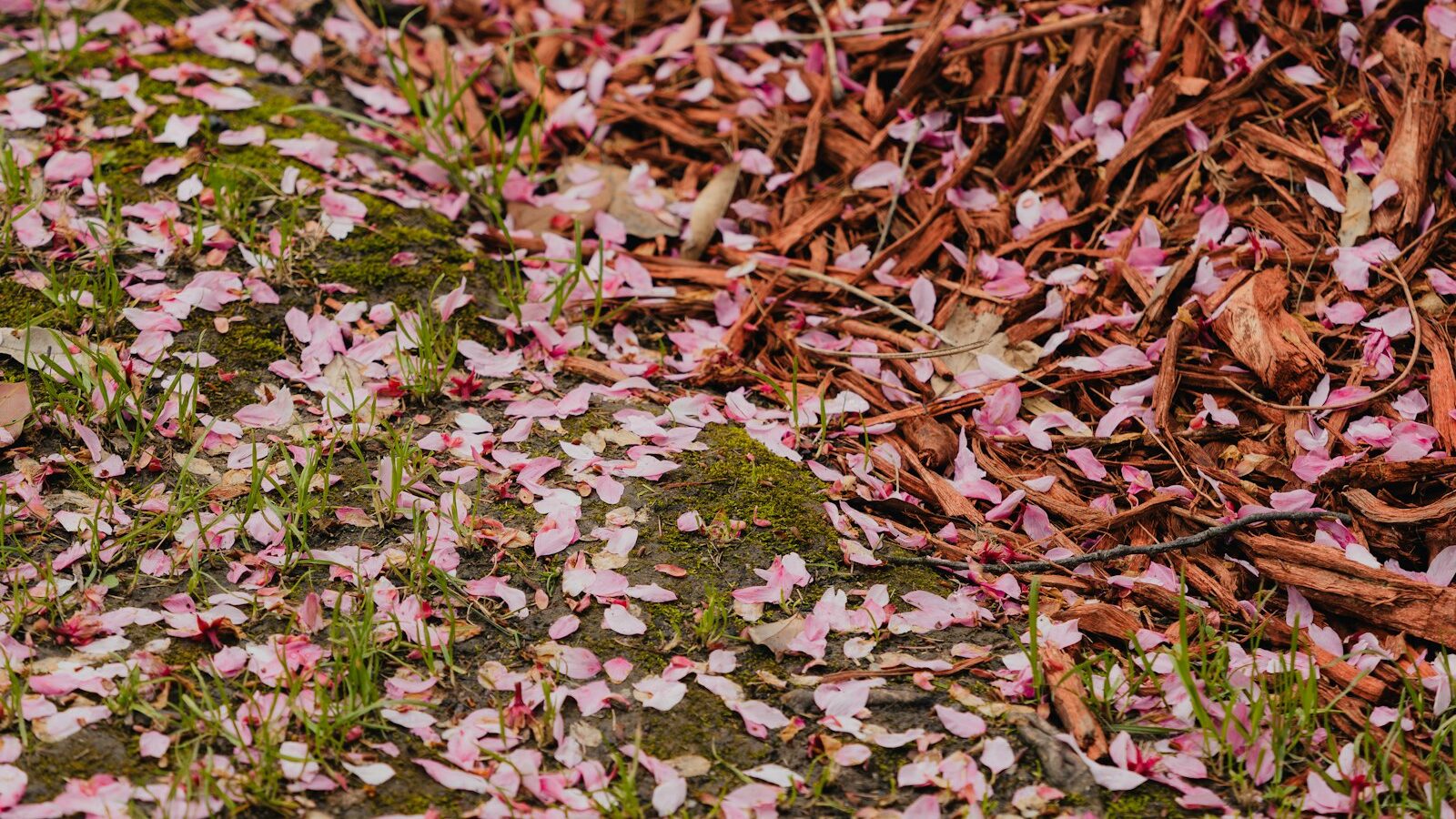
Mulch is one of the simplest, highest-return jobs in the garden: a single afternoon of spreading can mean less watering, fewer weeds, healthier soil, and beds that look finished. But not all mulches do the same job, and the wrong depth (or the dreaded “mulch volcano”) can actually harm your plants. This guide covers the main types, their real benefits, how to calculate exactly how much you need, and when to top it up.
As an Amazon Associate we earn from qualifying purchases. We may also earn a referral fee when you request quotes, at no cost to you.
Key takeaways
- Apply most organic mulches 2-3 inches deep (4 in. for coarse wood chips) and keep them a few inches clear of trunks and stems.
- Organic mulches (bark, wood chips, straw, compost, leaf mould) feed the soil as they break down; inorganic mulches (gravel, rubber) last longer but add no nutrients.
- One cubic yard covers about 100 sq ft at 3 inches deep, or 160 sq ft at 2 inches.
- “Mulch volcanoes” piled against tree trunks cause rot, girdling roots, and pests, never bury the root flare.
- Refresh organic mulch once a year (usually spring); inorganic mulch only needs occasional topping up.
Why mulch? The five real benefits
Mulch is any material laid over the soil surface, and a good layer earns its keep in several ways at once:
- Moisture retention. A 2-3 inch blanket slows evaporation dramatically, cutting watering needs by up to half in hot weather and helping plants ride out dry spells. This matters whether you’re in a Texas summer or a humid Singapore dry season.
- Weed suppression. Mulch blocks the light weed seeds need to germinate. A thick organic layer (or fabric beneath gravel) means far less hand-weeding all season.
- Temperature regulation. Mulch insulates roots, keeping soil cooler in summer heat and buffering cold snaps in winter, reducing the freeze-thaw cycles that heave plants out of the ground.
- Soil health. Organic mulches feed earthworms and microbes as they decompose, gradually building structure, drainage, and fertility, essentially slow-release composting in place.
- Looks. A fresh, even layer of mulch instantly tidies beds, defines edges, and gives the whole garden a cared-for, finished appearance.
For the bigger picture on how mulched beds fit into a comfortable outdoor space, see our outdoor living guide.
Organic mulches: bark, wood chips, straw, compost & more
Organic mulches come from once-living material and break down over time, feeding the soil. They need topping up but are the best all-round choice for plant health.
- Shredded bark / bark nuggets. Attractive, long-lasting, and slow to break down, ideal for shrub borders and tree rings. Larger nuggets stay put on flat ground; shredded bark knits together on slopes.
- Wood chips / arborist chips. Cheap (often free from tree services), great for paths and around established trees and shrubs. Keep them away from the stems of young annuals.
- Straw. Light, inexpensive, and perfect for vegetable beds and strawberries. Use seed-free straw, not hay, to avoid sprouting weeds.
- Compost. A nutrient-rich mulch that doubles as a soil feed. Spread a thin layer on beds and let worms work it in. New to it? Start with our composting for beginners guide.
- Leaf mould. Free autumn leaves, rotted down for a year, make a wonderful soil conditioner and woodland-bed mulch.
- Cocoa shell. Dark, fine-textured, and pleasant-smelling, but note it is toxic to dogs, so skip it if you have pets.
A sturdy mulch fork makes spreading bulk mulch far faster than a shovel. For bagged convenience on smaller jobs, bagged bark mulch is widely available.
Free, no-obligation quote · Connect with a local pro
Inorganic mulches: gravel, rubber & landscape fabric
Inorganic mulches don’t decompose, so they rarely need replacing, but they add nothing to the soil and can complicate planting later.
- Gravel and stone. Excellent for drainage-loving plants, succulents, rock gardens, and high-traffic areas. It absorbs heat, so avoid it around plants that dislike warm roots.
- Rubber mulch. Made from recycled tires, long-lasting and common under playground equipment. It doesn’t feed soil and opinions vary on its use near edible gardens.
- Landscape fabric. A woven barrier laid under gravel or bark to block weeds while letting water through. Useful for permanent beds and pathways, though over time fine soil settles on top and weeds can root in it.
For gravel beds and weed-prone paths, quality landscape fabric laid before the stone goes down saves hours of weeding. Inorganic mulches pair well with the kind of plant-light schemes in our low-maintenance landscaping ideas.
Mulch types compared
| Mulch type | Best for | Lasts |
|---|---|---|
| Shredded bark / nuggets | Shrub borders, tree rings, slopes | 2-4 years |
| Wood / arborist chips | Paths, around established trees | 1-3 years |
| Straw | Vegetable beds, strawberries | 1 season |
| Compost | All beds, feeding soil | Months (incorporates) |
| Leaf mould | Woodland and shade beds | 1-2 years |
| Gravel / stone | Succulents, paths, rock gardens | Indefinite |
| Rubber | Play areas, permanent beds | 10+ years |
| Landscape fabric | Weed barrier under gravel/bark | 5-10 years |
How deep to apply (and the “mulch volcano” mistake)
Depth is where most mulching goes wrong. As a rule:
- Fine mulches (compost, leaf mould): 1-2 inches. Too deep and they pack down and shed water.
- Medium mulches (shredded bark, most bagged products): 2-3 inches, the sweet spot for weed suppression and moisture.
- Coarse mulches (wood chips, nuggets): up to 4 inches, since they let more light through.
The single biggest error is the mulch volcano: piling mulch in a cone against a tree trunk. It traps moisture against the bark, invites rot, insects, and rodents, and encourages girdling roots that can slowly strangle the tree. Instead, spread mulch in a flat “doughnut,” keeping it 3-4 inches clear of the trunk so the root flare stays visible. The same rule applies to shrubs and perennials: keep mulch off the stems.
How much mulch do I need? A simple calculation
Mulch is sold by the cubic yard (bulk) or by the bag (commonly 2 cubic feet in the US). To work out your order:
- Measure the bed area in square feet (length × width).
- Decide your depth in inches and convert to feet (divide by 12).
- Multiply: area × depth (in feet) = cubic feet.
- Divide cubic feet by 27 to get cubic yards, or by the bag size to get the number of bags.
Worked example. Say you have a bed that is 20 ft × 15 ft = 300 sq ft, and you want 3 inches (0.25 ft) of mulch. That’s 300 × 0.25 = 75 cubic feet. Divide by 27 and you need about 2.8 cubic yards, round up to 3. In 2-cubic-foot bags, that’s 75 ÷ 2 = about 38 bags. A quick shortcut: one cubic yard covers roughly 100 sq ft at 3 inches, or 160 sq ft at 2 inches. Bulk delivery is usually far cheaper than bags once you pass 5-6 bags’ worth.
Free, no-obligation quote · Connect with a local pro
Best mulch by use & when to refresh
Matching the mulch to the job gives the best results:
- Vegetable beds: straw or compost, easy to work in and feeds the soil.
- Trees and shrubs: shredded bark or arborist chips in a flat doughnut.
- Drought-tolerant and gravel gardens: stone over landscape fabric.
- Play areas: rubber or thick wood chips for cushioning.
- Decorative borders: bark nuggets or cocoa shell (pet-free gardens only).
Refresh organic mulch about once a year, typically in spring after the soil has warmed, topping up to your target depth rather than burying the old layer in a thick new one. Fast-rotting mulches like straw and leaf mould may need a mid-season boost. Inorganic mulches just need the occasional rake and top-up where stone scatters or fabric shows through. Before re-mulching, pull any weeds and loosen the existing crust so water and air can reach the roots.
Frequently asked questions
Does mulch attract termites or pests?
Wood-based mulch can shelter insects if piled against your home or a trunk, but it rarely attracts termites on its own. Keep mulch a few inches away from foundations and stems, and you’ll avoid most problems.
Can I put mulch directly on weeds?
A thick layer will smother small annual weeds, but tough perennial weeds will push through. Pull or cut them first, then lay landscape fabric or a 3-inch mulch layer to keep them down.
Should I remove old mulch before adding new?
Usually no, organic mulch breaks down into the soil. Just rake it level, remove any matted or moldy patches, and top up to your target depth so you don’t end up with an over-deep, water-shedding layer.
Is dyed mulch safe?
Most colored mulches use iron-oxide or carbon-based dyes that are safe for plants and pets. Choose reputable brands, and avoid dyed mulch made from recycled treated lumber for edible gardens.
How long does a bag of mulch cover?
A standard 2-cubic-foot bag covers about 8 square feet at 3 inches deep, or 12 square feet at 2 inches. For anything larger than a few beds, bulk delivery by the cubic yard is more economical.
Get free mulching & planting quotes
Compare free, no-obligation quotes from vetted local landscaping pros.