

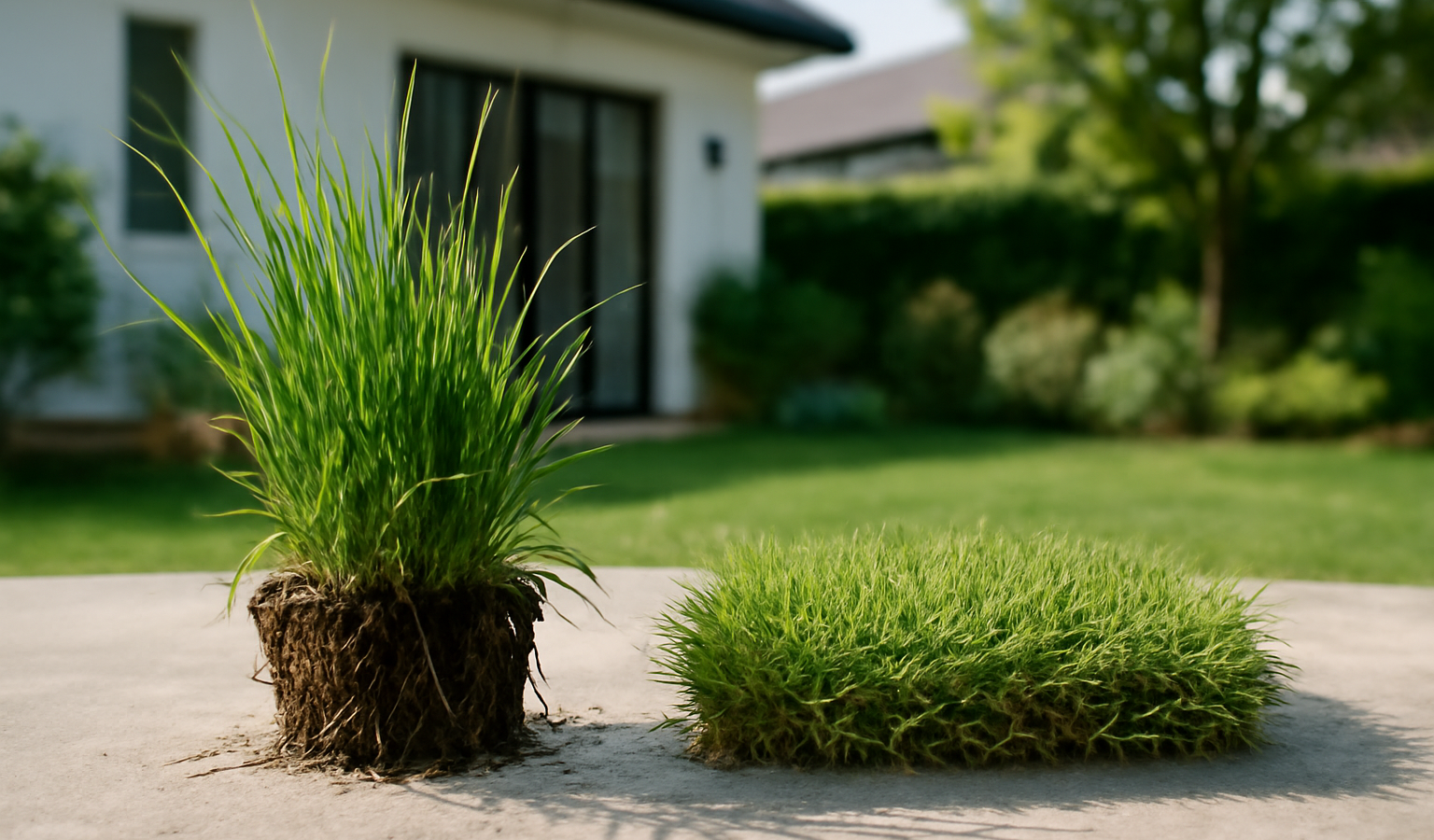
If you are reseeding a tired lawn or starting fresh on bare dirt, the choice between tall fescue and Bermuda grass shapes everything that follows: how often you mow, how much you water, when the lawn looks its best, and whether it survives summer heat or winter cold. These two grasses sit on opposite ends of the spectrum. Tall fescue is a cool-season bunch grass that stays green through frost and tolerates shade. Bermuda is a warm-season runner that thrives in brutal heat and full sun but browns out the moment nights turn cold. Picking the wrong one for your region means fighting your lawn every season instead of mowing it.
The honest answer is that geography decides most of this for you. Your USDA zone, your summer highs, and how much shade your yard throws will narrow the field fast. This guide breaks down both grasses across the factors that actually matter, then gives you a clear verdict by region and situation.
Key Takeaways
- Fescue is cool-season: it stays green in winter, tolerates shade, and needs less heat. Best for the transition zone and cooler northern climates.
- Bermuda is warm-season: it loves heat and full sun, recovers fast from traffic, but goes dormant brown below about 55 degrees F.
- Fescue needs more water in summer (1.0 to 1.25 inches a week); Bermuda is far more drought tolerant once established.
- Bermuda demands frequent low mowing (1 to 2 inches); fescue is mowed tall (3 to 4 inches) and less often.
- If you have shade, choose fescue. If you have blazing sun and heavy foot traffic, choose Bermuda.
| Factor | Tall Fescue | Bermuda Grass |
|---|---|---|
| Type | Cool-season bunch grass | Warm-season spreading grass |
| Best USDA zones | 3-7 (transition zone strong) | 7-10 (deep south, southwest) |
| Sun needs | Full sun to moderate shade | Full sun only (6+ hours) |
| Mowing height | 3 to 4 inches | 1 to 2 inches |
| Water per week (summer) | 1.0 to 1.25 inches | 0.5 to 1 inch |
| Drought tolerance | Moderate | Excellent |
| Traffic tolerance | Moderate | Excellent (fast recovery) |
| Winter color | Stays green | Browns/goes dormant |
| Establishment | Seed (fast, 7-14 days) | Seed, sod, or sprigs |
| Maintenance level | Moderate | High |
Tall Fescue: The Cool-Season Workhorse
Tall fescue (Festuca arundinacea, now often sold as turf-type tall fescue or TTTF) is the default lawn grass across the transition zone, that band running from the mid-Atlantic through Tennessee, Kentucky, Missouri, and into the lower Midwest where it is too hot for bluegrass and too cold for Bermuda to look good year-round. It is a bunch-type grass, meaning it grows in clumps from the crown rather than spreading by runners. That bunching habit is the single fact that drives most of its care.
Because fescue does not spread aggressively, thin or bare spots do not fill in on their own the way Bermuda does. You fix gaps by overseeding, typically every fall. The upside is that fescue almost never becomes invasive, rarely creeps into flower beds, and is easy to keep contained. Modern turf-type cultivars have much finer blades and denser growth than the old pasture-type “Kentucky 31,” so a well-managed fescue lawn looks lush and uniform.
Zones, sun and shade
Fescue performs best in USDA zones 3 through 7. It greens up early in spring, stays green through mild winters, and only browns during true drought or hard freeze. Its biggest practical advantage over Bermuda is shade tolerance: fescue holds up under about 4 to 5 hours of sun, making it the only realistic choice for yards shaded by mature trees or north-facing slopes. Bermuda simply thins and dies in those spots.
Water and mowing
Fescue has deep roots but a higher summer water demand than Bermuda, needing about 1.0 to 1.25 inches per week during heat to avoid going off-color. Mow it tall, 3 to 4 inches, which shades the soil, keeps roots cool, and crowds out crabgrass. Taller mowing is your best free defense against summer stress. Fertilize the bulk of the nitrogen in fall, not spring, to build roots ahead of summer.
Bermuda Grass: The Heat-Loving Spreader
Bermuda grass (Cynodon dactylon) is the dominant lawn and sports turf across the warm south and southwest. It spreads by both above-ground stolons and below-ground rhizomes, which is why it knits into a dense carpet and recovers from damage faster than almost any other lawn grass. A divot that would linger in fescue closes in Bermuda within a week or two during the growing season. That makes it the go-to for kids, dogs, and high-traffic yards in hot climates.
That same vigor is the trade-off. Bermuda is aggressive. It will creep under edging into beds and along walkways, and it requires real effort to keep contained. It also has zero shade tolerance: anything under about 6 hours of direct sun will thin out and weaken.
Zones, heat and dormancy
Bermuda is at its best in USDA zones 7 through 10. It loves heat that would stress fescue and is exceptionally drought tolerant once established, often getting by on 0.5 to 1 inch of water a week. The catch is winter color: when soil temperatures drop and nights fall below roughly 55 degrees F, Bermuda goes dormant and turns straw-brown until spring. In the deep south that dormancy is brief; in the transition zone it can mean four to five months of a brown lawn. Many homeowners overseed Bermuda with annual or perennial ryegrass in fall to keep winter color.
Mowing and maintenance
Bermuda is mowed low and often, ideally 1 to 2 inches, and it grows fast in summer heat, so expect to mow twice a week at peak. Let it get tall and you build thatch and scalp it the next time. A reel mower gives the best finish on a tightly managed Bermuda lawn, though a sharp rotary mower works fine for most homeowners. Bermuda is a heavy feeder during its growing season, wanting nitrogen roughly monthly from late spring through summer.
Traffic and recovery
Because fescue is a bunch grass with no runners, it cannot fill a worn spot on its own. A path beaten across the lawn by kids and dogs stays thin until you reseed it. That said, the deep root system of turf-type tall fescue gives individual plants decent wear resistance, so light-to-moderate traffic is fine; it is repeated, concentrated traffic that defeats it. The practical workaround is annual fall overseeding to thicken stand density and refill any worn areas before they widen.
Common problems
Fescue’s main summer enemy is heat-and-humidity disease, especially brown patch, a fungal disease that thrives when night temperatures stay above 70 degrees F and the canopy stays wet. Water early in the morning so blades dry by midday, avoid heavy nitrogen in late spring, and mow tall to reduce pressure. In the hottest summers, even a well-managed fescue lawn may thin and need fall overseeding to bounce back. Crabgrass and other weeds invade any thin spots, so maintaining density is your best defense.
Cost and Establishment Compared
Both grasses can be grown from seed, which keeps startup costs reasonable, but the seasons and timelines differ. Fescue establishes fast, germinating in about 7 to 14 days, and a fall seeding gives you a usable lawn by the following spring. Because it is sold as seed everywhere, it is inexpensive to start and easy to repair, you simply rake in more seed where needed. Bermuda can also be seeded affordably, but seeded Bermuda is slower to fill in than sod or sprigs, and the best establishment window is narrow (late spring into early summer).
On ongoing cost, the two trade places depending on what you count. Fescue generally needs less mowing and less fertilizer over the year, but uses more summer water. Bermuda needs frequent mowing and monthly summer feeding but far less irrigation once established. In a hot, dry climate, Bermuda’s drought tolerance can mean real savings on the water bill; in a cooler climate, fescue’s lighter mowing and feeding schedule wins. Factor in that a brown winter Bermuda lawn either gets accepted or gets the added cost and labor of fall ryegrass overseeding to stay green.
Which Should You Choose?
Match the grass to your climate first, then to your yard and your tolerance for maintenance.
Choose fescue if…
- You live in the transition zone or a cooler northern climate (zones 3-7).
- Your yard has shade from trees or buildings.
- You want a green lawn through winter and dislike a brown dormant lawn.
- You prefer mowing less often and want a grass that will not invade your beds.
Choose Bermuda if…
- You live in the hot south or southwest (zones 7-10) with long, intense summers.
- Your lawn gets full sun all day with no meaningful shade.
- You have heavy foot traffic from kids, pets, or play and need fast recovery.
- You want strong drought tolerance and do not mind frequent low mowing.
In the transition zone, where both can technically survive, the deciding factor is usually shade and your feelings about winter color. Heavily shaded, want green in January? Fescue. Full sun, want a bulletproof summer lawn and will tolerate brown winters? Bermuda. For more on the broader cool-versus-warm question, see our guide on cool-season vs warm-season grass, and if you lean Bermuda, our walkthrough on overseeding Bermuda with ryegrass covers keeping winter color. You can also browse more lawn and landscaping guides on our Outdoor Living hub.
Frequently Asked Questions
Can fescue and Bermuda grow together in the same lawn?
They can coexist temporarily but compete poorly long term. In the transition zone, Bermuda often invades fescue lawns in summer and goes dormant in winter, leaving a patchy mix. Most lawn pros recommend committing to one or controlling the invader.
Which grass is cheaper to maintain?
Fescue is usually cheaper over the year because it needs less frequent mowing and less fertilizer, though it uses more summer water. Bermuda needs more mowing and feeding but less irrigation once established.
Does Bermuda grass really need full sun?
Yes. Bermuda needs at least 6 hours of direct sun to stay dense. In shade it thins, weakens, and becomes susceptible to weeds and disease. Shade is the single most common reason a Bermuda lawn fails.
How do I keep Bermuda from invading my flower beds?
Install a deep physical edging (4 to 6 inches), maintain a clean mulch border, and spot-treat any runners that cross over. Bermuda spreads by rhizomes, so a shallow edge alone will not stop it.
When should I plant each grass from seed?
Sow fescue in early fall (or early spring) when soil is 50 to 65 degrees F. Sow Bermuda in late spring through early summer when soil is consistently above 65 to 70 degrees F. Each germinates best in its preferred season.