

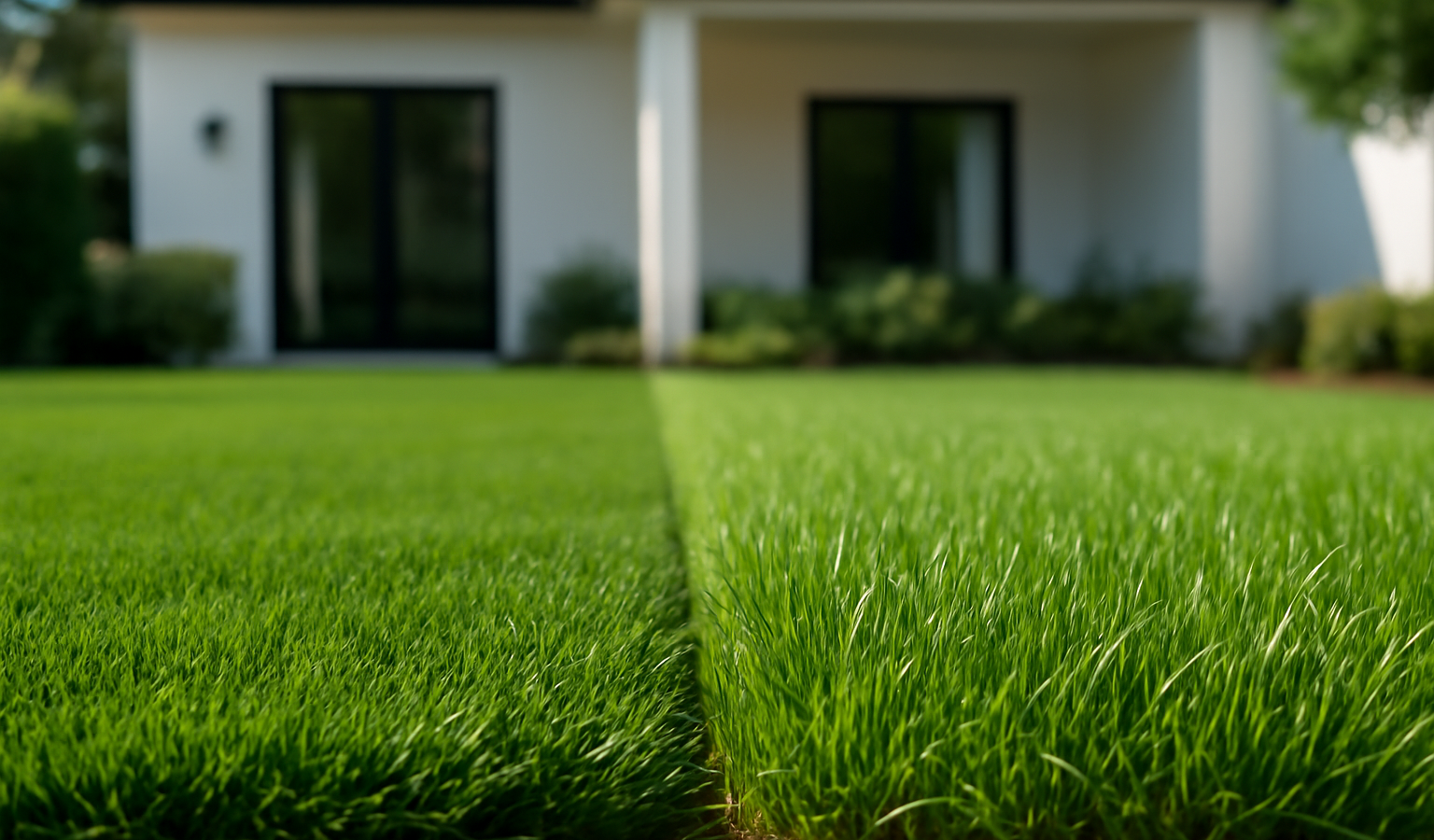
Zoysia and fescue sit on opposite sides of the most important line in lawn care: warm-season versus cool-season grass. Zoysia (Zoysia spp.) is a warm-season grass that thrives in summer heat, forms a dense, cushy carpet, and tolerates drought and traffic well — but it turns straw-brown for months of winter dormancy. Tall fescue (Festuca arundinacea) is a cool-season grass that stays green through cold weather, handles shade better than most, and establishes fast from seed — but it can struggle in extreme summer heat and humidity. Your climate, how much shade you have, and whether you can tolerate winter browning will decide which one is right for your yard. If you are in the transition zone where both can grow, the choice gets more interesting.
Key Takeaways
- Zoysia — warm-season, dense and traffic-tolerant, drought-hardy; goes dormant brown in winter and is slow to establish.
- Tall fescue — cool-season, stays green in cold weather, best shade tolerance, fast from seed; weaker in extreme summer heat.
- Zoysia suits the South and warm transition zone (~zones 6–10); fescue suits cooler and transition climates (~zones 4–7).
- Fescue is established cheaply from seed; zoysia is usually sod or plugs and slow to fill in.
- Choose by climate and shade first, then by your tolerance for winter dormancy and mowing.
Zoysia at a Glance
Zoysia is a warm-season grass that builds a thick, dense turf so cushy underfoot that it is sometimes compared to a carpet. It spreads by stolons and rhizomes to form a tight sod that chokes out most weeds once established, tolerates heavy foot traffic, and handles heat and drought with ease. It is happiest in full sun but tolerates light shade better than Bermuda, making it a popular choice for sunny southern lawns where homeowners want a manicured look. Mowing height typically runs 1 to 2.5 inches, and because it grows densely but not always fast, mowing frequency can be moderate.
The downsides are real. Zoysia is slow to establish — plugs or sod can take a season or two to knit into full coverage, and seeded zoysia is even slower and less reliable. It goes fully dormant and turns straw-brown after the first hard frost, staying that way through winter and greening up late in spring, which is a deal-breaker for homeowners who want year-round green. It can also build thatch over time and needs occasional dethatching. It performs across roughly USDA zones 6 through 10.
Tall Fescue at a Glance
Tall fescue is a cool-season bunch-type grass that stays green through cold weather and the shoulder seasons, browning out only in severe summer heat or deep cold. Its standout trait is shade tolerance — among common lawn grasses, fescue handles partial shade better than most, which makes it a frequent pick for tree-dotted yards. It has deep roots that give it solid drought resilience for a cool-season grass, and modern turf-type tall fescues are fine-bladed and attractive. Best of all for budget and speed, it establishes quickly and cheaply from seed, and because it is a bunch grass (it does not spread aggressively by runners), it stays where you plant it and rarely invades beds.
Its weaknesses are the flip side of zoysia’s. In the hot, humid lower South, fescue can thin out and suffer from summer heat stress and disease, often needing overseeding each fall to stay thick because it does not self-repair by spreading. It needs consistent moisture during establishment and reasonable feeding to look its best. It performs across roughly USDA zones 4 through 7, with the transition zone being its southern limit.
Side-by-Side Comparison
| Factor | Zoysia | Tall Fescue |
|---|---|---|
| Season type | Warm-season | Cool-season |
| Winter color | Dormant brown | Stays green |
| Shade tolerance | Moderate (light shade) | Good — best of common grasses |
| Heat tolerance | Excellent | Moderate; struggles in extreme heat |
| Traffic tolerance | High, but slow to repair | Moderate; needs overseeding to recover |
| Establishment | Slow — sod/plugs | Fast — cheap from seed |
| Spreads? | Yes — stolons & rhizomes | No — bunch grass, stays put |
| Zone range | ~Zones 6–10 | ~Zones 4–7 |
| Maintenance | Moderate; can build thatch | Moderate; fall overseeding common |
Climate and the Transition Zone
For most homeowners, climate decides this. In the cool North, fescue is the obvious pick — zoysia would spend half the year brown and barely grow. In the hot South, zoysia thrives where fescue would cook in summer. The real decision lives in the transition zone — a band across the middle of the country (think the Mid-Atlantic, Tennessee, Kentucky, parts of the Midwest) where neither warm- nor cool-season grasses are perfectly at home. There, the choice hinges on your priorities: zoysia for a tough, heat-proof, drought-hardy lawn you accept will brown in winter, or fescue for year-round green that you commit to overseeding and babying through summer.
Shade tips the scale toward fescue. If your yard has significant tree cover, fescue’s superior shade tolerance usually wins regardless of zone. Heavy summer use and a desire for low summer water tip toward zoysia.
Establishment, Cost, and Upkeep
Fescue is the cheaper, faster lawn to start: a bag of seed and a few weeks of moisture gets you a green lawn, and it is forgiving for DIYers. Zoysia is a bigger investment — sod or plugs cost more upfront and demand patience while they spread, sometimes a full one to two seasons for complete coverage. Once established, zoysia’s density crowds out weeds and reduces the need for herbicides, while fescue’s bunch habit leaves more room for weeds and bare spots that you fill by overseeding each fall.
Both lawns benefit from sound maintenance routines. Zoysia’s thatch tendency means periodic dethatching matters — see dethatching vs aerating to tell which your lawn needs. Fescue’s reliance on fall reseeding makes our overseeding vs reseeding guide especially useful. And if you are still weighing warm-season options, compare buffalo grass vs Bermuda grass for the lower-water and high-traffic ends of that spectrum.
Water and Drought Resilience
Both grasses are reasonably drought-resilient but in different ways. Zoysia, being warm-season, is built for summer heat and goes semi-dormant and off-color under drought to conserve itself, greening back up when rain returns; established zoysia gets by on relatively little supplemental water once rooted. Fescue’s drought tool is its deep root system — turf-type tall fescues root deeply enough to pull moisture from lower in the soil profile, which helps them ride out dry spells better than shallow-rooted cool-season grasses like Kentucky bluegrass. But in a brutal, prolonged summer heat-and-drought combination, fescue is more likely to thin and need recovery than zoysia.
In practice, zoysia rewards a “deep and infrequent” watering approach during establishment and then tolerates neglect; fescue does best with steady moisture, especially through its first season and during summer stress. Neither should be watered lightly and often — that encourages shallow roots and disease in both.
Mowing and Year-Round Look
Zoysia is typically mowed at 1 to 2.5 inches and, because it grows densely rather than tall and fast, often needs mowing less frequently than fescue at the height of the season — though its dense thatch-forming habit means you should not let it get shaggy and then scalp it. Fescue is mowed taller, around 3 to 4 inches, which helps it shade its own roots and outcompete weeds; cutting fescue too short is a common cause of summer decline. The taller mowing height is part of why fescue looks lush even in cool weather.
The year-round look is the emotional core of the decision for many homeowners. Zoysia gives you a beautiful dense lawn from late spring through early fall and then a solid brown carpet all winter — some people overseed it with annual ryegrass for winter color, others simply accept the dormancy. Fescue stays green nearly year-round in suitable climates, which is its single biggest selling point for anyone who cannot stand a brown winter lawn. Weigh that honestly: a few months of brown is a real trade for zoysia’s summer toughness and low water use.
The Verdict: Which Lawn Is Right for You
Choose zoysia if…
You are in a warm climate or the warmer transition zone, you want a dense, weed-resistant, drought- and heat-tough lawn, your yard gets mostly full sun, and you can accept several months of winter dormancy and a slow establishment period. It is ideal for hot southern lawns where summer survival and low water use matter more than staying green in January.
Choose tall fescue if…
You are in a cooler climate or the cooler transition zone, you want year-round green, your yard has shade from trees, or you want a fast, affordable lawn from seed. It is the better choice for shaded yards and anyone unwilling to look at a brown lawn all winter — just plan on fall overseeding to keep it thick.
Quick decision
Hot climate, full sun, fine with winter brown → zoysia. Cool climate, shade, want green year-round and cheap from seed → fescue. In between, let shade and your tolerance for winter dormancy break the tie.
Frequently Asked Questions
Does zoysia stay green in winter?
No. Zoysia is a warm-season grass that goes fully dormant and turns straw-brown after the first hard frost, staying brown until late spring. Fescue, a cool-season grass, stays green through cold weather.
Which grass is better for a shady yard?
Tall fescue. It has the best shade tolerance of the common lawn grasses, making it the better pick for tree-dotted yards. Zoysia tolerates only light shade and thins in heavier shade.
Can I grow both zoysia and fescue together?
It’s generally not recommended. They have opposite seasons and growth habits — zoysia spreads and crowds, fescue clumps — so they look mismatched and one tends to dominate. Pick the one that fits your climate.
Which is cheaper and faster to establish?
Fescue. It grows quickly and cheaply from seed in a few weeks. Zoysia is usually installed as sod or plugs, costs more upfront, and can take one to two seasons to fully fill in.
Which one handles summer heat better?
Zoysia. As a warm-season grass it thrives in summer heat and drought. Fescue can thin and suffer heat and disease stress in hot, humid summers, often needing fall overseeding to recover.