

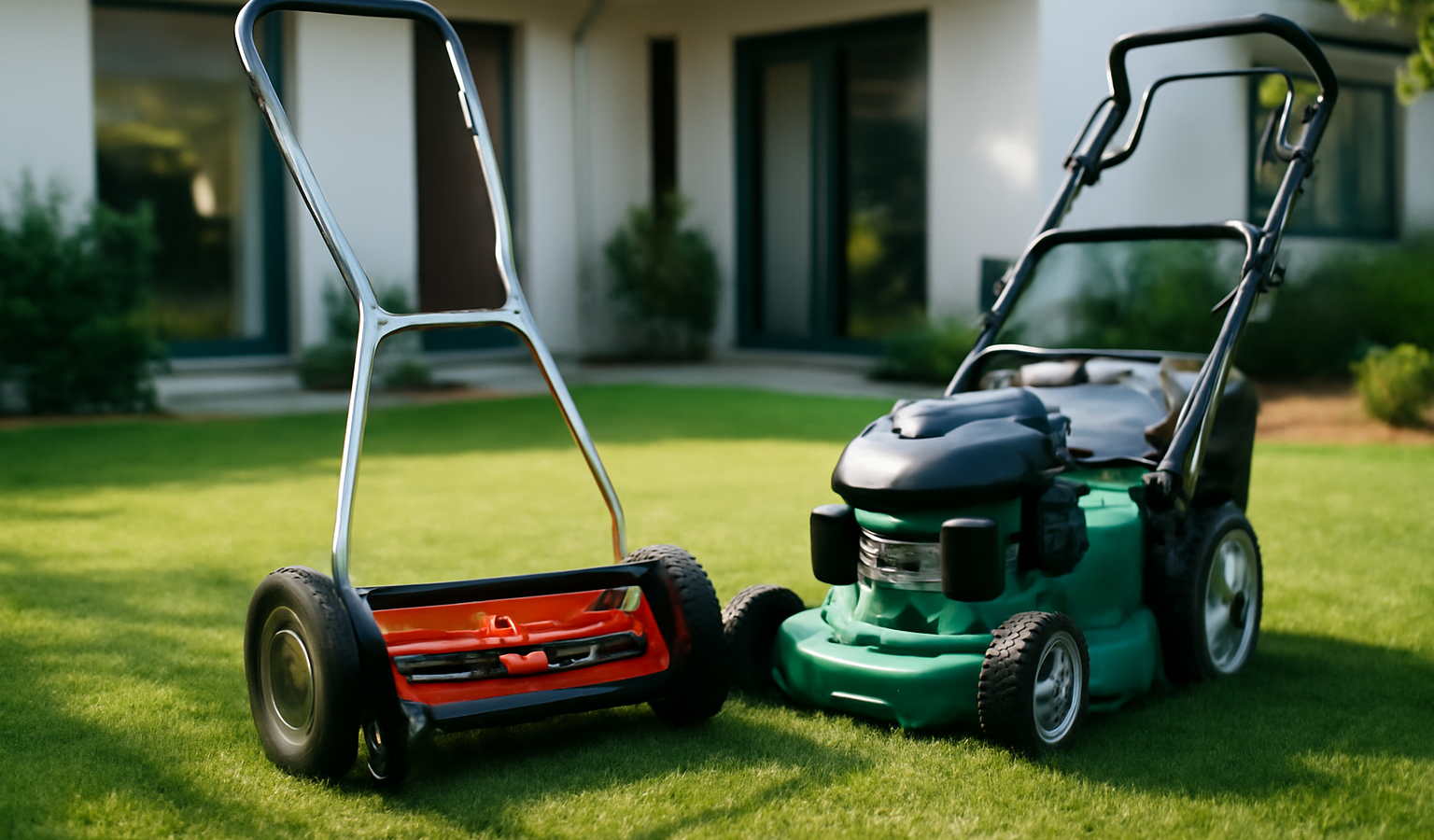
Most homeowners never give the cutting mechanism of their mower a second thought — they buy whatever rotary model is on sale and push it around the yard. But there is a real, centuries-old choice hiding in that decision, and it shows up clearly in the quality of your lawn. A reel mower slices grass with a scissor action between a spinning cylinder of curved blades and a fixed bottom blade, producing the cleanest cut in turfgrass. A rotary mower whirls a single horizontal blade at high speed, tearing through grass with brute force and handling almost any condition you throw at it. The reel gives a superior, healthier cut and runs quietly with no engine; the rotary is more powerful, more versatile, and far less fussy about tall grass, weeds, and uneven ground. Which one belongs in your shed depends on the grass you grow, the size and terrain of your lawn, how high you cut, and how much you care about a manicured finish versus simply getting the job done. This guide compares reel and rotary mowers on cut quality, grass compatibility, effort, maintenance, and cost so you can match the machine to your yard.
Key Takeaways
- Reel mowers cut with a clean scissor action that is healthier for grass and gives the finest finish — ideal for low-cut, fine-bladed lawns mowed often.
- Rotary mowers use a high-speed blade that tears the grass; they are far more powerful and versatile, handling tall grass, weeds, leaves, and rough terrain.
- Reel mowers struggle above about 1.5–2 inches of cut height and with tall, weedy, or stalky growth; rotary mowers cut high and through almost anything.
- Manual reel mowers are quiet, emission-free, and cheap to run but demand frequent mowing; rotary mowers (gas or battery) are quicker and lower-effort on big or rough lawns.
- Choose reel for small, level, frequently mowed fine-turf lawns; choose rotary for larger, taller, mixed, or uneven lawns and general versatility.
| Factor | Reel Mower | Rotary Mower |
|---|---|---|
| Cutting action | Scissor cut between cylinder and bed knife | High-speed single blade tears/impacts grass |
| Cut quality | Cleanest, healthiest cut | Good, but tears grass tips |
| Best cut height | Low: ~0.5–1.5 in | Higher: ~1.5–4 in |
| Grass types | Fine turf (Bermuda, zoysia, bentgrass) | Almost any, including coarse and tall |
| Tall / weedy growth | Jams and skips | Powers through |
| Effort & speed | Manual = more effort; needs frequent mowing | Powered; faster, lower effort |
| Noise & emissions | Near-silent, zero emissions (manual) | Loud gas, or quieter battery |
| Maintenance & cost | Cheap to run; needs periodic sharpening/adjustment | Higher running cost; blade, oil, fuel/battery |
How a Reel Mower Cuts — and Where It Shines
A reel mower works like a pair of scissors. A horizontal cylinder of several curved blades spins as the wheels turn and sweeps each grass blade against a fixed bottom blade, called the bed knife, shearing it cleanly. That clean shear is the reel mower’s defining advantage. Because the grass is sliced rather than torn, the cut tips are smooth and seal quickly, losing less moisture and presenting less wounded surface to disease. The result is a healthier lawn and the tight, even, almost striped finish you see on golf greens and the best-kept home lawns — that look comes from reel mowing.
Reel mowers excel on fine-bladed, dense turfgrasses cut short. Bermuda, zoysia, creeping bentgrass, and similar lawns maintained at half an inch to about an inch and a half are exactly what reel mowers were designed for, and they reward frequent mowing with a manicured surface no rotary can quite match. Manual push-reel models add real practical perks: they are nearly silent, produce zero emissions, need no fuel or charging, and are light and simple. For a small, level lawn of the right grass, mowed regularly, a push reel is a genuinely pleasant and superior tool.
The limitations are just as clear. Reel mowers do not handle height — push the cut above roughly an inch and a half to two inches and most struggle, so they are poorly suited to tall-growing cool-season lawns that prefer to be mowed at three inches. They jam on tall, overgrown, wet, or stalky grass and skip right over flexible weeds that lie down and pop back up, since there is no impact force to sever them. They also demand discipline: let the lawn get away from you and a reel mower simply cannot reclaim it — you will need a rotary to knock it down first. And the cylinder and bed knife must stay sharp and properly adjusted, or the scissor action turns into bending and bruising.
How a Rotary Mower Cuts — and Where It Shines
A rotary mower spins a single straight blade on a vertical axis at high speed — fast enough that the blade’s impact, not a slicing edge, is what severs the grass. That brute-force approach is the rotary’s great strength: it does not care much about grass height, density, weeds, or condition. It cuts tall growth, mows through dandelions and clover, mulches fallen leaves, and tackles rough, uneven, or sloped ground that would defeat a reel. Driven by a gas engine or, increasingly, a battery, it does the work for you instead of relying on your push, which makes large lawns realistic to mow in reasonable time.
Rotary mowers also cut high, which matters more than many people realize. Most cool-season lawns — tall fescue, Kentucky bluegrass, ryegrass — are healthiest mowed at around three inches, well above what a reel can manage, and the rotary handles that range easily. Mowing high shades the soil, suppresses weeds, and encourages deeper roots, so the rotary’s height range is a real agronomic advantage for those grasses. Modern battery rotary mowers add much of the reel’s quietness and zero local emissions while keeping the power and versatility, narrowing the old gap considerably.
The trade-off is cut quality and upkeep. Because a rotary tears or impacts the grass rather than slicing it, the cut tips are rougher and more ragged, especially if the blade is dull — and a torn tip browns and loses moisture more than a clean-sheared one, which is why a freshly mowed rotary lawn can look slightly tan at the tips. Keeping the blade sharp and balanced largely fixes this, but it is ongoing maintenance, alongside oil changes, fuel or battery management, and more noise from gas models. The rotary asks more in running cost and upkeep in exchange for its power and convenience.
Matching the Mower to Your Lawn
By grass type and cut height
This is the deciding factor for most people. If you grow a fine, warm-season turf like Bermuda or zoysia and keep it short — under about an inch and a half — a reel mower will give you a noticeably better lawn. If you grow a cool-season lawn that wants to be mowed tall, around three inches, a rotary is the right tool because a reel cannot cut that high. The grass you have, and the height it is healthiest at, often makes the choice for you before any other factor.
By lawn size and terrain
Manual reel mowers shine on small, level lawns — say, up to a few thousand square feet — where pushing the mower is reasonable and the ground is even. On large lawns, slopes, or rough, bumpy terrain, a powered rotary is far more practical; pushing a reel across a big or uneven yard quickly becomes a chore, and reels scalp badly on uneven ground. Be honest about your lawn’s size and surface before committing to manual mowing.
By how often you can mow
Reel mowers demand frequent, regular mowing because they cannot recover an overgrown lawn — you must cut little and often, never removing more than the top third of the blade at a time. If your schedule means the lawn sometimes gets long between cuts, a rotary’s ability to power through tall growth makes it far more forgiving. Choose the reel only if you will genuinely keep up with it.
By noise, emissions, and budget
If quiet, emission-free, low-cost mowing appeals and your lawn suits it, a manual reel is hard to beat — no fuel, no fumes, minimal noise, and very little to maintain beyond sharpening. If you want power without the gas, a battery rotary delivers most of that quiet and clean operation while handling tall grass and big lawns. Gas rotary mowers remain the most powerful and cheapest to buy outright, at the cost of noise, fumes, and more maintenance. Whatever you choose, lawn health still comes down to the basics covered in our broader outdoor living and lawn care guidance — mowing height, frequency, and a sharp blade matter more than the mower’s brand.
The Verdict
Pick a reel mower if you have a small, level lawn of fine, warm-season grass that you keep short and mow often, and you value the cleanest, healthiest cut along with quiet, emission-free operation. For the right lawn and the right gardener, nothing beats the manicured finish and pleasant simplicity of a push reel. Pick a rotary mower if you have a larger, taller, mixed, sloped, or uneven lawn, if you mow cool-season grass at three inches, or if you simply want a versatile, forgiving machine that powers through whatever the lawn throws at it. For the majority of homeowners with typical cool-season lawns and ordinary schedules, the rotary — increasingly a battery model — is the practical default. The reel is the specialist’s tool that rewards a specific lawn with a finish the rotary cannot match. Match the cutting action to your grass, your lawn’s size and terrain, and your willingness to mow often, and either machine will serve you well for years.
Frequently Asked Questions
Does a reel mower really cut grass better than a rotary?
For fine turfgrass cut short, yes. A reel mower slices each blade cleanly with a scissor action, leaving smooth tips that seal quickly, lose less moisture, and resist disease — a healthier, more manicured finish. A rotary tears the grass with a high-speed blade, leaving rougher tips. But the reel’s advantage only applies to suitable grasses cut low and mowed frequently.
What grass types work best with a reel mower?
Fine-bladed, dense turfgrasses kept short suit reel mowers best — Bermuda, zoysia, and bentgrass mowed at roughly half an inch to an inch and a half. Tall-growing cool-season grasses like tall fescue and Kentucky bluegrass, which are healthiest at about three inches, are too high for a reel and should be mowed with a rotary.
Can a reel mower cut tall grass?
No, and this is its biggest limitation. Reel mowers jam and skip on tall, overgrown, wet, or stalky grass and cannot reclaim a lawn that has gotten away from you. They require frequent mowing, never removing more than the top third of the blade. If your lawn often gets long between cuts, a rotary mower is far more forgiving.
Are battery rotary mowers as good as gas?
For most home lawns, yes. Modern battery rotary mowers deliver enough power for typical conditions while running much quieter and producing no local emissions, narrowing the gap with gas. Gas mowers still hold an edge in raw power and runtime for very large or heavy-duty lawns, but for an average yard a quality battery model is an excellent, lower-maintenance choice.
How much maintenance does each mower need?
A manual reel mower needs little beyond keeping the cylinder and bed knife sharp and properly adjusted so the scissor action stays clean. A rotary mower needs a regularly sharpened, balanced blade plus engine upkeep — oil and fuel for gas models, or battery care for electric. Either way, a sharp cutting edge is the single most important maintenance task for lawn health.