

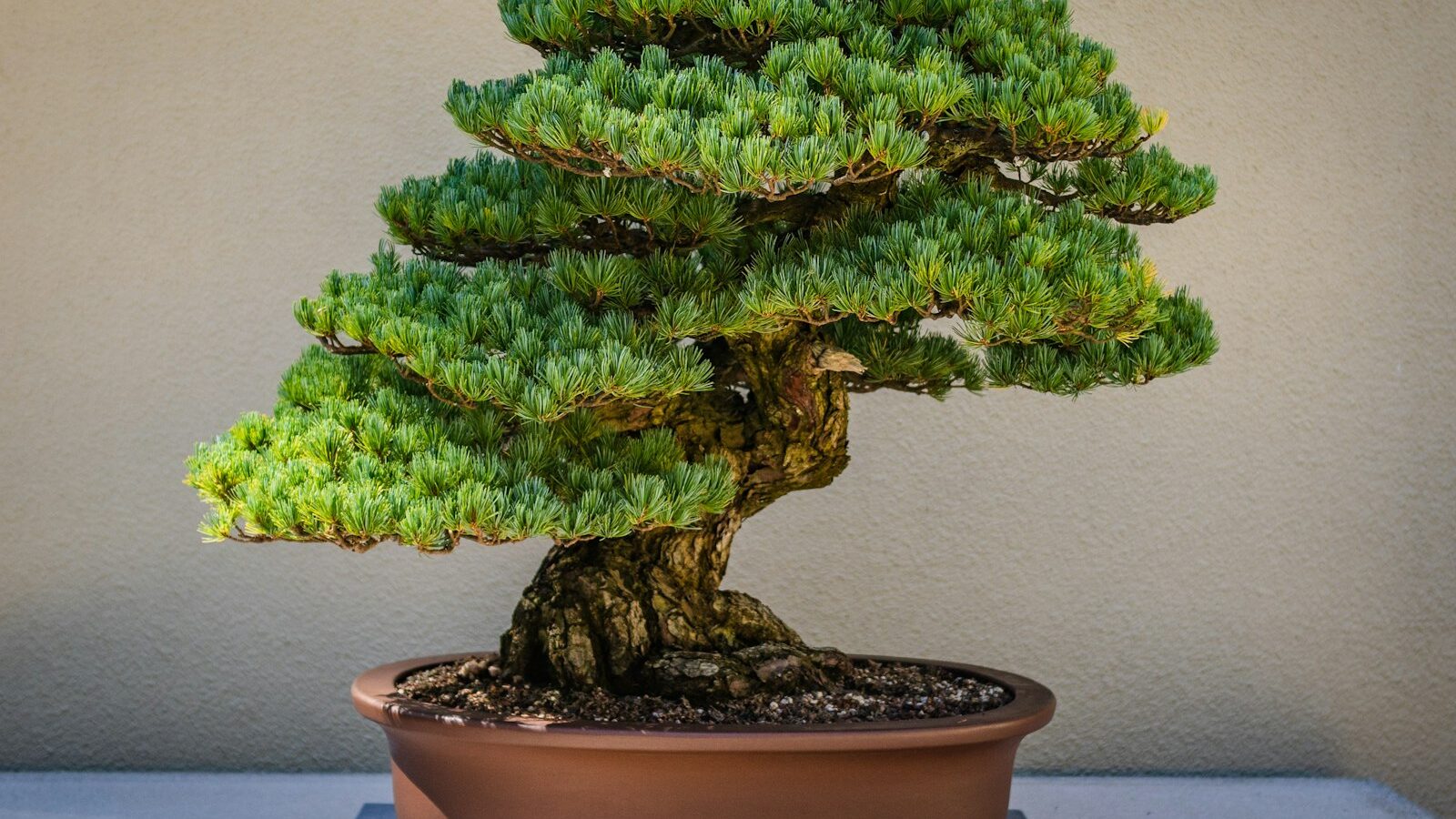
Bonsai is the living art of growing full, ordinary trees in miniature, shaping them over years into something that looks like a weathered, ancient tree in nature. It is far more approachable than it looks: with the right beginner species and a simple watering habit, almost anyone can keep one alive and thriving. This guide walks you through what bonsai actually is, the easiest trees to start with, and the day-to-day care that keeps them healthy.
Key takeaways
- Start with a hardy species (ficus, Chinese elm, juniper)
- Most bonsai are outdoor trees, not houseplants
- Watering by routine kills them — check the soil
- Use bonsai soil & shallow pots with drainage
- Prune & pinch to build shape over time
As an Amazon Associate we earn from qualifying purchases.
What bonsai actually is
“Bonsai” simply means “planted in a tray.” It is not a special dwarf species of tree — it is a normal tree, kept small through pruning, root reduction, and growing in a shallow container. The art is centuries old, refined in China (where it is called penjing) and Japan, and the goal is to recreate the look of a mature tree as it might appear in the wild: a thick trunk, a balanced branch structure, and a sense of age.
Because a bonsai is a real tree, it has the same needs as its full-sized cousins: light, water, fresh air, seasonal changes, and a dormant period for most species. Understanding that one fact — you are caring for a tree, not a decoration — is the single biggest shift for a beginner. If you enjoy the slow, attentive rhythm of bonsai, you may also enjoy our broader plant & flower care guide.
Best beginner species
Your first tree matters more than any tool or technique. Some species are forgiving of mistakes and bounce back quickly; others punish a single missed watering. Start with one of these.
Ficus (the easiest indoor bonsai)
Ficus (often Ficus retusa or Ficus ginseng) is the most beginner-friendly tree and the rare bonsai that genuinely thrives indoors. It tolerates lower humidity, recovers fast from over- or under-watering, and grows quickly so you can practice pruning. If you live in an apartment with no outdoor space, a ficus is your best bet.
Chinese elm
Chinese elm is hardy, fast-growing, and very tolerant of beginner pruning. It can be grown indoors in bright light or outdoors in mild climates, making it one of the most flexible starter trees. Its small leaves and fine branching look “bonsai-like” with little effort.
Juniper
Juniper is the classic “bonsai tree” look, with needle or scale foliage and gorgeous deadwood potential. Crucially, junipers are outdoor trees — they need full sun and a cold winter dormancy. They die slowly and silently indoors, so do not buy one unless you can keep it outside. They are very forgiving outdoors and take to wiring well.
Jade
Jade (Portulacaria afra or Crassula) is a succulent grown as bonsai. It stores water in its leaves, so it forgives the under-waterer and thrives on a sunny windowsill. If you tend to forget your plants, jade is a great match. You can find a beginner bonsai tree in any of these species online or at a local nursery.
Indoor vs outdoor: most bonsai are outdoor trees
This is the most common — and most fatal — beginner misunderstanding. The vast majority of bonsai species are temperate trees that need to be outside year-round, including through a cold winter dormancy. Junipers, pines, maples, elms, and most other “real bonsai” belong outdoors.
The short indoor list
- Truly indoor-friendly: ficus, jade, and (in bright light) Chinese elm
- Outdoor trees: juniper, pine, maple, elm, azalea, most flowering and conifer species
- If kept indoors: give the brightest window you have, ideally south-facing, plus a grow light in winter
If you want a tree on your desk, choose a species that actually wants to be there. Don’t fight biology — buying an outdoor juniper for a windowless office is the fastest way to a dead tree.
Watering: the number one killer
More bonsai die from watering mistakes than everything else combined — and both too much and too little are deadly. The fix is simple: never water on a fixed schedule. Water based on what the soil tells you.
How to water correctly
- Check first. Push a finger or chopstick about half an inch into the soil. Water only when the surface is starting to dry — not bone dry, not soggy.
- Water thoroughly. When you do water, soak the whole root mass until water runs freely from the drainage holes, then water again a moment later.
- Adjust to conditions. A tree in summer sun may need water daily; the same tree in cool weather may go several days. The soil, not the calendar, decides.
- Watch for warning signs. Yellowing, dropping leaves and constantly wet soil mean overwatering (and possible root rot); crisp, shriveled leaves mean it dried out.
Because bonsai live in shallow pots with fast-draining soil, they dry out faster than houseplants. Get in the habit of checking daily, even if you don’t water daily.
Light, soil, and the right pot
Light
Trees make their food from light, and most bonsai want a lot of it. Outdoor species need full sun for several hours a day. Indoor ficus and jade want your brightest window; supplement with an LED grow light through dark winter months. Weak, leggy growth with long gaps between leaves is the classic sign of too little light.
Soil
Regular potting soil holds too much water and suffocates bonsai roots. Use a gritty, fast-draining bonsai soil mix — typically a blend of akadama, pumice, and lava rock — that drains quickly while still holding some moisture. Good soil makes the watering balance far easier to get right.
The pot
Bonsai are grown in shallow containers that must have drainage holes. The shallow pot restricts root growth, which helps keep the tree miniature, but it also means less soil to buffer mistakes. Always choose a pot with good drainage, and consider a mesh screen over the holes to keep soil in and pests out.
Feeding, pruning, wiring, and repotting
Feeding
The small amount of soil in a bonsai pot holds few nutrients, so regular feeding is essential during the growing season (spring through early autumn). Use a balanced fertilizer at half the recommended strength, applied more frequently, and ease off in winter when most trees are dormant.
Pruning and pinching
Pruning is how you build shape over time. Structural pruning removes whole branches to set the basic form. Pinching — removing the soft new growth tips with your fingers — encourages the tree to branch out and grow denser, finer foliage. Prune with intent: remove branches that cross, grow straight up or down, or break the silhouette you want. A simple bonsai tool kit with concave cutters makes clean cuts that heal well.
Wiring and shaping
Wiring lets you bend branches and trunks into position. Wrap anodized aluminum or copper wire around a branch at roughly a 45-degree angle, then gently bend it into place. Leave the wire on for a few months while the branch sets, but check often — branches thicken and the wire can bite into the bark, leaving scars. Remove it before that happens. Start light: practice on a vigorous, expendable branch before reshaping your whole tree.
Repotting
Every one to three years, a bonsai needs repotting to refresh the soil and trim the roots so it doesn’t become pot-bound. Do it in early spring, just before the growing season. Gently comb out the roots, trim back the longest and thickest ones, and replant in fresh bonsai soil. The principles overlap with general houseplant care — see our guide on how to repot a houseplant for the basic mechanics.
Common beginner mistakes
- Keeping an outdoor tree indoors. The classic mall-kiosk juniper slowly declines inside. Match the species to the location.
- Watering on a schedule. Check the soil instead; both drought and waterlogging are fatal.
- Using regular potting soil. It stays too wet and rots roots. Use gritty bonsai soil.
- Too little light. Most bonsai need far more light than a typical room provides.
- Over-pruning a young or weak tree. Let it gain strength before heavy styling, and never remove most of the foliage at once.
- Skipping winter dormancy. Temperate species need a cold rest; don’t bring them into a warm house “to protect them.”
Avoid these six and you are ahead of most beginners. Bonsai rewards patience — small, consistent care beats big dramatic interventions every time. If you enjoy nurturing tricky, long-lived plants, you might also like our guide to orchid care.
Frequently asked questions
Is bonsai hard for beginners?
Not if you start with a forgiving species like ficus, Chinese elm, or jade, and water based on the soil rather than a schedule. The basics — light, water, and a fast-draining soil — are simple to learn. The artistry develops over years, but keeping a tree healthy is very achievable for a beginner.
Can I grow a bonsai indoors?
Some species, yes. Ficus and jade are true indoor bonsai, and Chinese elm can manage indoors in bright light. But most bonsai — junipers, pines, maples, and other temperate trees — are outdoor trees that need full sun and a cold winter dormancy, and they will slowly die indoors.
How often should I water a bonsai?
There is no fixed answer, and watering on a schedule is the leading cause of bonsai death. Check the soil daily by pushing a finger about half an inch in, and water thoroughly only when the surface starts to dry. In hot weather this may be daily; in cool weather, every few days.
What soil do bonsai need?
Bonsai need a gritty, fast-draining mix — commonly akadama, pumice, and lava rock — rather than standard potting soil, which holds too much water and rots the roots. Good bonsai soil drains quickly while retaining just enough moisture, making the watering balance much easier to manage.
How long does it take to grow a bonsai?
You can buy a pre-trained tree and start styling immediately, but growing one from a young plant into a refined bonsai takes years. Trunk thickening, branch development, and ramification happen gradually. Bonsai is a long-term, patient hobby — that slow progression is part of its appeal.