

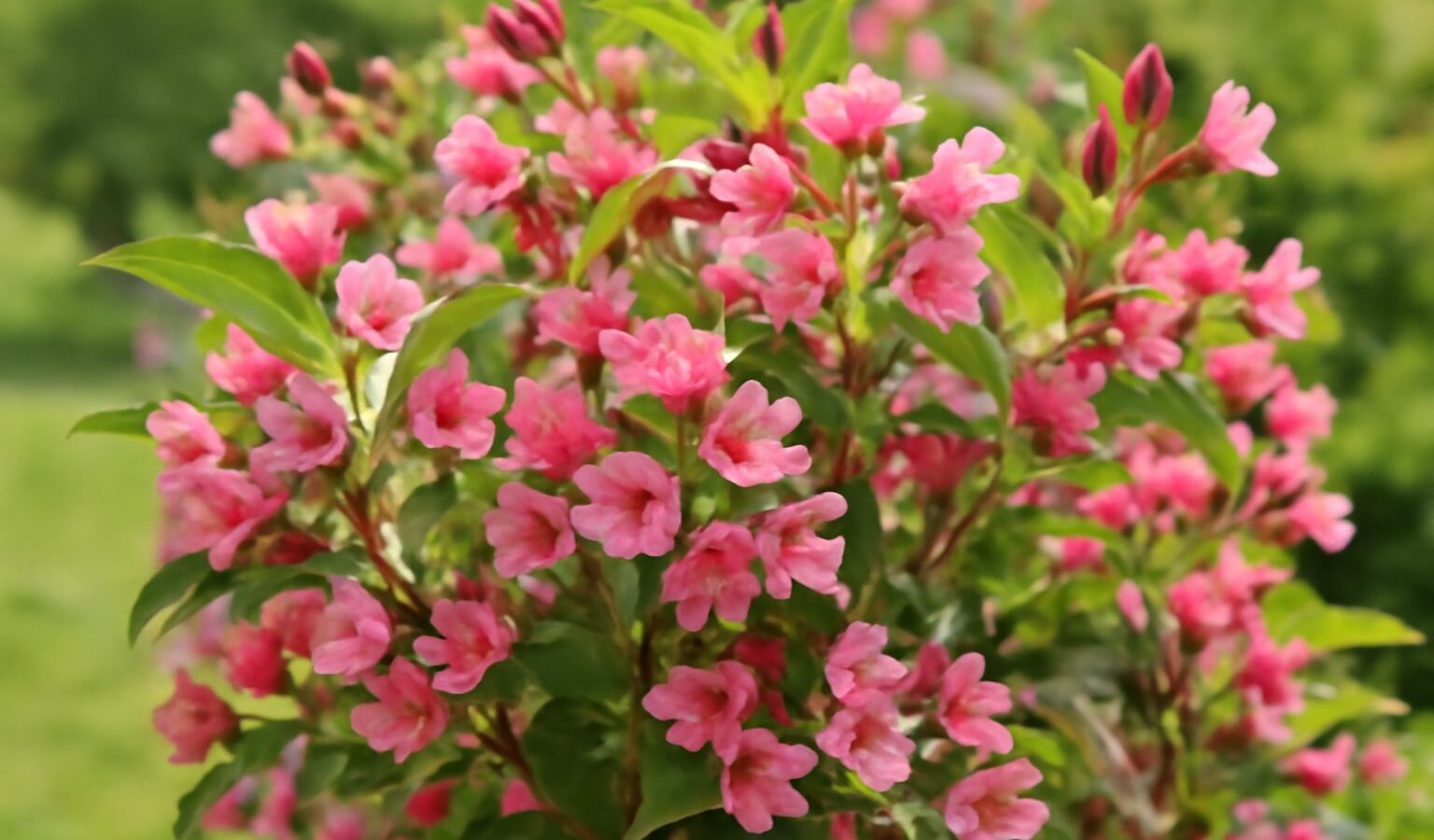
Weigela is one of the most dependable flowering shrubs you can plant for late-spring color, and it asks for almost nothing in return. From mid-May into June it covers itself in tubular pink, red, or white blooms that hummingbirds work all day long, and newer reblooming varieties throw a second flush in late summer. It is hardy, deer-resistant, and forgiving of clay — the kind of shrub that survives a beginner’s mistakes while still looking like you knew what you were doing. The one thing that trips people up is pruning, because weigela blooms on old wood and a poorly timed cut erases next year’s flowers. Get the timing right and you have a 20-year shrub that needs maybe ten minutes of attention a season.
In this guide
Key Takeaways
- Hardiness: USDA zones 4–8; full sun (6+ hours) for the heaviest bloom and best leaf color.
- Spacing: 4–6 ft apart for standard types, 2–3 ft for dwarf cultivars like ‘Midnight Wine’.
- Soil: Average, well-drained, slightly acidic to neutral (pH 5.5–7.0); tolerates clay.
- Bloom: Main flush late May–June on old wood; rebloomers (Sonic Bloom, ‘Wine & Roses’) flush again into fall.
- Pruning: Right after the spring bloom finishes — never in late summer, fall, or early spring.
Choosing the Right Weigela
Modern weigela cultivars range from 1-foot mounds to 8-foot fountains, so the variety you pick matters more than almost any other decision. For a deep-purple foliage shrub that reads as a focal point, ‘Wine & Roses’ grows 4–5 ft tall and wide with rosy-pink flowers against near-black leaves. ‘Midnight Wine’ is its 1–2 ft dwarf cousin, ideal for the front of a border or a large container. If you want repeat bloom, the Sonic Bloom series flowers heavily in spring and then continuously from summer to frost without deadheading. For a classic green-leaved hedge, ‘Red Prince’ reaches 5–6 ft with bright red trumpets that resist fading. Variegated types like ‘My Monet’ (1–1.5 ft) bring cream-edged leaves for foliage interest even when the shrub is out of flower.
Match the mature size to the space honestly. The most common regret with weigela is planting a 5-foot variety 18 inches from a walkway and then hacking it into a misshapen ball every year. Read the tag, then give it room.
When and Where to Plant
Plant weigela in spring after the last frost or in early fall (at least six weeks before your first hard freeze) so roots establish before extreme heat or cold. Spring planting is the safest in zones 4–5 where a young shrub benefits from a full growing season to root in. Avoid planting in midsummer heat unless you are prepared to water diligently.
Choose a site with at least six hours of direct sun. Weigela tolerates partial shade, but bloom thins noticeably below six hours, and purple-leaved varieties green up and lose their drama in too much shade. Good drainage matters more than rich soil — weigela rots in spots that stay soggy. If you garden in heavy clay, plant slightly high (crown an inch above grade) and amend a wide area rather than digging a deep hole that becomes a bathtub.
Step-by-Step Planting
- Dig a hole two to three times as wide as the root ball but no deeper than the ball itself.
- Loosen circling roots on container plants; tease them outward so they don’t girdle.
- Set the shrub so the top of the root ball sits level with or slightly above the surrounding soil.
- Backfill with the native soil you removed; skip heavy peat or potting mix that creates an interface roots won’t cross.
- Water in deeply to settle the soil, then add 2–3 inches of mulch, keeping it a couple inches off the stems.
Spacing and Layout
Space standard 4–6 ft weigela 4–6 ft apart, measuring center to center, so each shrub develops its natural arching shape without crowding. For an informal flowering hedge, tighten that to 3–4 ft so the plants knit together. Dwarf cultivars go 2–3 ft apart. Weigela’s loose, fountain-like habit looks best in a mixed border with perennials at its feet — think catmint, salvia, or daylilies — rather than in a rigid clipped row. If you want a tidy formal hedge, weigela is the wrong shrub; its charm is in the relaxed silhouette.
Watering and Feeding
For the first growing season, water deeply once or twice a week — roughly an inch at a time — to establish the root system. A new shrub that wilts in afternoon heat usually recovers by morning; one that wilts and stays limp at dawn needs water now. Once established, weigela is moderately drought-tolerant and only needs supplemental water during extended dry spells. Deep, infrequent soakings beat daily sprinkles, which encourage shallow roots.
Weigela is not a heavy feeder. A single application of balanced slow-release fertilizer (something like 10-10-10) in early spring as growth begins is plenty. Skip fertilizing after midsummer — late feeding pushes tender growth that won’t harden before frost. If your soil is reasonably good, a yearly inch of compost spread under the canopy can replace synthetic fertilizer entirely. Overfeeding produces lush leaves at the expense of flowers, so when in doubt, feed less.
Pruning Weigela the Right Way
This is the single most important section. Weigela blooms on old wood — buds form during the previous summer on the prior year’s stems. That means the correct window to prune is immediately after the main spring bloom finishes, usually in June. Prune then and the shrub has all summer to grow and set buds for next year. Prune in fall, winter, or early spring and you cut off the very wood that would have flowered, leaving you with a healthy green shrub and almost no blooms.
For routine shaping, cut back the stems that just flowered by about a third, making each cut just above an outward-facing bud or a side branch. To keep an older shrub vigorous, use renewal pruning: each June remove one-quarter to one-third of the oldest, thickest stems all the way to the base. This continually refreshes the plant and prevents the woody, bare-bottomed look that neglected weigela develops. A badly overgrown shrub can be rejuvenated by cutting the whole thing to about 12 inches in late winter — you’ll sacrifice that year’s bloom but get a dense, vigorous shrub the following season.
Reblooming varieties are more forgiving because they also flower on new wood, but they still produce their heaviest spring show on old wood, so the June-after-bloom rule still serves them best. A light shaping later in summer on rebloomers won’t hurt.
Pests, Diseases, and Troubleshooting
Weigela is refreshingly trouble-free. The few issues you might see are easy to manage:
- Aphids: Clusters on new growth in spring. A strong blast of water or insecticidal soap handles them; ladybugs usually arrive on their own.
- Spider mites: More likely in hot, dry, dusty conditions; look for fine stippling and webbing. Hose down foliage and improve airflow.
- Powdery mildew: A white film on leaves in crowded, humid, shady sites. Improve spacing and air circulation rather than reaching for fungicide.
- No flowers: Almost always a pruning-timing error or too much shade. Move the pruning to right after bloom and confirm 6+ hours of sun.
- Leaf scorch: Brown leaf edges in drought; deep-water and mulch.
Deer generally leave weigela alone, which makes it valuable in rural and suburban gardens where hostas and daylilies get browsed to the ground. Rabbits may nibble young stems in winter, so a cylinder of hardware cloth around new plantings helps in the first year or two.
Companion Plants and Design Ideas
Weigela’s arching habit and seasonal color pair beautifully with other easygoing shrubs and perennials. For a hummingbird-friendly border, combine it with salvia, bee balm, and a nearby butterfly bush to keep pollinators fed from spring through fall. Dark-leaved cultivars like ‘Wine & Roses’ look striking against chartreuse foliage — try them near a golden spirea or behind a drift of catmint for a clean purple-and-blue scheme. If you are building a low-maintenance flowering shrub layer, weigela slots in alongside forsythia (early spring) and viburnum (mid-spring) to stagger the show. Browse more options on the Plants & Flowers hub.
Propagating Weigela
Weigela roots easily from softwood cuttings taken in early summer. Snip 4–6 inch tips of the current season’s growth, strip the lower leaves, dip the cut end in rooting hormone, and stick them in a moist mix of perlite and peat. Keep them humid and out of direct sun, and most will root in three to four weeks. Hardwood cuttings taken in late fall also work but are slower. Note that named cultivars are patented in many cases — propagating them for your own garden is fine, but propagating and selling them is not.
Frequently Asked Questions
Why is my weigela not blooming?
The two usual culprits are pruning at the wrong time and too little sun. Weigela blooms on old wood, so pruning in fall or early spring removes the flower buds. Prune only right after the spring bloom, and make sure the shrub gets at least six hours of direct sun.
When should I prune weigela?
Immediately after the main spring bloom finishes, typically in June. This gives the shrub the rest of the season to grow and set buds for next year. Avoid cutting it in late summer, fall, winter, or early spring.
How big does weigela get?
It depends entirely on the variety. Dwarf cultivars like ‘Midnight Wine’ stay 1–2 ft, while standard types reach 4–6 ft and some old-fashioned varieties hit 8 ft. Always check the plant tag for mature size before placing it.
Is weigela deer-resistant?
Yes, deer typically avoid weigela, making it a good choice in areas with heavy deer pressure. Rabbits may nibble young stems in winter, so protect new plantings with hardware cloth for the first year or two.
Does weigela bloom more than once a year?
Older varieties bloom once heavily in late spring. Reblooming series such as Sonic Bloom and cultivars like ‘Wine & Roses’ produce a strong spring flush plus repeat flowering into fall, since they bloom on both old and new wood.
Plant weigela in a sunny, well-drained spot, water it through its first season, feed it lightly in spring, and prune it right after it blooms — that is the entire job. Do those four things and you’ll have a fountain of trumpet flowers, a steady supply of hummingbirds, and one of the lowest-maintenance flowering shrubs in the garden for decades to come.