

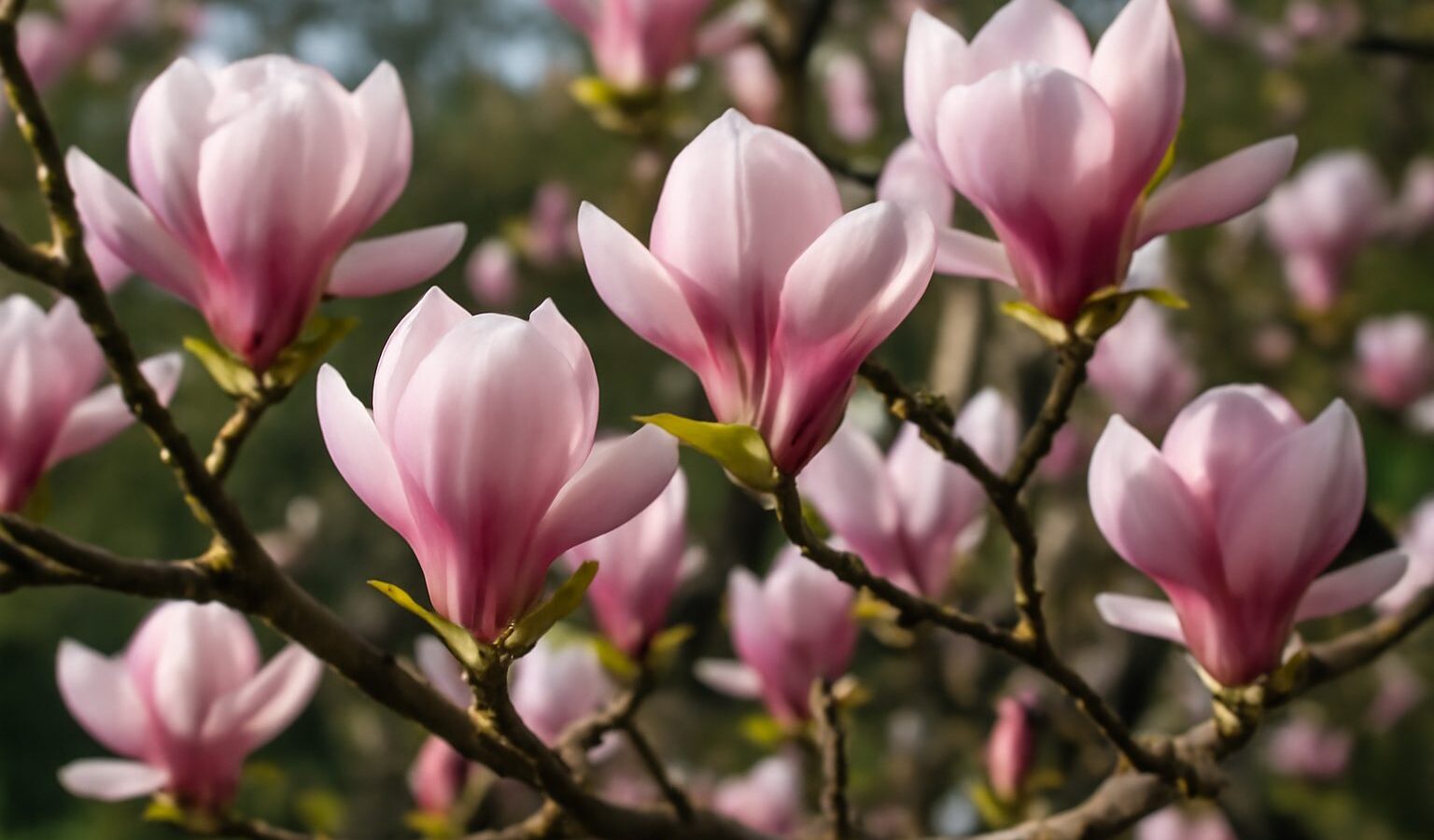
Few sights in the garden stop traffic like a magnolia in full bloom — goblet-shaped flowers the size of a fist opening on bare branches before the leaves arrive, or the glossy, lemon-scented saucers of a Southern magnolia against dark evergreen foliage. Magnolias are an ancient lineage of trees and large shrubs, and despite their showstopping flowers they are surprisingly low-maintenance once established. The two things that trip up new growers are siting (those early flowers are frost-tender, and the roots resent disturbance) and planting depth. Nail both, give the tree a permanent home with room to grow, and a magnolia will outlive you. This guide covers choosing a type, hardiness zones, siting, planting, watering, the minimal pruning magnolias want, and the handful of problems worth watching.
Key Takeaways
- Hardiness varies widely by type: deciduous magnolias zones 4–9, evergreen Southern magnolia zones 7–10.
- Site in full sun to part shade; avoid east-facing spots and frost pockets so early blooms aren’t nipped by late freezes.
- Plant so the root flare sits at grade, in moist, well-drained, slightly acidic soil — magnolias have fleshy, easily damaged roots.
- Water deeply for the first two to three years; established trees are fairly drought-tolerant.
- Prune minimally, right after flowering — magnolias don’t heal pruning wounds well, so the less the better.
- Mature size ranges from 15-foot shrubby star magnolias to 60–80-foot Southern magnolias.
Types of Magnolia and Which to Choose
“Magnolia” covers a wide genus, and the type you pick determines almost everything about how you grow it. There are three broad groups worth knowing.
- Deciduous spring bloomers — saucer magnolia (Magnolia × soulangeana), star magnolia (M. stellata), and the many hybrids. These drop their leaves in winter and flower on bare branches in early spring, often before any other tree. Hardy roughly zones 4–9. Star magnolia stays shrubby at 15–20 feet; saucer magnolia reaches 20–30 feet.
- Evergreen Southern magnolia (M. grandiflora) — the iconic broadleaf evergreen of the South, with huge fragrant white summer flowers. Zones 7–10, and a big tree: 60 to 80 feet, though compact cultivars like ‘Little Gem’ stay around 20 feet.
- Summer-blooming deciduous types like sweetbay magnolia (M. virginiana), which tolerates wet soil and bloom later, dodging spring-frost risk. Zones 5–10.
For most home gardens in cold-winter regions, a star or saucer magnolia is the practical choice. In the South, a Southern magnolia is the classic, but only if you have the space for an eventual giant.
Hardiness Zones and Climate
Match the type to your zone using the ranges above, but understand the real climate risk for the spring bloomers: the flowers, not the tree, are the vulnerable part. Saucer and star magnolias open their buds very early, and a hard late frost can turn a tree full of buds into mush overnight, browning the blooms before they fully open. The tree itself is unharmed and will bloom again next year, but you lose the show.
You manage this risk through siting rather than zone. Avoid the warmest microclimates that coax the tree into blooming even earlier, and avoid east-facing exposures where the morning sun thaws frosted buds too fast and damages them. A spot that warms gradually gives the best odds of an unblemished bloom.
Siting: Sun, Frost, and Space
Magnolias flower best in full sun — at least six hours daily — though they tolerate light afternoon shade, which can actually be an advantage in the hot South. The bigger siting decisions are about frost and permanence.
- Avoid frost pockets. Cold air pools at the bottom of slopes and in low yard corners, exactly where late-spring freezes hit hardest. Plant on higher, open ground.
- Avoid east-facing spots for early bloomers, so frosted buds thaw slowly rather than being scorched by sudden morning sun.
- Pick a permanent home. Magnolias have fleshy, ropey roots that hate disturbance and transplant poorly once mature. Decide where the tree goes and commit — this is not a tree to move later.
- Give it room. Account for the full mature spread. A Southern magnolia three feet from the foundation will become a problem; a saucer magnolia crammed under power lines is a future heartache.
For soil, magnolias want moist, rich, well-drained ground that is slightly acidic (pH around 5.5 to 6.5). They dislike heavy alkaline clay and will show yellowing leaves if the pH is too high. Sweetbay magnolia is the exception — it happily handles boggy, wet sites where others would rot.
How to Plant a Magnolia
Plant in early spring (the safest time in cold regions, so roots have all season to settle) or early fall in milder zones. Because magnolia roots are sensitive, handle the root ball gently and disturb it as little as possible.
- Dig a hole two to three times as wide as the root ball but no deeper. Wide and shallow is the rule for almost every tree, and doubly so for magnolias with their shallow, spreading roots.
- Set the root flare at grade. The point where the trunk widens into roots should sit level with or just above the surrounding soil. Planting too deep suffocates roots and is a leading cause of slow decline.
- Loosen only lightly. If roots are circling the pot, tease the outer ones free, but don’t aggressively bare-root or chop the fleshy roots — they don’t recover well.
- Backfill with native soil amended with compost, firm gently, and create a shallow watering basin.
- Water deeply to settle the soil, then mulch.
Apply 2 to 3 inches of organic mulch over the root zone, kept a few inches clear of the trunk. Magnolia roots are shallow, so a wide mulch ring protects them, conserves moisture, and saves you from nicking roots with a mower or string trimmer. For more on getting trees and shrubs established, browse our Plants & Flowers guides.
Watering and Feeding
Newly planted magnolias need consistent moisture for the first two to three years while their root systems expand. Water deeply once or twice a week in the absence of rain — aim to wet the entire root zone rather than giving frequent shallow sips. The shallow roots dry out faster than you’d expect, especially in the first summer, so check soil moisture a couple inches down regularly.
Once established, magnolias are reasonably drought-tolerant and need supplemental water mainly during extended dry spells. Maintaining that mulch layer does most of the moisture management for you.
Magnolias are not heavy feeders. In poor soil, an application of a balanced or slightly acidic slow-release fertilizer in early spring supports growth, but don’t overdo nitrogen — lush leafy growth comes at the expense of flowers. A spring top-dressing of compost is often all an established tree needs. If leaves yellow between green veins, that’s chlorosis from soil that’s too alkaline; correct it with a soil acidifier and an iron supplement rather than more fertilizer.
Pruning a Magnolia
Magnolias need very little pruning and actively resent heavy cutting — their wounds heal slowly and large cuts invite decay. The watchwords are minimal and timing.
- Prune right after flowering. Spring bloomers set next year’s flower buds in summer, so pruning later removes next season’s show. For Southern magnolia, prune in spring before the summer flush.
- Limit yourself to cleanup: remove dead, damaged, or crossing branches, and the occasional wayward shoot that spoils the shape.
- Make clean cuts back to a branch or the trunk, and avoid removing large limbs unless truly necessary. Never top a magnolia.
- Shape young trees lightly in their first few years to establish a good framework, then leave well-grown trees alone.
Resist the urge to “tidy up” an established magnolia every year. Their naturally graceful form is the goal, and the best-looking specimens are usually the least-pruned.
Common Problems
Frost-damaged flowers
The classic disappointment with early-blooming saucer and star magnolias: a warm spell coaxes the buds open, then a late freeze browns them overnight. There’s no fixing the ruined blooms, but the tree is fine. Manage it by siting away from frost pockets and east-facing exposures, and consider later-blooming types like sweetbay if your springs are erratic.
Scale and sooty mold
Magnolia scale is the most common pest — small bumps on twigs that excrete sticky honeydew, which then grows black sooty mold on leaves below. Treat heavy infestations with horticultural oil applied in late summer when the crawlers are active, or dormant oil in winter. The sooty mold itself is harmless and fades once the scale is controlled.
Chlorosis and leaf spots
Yellow leaves with green veins signal alkaline soil; lower the pH with elemental sulfur or an acidifier over time. Various fungal leaf spots appear in wet seasons but are mostly cosmetic — rake and dispose of fallen leaves to reduce spores, and don’t lose sleep over a few blemishes.
Using Magnolias in the Landscape
Because magnolias are long-lived and dislike being moved, think about their role before you plant. A star or saucer magnolia makes a perfect spring focal point near a patio or as a small specimen lawn tree. A Southern magnolia is a stately anchor for a large property or a tall evergreen screen, though be ready for year-round leaf drop beneath it. Sweetbay shines at the edge of a rain garden or a damp low spot where little else thrives. Underplant with shade-tolerant groundcovers rather than turf to avoid mower damage to those shallow roots. For ideas on pairing trees with the rest of your yard, see our Outdoor Living guides.
Frequently Asked Questions
How long until a magnolia tree blooms?
Grafted nursery trees often bloom within a year or two of planting. Seed-grown or very young saplings can take much longer — sometimes 5 to 10 years — which is one reason to buy an established named cultivar rather than start from seed.
Why didn’t my magnolia bloom this year?
The most common cause is a late frost that killed the buds. Other reasons include too much shade, pruning at the wrong time (which removes flower buds), excess nitrogen fertilizer, or simply a young tree not yet mature enough to flower.
Do magnolia roots damage foundations or pipes?
Magnolia roots are shallow and wide-spreading rather than deeply invasive, but a large Southern magnolia planted close to a house can still cause issues and its sheer size matters. Plant well away from foundations, and underplant rather than mow over the surface roots.
Can I grow a magnolia in a container?
Compact types like ‘Little Gem’ Southern magnolia or a small star magnolia can grow in a large container for years. Use a big pot with good drainage and acidic mix, water consistently, and protect the roots from hard freezes in cold zones.
When is the best time to plant a magnolia?
Early spring is safest in cold regions, giving the tree a full season to establish before winter. In mild climates, early fall also works. Avoid summer planting, and handle the sensitive roots gently whenever you plant.
Choose the right magnolia for your zone and space, give it a permanent sunny spot out of the frost pockets, plant it shallow with its root flare at grade, and prune it sparingly. Do that and you’ll have decades of those unmistakable, traffic-stopping blooms every single spring.