

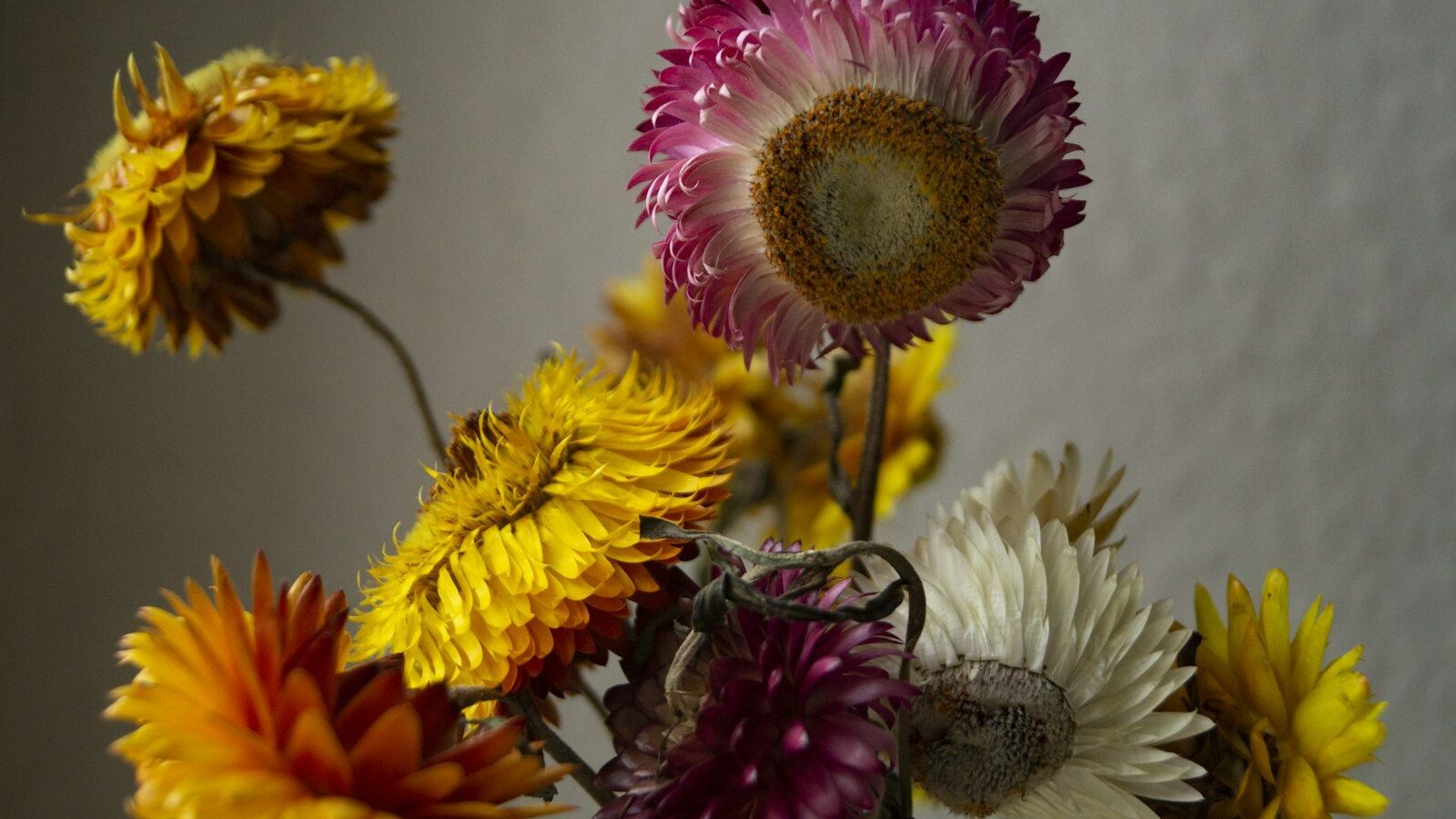
Strawflowers (Xerochrysum bracteatum, formerly Helichrysum) earn their nickname “everlastings” honestly — their papery, straw-textured petals are actually stiff bracts that hold color for years after drying. They bloom nonstop from early summer to frost in saturated reds, oranges, yellows, pinks, and whites, thrive in heat and poor soil, and are among the easiest flowers to dry at home. Start seed indoors 6–8 weeks before your last frost, plant in full sun, space 9–12 inches apart, and harvest at just the right stage for perfect dried blooms. Here’s the full guide.
Key Takeaways
- Strawflowers are heat-loving annuals (tender perennials in zones 8–11) that need full sun and well-drained soil and tolerate drought and poor ground.
- Start seed indoors 6–8 weeks before last frost; surface-sow because the seed needs light to germinate.
- Space plants 9–12 inches apart and pinch young plants to encourage branching and more flowers.
- The papery “petals” are bracts, so blooms last for years when dried — the key is harvesting before the center fully opens.
- Cut for drying when flowers are half to two-thirds open, then hang upside down in a dark, airy spot for 2–3 weeks.
What Makes Strawflowers “Everlasting”
What look like petals on a strawflower are stiff, papery bracts surrounding a small central disc of true flowers. Because those bracts are already dry and rigid even on the living plant, they keep their shape and color almost indefinitely once harvested — no special preservation needed. This is why strawflowers anchor dried arrangements, wreaths, and craft projects. The trade-off: harvest timing matters, because the bracts keep opening after cutting, and a too-mature cut yields a floppy, seedy center.
Strawflower Varieties to Grow
Strawflowers split broadly into tall cut-flower types and compact bedding types, so match the variety to your goal. For cutting and drying, the ‘King Size’ and ‘Monstrosum’ strains reach 3–4 feet with the largest, fullest double blooms, while the ‘Tom Thumb’ / ‘Bright Bikini’ mixes stay 12–15 inches for borders and containers. The ‘Dragon’ and ‘Swiss Giants’ series offer rich, saturated single colors useful for planting solid blocks in a cutting bed. For pots and small spaces, look for the trailing or mounded ‘Mohave’ / ‘Sundaze’ hybrids, which are sold as bedding plants and bloom heavily but are less suited to drying than the tall seed strains. Color range is broad — golden yellow, orange, scarlet, rose, pink, white, and bronze — with yellows and oranges holding their tone best after drying. As with most everlastings, buy the tall, large-flowered seed strains if drying for crafts is your priority, and the dwarf hybrids if you mainly want season-long color in a planter.
When and Where to Plant
- Timing: Transplant out only after all frost danger has passed and soil is warm. Strawflowers are tender and dislike cold.
- Sun: Full sun, 6+ hours, for the most blooms and the sturdiest stems.
- Soil: Light, well-drained, average-to-lean soil at pH 6.0–7.5. They handle sandy, poor ground; they hate soggy clay.
- Spacing: 9–12 inches apart. Tall cut-flower varieties (up to 3–4 ft) benefit from slightly tighter spacing for long, straight stems.
Starting Strawflowers From Seed
Start indoors 6–8 weeks before your last frost. Surface-sow the seed onto moist seed-starting mix and press it in without covering — light is required for germination. Keep at 70–75°F; seedlings emerge in 7–10 days. Provide strong light immediately so they don’t stretch. Harden off over a week before transplanting once nights stay reliably above 50°F.
In long-summer regions, you can also direct sow once soil warms to about 65°F, then thin to spacing. Pinch the growing tip when plants reach 6–8 inches to drive branching — this dramatically increases the number of harvestable stems. For more sun-loving cutting annuals to start alongside strawflowers, see our Plants & Flowers guides.
Watering, Feeding and Support
Water new transplants regularly to establish, then provide about 1 inch per week — but let the soil dry slightly between waterings. Strawflowers are drought-tolerant once established and resent constantly wet roots, which cause rot. Always water at the base; the dense bracts trap moisture and can rot if repeatedly wetted.
Feed lightly. A balanced slow-release fertilizer at planting plus an occasional diluted liquid feed is plenty; too much nitrogen gives leaves instead of flowers. Tall varieties in a cutting bed appreciate a layer of horizontal netting set early to keep stems straight.
Deadheading for Continuous Bloom
Strawflowers bloom heavily from early summer until frost, and the more you cut, the more they produce. Deadhead or harvest spent and finished blooms regularly to keep the plant pushing new flowers rather than setting seed. If you’re growing primarily for dried flowers, frequent cutting at the right stage doubles as deadheading.
Growing Strawflowers in Containers
Strawflowers are excellent container plants, and their heat and drought tolerance suits the hot, fast-draining conditions of pots and balconies. Choose dwarf or mounding varieties for containers — the tall cut-flower strains get top-heavy and require staking that looks awkward in a pot. Use a free-draining potting mix in a container with drainage holes, since strawflowers rot in soggy roots. One dwarf plant suits a 6-inch pot, or combine three in a 12-inch planter with other sun-and-heat lovers like gomphrena, lantana, or trailing verbena. Place pots in full sun for at least six hours; shade produces leggy, sparse plants. Water when the top inch of mix dries — frequent enough to keep plants from wilting but never so often that the medium stays wet — and feed every two to three weeks with a half-strength balanced liquid fertilizer to replace nutrients washed out by watering. Pinch the young plants and deadhead or harvest regularly, and a container of strawflowers will bloom from early summer until frost.
Companion Planting and Garden Design
Strawflowers pair naturally with other warm-season everlastings, so a single sunny bed can supply an entire dried arrangement: plant them alongside gomphrena (globe amaranth), statice, celosia, and ornamental grasses, all of which share the heat tolerance and dry beautifully. In the mixed border, their stiff, jewel-toned blooms contrast well with the airy texture of cosmos and the bold daisies of zinnias and rudbeckia, while silver-foliaged companions like dusty miller make the hot colors pop. Because strawflowers are magnets for bees and butterflies, they also earn a place near the vegetable garden as a pollinator draw. For design, use the tall strains as mid-to-back-of-border filler that bridges early and late summer, and the dwarf types as edging or container “thrillers.” Avoid crowding them against tall, shading neighbors or moisture-loving plants — strawflowers want their own sunny, well-drained space and will sulk in damp, shaded competition.
Regional and Zone Notes
- Long, hot-summer regions (zones 7–10): Strawflowers excel. Direct sowing works once soil warms, the bloom season is long, and plants may behave as short-lived tender perennials at the warm end of the range (zones 8–11).
- Northern and short-season zones (3–6): Start seed indoors 6–8 weeks before the last frost to make the most of summer, and choose faster-maturing or dwarf varieties so plants bloom and you can harvest for drying before the first fall frost.
- Hot, dry Southwest: A near-perfect climate — strawflowers thrive on heat and lean soil. Watch for aphids on tender new growth and water at the base to keep the dense bracts from trapping moisture.
- Cool, damp coastal regions: The hardest setting, because strawflowers want warmth and dry bracts. Give them the hottest, sunniest, best-drained spot you have, and water sparingly to limit the mildew that humidity encourages.
Pests and Problems
- Aphids: The most common pest, on new growth and buds; rinse off or use insecticidal soap.
- Downy/powdery mildew: From crowding and overhead watering; space well and water at the base.
- Root and crown rot: Caused by wet, poorly drained soil — improve drainage and ease off watering.
- Leggy plants: Result of low light at the seedling stage or skipping the pinch; give bright light and pinch early.
Harvesting and Drying Strawflowers
Timing the harvest is the whole secret to beautiful dried strawflowers, because the bracts continue to open and curl back after cutting.
- Cut at the right stage: Harvest when the flower is half to two-thirds open and you can just barely see the yellow center. Fully open flowers will reveal a seedy, floppy middle once dried.
- Cut in the morning: Choose a dry day after dew has lifted; cut long stems.
- Strip the leaves from the stems, which dry poorly and look messy.
Drying method
Bundle 5–10 stems loosely with a rubber band (it tightens as stems shrink) and hang them upside down in a warm, dark, well-ventilated room for 2–3 weeks. Darkness preserves color; airflow prevents mold. Because strawflower stems can get weak and brittle when dried, many crafters cut the heads with a short stem and insert florist wire for arrangements and wreaths. Dried strawflowers last for years and pair beautifully with other everlastings like statice and celosia.
End of Season and Saving Seed
Strawflowers are killed by the first hard frost in most of the US (they persist as tender perennials only in zones 8–11). Before frost, let a few flowers fully mature and dry on the plant, then collect the seed from the centers and store it cool and dry for next year. Pull and compost spent plants after the season ends.
Frequently Asked Questions
When should I cut strawflowers for drying?
Cut when the flower is half to two-thirds open, just as the yellow center begins to show. The bracts keep opening after harvest, so flowers cut fully open will dry with a loose, seedy center. Morning harvest on a dry day is best.
Do strawflowers come back every year?
In USDA zones 8–11 they can survive as tender perennials, but in most of the US they’re grown as annuals killed by frost. They self-seed readily, and you can save seed from mature centers to replant the following spring.
How long do dried strawflowers last?
Years. Because the papery petals are actually stiff, already-dry bracts, properly dried strawflowers hold their shape and color for a very long time, which is why they’re a staple of everlasting arrangements and wreaths.
Why are my strawflowers leggy with few blooms?
Usually low light at the seedling stage, too little sun in the garden, skipping the early pinch, or too much nitrogen. Give full sun, pinch plants at 6–8 inches to encourage branching, and feed lightly for compact, flower-heavy plants.
Can I grow strawflowers in containers?
Yes. Choose dwarf or compact varieties, use a well-drained potting mix in a pot with drainage holes, place in full sun, water when the top inch dries, and feed lightly. Pinch young plants and deadhead to keep blooms coming all season.
How do I start strawflower seed correctly?
Surface-sow the seed on moist seed-starting mix and press it in without covering, because strawflower seed needs light to germinate. Keep it at 70–75°F and seedlings emerge in 7–10 days. Give strong light immediately so they don’t stretch, harden off over a week, and transplant only once nights stay above 50°F.
What plants pair well with strawflowers?
Other warm-season everlastings are the best partners — gomphrena, statice, celosia, and ornamental grasses share strawflowers’ love of heat, sun, and lean soil and all dry well, so one bed supplies a whole dried arrangement. Zinnias, cosmos, and rudbeckia make good border companions, and silver dusty miller sets off the hot colors.