

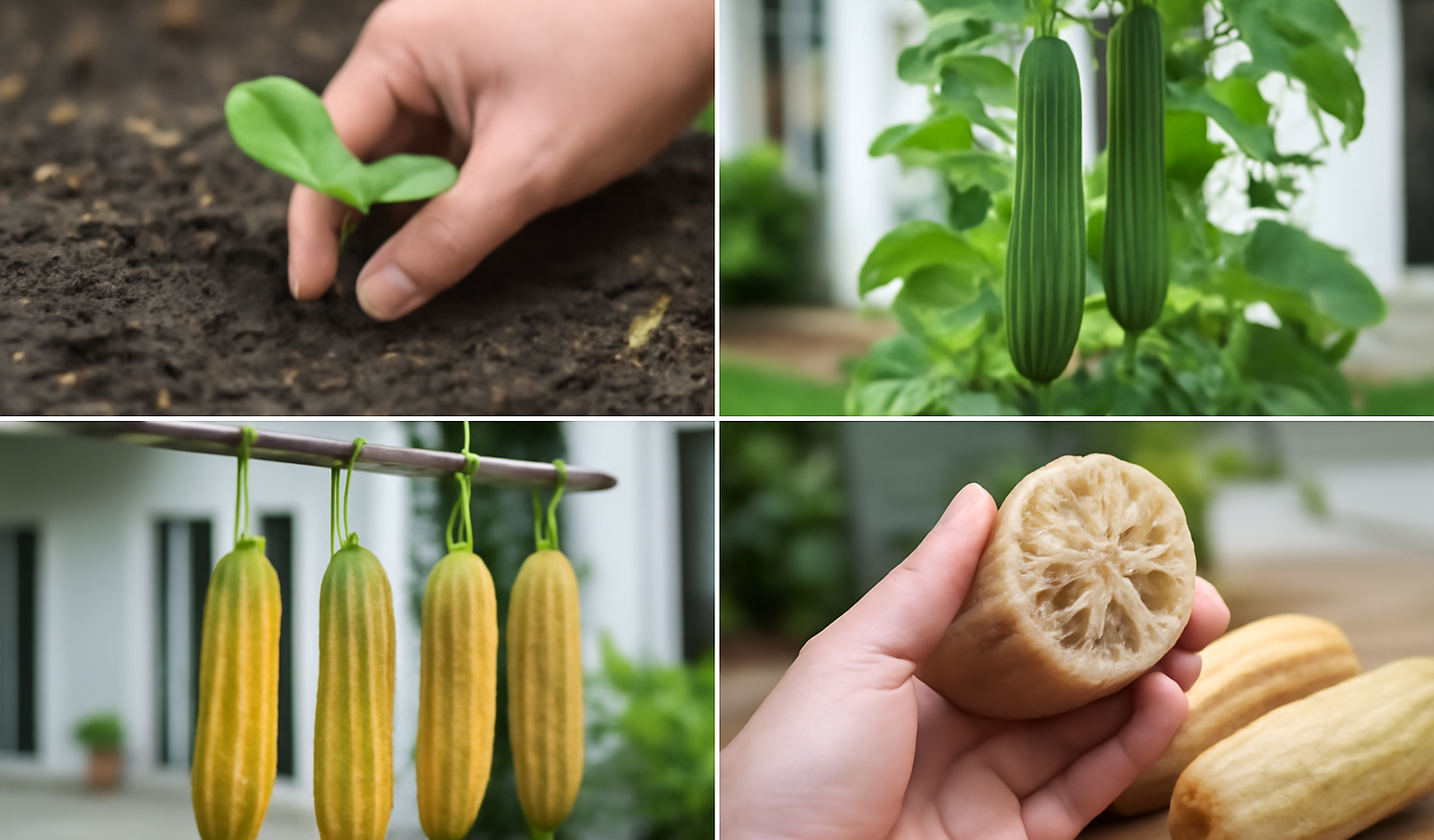
Those exfoliating “loofah” sponges in the bath aisle aren’t sea creatures — they’re the dried fibrous skeleton of a gourd you can grow in your own backyard. Luffa (also spelled loofah) is a vigorous tropical vine in the cucumber family that produces long, cylindrical gourds; let them mature and dry on the vine and the flesh inside transforms into a tough, lattice-like sponge perfect for scrubbing skin or dishes. The catch is that luffa demands a long, warm growing season — often 150 to 200 frost-free days — so success comes down to starting early, training the vines up a sturdy trellis, and being patient through a slow drying-down at the end. This guide covers timing, starting seeds, trellising and spacing, days to maturity, and the all-important harvest-and-dry process that turns a gourd into a sponge.
Key Takeaways
- Long season: Needs 150–200+ frost-free days. In cooler climates, start seeds indoors 6–8 weeks before the last frost — non-negotiable.
- Trellis required: Vines reach 15–30 ft; grow them on a strong vertical trellis so gourds hang straight and stay clean.
- Spacing: 18–24 inches apart along the trellis, in full sun and rich, well-drained soil.
- Days to maturity: Young gourds are edible at 75–90 days; sponge gourds need the full season to mature and dry.
- Drying: Harvest when gourds are light, brown, and rattle; then peel, shake out seeds, rinse the fiber, and dry the sponge fully.
The Long-Season Challenge
The number one reason gardeners fail with luffa is running out of season. A loofah sponge only forms if the gourd matures fully and begins drying on the vine, and that takes a long stretch of warm weather — figure 150 to 200 frost-free days from sowing to a dry, harvestable sponge. In USDA zones 7 and warmer you can often direct-sow and still finish in time; in zones 6 and cooler you must start seeds indoors and give the plants every advantage to beat the first fall frost.
Luffa is also strictly warm-season and frost-tender, like its relatives the cucumber and melon. It won’t grow in cold soil and a single frost ends the season, so the whole strategy is maximizing warm growing time on both ends: start early indoors, transplant only after all frost danger and warm soil, and protect the maturing gourds from the first fall frost if you can.
Starting Seeds
In most of the country, start luffa seeds indoors 6–8 weeks before your last spring frost. The hard-coated seeds germinate slowly and erratically, so help them along: nick the seed coat lightly with a file or sandpaper and soak the seeds in warm water for 24 hours before sowing. Plant about half an inch deep in roomy 3–4 inch pots, and keep them very warm — 75–85°F with a seedling heat mat — for fastest germination, which can still take one to three weeks.
Grow the seedlings under bright light and don’t rush them outside. Transplant only when nighttime temperatures stay reliably above 55–60°F and the soil has warmed, usually a week or two after your last frost. Harden them off gradually first. Where the season is long and warm, you can direct-sow into warm soil instead, planting two or three pre-soaked seeds per spot and thinning to the strongest.
Trellising and Spacing
Luffa vines are huge — commonly 15 to 30 feet — and they must climb. A strong vertical trellis is essential for three reasons: it keeps the gourds off the ground (where they rot or develop flat spots), lets them hang straight so they grow long and uniform, and dramatically improves airflow and sun exposure for ripening. Build something sturdy: a heavy-duty arbor, a cattle-panel arch, a chain-link fence, or a robust post-and-wire trellis. A flimsy structure will collapse under the weight of mature vines laden with gourds.
Space plants 18–24 inches apart along the base of the trellis, in full sun (at least 6–8 hours) and rich, well-drained soil amended with compost. Guide the young vines onto the trellis; once they catch hold with their tendrils they climb on their own. Letting the gourds dangle freely from an overhead arbor produces the straightest, best-shaped sponges.
Care, Watering, and Feeding
Luffa is hungry and thirsty during its long growth. Water deeply and consistently — about 1 to 1.5 inches per week, more in heat — keeping the soil evenly moist but never waterlogged. Mulch to conserve moisture and suppress weeds. Feed every few weeks with a balanced fertilizer through the vegetative and flowering stages; once gourds are sizing up you can ease off nitrogen so the plant focuses on fruit and fiber rather than more leaf.
The vines produce separate male and female yellow flowers, and bees do the pollinating — male flowers usually appear first and in greater numbers, so don’t worry when early flowers drop without setting fruit. If pollinators are scarce, you can hand-pollinate by transferring pollen from a male bloom to the center of a female (the one with a tiny gourd behind it) in the morning. Watch for cucumber beetles, squash bugs, and powdery mildew, the same pests that bother other cucurbits; good airflow on the trellis and prompt action keep them manageable.
Days to Maturity and When to Harvest
Luffa has two harvest windows. Young, tender gourds (picked at 4–6 inches, around 75–90 days) are edible and cooked like zucchini or okra in many cuisines. But for sponges, you want the opposite: leave the gourds on the vine to mature fully and begin drying down, which takes the entire season.
A sponge gourd is ready when it turns from green to tan or brown, the skin loosens and feels papery, the gourd becomes surprisingly lightweight, and it rattles with loose dry seeds when shaken. Ideally let them dry on the vine as long as possible. If frost threatens before they’re fully dry, harvest the mature green-to-yellowing gourds and finish drying them indoors in a warm, airy spot — they’ll often continue ripening off the vine, though on-vine drying gives the best sponges.
How to Peel and Dry Your Loofah Sponges
Turning a dry gourd into a usable sponge is simple and satisfying:
- Peel: Crack and peel off the dry, brittle outer skin. If it resists, soak the gourd in water for a few minutes to loosen it. Snap off one end and the skin usually strips away in pieces.
- Shake out the seeds: Whack the gourd to dislodge the dark seeds inside — save the plumpest ones in a labeled envelope for next year’s crop.
- Rinse and clean: Rinse the fiber thoroughly under running water to flush out remaining seeds, pulp, and sap. For bright, clean sponges, soak briefly in a dilute bleach solution (about 1 part bleach to 10 parts water), then rinse very well.
- Dry completely: Hang the sponges in a sunny, airy place until bone-dry — this is critical, as any trapped moisture leads to mold. They’re ready to cut into sections for the bath or kitchen.
Homegrown loofahs are fully compostable and make great gifts. If you enjoyed growing your own useful crop, browse more grow-your-own guides on the Plants & Flowers hub, and if you’re growing other vining crops, our guide on building a sturdy trellis applies just as well to heavy luffa vines.
Frequently Asked Questions
How long does luffa take to grow into a sponge?
A long time — typically 150 to 200+ frost-free days from sowing until the gourd matures and dries enough to become a sponge. That’s why gardeners in cooler climates must start seeds indoors 6–8 weeks before the last frost; running out of warm season before the gourds dry is the most common reason for failure.
Do I have to grow luffa on a trellis?
Effectively yes. The vines reach 15–30 feet, and a strong vertical trellis keeps the gourds off the ground so they don’t rot or develop flat spots, lets them hang straight for long uniform sponges, and improves airflow for ripening. Use something heavy-duty like a cattle panel or sturdy arbor.
When do I harvest luffa for sponges?
When the gourd turns tan or brown, the skin feels papery and loose, the gourd becomes lightweight, and it rattles with dry seeds inside. Let them dry on the vine as long as possible. If frost threatens, pick the mature ones and finish drying them indoors in a warm, airy place.
Can you eat luffa gourds?
Yes — harvested young at 4–6 inches (around 75–90 days), luffa is a tender vegetable cooked like zucchini or okra in many Asian cuisines. Only the mature, fully dried gourds become inedible fibrous sponges, so you choose your harvest based on whether you want food or a loofah.
How do I clean and whiten my homegrown loofahs?
Peel off the dry skin (soak briefly if it sticks), shake out the seeds, and rinse the fiber thoroughly. For a bright, clean sponge, soak it in a dilute bleach solution (about 1:10 with water), then rinse very well and hang to dry completely. Full drying prevents mold.