

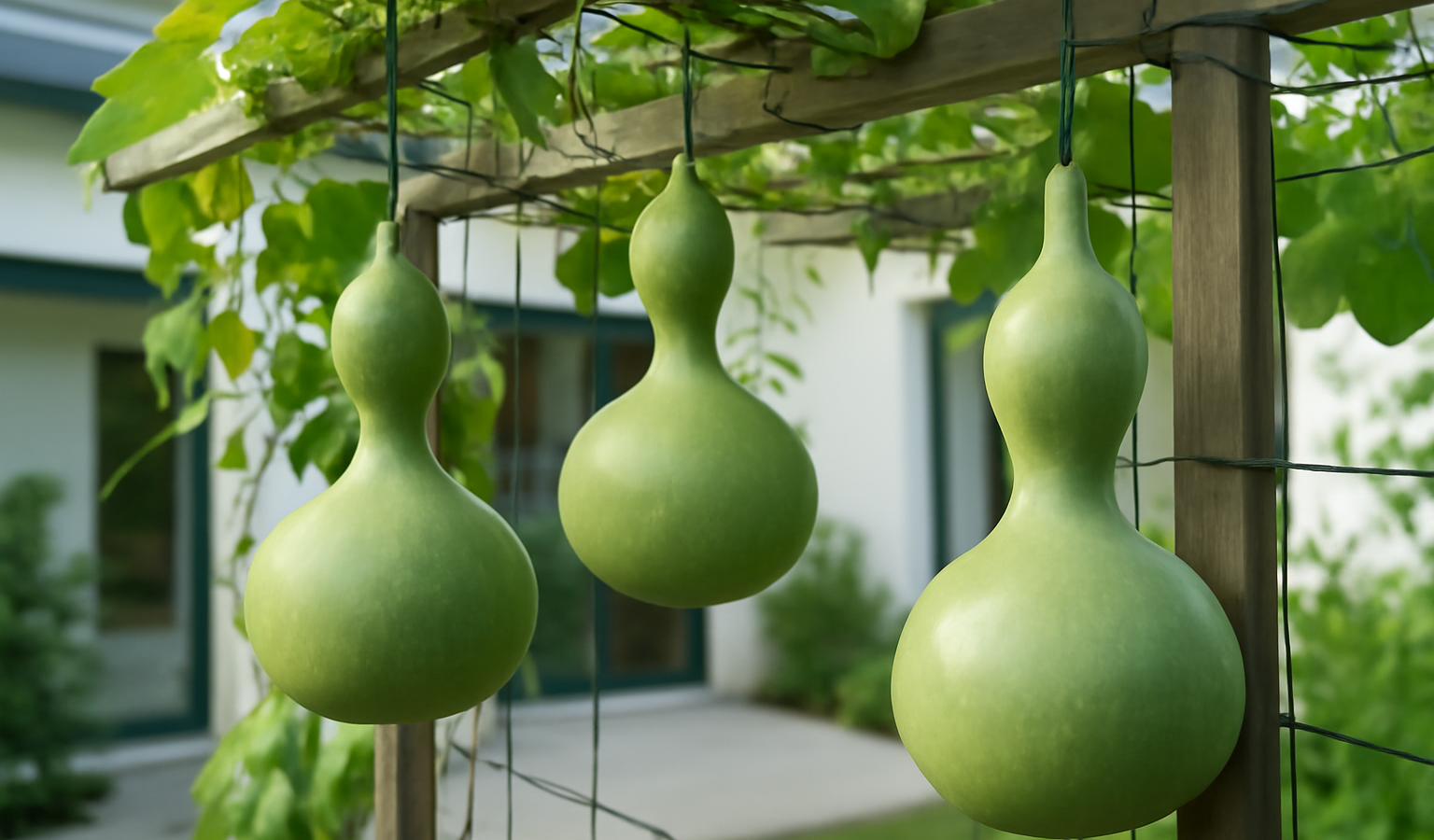
Gourds are one of the most rewarding crops you can grow because the harvest lasts long after the season ends — a well-cured hardshell gourd can sit on your shelf as a birdhouse, dipper, or decoration for years. They are also vigorous, easy-to-germinate vines that practically grow themselves once it is warm. The two things beginners get wrong are giving them too little space and harvesting too early, then watching the gourds rot instead of cure. This guide covers planting from seed, trellising the rampant vines, hand-pollinating for better fruit set, and the complete multi-month curing and drying process that turns a green gourd into a hard, lightweight, lasting object.
Key Takeaways
- Gourds are warm-season annuals — sow after the last frost when soil hits 65–70°F; they need 100–180 frost-free days.
- Give vines serious room: 4–8 feet between hills, and trellis hardshell types for straight, clean, rot-free fruit.
- Many gourds have separate male and female flowers and benefit from hand-pollination for reliable fruit set.
- Harvest only when the stem dries brown and the shell is hard — leave ornamentals on the vine until killed by frost.
- Curing takes weeks to months; cure in a dry, airy spot, accept the surface mold, and wash to a hard shell when it rattles.
Types of Gourds and Choosing Seed
“Gourd” covers a few different plants. Ornamental gourds (Cucurbita pepo) are the small, warty, brightly colored fall-decoration types — fast at 90–100 days, thin-shelled, and best used fresh or lightly dried. Hardshell gourds (Lagenaria siceraria, also called bottle, birdhouse, or dipper gourds) are the durable, woody ones used for crafts; they need a longer 120–180 day season and the full curing treatment. Luffa gourds (Luffa species) are grown for their fibrous interior sponges and behave like a long-season hardshell.
Match the type to your climate. If you garden in a short-season northern zone, start hardshell and luffa seed indoors or stick to fast ornamentals, because they need every warm week available. Check days-to-maturity on the seed packet against your frost-free window before buying.
When and How to Plant Gourds
Gourds are frost-tender and crave heat. Direct-sow after your last frost date, once soil temperature reaches 65–70°F — cold soil rots seeds and stalls growth. In zones with under about 120 frost-free days, start seeds indoors 3–4 weeks before transplanting, but handle the roots gently since cucurbits resent disturbance; use peat or paper pots you can plant whole.
Hardshell gourd seeds have a thick coat and germinate slowly. Soak them in warm water for 24 hours, and many growers lightly nick or sand the seed coat (scarify) to speed things along. Plant seeds 1 inch deep, two or three per hill.
- Spacing: Hardshell and luffa vines are huge — space hills 4–8 feet apart, with rows 6–8 feet apart. Ornamentals can go a bit tighter at 3–4 feet.
- Sun: Full sun, a minimum of six to eight hours daily.
- Soil: Rich, well-drained, slightly acidic to neutral. Work in plenty of compost — gourds are heavy feeders.
- Thinning: Once seedlings have a couple of true leaves, thin to the strongest one or two plants per hill.
Trellising the Vines
A single hardshell gourd plant can run 15–30 feet, so trellising is not optional if you want clean fruit and a usable garden. Letting gourds sprawl on the ground works for tough ornamentals, but hardshells that lie on soil develop flat, rot-prone, discolored spots and often grow into awkward curved shapes.
Build something strong — a mature gourd-laden vine is heavy, and individual bottle gourds can weigh several pounds. A sturdy arbor, cattle-panel arch, pergola, or a heavy-duty fence works well. As the vine climbs, the gourds hang straight down, growing long and symmetrical, and they get airflow on all sides that dramatically cuts disease. The tendrils will grab on their own, but guide and tie wandering shoots early to set the direction. If a developing gourd is large enough to strain the stem, support it with a sling made from old pantyhose or netting tied to the trellis. The same vertical-growing logic that helps pole beans applies here — see our comparison of bush beans vs pole beans for more on managing climbing crops in tight space.
Pollination and Fruit Set
Gourds produce separate male and female flowers on the same plant (they are monoecious). The female flower is easy to spot — it has a tiny immature gourd swelling at its base, behind the petals — while male flowers sit on plain straight stems. Males usually appear first and in greater numbers, which alarms beginners who think the plant is failing to fruit. It is not; the females come a week or two later.
Hardshell (Lagenaria) gourds open their white flowers in the evening and are pollinated by night-flying moths, while Cucurbita ornamentals open in daytime and rely on bees. If fruit set is poor — flowers form but the baby gourds yellow and drop — hand-pollinate. Pick a fresh male flower, peel back its petals, and dab the pollen-laden anther directly onto the sticky stigma in the center of a female flower. Do this in the early morning for daytime types and at dusk for hardshells. Avoid spraying insecticides while flowers are open so you do not harm the bees and moths doing the work for you.
Watering, Feeding, and Vine Care
Gourds need steady moisture, especially while fruit is sizing up — aim for about an inch of water per week, more in heat. Water at the base early in the day; wetting the foliage in the evening invites powdery mildew, the most common gourd disease. Mulch around the base to hold moisture and keep weeds down.
Feed at planting with compost and a balanced fertilizer, then side-dress once vines start running and again when fruit sets. Go easy on nitrogen after flowering begins — too much produces a jungle of leaves and few gourds. Once the season is winding down, some growers pinch the growing tips to push the plant’s energy into ripening existing fruit rather than making new ones it can never mature before frost. Watch for cucumber beetles (which spread bacterial wilt) and squash bugs, and manage powdery mildew with good spacing, airflow, and a fungicide or potassium-bicarbonate spray if it appears.
Harvesting Gourds at the Right Time
Harvest timing is where most of the curing battle is won or lost. Leave gourds on the vine as long as possible — ideally until the vine itself dies back or is killed by the first light frost. A gourd is ready when the stem connecting it to the vine turns brown and dries, the shell feels hard and woody, and the fruit no longer increases in size. For hardshells, the skin loses its green sheen and may show a tan or mottled color. Frost will kill the vines but a light frost will not ruin a mature, hard-shelled gourd.
Cut — never pull — the gourd from the vine, leaving a few inches of stem attached. The stem acts as a wick during drying and helps prevent rot at the top. Handle gourds gently; bruises and punctures become rot points later. Wash each one in a mild bleach solution (about one part bleach to ten parts water) to kill surface bacteria, then dry. Discard any gourd that is soft, damaged, or immature, because it will simply rot rather than cure.
Curing and Drying Hardshell Gourds
Curing is a two-phase, multi-month process, and patience is everything. The surface mold and discoloration that appears is normal and even helps create the mottled patterns crafters prize — do not throw a gourd out just because it looks ugly while drying.
- Surface drying (1–2 weeks): Set the gourds in a single layer in a dry, warm, well-ventilated spot out of direct sun. The thin outer skin dries and hardens first.
- Internal drying (1–6 months): Move them to a dark, dry, airy place — a shed, attic, or garage with good airflow. Lay them on slatted racks or hang them in mesh bags so air circulates on all sides. Turn them every week or two and remove any that turn soft or mushy.
- Knowing it is done: A fully cured gourd becomes very lightweight, the shell is rock-hard, and the dried seeds rattle loosely inside when you shake it. This can take anywhere from one month for thin ornamentals to six months for thick birdhouse gourds.
Once cured, scrub off the moldy outer skin with steel wool or a copper scrubber under water to reveal the smooth, hard shell underneath. From there you can sand, wood-burn, cut, and seal the gourd for whatever project you have in mind. Ornamental Cucurbita gourds dry faster but never get as woody or durable; enjoy them as seasonal decor and expect them to last a few months rather than years. For more on extending your edible and craft harvests, browse the Plants & Flowers hub.
Frequently Asked Questions
How long does it take to grow gourds?
Ornamental gourds mature in about 90–100 days, while hardshell, birdhouse, and luffa gourds need 120–180 frost-free days. Always check days-to-maturity against your local frost-free window, and start long-season types indoors in cooler climates.
Why are my gourds rotting instead of drying?
Rot almost always means the gourd was harvested immature, was bruised or punctured, or is curing in a damp, stagnant spot. Pick only gourds with hard shells and dried brown stems, handle them gently, and cure them with strong airflow on all sides. Discard any that go soft.
Do I need to trellis gourds?
Hardshell and dipper gourds strongly benefit from a sturdy trellis — it keeps fruit straight, clean, and rot-free and saves enormous ground space. Tough ornamental gourds can sprawl on the ground if you have room, though they may develop flat spots where they rest.
Why do my gourd flowers fall off without making fruit?
Early flower drop is usually just the male flowers, which open first and naturally fall. If female flowers (the ones with a tiny gourd at the base) drop, it is typically poor pollination — hand-pollinate by transferring pollen from a male flower, in the evening for hardshell types and the morning for ornamentals.
Is the mold on my drying gourds dangerous?
The surface mold that forms during curing is a normal part of the process and creates the mottled patterns crafters like. Cure in a ventilated area, wear a dust mask when scrubbing the cleaned shells, and only discard gourds that turn soft and collapse, which indicates internal rot rather than surface mold.