

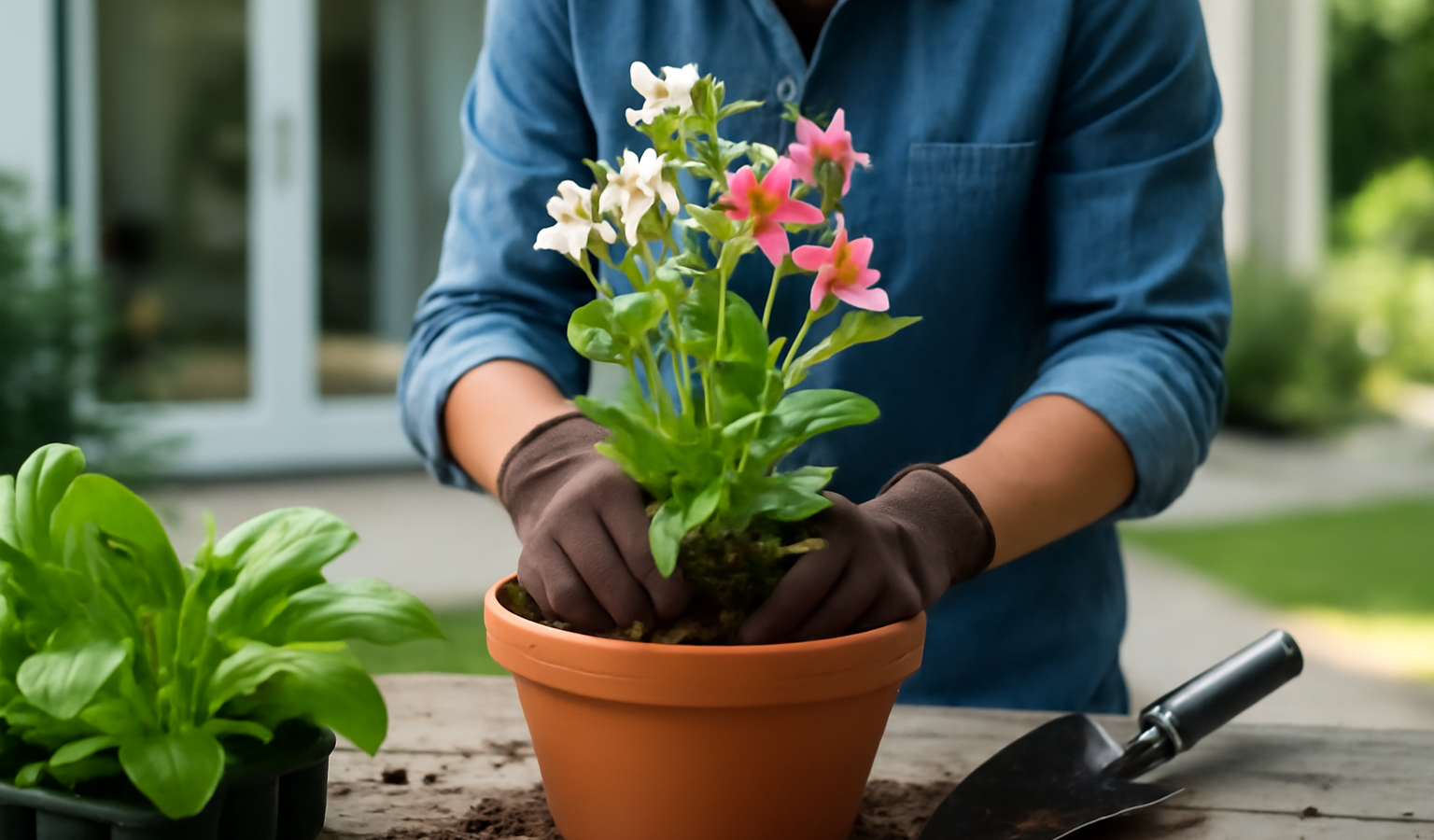
Grow nicotiana as a warm-season annual: surface-sow the dust-fine seeds indoors 6 to 8 weeks before your last frost, do not cover them because they need light to germinate, then move seedlings outside after the soil warms and space them 8 to 18 inches apart depending on the variety. Give them full sun to part shade and steady moisture, and you’ll get tubular, star-shaped flowers from early summer until frost. Several species, especially Nicotiana sylvestris and N. alata, release a heavy sweet perfume at dusk that pulls in hawkmoths and hummingbirds. The plants are tender perennials only in USDA zones 10 and 11; everywhere colder they’re treated as annuals, but they reseed so readily that they often come back on their own.
Key Takeaways
- Seeds are tiny and dust-like and need light to sprout, so press them onto the surface and never bury them.
- Start indoors 6 to 8 weeks before your last frost; transplant only after nights stay above 50°F.
- Heights run from 12 to 18 inches (‘Domino’, ‘Saratoga’) up to 4 to 5 feet (N. sylvestris), so check the variety before spacing.
- Many are intensely fragrant in the evening and feed hummingbirds, moths, and other pollinators.
- All parts are toxic if eaten (it’s in the nightshade family), and plants are prone to tobacco mosaic virus and hornworms.
What Nicotiana Is and Which Varieties to Grow
Nicotiana, commonly called flowering tobacco, is a genus in the nightshade family (Solanaceae), related to tomatoes, peppers, petunias, and datura. It’s grown as an ornamental for its clusters of tubular flowers that flare open into a five-pointed star at the mouth. Colors span white, cream, lime green, pink, rose, red, and dusky maroon. Bloom runs from early summer right up to your first hard frost, and the plants are remarkably untroubled by heat once established.
The genus is worth understanding by species because size and fragrance vary enormously. Nicotiana alata is the old-fashioned jasmine tobacco, growing 2 to 4 feet with white-to-pink trumpets that are powerfully scented at night. Nicotiana sylvestris, the woodland tobacco, is the showstopper: a single plant reaches 4 to 5 feet with broad tropical-looking leaves and drooping clusters of long white tubes that perfume the whole garden after sundown. Nicotiana langsdorffii is a connoisseur’s plant, 3 to 5 feet tall with hundreds of small chartreuse-green bells and almost no scent, but unbeatable for flower arrangers and a magnet for hummingbirds.
For bedding and containers, breeders have produced compact hybrid series. The ‘Domino’ and ‘Saratoga’ series stay a tidy 12 to 18 inches, hold their flowers facing upward and open in daytime, and come in mixed and single colors. The tradeoff is fragrance: most of these compact day-bloomers have been bred for color and uniformity and smell little or nothing. If perfume is what you’re after, grow the tall species. A practical approach is to plant ‘Domino’ or ‘Saratoga’ at the front of a bed for reliable color and tuck a few N. sylvestris at the back for evening scent and height.
Climate, Hardiness, and Sun
Treat nicotiana as an annual in almost every US garden. It’s a tender perennial only in USDA zones 10 and 11, where mild winters let the roots survive and the plant can grow woody and shrubby over a couple of seasons. In zones 3 through 9 it dies at the first hard freeze, but because it sets enormous quantities of seed, it frequently reseeds and returns the following spring without any help from you. If you want guaranteed plants, collect seed or start fresh transplants each year rather than relying on volunteers.
For light, the sweet spot is full sun in cool and temperate regions, meaning 6 or more hours of direct sun. In hot-summer areas (the Deep South, Texas, the Southwest, USDA zones 8 and warmer), give plants afternoon shade or site them where they get morning sun and dappled light later in the day. Nicotiana tolerates part shade better than most annuals and will still flower well with 4 to 5 hours of sun, though stems stretch and lean toward the light in deeper shade. Too much shade also reduces flowering and makes tall species flop.
When and Where to Plant
Nicotiana is frost-tender, so timing follows your last spring frost date. Don’t rush it outdoors. The plants sulk and stall in cold soil, and a late frost will kill seedlings outright. Wait until all danger of frost has passed and nighttime temperatures hold steadily above 50°F before transplanting or direct sowing. In most of the country that’s mid-to-late spring; in the upper Midwest and New England, late May into early June.
Choose a site with rich, well-drained soil and consistent moisture. Nicotiana grows in most soils but performs best in fertile loam amended with a couple of inches of compost worked into the top 6 to 8 inches before planting. A near-neutral pH of 6.0 to 6.8 is ideal. The tall species need a spot sheltered from strong wind, since 5-foot stems carrying heavy flower heads can snap or lodge in a storm. They make excellent additions to a cottage border, a moon garden, or any bed you sit near in the evening, where the night fragrance is the whole point. For pairing ideas with other evening-scented annuals, see our guide on how to grow moonflowers.
Starting Nicotiana From Seed
Starting from seed is by far the cheapest way to get a lot of plants, and it’s how most gardeners grow nicotiana since transplants are not always sold at garden centers. The one rule you cannot break: the seeds are tiny, almost like dust, and they need light to germinate. Surface-sow them and do not cover them with soil. Burying these seeds even a fraction of an inch is the single most common reason people fail with nicotiana.
Indoors, 6 to 8 weeks before last frost
Fill cell trays or small pots with a moistened seed-starting mix and firm it lightly. Sprinkle the fine seed thinly across the surface, or mix it with a pinch of sand to spread it more evenly, then press gently so the seed makes contact with the mix but stays exposed to light. Mist the surface, cover the tray with a clear dome or plastic to hold humidity, and set it somewhere bright at 70 to 75°F. Germination usually takes 10 to 20 days. The moment you see green, remove the dome and give the seedlings strong light, either a sunny window or grow lights an inch or two above the foliage, to prevent leggy, weak stems.
Keep the surface evenly moist but never soggy; bottom-watering by setting trays in a shallow tray of water protects the delicate seedlings from being flattened. Once plants have two or three true leaves, thin or prick them out into individual cells. Begin hardening off over 7 to 10 days before transplanting, moving trays outdoors to a sheltered spot for a few hours at first and extending the time daily so they adjust to wind and direct sun.
Direct sowing outdoors
In zones 7 and warmer with long seasons, you can scatter seed directly on prepared, weed-free soil after your last frost. Press it into the surface, keep it consistently damp, and thin the seedlings to final spacing once they’re a few inches tall. Direct-sown plants bloom later than transplants, so indoor starting gives you a meaningful head start in shorter-season climates.
Transplanting and Spacing
Set hardened-off transplants out on a calm, overcast day or in the evening to reduce transplant shock. Plant at the same depth they grew in their pots and water in well. Spacing depends entirely on the variety, so check the mature size before you plant. Compact bedding series like ‘Domino’ and ‘Saratoga’ (12 to 18 inches tall) want 8 to 12 inches between plants. Mid-sized N. alata needs 12 to 18 inches. The towering species, N. sylvestris and N. langsdorffii, need 18 to 24 inches of elbow room so air moves freely and the big plants don’t crowd each other.
Mulch with 1 to 2 inches of shredded leaves or fine bark after planting to conserve moisture and suppress weeds, keeping the mulch an inch back from the stems. If you grow the tall species in an exposed spot, stake them early, while they’re small, so the support is in place before the flower heads get heavy. Nicotiana also grows well in large containers; use a pot at least 12 inches across for compact types and a roomy half-barrel for the giants, and expect to water containers more often since they dry out fast.
Watering and Feeding
Nicotiana likes steady moisture and resents drought, which causes flowering to stall and the lower leaves to wilt and yellow. Aim to provide about 1 inch of water per week from rain or irrigation, more in heat or in containers. Water deeply at the base rather than overhead; wet foliage that stays damp invites disease and can spread virus on your hands and tools. Let the top inch of soil dry slightly between waterings so the roots get oxygen, but don’t let the plant flag.
These are moderate-to-hungry feeders, especially the big species putting on several feet of growth. Mix a balanced slow-release granular fertilizer into the bed at planting, or feed every 2 to 3 weeks through the growing season with a balanced liquid fertilizer diluted to label rate. Don’t overdo nitrogen, though: too much pushes lush leaves at the expense of flowers and makes stems floppy. Container plants need more frequent feeding since nutrients leach out with every watering.
Fragrance and the Evening Show
The reason serious gardeners grow nicotiana is the perfume, and it pays to understand how it works so you can plant for it. The strongly scented species, above all N. sylvestris and N. alata, are pollinated by night-flying hawkmoths. Their flowers stay relatively closed and quiet during the heat of the day, then open wide and release a heavy, sweet, jasmine-like fragrance as the sun goes down and the air cools. By full dark a single mature plant can scent an entire patio or courtyard.
To get the most from this, site the fragrant species where you’ll actually be in the evening: beside a porch, along a path you walk after dinner, under a bedroom window, or in a dedicated moon garden of white and pale flowers that glow at dusk. Be aware that the compact day-blooming bedding series sacrifice most of this scent for upward-facing daytime color, so if fragrance is the goal, read the variety description carefully and lean toward the species rather than the hybrids.
Deadheading and Self-Seeding
Nicotiana flowers continuously, and a little maintenance keeps it tidy and prolific. Pinch or snip off spent flower clusters before they form seed to encourage more blooms and a longer season; this is most worthwhile on the compact bedding types. The tall species often shed their faded flowers cleanly on their own and need little fuss. If a plant gets leggy by midsummer, you can cut it back by a third to force fresh growth and a second flush of bloom.
Here’s the catch with deadheading: it also prevents the prolific self-seeding that many gardeners prize. Nicotiana reseeds enthusiastically, and a single plant left to ripen its pods can scatter thousands of seeds that sprout the following spring. If you want volunteers, leave some seed heads to mature and drop, then thin the seedlings where they’re too thick. Note that hybrid series like ‘Domino’ won’t come true from saved seed; their offspring revert to mixed, often smaller flowers, while the species reseed reliably true to type. To collect seed, let pods dry tan and papery on the plant, then snip them into a paper bag and store the dust-fine seed cool and dry.
Pests, Disease, and Toxicity
As a member of the nightshade family, nicotiana shares both the toxicity and several pests of its tomato and tobacco relatives. Every part of the plant is poisonous if eaten because it contains alkaloids, including nicotine. Site it away from areas where small children or pets graze, and wash your hands after handling. It is grown strictly as an ornamental and is not for consumption in any form.
The most serious disease is tobacco mosaic virus (TMV), which causes mottled, distorted, light-and-dark patchy leaves and stunted growth. There is no cure; remove and destroy infected plants and do not compost them. TMV spreads on hands and tools, and notably through tobacco products, so never handle plants after smoking, and wash up before working among them. On the pest side, watch for tobacco and tomato hornworms, fat green caterpillars that strip foliage fast and are best handpicked at dusk. Aphids cluster on new growth and can be knocked off with a strong spray of water or treated with insecticidal soap, and budworms sometimes bore into developing flowers. Good spacing and airflow, drip irrigation, and clean tools prevent most trouble before it starts. For another nightshade-adjacent self-sower with similar habits, compare notes with our guide to growing cleome.
Cut Flowers and Pollinators
Nicotiana earns its keep beyond the border. The long-tubed flowers are a hummingbird favorite, and the fragrant species draw in hawkmoths and other night pollinators, making it one of the better annuals for a wildlife-friendly garden. Plant it near a window or seating area and you’ll see hummingbirds working the trumpets in daylight and sphinx moths hovering at dusk like tiny hummingbirds themselves. Pair it with other nectar-rich annuals to keep pollinators coming all season; our Plants & Flowers hub has plenty of companions to choose from.
For cutting, the airy chartreuse N. langsdorffii and the white-flowered species are florists’ favorites, adding height, movement, and a wild meadow look to arrangements. Cut in the cool of early morning when stems are fully hydrated, choosing stems with a few open flowers and plenty of buds to come. Strip the lower leaves, plunge the stems immediately into cool water, and they’ll last several days to a week in the vase. The scent of the fragrant types carries indoors in the evening, the same way it does in the garden.
Frequently Asked Questions
Is nicotiana an annual or a perennial?
It’s a tender perennial only in USDA zones 10 and 11, where mild winters let it survive. In zones 3 through 9 it’s grown as a warm-season annual that dies at frost, though it reseeds so readily it often returns on its own each spring.
Why aren’t my nicotiana seeds germinating?
The most common cause is burying them. The seeds are dust-fine and need light to sprout, so they must be surface-sown and left uncovered. Press them onto moist mix, keep them at 70 to 75°F and consistently damp, and they should germinate in 10 to 20 days.
Which nicotiana is the most fragrant?
Nicotiana sylvestris and N. alata are the most fragrant, releasing a sweet jasmine-like perfume in the evening to attract hawkmoths. Compact bedding series like ‘Domino’ and ‘Saratoga’ have been bred for daytime color and have little to no scent.
How big does nicotiana get?
It depends on the variety. Compact ‘Domino’ and ‘Saratoga’ types stay 12 to 18 inches, N. alata reaches 2 to 4 feet, and the giant N. sylvestris and chartreuse N. langsdorffii can top 4 to 5 feet. Check the species before spacing and staking.
Is flowering tobacco poisonous?
Yes. Nicotiana is in the nightshade family and every part is toxic if eaten because it contains nicotine and related alkaloids. Grow it strictly as an ornamental, keep it away from children and pets that might chew it, and wash your hands after handling.