

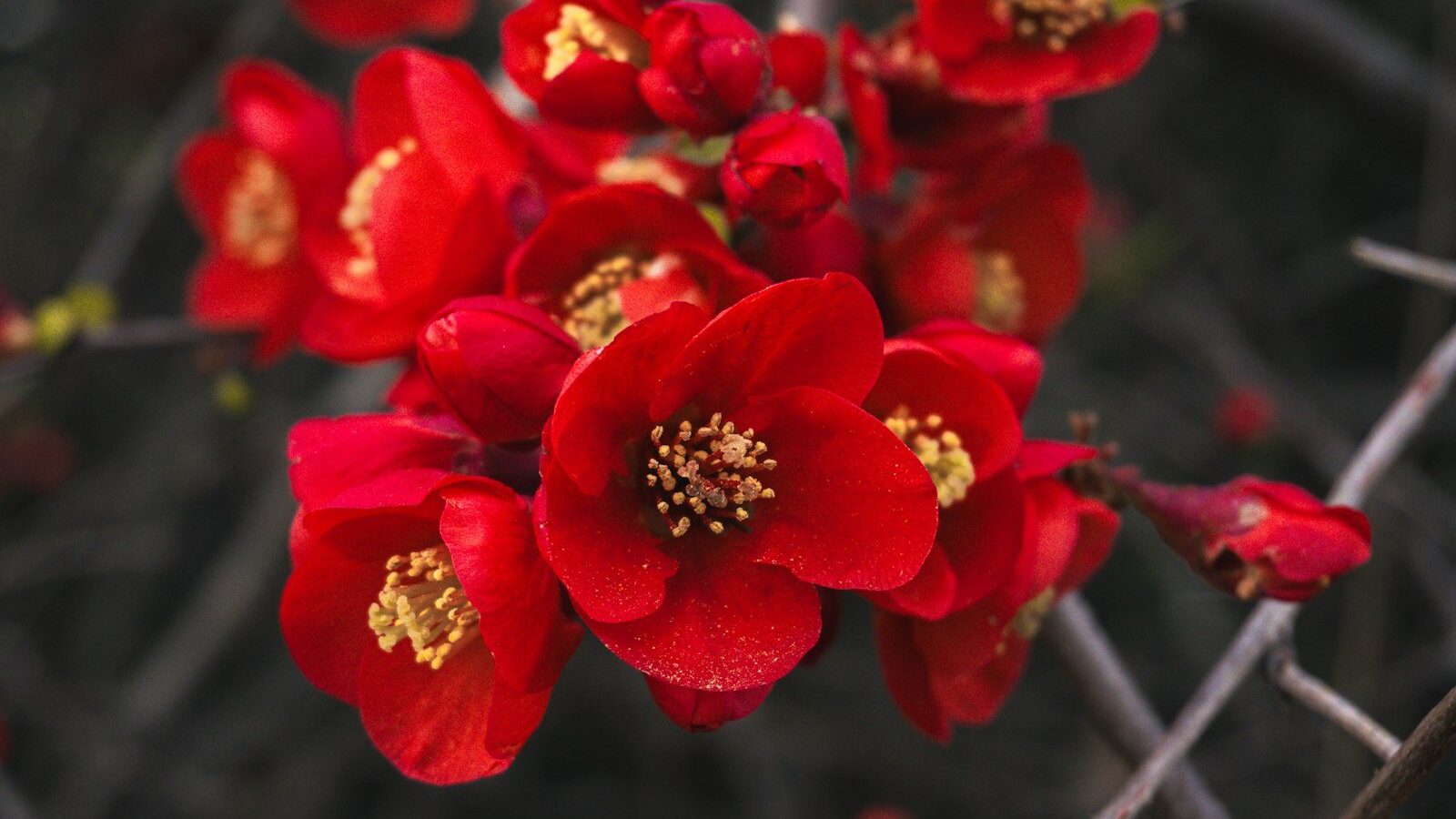
If you want fiery color in the garden before almost anything else has woken up, grow flowering quince. To grow flowering quince (Chaenomeles) well, plant it in full sun in average, well-drained soil, prune it right after it finishes blooming in spring, and otherwise leave it almost entirely alone. This tough, thorny deciduous shrub bursts into bloom in late winter to early spring, often while snow still lingers, covering its bare branches with waxy flowers in scarlet, coral, salmon, pink, or white. After the show comes a bonus: small, hard, intensely aromatic fruits that ripen in fall and make superb jelly. Flowering quince is drought-tolerant once established, adaptable to poor soil, and so durable it shows up thriving around abandoned farmhouses decades after planting. This guide covers cultivar choice, planting, the all-important pruning timing, fruit, and the handful of pests worth watching.
Key Takeaways
- Flowering quince (Chaenomeles) is hardy in USDA zones 4-9 and blooms in late winter to early spring, often before its leaves emerge.
- Plant in full sun for the heaviest bloom; it tolerates part shade, poor soil, and drought once established.
- Space plants 3-6 feet apart depending on the cultivar; most reach 2-10 feet tall, many with sharp thorns.
- Prune immediately after flowering, since it blooms on old wood; pruning later removes next year’s buds.
- Early flowers feed bees and other pollinators; the thorny habit makes an excellent barrier hedge.
- Watch for fungal leaf spot in wet years and aphids in spring; the aromatic fall fruit makes excellent jelly.
Why Grow Flowering Quince
Flowering quince is one of the earliest woody plants to bloom, and that timing is its whole reason for being. In late winter, when the garden is still brown and bare, its tangled branches light up with clusters of five-petaled flowers in vivid colors that no other shrub offers so early. Cut branches in bud and bring them indoors and they will force into bloom in a vase, a centuries-old trick for getting flowers weeks ahead of the garden.
Beyond the spring spectacle, flowering quince is prized for sheer toughness. It shrugs off poor soil, drought, heat, urban pollution, and neglect. Its thorny, twiggy structure makes a formidable security hedge or barrier planting, and birds shelter and nest in its dense tangle. In fall it produces small, hard, yellow-green fruits, fragrant enough to perfume a room, that are too astringent to eat raw but transform into excellent jelly, preserves, and aromatic potpourri. Few shrubs give so much for so little care.
Hardiness, Size, and Varieties
Chaenomeles is hardy in USDA zones 4 through 9. The two species most often grown are Chaenomeles speciosa, the larger common flowering quince at 6 to 10 feet, and Chaenomeles japonica, the lower Japanese quince at 2 to 3 feet. Hybrids between them, sold as Chaenomeles x superba, offer a wide color range on medium-sized plants. Modern breeding has produced compact and even thornless or fruitless selections that fit small gardens better than the old farmhouse types.
- ‘Texas Scarlet’ is a low, spreading 3-foot shrub smothered in tomato-red flowers, one of the most popular.
- ‘Cameo’ bears double apricot-pink blooms and is nearly thornless, growing to about 4 to 5 feet.
- ‘Jet Trail’ offers pure white flowers on a compact 3-foot mound.
- ‘Toyo-Nishiki’ is a showpiece that carries red, pink, and white flowers on the same branch.
- The Double Take series (‘Scarlet Storm’, ‘Pink Storm’, ‘Orange Storm’) provides large double, camellia-like flowers, thornless stems, and no messy fruit, bred for ornamental use.
Choose based on your goal. For a colorful spring accent with no thorns or fruit cleanup, the Double Take series excels. For an old-fashioned barrier hedge plus fall fruit for jelly, the thorny species and ‘Toyo-Nishiki’ deliver both.
Where to Plant
Flowering quince blooms most heavily in full sun, at least six hours of direct light a day. It will grow and flower in part shade, but expect noticeably fewer blooms and a looser, more open habit. Give it a spot with good air movement, which helps keep foliar diseases at bay in humid climates.
Because the brilliant flowers appear on bare branches, plant quince where the early color will be noticed, against an evergreen backdrop, near an entry, or along a walk, but mind the thorns on standard cultivars and keep them back from doorways and play areas. Its dense, prickly form makes it ideal as a barrier hedge along a property line or beneath a window. Allow enough room: crowded plants bloom less and develop more disease.
Soil Requirements
One of flowering quince’s best traits is its indifference to soil. It grows in clay, loam, or sand and tolerates a wide pH range, though it prefers slightly acidic to neutral soil around pH 6.0 to 7.0. In strongly alkaline soils the leaves may yellow with chlorosis. The only firm requirement is reasonable drainage; quince dislikes constantly soggy ground, which can cause root rot.
You do not need to pamper the soil. Work an inch or two of compost into the planting area to give roots a good start, but avoid over-enriching, since lean soil produces a sturdier, more floriferous plant. If your ground is heavy clay that holds water, plant on a slight mound to lift the crown above the wettest zone.
When and How to Plant
Plant flowering quince in early spring or in fall while the soil is still workable. Bare-root plants are best set out in early spring before they leaf out; container-grown plants can go in throughout the growing season with attentive watering. Fall planting in mild climates gives roots a head start before the next summer.
- Dig a hole as deep as the root ball and two to three times as wide, roughening the sides of the hole.
- Loosen any circling roots on a pot-bound plant so they spread outward into the surrounding soil.
- Position the shrub with the top of the root ball level with the existing grade, never deeper, to avoid crown rot.
- Backfill with native soil amended with a little compost, firming to remove air pockets.
- Space plants 3 to 4 feet apart for a continuous hedge, or 5 to 6 feet apart as freestanding specimens.
- Water deeply and apply a 2- to 3-inch mulch ring, kept a few inches away from the stems.
Watering and Feeding
Water new plants regularly through their first growing season, about an inch of water per week, to build a deep root system. Once established, flowering quince is genuinely drought-tolerant and rarely needs supplemental water except during extended dry spells. Overwatering an established plant does more harm than good.
Fertilizer needs are minimal. A light application of a balanced granular fertilizer in early spring, after bloom, is plenty for plants in poor soil; those in decent ground need nothing more than an annual topdressing of compost. Avoid high-nitrogen feeding, which pushes leafy growth and soft shoots prone to fireblight and aphids at the expense of flowers.
Pruning Flowering Quince
Pruning timing is the single most important thing to get right with flowering quince, because it blooms on old wood, the previous year’s growth. The buds that will become next spring’s flowers form during summer on this season’s stems. That means you must prune immediately after flowering finishes in spring. Prune in summer, fall, or winter and you will cut off the flower buds and lose the next display.
Right after the petals drop, do your shaping. Remove dead, damaged, or crossing branches, thin out crowded interior stems to open up the tangle and improve airflow, and shorten overlong shoots to control size. Flowering quince tends toward a dense, twiggy mass, so regular thinning keeps it healthier and more graceful. To renew an old, overgrown plant, cut the oldest third of the stems to the ground each year over three years, which rejuvenates it without sacrificing all bloom at once. Wear thick gloves and long sleeves, because the thorns are sharp.
Bloom, Pollinators, and Wildlife
The early flowers of quince are more than ornamental. Opening in late winter and early spring, they provide one of the season’s first nectar and pollen sources for honeybees, native bees, and other early pollinators emerging hungry from winter, a genuinely valuable role in the garden ecosystem. Planting early bloomers like quince alongside later-flowering shrubs helps support pollinators across the whole season; see our broader plants and flowers guides for ideas on extending bloom.
The thorny, twiggy structure offers excellent protected nesting and shelter for songbirds, and the dense barrier deters larger animals. While the fruit is too hard for most wildlife to eat fresh, it eventually softens and is taken by some birds and mammals in late fall and winter. For a gardener building habitat, quince contributes early forage, cover, and structure all at once.
The Fruit and How to Use It
Flowering quince produces small, hard, yellow-green to golden fruits, roughly the size of a golf ball, that ripen in fall. They are intensely aromatic; a bowl of them will scent a whole room for weeks. They are far too astringent and woody to eat raw, but they are rich in pectin, which makes them outstanding for cooking. Simmered with sugar, the fruit yields a fragrant pink jelly, and it can be added to apple preserves to boost flavor and set. Sliced fruits dried for potpourri keep their scent for months.
Note that flowering quince fruit is distinct from the larger, true edible quince that grows on a small tree; if you want abundant fruit for the kitchen, the dedicated fruiting quince tree is the better choice. Most flowering quince cultivars are self-fruitful and set a modest crop without a pollinizer, though thornless ornamental selections like the Double Take series are bred to be largely fruitless.
Common Pests and Problems
Flowering quince is durable, but a few issues turn up, mostly in wet weather or on stressed plants.
Fungal Leaf Spot
In humid climates and wet springs, leaf spot can cause dark blotches and premature leaf drop by midsummer. It is rarely fatal but looks unsightly. Improve airflow by thinning the shrub, avoid overhead watering, and rake up and dispose of fallen leaves to reduce reinfection. Resistant cultivars exist if leaf spot is a recurring problem in your area.
Fireblight
As a member of the rose family, quince can occasionally catch fireblight, a bacterial disease that blackens shoots so they look scorched. Prune out affected wood well below the damage, sterilizing your tools between cuts, and avoid heavy nitrogen feeding that produces susceptible soft growth.
Aphids and Scale
Aphids may cluster on tender spring shoots, distorting new growth, and scale can appear on stems. Knock aphids off with a strong water spray or treat with insecticidal soap; for scale, horticultural oil applied in the dormant season is effective. Healthy, properly watered plants usually shrug off both.
Frequently Asked Questions
When does flowering quince bloom?
Flowering quince blooms in late winter to early spring, often before its leaves emerge and sometimes while snow still lingers. It is one of the earliest woody plants to flower, which is its main appeal. The bloom lasts a couple of weeks, and you can cut budded branches to force into bloom indoors even earlier.
When should I prune flowering quince?
Prune immediately after it finishes blooming in spring. Flowering quince flowers on old wood, and the buds for next year form on this season’s growth during summer. If you prune in summer, fall, or winter, you cut off those buds and lose next spring’s flowers. Right after bloom is the only correct window.
Can you eat flowering quince fruit?
Not raw, it is far too hard and astringent. But the small, aromatic fruits are loaded with pectin and make excellent jelly and preserves once cooked with sugar. They also scent a room beautifully as a natural potpourri. For abundant kitchen fruit, grow a true fruiting quince tree instead, which bears larger, milder fruit.
Does flowering quince have thorns?
Most traditional cultivars and the species do have sharp thorns, which makes them excellent barrier hedges but a poor choice near doorways or play areas. If you want the flowers without the thorns, choose a thornless modern selection such as the Double Take series or ‘Cameo’, which are bred for ornamental use.
How big does flowering quince get?
It depends on the cultivar. Low spreading types like ‘Texas Scarlet’ stay around 3 feet tall, while the common species Chaenomeles speciosa can reach 6 to 10 feet. Most garden hybrids land in the 3- to 5-foot range. Check the mature size on the label and space accordingly so the plant has room to bloom freely.
Flowering quince delivers fierce early-spring color when the garden needs it most, then asks almost nothing in return. Plant it in full sun in well-drained soil, prune it right after it blooms, and keep it watered only while it establishes, and it will reward you with decades of late-winter flowers, fragrant fall fruit for the jelly pot, and a tough, wildlife-friendly presence in zones 4 through 9. Choose a thornless cultivar for a tidy border or a thorny species for a barrier hedge, and you will have one of the most dependable shrubs in the yard.