

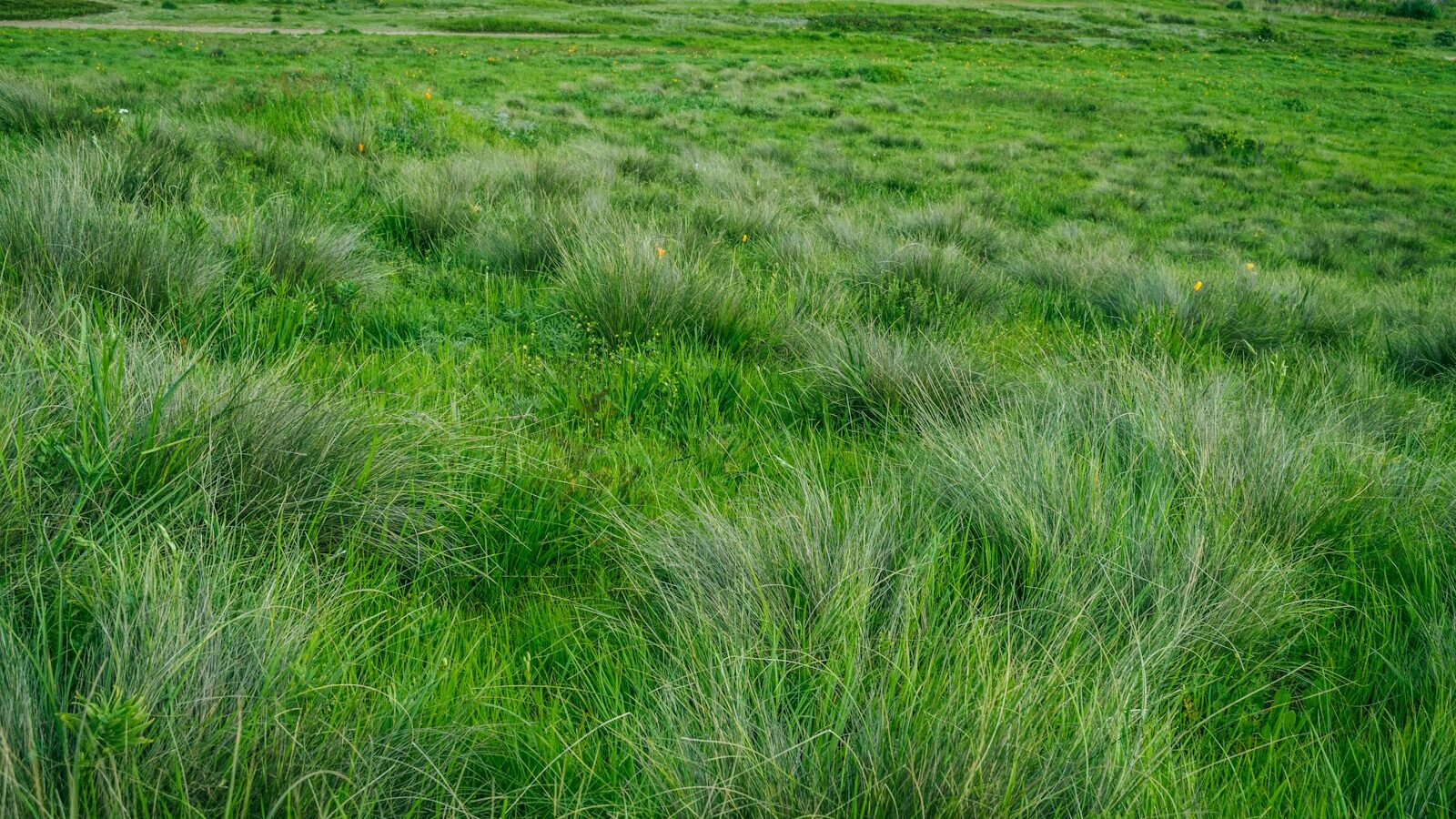
Maiden grass (Miscanthus sinensis) is the big, arching workhorse of the ornamental-grass world. Plant it in full sun and you get a four-to-six-foot fountain of fine-textured blades that turns coppery in fall and throws up silky, fan-shaped plumes that catch low autumn light. It is a warm-season grass, which means it does almost nothing until the soil warms in late spring, then explodes into growth through summer. The trade-off is honest: Miscanthus sinensis reseeds aggressively in mild climates and is listed as invasive in parts of the Mid-Atlantic, Southeast, and elsewhere. Grow it well, cut it back once a year, and choose a sterile or low-seeding cultivar, and it will anchor a border for a decade.
Key Takeaways
- Zones 5–9, full sun. Needs at least 6 hours of direct sun or it flops and flowers poorly.
- Warm-season grass. Greens up late (May–June) and grows fast through summer heat.
- Give it room: mature clumps reach 4–6 ft tall and 3–5 ft wide; space 36–48 in apart.
- Cut back once a year to 4–6 in in late winter, before new shoots appear.
- Divide every 3–4 years in spring when the center dies out.
- Invasiveness warning: the straight species self-seeds; pick sterile cultivars like ‘Gracillimus’ or deadhead plumes in invasive-listed regions.
Where Maiden Grass Grows Best
Maiden grass is reliably hardy in USDA zones 5 through 9, and some tough cultivars push into zone 4 with good snow cover. The single most important factor is sun. This is a full-sun plant in every sense: give it six to eight hours of direct light and the clump stands upright on its own, blades stiff and arching gracefully. Plant it in part shade and you get a floppy, open clump that splits in the middle and flowers sparsely if at all. If your only available spot gets afternoon shade, choose a more compact cultivar and expect to stake it.
Soil is far less fussy. Maiden grass tolerates clay, sand, and everything between, and it handles a soil pH from about 5.5 to 7.5 without complaint. What it will not tolerate is standing water in winter; cold, saturated soil rots the crown. If your site stays soggy, plant on a slight mound or amend heavy clay with a few inches of compost to improve drainage. Once established, the plant is notably drought-tolerant thanks to a deep, fibrous root system, though the foliage looks lushest with occasional summer water.
Planting Maiden Grass
The best planting window is spring, after your last frost and once the soil has warmed to at least 55°F. Spring planting gives the warm-season roots a full growing season to establish before their first winter. You can plant container-grown clumps through early fall in zones 7 and warmer, but in zones 5 and 6 avoid fall planting—a small clump that hasn’t rooted in is easily heaved out by freeze-thaw cycles.
Dig a hole twice as wide as the nursery pot and exactly as deep. Setting the crown too deep invites rot, so the top of the root ball should sit flush with the surrounding soil or a hair proud of it. Tease apart any circling roots, backfill with native soil, water deeply to settle out air pockets, and add a two-inch ring of mulch—keeping it a few inches off the crown. Spacing matters more than beginners expect. A clump that looks lonely at planting will be three to five feet across in three years, so space individual plants 36 to 48 inches apart center-to-center. For a screen, 36 inches gives a solid wall by year two.
Watering, Feeding, and Season-One Care
Through the first growing season, water a new clump deeply once or twice a week so the root zone never fully dries out—this is the make-or-break period for establishment. After that first year, maiden grass is one of the lowest-maintenance plants you can grow. Established clumps need supplemental water only during extended drought, and even then mostly for appearance.
Go easy on fertilizer. Maiden grass evolved on lean soils, and too much nitrogen produces soft, tall growth that flops and splays open by midsummer—the most common complaint with this plant. A single light application of a balanced, slow-release fertilizer in early spring is plenty; in average garden soil you can skip feeding entirely. If your clump flops every year despite full sun, the cause is almost always overfeeding or overwatering, not lack of either.
Cutting Back Maiden Grass
Maiden grass earns its keep in winter—the tan blades and plumes catch frost and rustle in the wind, so leave them standing for off-season interest and to protect the crown. Then cut the entire clump back hard once a year. The timing is late winter to very early spring (February to March in most zones), before the new green shoots push up. If you wait too long, you’ll be trimming around tender new growth and leaving ugly cut stubs through the season.
Cut the whole clump down to four to six inches above the ground. For a small plant, sharp hand pruners or hedge shears work. For an established three-foot clump, the old trick is to tie the foliage into a tight bundle with twine or a bungee cord first, then cut through the base with hedge shears or a reciprocating saw—the bundle keeps the cut blades from scattering across the yard. Wear long sleeves and gloves; the leaf edges are sharp enough to give paper-cut-style nicks.
Dividing Maiden Grass
After three or four years, the center of a maiden grass clump often dies out, leaving a hollow donut of living growth around a dead core. That’s the signal to divide. Division both rejuvenates the plant and gives you free plants for elsewhere in the garden. Do it in spring just as new growth begins, when the plant has maximum energy to recover.
Dig up the whole clump or slice off wedges from the living perimeter with a sharp spade. Mature maiden grass develops a dense, woody root mass that can be genuinely difficult to cut—a sharp spade, an old pruning saw, or even an axe is sometimes needed. Discard the dead center, split the living tissue into fist-sized sections each with healthy roots and shoots, and replant immediately at the same depth. Water well and the divisions will reestablish within a season.
The Invasiveness Problem—and How to Garden Responsibly
This is the part too many plant tags skip. Straight-species Miscanthus sinensis produces viable seed that wind-disperses into roadsides, old fields, and woodland edges, where it forms dense monocultures that crowd out native plants. It is listed as invasive or a “plant of concern” in numerous states across the Mid-Atlantic, Southeast, and lower Midwest. Before planting, check your state’s invasive-species list or ask your local extension office.
You can still enjoy maiden grass responsibly. Choose cultivars selected for low fertility or late, sparse flowering—’Gracillimus’ (maiden grass proper), ‘Adagio’, and the variegated ‘Morning Light’ set little viable seed in cooler zones, while sterile or near-sterile selections are increasingly available. The fail-safe in any region is to cut and bag the plumes before the seed matures and disperses in late fall. Never compost seed heads from a known invasive, and never plant near natural areas or waterways. Responsible cultivar choice plus deadheading lets you keep the structure without feeding the spread.
Common Problems
Flopping is the headline issue, and it traces back to three causes: not enough sun, too much nitrogen, or too much water. Fix the inputs before you reach for stakes. Miscanthus blight and rust can spot the foliage in humid climates—improve air circulation by spacing clumps generously and avoid overhead watering late in the day. Mealybugs occasionally hide at the base of the blades but rarely warrant treatment. Otherwise this is a remarkably pest- and disease-resistant grass, which is exactly why it became so popular—and, in the wrong places, so invasive.
Maiden grass pairs beautifully with late-season perennials; for design ideas browse our Plants & Flowers guides, and if you’re weighing it against a native option, read our comparison of native vs non-native plants. For a non-invasive native alternative with similar height and fall color, consider switchgrass (Panicum).
Frequently Asked Questions
Is maiden grass invasive?
The straight species, Miscanthus sinensis, self-seeds and is listed as invasive in parts of the Mid-Atlantic, Southeast, and lower Midwest. Choose low-seeding cultivars like ‘Gracillimus’ or ‘Morning Light’, cut off plumes before seed disperses in fall, and check your state invasive list before planting near natural areas.
When should I cut back maiden grass?
Cut the entire clump to 4–6 inches in late winter or very early spring (roughly February–March), before new green shoots emerge. Leave the foliage standing all winter for interest and crown protection.
Why is my maiden grass flopping in the middle?
Almost always too little sun, too much nitrogen, or too much water. Give it 6+ hours of direct sun, stop fertilizing, and water only during drought. Dividing an old, hollow-centered clump also restores upright form.
How big does maiden grass get?
Most cultivars reach 4–6 feet tall and 3–5 feet wide at maturity, with plumes adding another foot or more in fall. Space plants 36–48 inches apart.
How often should I divide maiden grass?
Every 3–4 years, or whenever the center dies out and leaves a hollow ring. Divide in spring as new growth starts, cutting through the woody root mass with a sharp spade and replanting the living outer sections.