

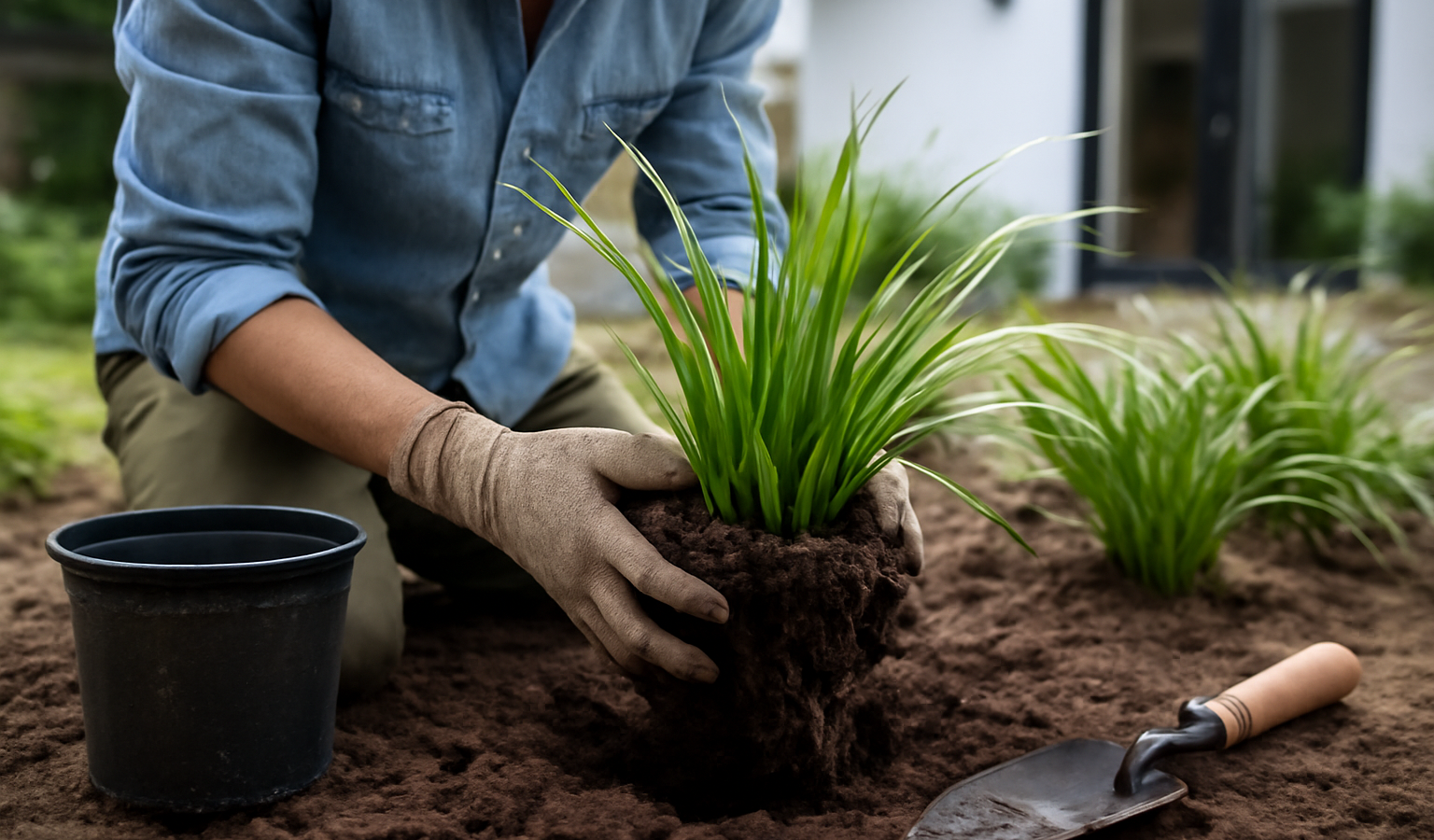
Liriope is the workhorse of low-maintenance landscaping, the plant you reach for when you need something tough, evergreen, and almost impossible to kill to fill a problem spot. Often called monkey grass or lilyturf, it is not a true grass at all but a member of the asparagus family that forms grassy-looking clumps of strappy, arching foliage. Gardeners love it for two specific jobs: a tidy, repeating edge along walkways and beds, and a sweeping groundcover that smothers weeds under trees and on slopes where lawn refuses to grow. Add purple flower spikes in late summer, real drought tolerance once established, and a tolerance for everything from full sun to deep shade, and you have a plant that earns its keep in USDA zones 5 through 10. This guide walks through choosing the right species, spacing it correctly for each job, and the single best maintenance trick that keeps liriope looking sharp year after year.
Key Takeaways
- Choose Liriope muscari for clean, well-behaved clumps along borders and edging; choose Liriope spicata only for aggressive, spreading groundcover where you can contain it.
- Space plants 8 to 12 inches apart for edging and 12 to 18 inches apart for a groundcover mass, depending on how fast you want full coverage.
- Hardy in USDA zones 5 to 10, it grows in full sun to full shade and shrugs off drought once roots are established.
- The best refresh trick is to mow or shear liriope down to about 3 inches in late winter, just before new growth, to remove tatty winter foliage.
- Expect purple flower spikes in late summer followed by dark berries, plus excellent deer resistance.
- Divide clumps every 3 to 4 years to keep them vigorous and to make free new plants.
What Is Liriope (Monkey Grass or Lilyturf)?
Liriope is a clump-forming evergreen perennial native to East Asia, prized in temperate gardens across the United States for its grass-like appearance and bombproof constitution. The leaves are flat, leathery, and arching, usually a deep green, though variegated forms with cream or gold edges are widely sold. Most varieties top out around 12 to 18 inches tall, forming a dense, fountain-shaped tuft. Because it resembles turf grass at a glance, people often nickname it monkey grass; lilyturf is the other common name, a nod to the lily-like flower spikes it throws up in summer. It is important to understand that liriope is not a lawn substitute you walk on, nor is it a true grass. It is an ornamental perennial that spreads either by tidy clump expansion or by underground runners, depending entirely on which species you plant.
That distinction between the two main species is the single most important decision you will make, so it deserves a closer look before you buy a single pot. Getting it wrong is the difference between a plant that politely holds its line for decades and one that quietly colonizes your entire flower bed. If you want a broader sense of how groundcovers and edging perennials fit into a planting plan, the Plants & Flowers hub is a good place to compare options before committing.
Liriope muscari vs. Liriope spicata: Choose the Right One
Liriope muscari — the clumping, well-behaved choice
Liriope muscari is the species most gardeners actually want. It grows in discrete, slowly expanding clumps that stay roughly where you put them, widening by a few inches a year rather than running off across the yard. This makes it ideal for edging, border fronts, and any situation where you need a crisp, predictable line. Popular cultivars include ‘Big Blue’ with broad green leaves and prominent flower spikes, ‘Variegata’ with gold-margined foliage, and ‘Royal Purple’ with especially showy blooms. Because muscari does not send out aggressive runners, you can plant it next to a lawn or a perennial border without worrying it will swallow its neighbors. When a guide refers to liriope for formal edging, it almost always means muscari.
Liriope spicata — the spreading, potentially invasive groundcover
Liriope spicata, sometimes labeled creeping lilyturf, spreads by underground stems called stolons and will steadily fill in any open ground you give it. That trait is a virtue when you need to cover a large, awkward area fast, such as a shady slope, a strip between sidewalk and street, or the dry ground under mature trees where grass simply will not establish. It is genuinely tough and effective at suppressing weeds once it knits together. The flip side is that spicata can be aggressive to the point of invasive. In several Southeastern states it has escaped gardens and naturalized in woodlands, and even in a home landscape it will push into lawns, beds, and cracks in pavement if left unchecked. Plant spicata only where you have a hard edge, a buried barrier, or an isolated bed to contain it, and never adjacent to a manicured perennial border you care about.
The simplest rule: if you want neat and contained, plant muscari. If you want fast and spreading and you have a place to safely confine it, plant spicata. For a closely related, shade-loving alternative with even finer texture, compare notes with how to grow mondo grass, which is often mistaken for liriope but stays much shorter and lacks the running habit of spicata.
Hardiness, Light, and Where Liriope Grows
Liriope is reliably hardy in USDA zones 5 through 10, which covers most of the continental United States. In the colder end of that range, zones 5 and 6, the foliage may brown and look ragged through winter, which is exactly why the late-winter cutback described below is so useful. In zones 8 through 10 it stays genuinely evergreen and looks presentable nearly year-round. One of liriope’s greatest assets is its adaptability to light. It performs well in full sun, partial shade, and even full, deep shade beneath dense tree canopies. In full sun it flowers most heavily and stays densest, but it needs more consistent moisture in those conditions. In deep shade it grows a little looser and blooms a little less, but it still thrives where most other plants sulk, making it one of the few dependable options for that band of dry shade against a north-facing wall or under evergreens.
Soil and Drought Tolerance
Liriope is not fussy about soil. It grows in clay, loam, or sandy ground and tolerates a wide pH range, though it prefers slightly acidic to neutral soil. The one thing it genuinely dislikes is sitting in waterlogged ground, which invites root and crown rot. Choose a spot with reasonable drainage, and if your soil is heavy clay, work in a couple of inches of compost before planting to loosen it and improve structure. Once established, liriope is notably drought tolerant. The thick, slightly fleshy roots store moisture, so an established planting can ride out summer dry spells with little or no supplemental water, especially in shade. This combination of drought tolerance and shade tolerance is why liriope shows up so often in commercial and municipal landscapes where irrigation is unreliable and maintenance budgets are thin.
When and How to Plant Liriope
The best times to plant liriope are spring and fall, when temperatures are mild and rainfall is more dependable, giving roots a chance to establish before the stress of summer heat or winter cold. Spring planting works well across all zones; fall planting is excellent in zones 7 and warmer, where roots keep growing through a mild winter. You can plant container-grown liriope through summer too, but be prepared to water diligently. Dig each hole as deep as the root ball and a little wider, set the plant so the crown sits level with the surrounding soil, backfill, firm gently, and water in thoroughly. Mulch with 2 inches of shredded bark or leaf mold to conserve moisture and suppress weeds while the planting fills in.
Spacing: Border and Edging vs. Groundcover Mass
Spacing is where most people either get a clean result or end up disappointed, and it depends entirely on the job you are asking liriope to do. The two main uses, edging and groundcover, call for different spacing.
Spacing for borders and edging
For a defined edge or border along a path, driveway, or bed front, space plants 8 to 12 inches apart, center to center, in a single line or a staggered double row. Tighter spacing, around 8 inches, gives you a continuous, solid ribbon of foliage in the first season and reads as a deliberate, formal line; this is the look you want flanking a front walk. Wider spacing toward 12 inches saves money and still closes up within a year or two as the clumps widen, but it looks a little gappy at first. Use clumping muscari for edging so the line stays crisp and the plants do not creep into the adjacent lawn or bed.
Spacing for groundcover mass
For covering a larger area as a groundcover, space plants 12 to 18 inches apart in a staggered, offset grid rather than straight rows, which gives the most natural and even fill. At 12 inches the area knits together in a single growing season; at 18 inches it takes two seasons but uses far fewer plants over a big space. Spicata’s running habit lets you start with the wider 18-inch spacing and still expect complete coverage, because it actively fills the gaps. Muscari used as groundcover does best toward the tighter 12-inch end since it relies on slow clump expansion rather than runners.
How to estimate how many plants you need
To plan a mass planting, the quick math is straightforward. For plants on 12-inch centers, you need roughly one plant per square foot, so a 100-square-foot bed takes about 100 plants. For 18-inch centers, figure about one plant for every 2.25 square feet, so that same 100-square-foot bed needs only about 44 plants. For 8-inch edging spacing along a path, divide the run length in inches by 8: a 20-foot edge is 240 inches, or about 30 plants. Buying liriope in flats or as bare-root divisions rather than individual quart pots dramatically lowers the cost when you are covering a large area, and the smaller divisions establish just fine.
The Mowing Trick: Cutting Back Liriope in Late Winter
If you remember one maintenance tip from this guide, make it this one. By late winter, the previous year’s liriope foliage often looks tired: browned tips, cold-damaged blades, and a tatty, flattened appearance, especially in colder zones. Rather than fussing with the plant blade by blade, you cut the entire planting down hard to refresh it. For a large groundcover bed or a long edge, the easiest method is to run a lawn mower over it with the deck set high, at about 3 inches, mowing off all the old foliage in a single pass. For smaller plantings or individual clumps, hedge shears or a string trimmer do the same job. The crowns sit safely below the cutting height, so you are only removing the worn-out leaves.
Timing is the key. Do this in late winter or very early spring, after the worst cold has passed but before the new growth begins to push, typically February in the South and March into early April farther north. Cutting before new shoots emerge means you remove all the old, damaged blades without slicing the tips off the fresh growth, which would leave the planting looking chopped and brown-tipped all season. Within a few weeks of the cutback, a flush of bright new foliage emerges, and the planting looks crisp and uniform for the rest of the year. Skip the cutback and the old leaves persist, mixing tired brown blades through the new green and giving the whole bed a perpetually unkempt look. Rake up and remove the clippings afterward, since a thick mat of cut foliage left on top can smother the emerging shoots and harbor slugs and disease.
One caution: set the mower high and check the height before you start. Scalping the crowns too low can damage or kill the plants. If you are nervous about it, do a test pass on a small section first. This once-a-year haircut is the single biggest reason well-kept liriope plantings look so much better than neglected ones, and it takes only minutes for what would otherwise be hours of hand grooming.
Watering, Fertilizing, and Ongoing Care
During the first growing season, water new liriope regularly, aiming for about 1 inch of water per week from rain or irrigation, to help roots establish. Keep the soil consistently moist but never soggy. After that first year, established plants need very little supplemental water and only really want it during extended drought, particularly when planted in full sun. Liriope is a light feeder and rarely needs much fertilizer. If growth seems weak or you want to push denser foliage, apply a balanced slow-release fertilizer in early spring, right around the time of the late-winter cutback, and that is generally enough for the whole year. Avoid heavy nitrogen, which produces floppy growth and fewer flowers.
Dividing liriope every 3 to 4 years
Every 3 to 4 years, clumping liriope benefits from division. Over time the centers of older clumps can grow congested or die out, and dividing rejuvenates them while giving you free plants to expand your planting or fill gaps. Dig the clump in early spring, ideally right after the cutback, and use a sharp spade or knife to slice it into sections, making sure each division has both roots and several blades. Replant immediately at the same depth, water in, and the divisions will establish quickly. This is by far the cheapest way to build up a large liriope planting, and it is one of the few perennials forgiving enough to take rough division and barely notice.
Flowers, Berries, and Seasonal Interest
In late summer, usually August into September, liriope sends up slender spikes of small flowers held just above the foliage. On muscari the spikes are stout and densely packed, in shades of violet, lavender, and purple, looking a bit like grape hyacinths, which is exactly what the species name muscari references. They are a genuine ornamental feature and draw bees. As the flowers fade, they give way to small, glossy berries that ripen to blackish-purple and can persist into fall and winter, adding a subtle extra layer of interest. Spicata flowers too, with paler, more loosely arranged spikes that are less showy than muscari’s. The evergreen foliage carries the planting through the rest of the year, which combined with the summer bloom makes liriope a true four-season plant in milder zones.
Pests, Diseases, and Deer Resistance
Liriope is largely trouble-free, but a few problems are worth knowing. Crown rot and root rot are the most serious, caused by fungal pathogens that thrive in poorly drained, waterlogged soil; the best defense is good drainage and avoiding overwatering. Slugs and snails can chew ragged holes in the foliage, especially in damp shade and in beds where cut clippings have been left to mat; clearing debris and improving air circulation helps, as do iron-phosphate slug baits if the damage is heavy. Anthracnose, a fungal leaf disease, can cause reddish-brown lesions and dieback at the leaf tips, particularly in crowded, humid plantings; the annual cutback and removal of old foliage goes a long way toward preventing it by clearing away infected tissue. Scale insects occasionally appear but are rarely serious.
On the plus side, liriope is reliably deer resistant. Deer find the leathery foliage unpalatable and almost always leave it alone, which makes it invaluable in rural and suburban gardens under constant browsing pressure. It is also generally rabbit resistant. If you are planning a landscape in deer country, liriope pairs well with other tough, browse-proof choices; for a complementary woody accent, see how to grow a paperbark maple for a small specimen tree that brings winter bark interest above a groundcover sea of liriope.
Keeping Spicata Contained
Because Liriope spicata spreads by runners, containment deserves a deliberate plan rather than an afterthought. The most reliable method is a physical barrier: a buried edging strip or root barrier sunk at least 6 to 8 inches deep around the planting, or a naturally bounded site like a bed enclosed by driveway, sidewalk, and foundation. A mowed lawn strip acts as a partial check, since regular mowing weakens any runners that try to cross it, but it will not stop spicata entirely. Edging the bed once or twice a season with a sharp spade severs escaping stolons before they take hold. If spicata does jump its bounds, dig out the wanderers promptly, roots and all, before they establish. In short, treat spicata like a useful but determined spreader: give it a job and a fence, and it will reward you; give it freedom, and it will take the whole yard.
Frequently Asked Questions
Is liriope the same as monkey grass?
Yes, monkey grass is a common nickname for liriope, and lilyturf is another. Despite the name, it is not a true grass but an evergreen perennial in the asparagus family. The nickname comes from its grass-like, strappy foliage. Note that mondo grass (Ophiopogon) is sometimes also called monkey grass and is a different but closely related plant that stays shorter.
Should I plant Liriope muscari or Liriope spicata?
Choose muscari for edging, borders, and any tidy, contained planting, because it grows in well-behaved clumps that stay put. Choose spicata only when you want a fast-spreading groundcover for a large area and you can confine it with a buried barrier or hard edges, since its underground runners can become invasive and push into lawns and beds.
When and how do I cut back liriope?
Cut it back hard in late winter or very early spring, before new growth emerges, typically February in the South and March to early April farther north. Run a mower over large plantings with the deck set high at about 3 inches, or use shears on small clumps. This removes tatty, cold-damaged foliage so fresh new leaves can emerge cleanly. Rake up and remove the clippings afterward.
How far apart should I space liriope?
For edging and borders, space plants 8 to 12 inches apart for a clean, continuous line. For groundcover, space them 12 to 18 inches apart in a staggered grid, using tighter spacing for faster coverage. As a rule of thumb, 12-inch centers need about one plant per square foot, while 18-inch centers need roughly one plant per 2.25 square feet.
Does liriope flower, and is it deer resistant?
Yes on both counts. Liriope produces spikes of small purple to violet flowers in late summer, usually August into September, followed by dark berries. It is also reliably deer resistant; deer find the leathery foliage unpalatable and almost always leave it alone, which makes it a dependable choice in gardens with heavy deer pressure.