

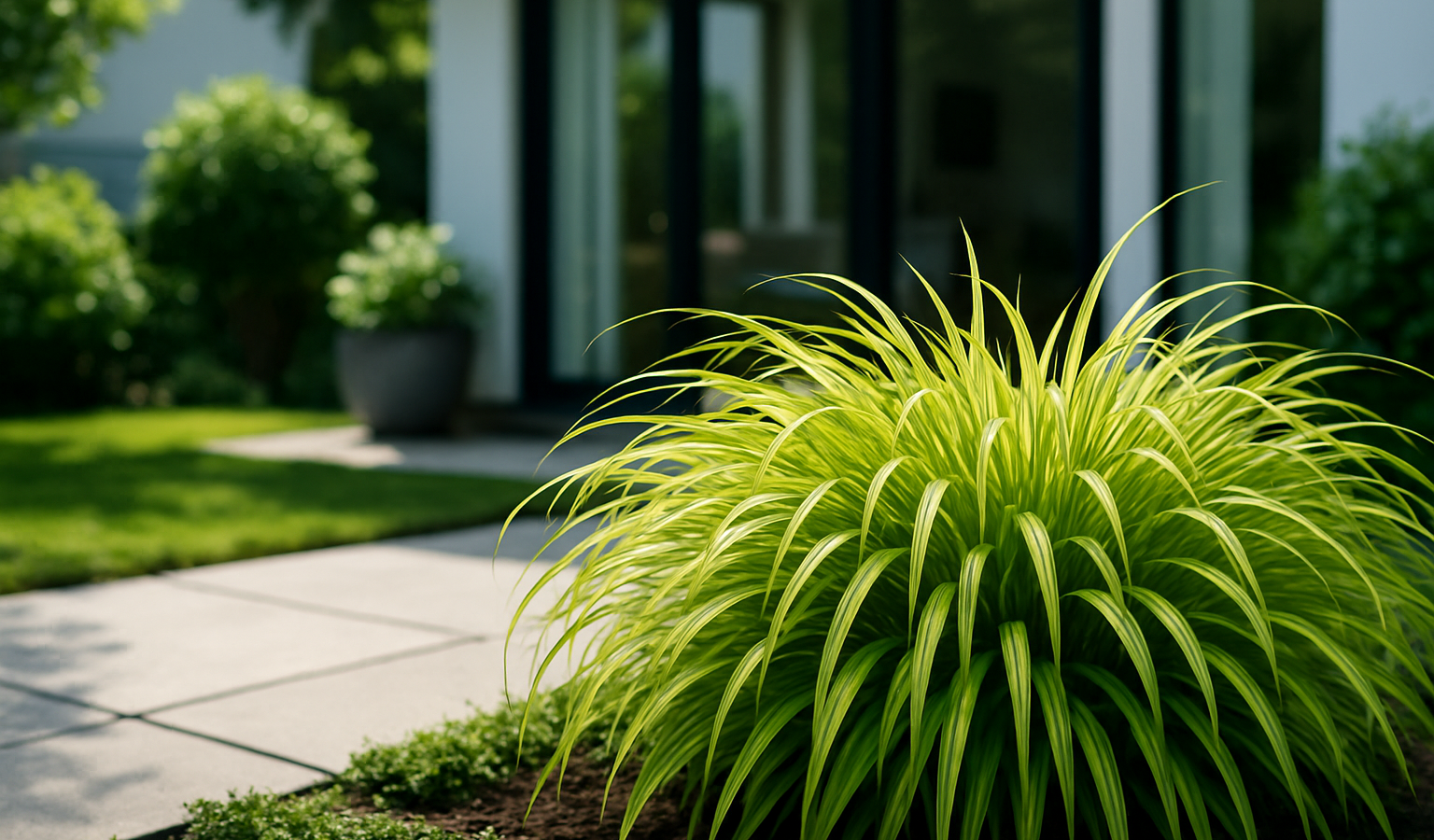
Japanese forest grass (Hakonechloa macra) is the finest ornamental grass for shade you can plant, full stop. While nearly every other grass demands sun, this one mounds and cascades in part to full shade, its blades flowing in one direction like water poured over a ledge. Give it rich, evenly moist soil, the right amount of light for its color, and a little patience while it settles in, and it will anchor a shade border for decades. The two things that trip people up are watering it too little and giving up on it because it is slow. Get past those and it is nearly foolproof.
Key Takeaways
- Light: Part to full shade. Golden ‘Aureola’ wants a few hours of gentle morning sun for best color but scorches in hot afternoon sun; all-green forms are the most shade tolerant.
- Zones: USDA 5 to 9, warm-season grower that emerges late in spring.
- Soil and water: Rich, humusy, well-drained but consistently moist. It crisps at the tips if it dries out, so never let it bake.
- Size and habit: 12 to 18 inches tall, clumping (not invasive), with a graceful cascading mound.
- Pace: Slow. It takes 2 to 3 years to fill in. Do not expect fast spread.
- Cut-back: Shear to the ground in late winter or early spring, then wait, it leafs out late.
Where Japanese Forest Grass Grows Best
Hakonechloa is reliably hardy in USDA zones 5 through 9. In the colder end of that range, a winter mulch of shredded leaves over the crown helps it through hard freezes, especially in its first couple of winters before the clump is established. In zones 8 and 9, the concern flips: heat and drought are the enemies, so site it where it gets afternoon shade and the soil stays cool and damp. It is native to the mountains of Japan, where it grows on moist, shaded slopes and rocky stream banks, and that origin tells you everything about what it wants from you: dappled light, steady moisture, and humus-rich ground.
Getting the Light Right
Light is the single most misunderstood part of growing this grass, mostly because the answer changes with the variety. The plain green species and green-leaved selections are the most shade tolerant of all and will take genuinely deep, full shade under trees where little else thrives. The golden and variegated forms are a different story. The popular ‘Aureola’, with its chartreuse-to-gold blades streaked in green, develops its richest color with a few hours of soft morning sun. Grow it in too much shade and the gold washes out toward lime green; grow it in hot afternoon sun and the blades bleach, brown, and scorch at the edges. The sweet spot for the gold types is bright, filtered shade or an east-facing spot that gets gentle early light and is shaded by midday. When in doubt, err toward more shade rather than more sun, because crisped foliage is harder to recover from than slightly muted color.
Soil and Moisture
This grass demands rich, humusy, moisture-retentive soil that still drains. Before planting, work in two to three inches of compost or leaf mold across the bed. That organic matter holds water at the roots and feeds the slow buildup of the clump. The cardinal rule is to keep it evenly moist. Hakonechloa is not drought tolerant, and the first symptom of dry stress is brown, crispy blade tips, which it wears for the rest of the season because grass blades do not heal. In a normal week aim for the soil to stay damp like a wrung-out sponge, watering deeply once or twice a week in the absence of rain and more often during heat. A two-inch mulch of shredded bark or leaf mold over the root zone is not optional in my book; it keeps the soil cool and cuts your watering in half.
Planting and Spacing
Plant Hakonechloa in spring after the soil warms, or in early fall in mild-winter regions so roots establish before summer. Space individual plants 16 to 24 inches apart on center. Because each clump cascades outward, plants set on roughly 18-inch centers will knit into a flowing carpet over two or three seasons without crowding. Set the crown at the same depth it sat in the pot, water it in thoroughly, and mulch. On slopes and the tops of retaining walls the plant truly shines, the blades pouring downhill in a way few perennials can match, so use that habit deliberately at the front of beds, along steps, or spilling over a low wall.
Be Patient: It Is a Slow Grower
Set your expectations now. Japanese forest grass is genuinely slow, often putting on little visible size its first year as it builds roots. By year two it begins to look like a real plant, and by year three it fills its space and shows off the cascading form it is famous for. This is a clumping grass that expands slowly outward from the crown by short rhizomes; it is not a runner and will never become invasive. The flip side of slow growth is longevity and zero thuggish behavior, so resist the urge to dig up a sulking first-year plant. Keep it watered and it will reward your patience.
Seasonal Care and Cut-Back Timing
As a warm-season grass, Hakonechloa goes dormant in winter, the foliage fading to a warm tan that holds up well and looks attractive against snow. Leave that dead foliage standing through winter for protection and looks. The one essential pruning task is to cut the whole clump back to within an inch or two of the ground in late winter or early spring, before new growth pushes. A pair of hedge shears or a string trimmer makes quick work of it. Here is the part that worries first-time growers: it emerges late, often not breaking ground until mid to late spring, well after hostas and ferns are up. Do not assume it died and dig it out. It is simply slow to wake.
Feeding is light. A single spring application of compost or a balanced slow-release fertilizer as growth begins is plenty. Over-fertilizing produces floppy, weak growth. Through the growing season your main job is moisture management: keep it damp, refresh the mulch, and watch the tips for any sign of drying. If you see browning, increase watering and consider whether the spot gets too much sun.
Dividing
Divide in spring just as new growth appears, every few years if you want more plants or if the center of a very old clump thins. Lift the whole clump, slice it into sections with a sharp spade or knife so each piece has roots and growing points, and replant immediately at the same depth. Keep divisions well watered until they re-establish. Because the plant is slow, divisions also take time to bulk up, so make larger sections rather than tiny ones if you want a quick visual result.
Varieties Worth Knowing
- ‘Aureola’ — the classic, with bright gold blades finely streaked in green; needs gentle morning sun for best color. A perennial favorite for good reason.
- ‘All Gold’ — solid, luminous yellow-gold with no green striping and a slightly more upright habit; reads as a true gold from a distance.
- ‘Beni-Kaze’ — green through summer, then flushes red and burgundy in fall; a quieter choice that pays off late in the season.
- ‘Albostriata’ — green-and-white variegation, vigorous and one of the more shade-tolerant variegated forms, brightening dark corners.
Growing in Containers
Hakonechloa is superb in pots, where its cascading blades spill over the rim like a green or gold waterfall. Use a large container with a quality, moisture-retentive potting mix and make sure it drains. The catch with containers is water: pots dry far faster than the ground, and this grass will not forgive drying out, so check daily in warm weather and water before the mix goes dry. Site the pot in shade or morning sun per your variety. In zones at the cold edge of its range, container roots are more exposed to freezing, so sink the pot in the ground for winter, move it to an unheated garage, or cluster pots against the house and mulch heavily.
Design Partners and Pests
Few plants combine as well in shade as Japanese forest grass. Pair it with hostas, where the fine flowing blades play off bold hosta leaves, and with ferns, whose lacy texture complements the grass beautifully. It also sets off the colorful foliage of coral bells and threads nicely among shade perennials in a woodland border. For more ideas on what thrives out of the sun, see our guide to sun versus shade perennials. On the pest front, Hakonechloa is refreshingly trouble-free: deer and rabbits generally leave it alone, and it has no serious insect or disease problems. The only real threats are dryness and rot in soggy, poorly drained ground, both of which are site issues you control at planting.
If you are building out a shade garden with grasses and grass-like plants, it pairs naturally with sedge (Carex), and you can browse the full collection of our growing guides on the plants and flowers hub.
Frequently Asked Questions
Why are the tips of my Japanese forest grass turning brown?
Brown, crispy tips almost always mean the plant dried out or got too much hot sun. This grass hates drying out, so increase watering to keep the soil evenly moist and add mulch to hold moisture. If a gold variety is in afternoon sun, move it to morning sun or shade.
Is Japanese forest grass invasive?
No. It is a clumping grass that spreads slowly outward from the crown by short rhizomes. It does not run or self-sow aggressively and will never take over a bed. If anything, gardeners wish it grew faster.
How long does it take to fill in?
Plan on two to three years. The first year it builds roots and may barely grow above ground, the second year it looks like a proper plant, and by the third it reaches full size and shows its cascading form.
When should I cut it back, and why hasn’t it come up in spring?
Cut the old foliage to the ground in late winter or early spring before new growth. It is a warm-season grass that emerges late, often mid to late spring, so do not panic or dig it out if it is slower to appear than your hostas and ferns.
Can Japanese forest grass grow in full shade?
Yes, the plain green and green-leaved types are among the most shade-tolerant ornamental grasses and thrive in full shade. Gold and variegated forms tolerate shade but show their best color with a few hours of gentle morning sun.