

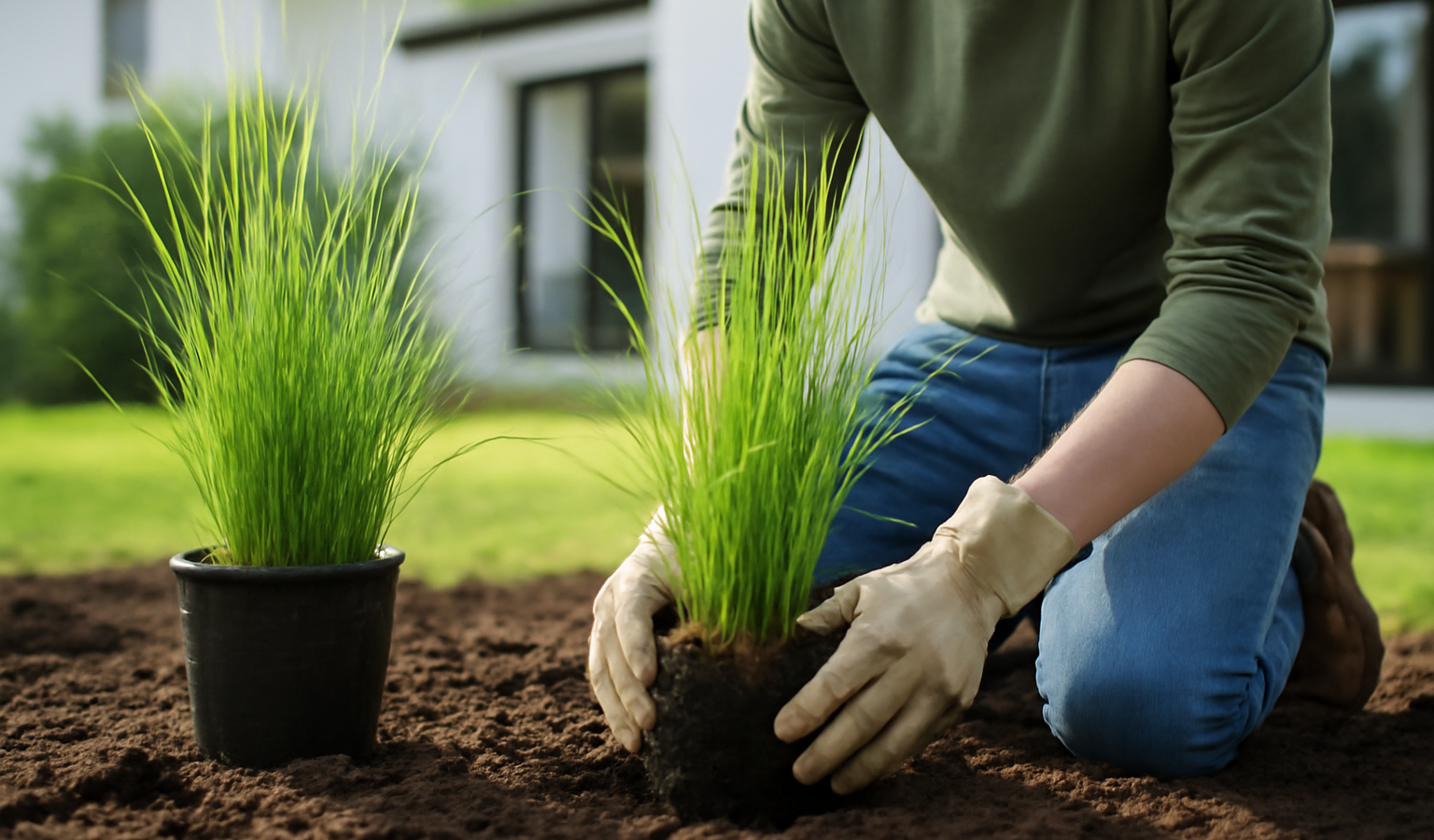
Switchgrass (Panicum virgatum) is the native prairie grass that does everything maiden grass does without the invasiveness baggage. It’s a warm-season North American native that forms upright, vase-shaped clumps three to six feet tall, topped in late summer with airy, pink-tinged flower panicles that fade to a soft cloud of tan seed in winter. The foliage runs from steely blue to deep green to wine-red depending on cultivar, and the whole plant turns golden in fall. It feeds birds, shelters wildlife, anchors slopes with deep roots, and shrugs off heat, drought, clay, and salt. If you want bold ornamental structure and ecological value, switchgrass is hard to beat.
Key Takeaways
- Zones 4–9, full sun. A tough North American native that tolerates a huge range of soils.
- Warm-season grass: emerges late spring, blooms late summer, peaks in fall color.
- Size varies by cultivar: 3–6 ft tall, 2–3 ft wide; space 24–36 in apart.
- Cut back once a year to 4–6 in in late winter before new growth.
- Divide every 3–5 years in spring if the clump opens in the center.
- Not invasive—it’s native; a responsible alternative to miscanthus or pampas grass.
Where Switchgrass Grows Best
Switchgrass is hardy across USDA zones 4 through 9, one of the widest ranges of any ornamental grass, reflecting its natural distribution across most of the continental United States. It is a full-sun plant—give it at least six hours of direct light for the stiffest, most upright habit and the best foliage color. The blue-leaved cultivars in particular wash out and flop in shade. A few hours of afternoon shade is tolerated, but expect a looser, taller, more relaxed clump.
Soil tolerance is where switchgrass shines. It grows in heavy clay, pure sand, rich loam, and rocky fill; it handles a pH from 4.5 to 8.0; and it tolerates both periodic flooding and prolonged drought once established. Coastal gardeners value its salt tolerance. The only thing that compromises it is rich, overfed soil, which—like maiden grass—produces tall, soft growth that flops. Lean and dry is exactly how switchgrass likes it.
Planting Switchgrass
Plant in spring after the last frost, once soil has warmed to 55–60°F. As a warm-season grass, switchgrass roots into warm soil and needs a full season to establish before winter, so spring is far better than fall in cold zones. You can plant from nursery containers all season in the South, and switchgrass also grows readily from seed sown directly in spring—an inexpensive way to cover a large slope or meadow.
Dig a hole as deep as the root ball and twice as wide, set the crown level with the soil surface, backfill, and water deeply. Spacing depends on cultivar and goal: for individual specimens or a loose grouping, space 24 to 36 inches apart; for erosion control or a solid mass, tighten to 18 to 24 inches. A two-inch mulch ring conserves moisture during establishment but keep it off the crown. Seed-grown stands take two to three seasons to reach full size, so be patient.
Watering and Feeding
Water new plants deeply once or twice a week through the first growing season. After that, switchgrass is extraordinarily self-sufficient—its roots can reach several feet down, pulling moisture from deep in the soil profile, which is why prairie ecologists prize it for drought resilience and carbon storage. Established clumps essentially never need watering in most climates.
Skip the fertilizer. Switchgrass is adapted to nutrient-poor prairie soils, and feeding it does more harm than good: nitrogen drives floppy, oversized growth that splays open after summer storms. If your switchgrass is flopping, the fix is less—less food, less water, more sun—not staking. In genuinely poor soil, a single light spring topdressing of compost is the most you should ever apply.
Cutting Back Switchgrass
Leave switchgrass standing through winter. The tan stems and seed clouds provide some of the best cold-season structure in the garden, and the seed heads feed sparrows, juncos, and other birds. The dried foliage also insulates the crown. Then cut the whole clump back once a year, in late winter to early spring, before new green shoots emerge from the base—typically February through March depending on your zone.
Cut to four to six inches above the ground. Hand pruners handle small clumps; for established plants, bundle the foliage with twine before cutting with hedge shears so the trimmings don’t scatter. If you garden for wildlife and can tolerate the look, delaying the cut until early spring maximizes winter cover and seed for birds. Either way, get it done before new growth appears, or you’ll be left with brown stubs sticking up through the fresh green all season.
Dividing Switchgrass
Switchgrass is long-lived and slower to decline than miscanthus, but after three to five years a clump may start to open or thin in the center. Divide it in spring as new growth begins. Dig up the clump (or cut wedges from the edge), split it into sections with healthy roots and shoots using a sharp spade, discard any dead center, and replant at the same depth. Water the divisions well and they’ll reestablish within a season. Division is also the simplest way to multiply a favorite cultivar, since seed-grown plants don’t always come true to the parent’s leaf color.
A Native That Won’t Take Over
Here’s the key reason gardeners increasingly choose switchgrass: it is native across most of North America, so it is not invasive in the way exotic ornamental grasses can be. While it does self-seed modestly—and well-behaved volunteers may appear in beds—it fills an ecological niche rather than displacing native flora, and it supports native insects and birds that exotic grasses do not. It’s a textbook responsible substitute for invasive-listed Miscanthus sinensis, pampas grass, or fountain grass.
If you want to limit even modest self-sowing in a tidy bed, simply cut the seed heads in late fall before they shatter, or choose a cultivar like ‘Northwind’ or ‘Heavy Metal’ that holds its form tightly. Worth knowing: switchgrass spreads slowly by short rhizomes as well as seed, so the clump expands gradually outward over years—divide it if it outgrows its spot.
Best Cultivars and Common Problems
‘Heavy Metal’ offers steel-blue, strongly upright foliage to five feet; ‘Northwind’ is the gold standard for a narrow, columnar, never-flopping form; ‘Shenandoah’ and ‘Ruby Ribbons’ bring red-tipped summer foliage that deepens to burgundy in fall. For problems, there are blessedly few. Rust can spot foliage in humid summers—improve air movement with adequate spacing. The chronic complaint is, again, flopping, and again the answer is full sun plus lean, unwatered, unfertilized conditions. Get the siting right and switchgrass is close to indestructible.
Using Switchgrass in the Landscape
Few plants earn their place as many ways as switchgrass. Its strict, vertical cultivars make superb summer screens and backdrops, fast enough to soften a new fence by their second season. Massed in drifts of five or seven, switchgrass reads as a moving, shimmering block that catches every breeze—the airy panicles diffuse light and add motion that static shrubs never will. In a rain garden or bioswale it’s a standout, since the deep roots tolerate the wet-then-dry cycle that drowns lesser plants while filtering runoff. On a slope, those same roots knit the soil against erosion better than almost any ornamental.
It’s also a four-season plant. Spring brings fresh blue or green blades; summer adds the airy pink-bronze panicles floating a foot above the foliage; fall turns the whole clump gold, amber, or burgundy depending on cultivar; and winter leaves a tan, upright silhouette that holds snow and feeds birds. Pair it with late-season perennials like coneflower, black-eyed Susan, sedum, and aster for a prairie-style border that peaks exactly when most gardens fade. Because it’s a warm-season grass that leafs out late, interplant spring bulbs nearby to cover the bare early-season ground.
Switchgrass shines in naturalistic plantings and rain gardens; for more low-maintenance picks see our Plants & Flowers guides and our take on choosing native vs non-native plants. If you’re comparing structural grasses, our guide to growing maiden grass (Miscanthus) covers the exotic alternative.
Frequently Asked Questions
Is switchgrass invasive?
No. Switchgrass (Panicum virgatum) is native across most of North America and is not considered invasive. It self-seeds modestly and spreads slowly by rhizomes, but it supports native wildlife rather than displacing native plants—making it a responsible alternative to miscanthus, pampas grass, or fountain grass.
When do I cut back switchgrass?
Cut the whole clump to 4–6 inches in late winter or early spring (about February–March), before new shoots emerge. Leave it standing all winter for structure and to feed birds with the seed heads.
Why is my switchgrass flopping?
Too much shade, water, or fertilizer. Switchgrass wants full sun and lean, dry soil. Stop feeding and watering, and for the best upright habit choose a stiff cultivar like ‘Northwind’ or ‘Heavy Metal’.
Can I grow switchgrass from seed?
Yes. Sow seed directly in spring once soil is warm. Seeded stands take two to three seasons to reach full size, and seed-grown plants may vary in leaf color—divide established clumps if you want an exact copy of a named cultivar.
How big does switchgrass get?
Depending on cultivar, 3–6 feet tall and 2–3 feet wide, with flower panicles adding extra height in late summer. Space plants 24–36 inches apart, or 18–24 inches for erosion control.