

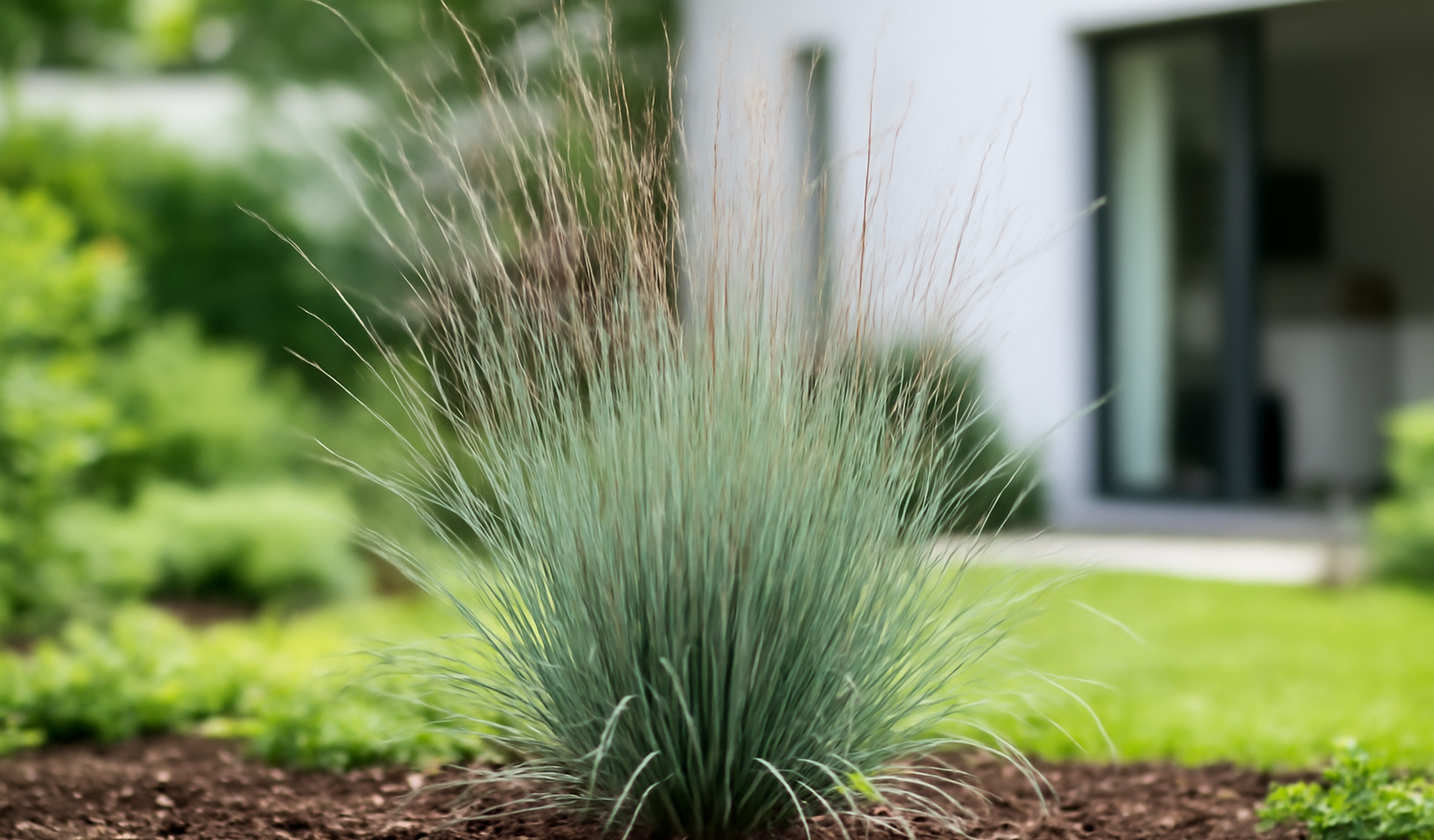
Little bluestem (Schizachyrium scoparium) is the easiest knockout native grass you can plant: give it full sun and lean, well-drained soil, then leave it alone. This warm-season North American prairie bunchgrass grows two to four feet tall, wears blue-green foliage all summer, and ignites into copper, mahogany, and blue-red tones in fall that hold all winter. It is drought-proof once established, needs no fertilizer, hosts skipper butterflies, and feeds birds. The only ways to fail are too much water, too much fertility, or too much shade, all of which make it flop and split open in the middle.
Key Takeaways
- Native warm-season bunchgrass, hardy USDA zones 3 to 9, two to four feet tall.
- Wants full sun and lean, well-drained soil; rich soil, overwatering, and shade cause flopping.
- Extremely drought tolerant once established thanks to deep roots; no fertilizer needed.
- Emerges late in spring because it is warm-season; do not give up on it early.
- Cut back to 4 to 6 inches in late winter or early spring, never in fall.
- Space 18 to 24 inches apart; choose upright cultivars like Standing Ovation to resist flopping.
Zones, Range, and Why Native Matters
Little bluestem is hardy across USDA zones 3 to 9, one of the widest ranges of any ornamental grass, and it is native to nearly all of the continental United States and much of Canada. It was a dominant grass of the tallgrass and mixed-grass prairies, so it is genuinely adapted to North American soils, rainfall patterns, and wildlife. That native status is not just a feel-good label: it means the plant supports local food webs, serves as a larval host for several skipper butterflies, and provides seed and winter cover for birds. Because it descends from prairie stock, it expects the prairie conditions of full sun, lean soil, and dry summers, and it shrugs off the heat, cold, and drought that punish fussier ornamentals.
Choosing the Right Site
Full sun is the single most important requirement. Little bluestem needs at least six hours of direct light, and more is better. In partial shade it stretches, weakens, and flops open, losing both its upright form and its vivid fall color. Pick the brightest, most open spot in the garden, an exposed slope, a hot strip along a driveway, or the sunny back of a border where its winter silhouette can be enjoyed.
Soil should be well-drained and on the lean side. This grass actively prefers poor, dry, sandy, gravelly, or rocky ground; that is where it grows densest and most upright. Rich, fertile, heavily amended beds make it grow lush, soft, and top-heavy until it splays apart at the base, a problem gardeners call flopping or splitting. It tolerates a wide pH range and handles clay as long as the clay drains and is not chronically wet. If you have a difficult dry, sunny spot where little else thrives, little bluestem will likely love it. The same lean-soil logic governs other prairie plants; our guide to how to grow prairie dropseed pairs naturally with it in a matrix planting.
Planting and Spacing
Plant little bluestem in spring after the soil has warmed, or in early fall in milder zones, giving roots time to establish before extreme weather. Container plants and plugs both transplant well. Dig a hole no deeper than the root ball, set the crown level with the soil surface, backfill with the native soil rather than rich amendments, and water in. Resist the temptation to enrich the planting hole; lean is what this plant wants.
Space plants 18 to 24 inches apart. At this spacing individual clumps read as distinct fountains, while closer spacing of around 12 to 15 inches creates a denser meadow or mass that knits together and helps the plants support one another. For a naturalistic prairie or pollinator planting, mass little bluestem in drifts and interplant with sun-loving perennials and other native grasses. Newly planted bluestem benefits from regular water its first season to establish the deep root system; after that, supplemental watering is rarely needed.
Watering, Feeding, and Low-Maintenance Care
Once established, little bluestem is one of the most drought-tolerant plants you can grow. Its deep, fibrous roots reach moisture far below the surface, so established stands need essentially no irrigation in most climates. Overwatering is far more dangerous than underwatering; too much water produces the same floppy, splayed growth as rich soil. Water deeply but infrequently the first year, then back off almost entirely.
Do not fertilize. Little bluestem evolved on nutrient-poor prairie, and added nitrogen makes it tall, weak, and prone to collapse. Skip the compost, skip the granular feed, and let the plant grow tough and upright. This is a genuinely low-maintenance perennial; aside from one cutback a year, it asks for almost nothing. If you are mixing it into a sun border, a quick read on sun vs shade perennials helps you choose companions that share its appetite for light and dry feet.
The Late-Spring Patience Rule
Here is the single thing that confuses new growers most: little bluestem is a warm-season grass, so it emerges late in spring, often weeks after cool-season grasses and most perennials are already green. In a cold spring it may not show meaningful growth until temperatures are reliably warm, sometimes May or even early June in northern zones. Every year, gardeners assume their plant died over winter and dig it out, only to discover firm white roots. Do not give up on it. Wait until the soil and air have truly warmed before declaring a plant dead, and you will almost always see it flush.
When and How to Cut Back
Cut little bluestem back once a year, in late winter or early spring, before new growth begins. Shear or mow the whole clump down to about 4 to 6 inches above the ground. That is the entire annual maintenance routine.
Crucially, do not cut it back in fall. The standing foliage and fluffy, light-catching seed heads are the whole point in autumn and winter: the coppery and mahogany tones glow against snow and low sun, and the standing clumps provide cover and seed for birds plus overwintering habitat for insects. Leaving the grass up through winter is both the prettiest and the most ecologically valuable choice. Time your spring cutback for that narrow window after the worst cold has passed but before the new warm-season shoots emerge, so you remove the old growth without shearing off the new.
Fixing and Preventing Flopping
Flopping, where the clump splits open and falls outward from the center, is the classic little bluestem complaint, and it is nearly always caused by conditions that are too good. The cures are environmental, not cosmetic.
- Move it to full sun. Shade is the most common cause of weak, leaning growth.
- Stop fertilizing and stop overwatering. Lean and dry produces stiff, upright clumps; rich and wet produces flop.
- Plant in poorer soil. If your bed is rich, work in coarse sand or grit, or choose a leaner site.
- Choose an upright cultivar. Named selections bred for strong vertical habit resist flopping far better than seed-grown plants.
- Plant closer or among companions. Neighbors provide mutual support in a matrix planting.
Wildlife Value and Self-Sowing
Little bluestem earns its place ecologically. It is a larval host plant for several skipper butterflies, and its seeds feed sparrows, juncos, and other small birds through fall and winter. The dense clumps shelter beneficial insects and small wildlife, especially when left standing over winter. As a native, it supports far more local biodiversity than exotic ornamental grasses.
The species self-sows readily, which is a feature in a naturalistic meadow and a minor chore in a tidy border. Seedlings appear around established clumps and can be left to thicken a planting, transplanted while young, or weeded out. Named cultivars set less viable seed and stay more contained, so if you want predictable plants in defined spots, start with selections rather than the straight species.
Varieties Worth Growing
Modern cultivars were bred largely to solve the flopping problem and intensify color. Standing Ovation is the go-to upright selection, holding a strong vertical form with broad blue foliage and excellent fall color. The Blues offers especially blue summer foliage but can lean in rich soil, so site it lean and sunny. Blue Heaven (sold as Minnblueb) is a tall, upright, very cold-hardy selection with blue summer color shifting to burgundy and purple in fall. Twilight Zone brings silvery-purple tones and a more colorful summer presence. For pure native restoration, the straight species grown from regional seed is the most ecologically appropriate choice and the cheapest to plant in quantity.
Little bluestem gives you four seasons of structure and color for almost no effort, asking only sun, lean soil, and patience in spring. For more sun-loving grasses and perennials to plant alongside it, browse the plants and flowers hub.
Frequently Asked Questions
Why is my little bluestem flopping over?
Flopping is almost always caused by too little sun, too much water, or too-rich soil. Move it to full sun, stop fertilizing, cut back on watering, and consider an upright cultivar like Standing Ovation. Lean, dry, sunny conditions produce stiff, vertical clumps.
When should I cut back little bluestem?
Cut it down to about 4 to 6 inches in late winter or early spring, before new growth emerges. Do not cut it in fall, because the standing foliage and seed heads provide winter interest, bird food, and insect habitat.
Is my little bluestem dead? It hasn’t come up.
Probably not. It is a warm-season grass that emerges late, often not until late spring or early summer in cold climates. Wait until the soil has truly warmed before assuming it died, and check for firm white roots rather than digging it out early.
Does little bluestem need full sun?
Yes. It needs at least six hours of direct sun and performs best in even more. In shade it grows weak, leans, flops, and loses its vivid fall color, so always plant it in the sunniest, most open spot available.
How far apart should I plant little bluestem?
Space plants 18 to 24 inches apart for distinct fountain-shaped clumps, or closer at about 12 to 15 inches for a dense meadow or mass planting where the plants support each other. Avoid enriching the soil at planting time.