

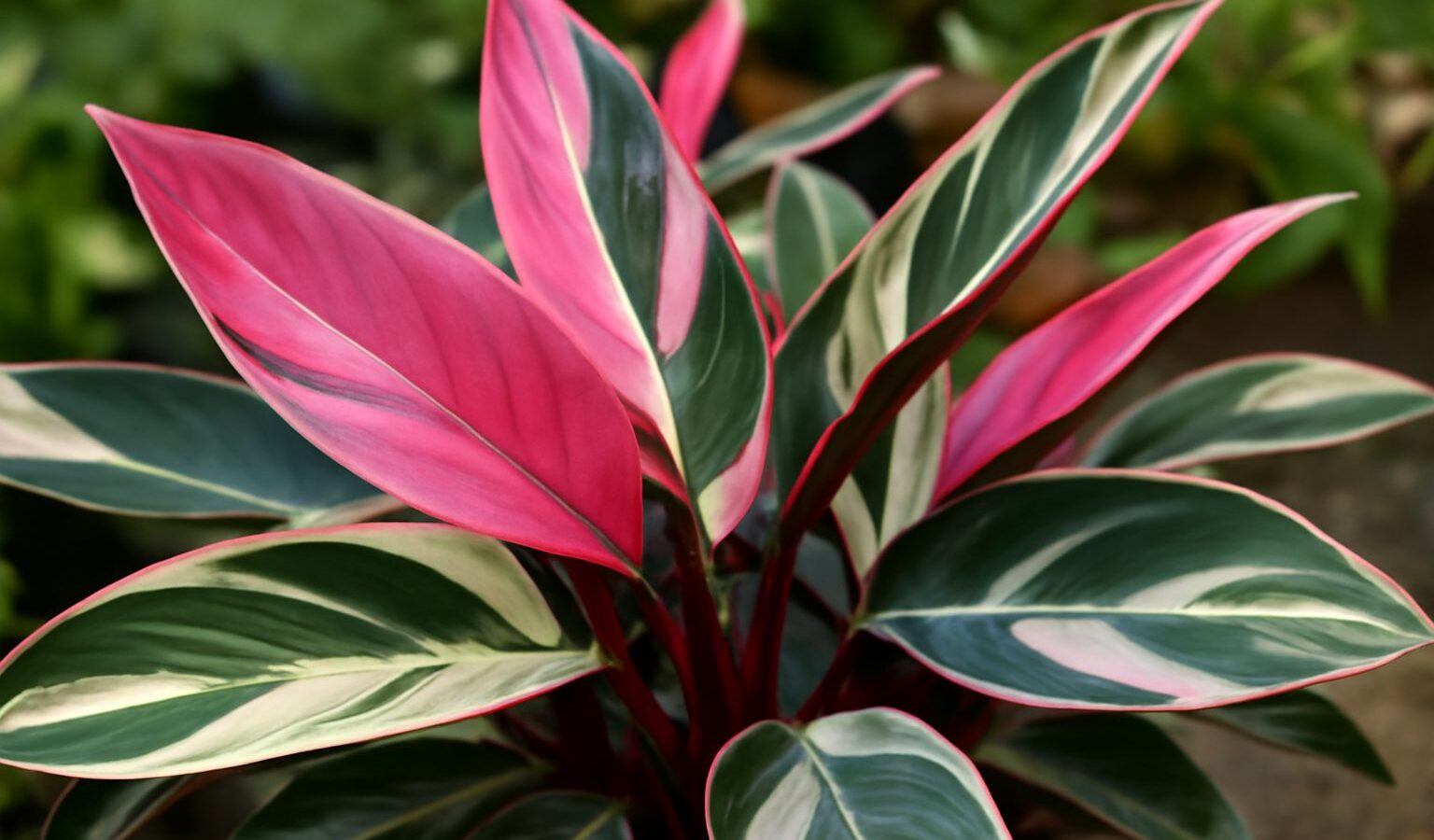
Stromanthe Triostar (Stromanthe sanguinea ‘Triostar’, also sold as Stromanthe thalia ‘Triostar’) is one of the most striking foliage houseplants you can grow, and also one of the most honest about being unhappy. Its long, lance-shaped leaves are splashed in cream, white, and several shades of green on top, with a glowing magenta-pink underside that shows off every evening when the leaves fold upward like praying hands. Get three things right, bright indirect light, steady moisture, and high humidity, and it rewards you with paddle after paddle of that candy-striped color. Get the air too dry or the water too harsh and it tells you immediately with crispy brown edges.
It belongs to the Marantaceae family alongside calatheas, marantas, and ctenanthes, the so-called prayer plants, and it shares both their drama and their fussiness. The nightly raising and lowering of the leaves, called nyctinasty, is normal and a good sign your plant is on a healthy light cycle. What it does not tolerate is neglect: dry tap water, a sunny windowsill, or letting the pot go bone dry will all show up on the foliage within days.
This guide walks through everything that keeps a Stromanthe Triostar looking its best indoors, the exact light it wants, how to water it without scorching the edges, the humidity it truly needs, feeding and potting, and how to fix the brown-edge problem that sends most owners searching for help.
Key Takeaways
- Give it bright, indirect light. The variegation needs good light to stay vivid, but direct sun bleaches and scorches the leaves, so an east window or a few feet back from a south or west window is ideal.
- Keep the soil evenly moist, never soggy and never bone dry. Water when the top inch starts to dry, and use distilled, rainwater, or filtered water, the fluoride and salts in tap water cause brown edges.
- High humidity is non-negotiable. Aim for 50 to 60 percent or higher; a humidifier is the most reliable way to keep the leaf edges from crisping.
- Keep it warm, 65 to 80 F, and away from cold drafts, heating vents, and air conditioning.
- Stromanthe Triostar is non-toxic to cats and dogs, making it a safe statement plant for pet homes.
Light: Bright but Filtered
Light is a balancing act with this plant. It needs bright, indirect light to fuel and maintain the cream and pink variegation, because the pale, lower-chlorophyll sections of each leaf cannot photosynthesize the way solid green leaves do. Too little light and the new growth comes in greener and plainer, the leaves space out, and the plant looks dull and leggy. So you want plenty of brightness reaching it through most of the day.
What it cannot take is harsh direct sun. A few hours of soft, early morning sun in an east-facing window is fine and even beneficial, but hot midday or afternoon sun streaming through glass will fade the variegation to a washed-out beige and burn dry, papery patches into the leaves. The sweet spot for most homes is right beside an east window, or set back two to four feet from a bright south or west window where a sheer curtain diffuses the strongest rays.
If your only bright window also gets blasting afternoon sun, filter it with a sheer curtain rather than moving the plant into a dim corner. In a genuinely low-light room, a Stromanthe Triostar will survive but slowly lose its color and vigor; a basic LED grow light running 10 to 12 hours a day fixes that and keeps the variegation bright through dark winters. Rotate the pot a quarter turn each week so the plant grows evenly toward the light rather than leaning.
Watering: Evenly Moist, and Mind the Water Quality
Stromanthe wants its soil kept consistently and lightly moist, like a wrung-out sponge, never waterlogged and never fully dried out. The practical rule is to water when the top inch of soil begins to feel dry to the touch, then water thoroughly until it runs from the drainage holes and tip out anything left in the saucer. In a warm, bright spot during spring and summer that often means watering once or twice a week; in winter, when growth slows, the plant uses less and you should ease off to avoid sogginess. Always check the soil with your finger rather than watering on a rigid schedule.
The single biggest cause of an ugly Stromanthe is water quality. Like its calathea relatives, it is sensitive to the fluoride, chlorine, and dissolved mineral salts in most municipal tap water, and these accumulate at the leaf margins and burn them brown and crisp. Use distilled water, collected rainwater, or filtered water if your tap water is hard or fluoridated. If you must use tap water, let it sit out uncovered overnight so some chlorine dissipates, but be aware this does nothing for fluoride or salts. Lukewarm water is gentler than cold straight from the tap.
Both extremes punish you. Let the pot dry out completely and the leaves curl tightly, wilt, and crisp at the edges; the plant may recover after a thorough soak, but repeated drought permanently damages foliage. Keep it soggy and starved of air at the roots and you invite root rot, signaled by yellowing lower leaves and a sour smell from the soil. Even moisture in a free-draining mix is the target.
Humidity: The Make-or-Break Factor
If you take one thing from this guide, make it humidity. Stromanthe Triostar is a tropical rainforest understory plant and it genuinely needs high humidity, ideally 50 to 60 percent or more. The dry air of a heated or air-conditioned home, often 30 percent or lower, is the most common reason these plants develop relentless brown, crispy edges no matter how carefully you water.
A small room humidifier running near the plant is by far the most effective and consistent solution, and it is worth the modest cost if you love the plant. Grouping it with other houseplants raises the local humidity a little through shared transpiration, and a pebble tray, a shallow dish of water and pebbles that keeps the pot above the waterline, helps modestly. Misting is popular but largely cosmetic; it raises humidity only for minutes and, if leaves stay wet too long in still air, can encourage fungal spotting. A bright bathroom can be a happy home for one. Keep it out of the direct path of heating vents and AC, which dry and chill the air fastest.
Temperature, Soil, and Feeding
Warmth keeps this plant comfortable. Aim for normal-to-warm room temperatures of roughly 65 to 80 F (18 to 27 C) and protect it from anything below about 60 F. It has no frost tolerance and dislikes sudden swings, so keep it away from drafty doors, cold windowpanes in winter, and the blast of both heaters and air conditioners. Stable, warm, humid air is what it evolved for.
For soil, use a light, well-draining but moisture-retentive mix. A quality peat- or coir-based houseplant potting mix amended with extra perlite and a handful of orchid bark works well: it holds the steady moisture the roots want while still letting excess water drain so they never suffocate. The pot must have drainage holes. A plastic or glazed pot helps retain moisture better than porous terracotta, which can dry this plant too aggressively for comfort. If you are unsure which medium to buy, our overview of potting mix vs. garden soil explains why a fast-draining bagged mix beats heavy native dirt for any container plant.
Feed lightly during the growing season. A balanced liquid houseplant fertilizer diluted to about half strength, applied roughly every two to four weeks in spring and summer, is plenty; stop feeding in fall and winter while growth slows. Because the plant is salt-sensitive, flush the pot with plain distilled water every month or so to wash out accumulated fertilizer salts, and never feed bone-dry soil, which can burn the roots.
Repotting and Propagation
Stromanthe grows from a spreading clump of rhizomes and does not need frequent repotting. Move it up one pot size, no more, every two years or so, or when roots fill the pot and water races straight through. Spring is the best time, when the plant is entering active growth and recovers fastest. Going too large too fast surrounds the roots with excess wet soil they cannot use, inviting rot, so step up gradually.
The reliable way to propagate this plant is division, not stem cuttings, which do not root. At repotting time, gently tease or cut the rhizome clump into sections, making sure each division has its own healthy roots and at least a few leaves. Pot each section into the same kind of moist, well-draining mix, water it in, and keep it warm, humid, and out of direct sun while it settles. Expect a sulky week or two of adjustment before new growth appears; high humidity during this period makes all the difference to success.
Common Problems and Fixes
Brown, crispy leaf edges are the classic Stromanthe complaint and almost always trace to low humidity or mineral-laden tap water, often both. Switch to distilled or rainwater, raise the humidity with a humidifier, and keep the plant away from heat sources. Curling or tightly rolled leaves usually mean the plant is too dry, either thirsty soil or parched air, so check both. Faded, washed-out, or scorched patches point to too much direct sun; move it to filtered light. Yellowing lower leaves with damp soil suggest overwatering and possible root rot, so let it dry slightly and check the roots.
Pests to watch for are spider mites, which thrive in the dry air this plant hates and show up as fine webbing and stippled, speckled leaves, plus the occasional mealybug, fungus gnat, or scale. Keeping humidity high is itself good mite prevention. Wipe the leaves and treat with insecticidal soap or diluted neem oil weekly until the infestation clears, and isolate any new plant before placing it near your others. A little fading of the lowest, oldest leaves over time is normal aging, not a problem; simply trim them off. For more easy-to-stunning foliage options to grow alongside it, browse our plants and flowers hub.
Frequently Asked Questions
Why does my Stromanthe Triostar have brown, crispy edges?
Brown, crispy leaf margins are almost always caused by low humidity, mineral-rich tap water, or both. Stromanthe needs 50 to 60 percent humidity and is sensitive to the fluoride, chlorine, and salts in tap water. Switch to distilled or rainwater, run a humidifier nearby, and keep the plant away from heating vents and AC. Trim damaged edges with clean scissors, following the leaf’s natural shape.
How often should I water a Stromanthe Triostar?
Keep the soil evenly moist but not soggy. Water when the top inch starts to feel dry, which is often once or twice a week in spring and summer and less in winter. Always check the soil with your finger rather than following a fixed schedule, water thoroughly until it drains, and empty the saucer. Use distilled, rain, or filtered water to avoid brown edges.
Why are my Stromanthe’s leaves curling?
Curling or tightly rolled leaves usually signal that the plant is too dry, either from soil that dried out too far or from air that is too dry. Check the soil moisture and water if the top inch is dry, and raise the humidity around the plant. Some leaves naturally fold upward at night, which is normal prayer-plant behavior, but daytime curling means it needs attention.
Is Stromanthe Triostar toxic to cats and dogs?
No. Stromanthe Triostar is considered non-toxic to cats and dogs, like its calathea and maranta relatives, so it is a safe choice for households with pets. As always, discourage pets from chewing the leaves, since eating foliage can cause mild stomach upset, but the plant is not poisonous.
Why is my Stromanthe losing its pink and cream variegation?
Fading variegation, with new leaves coming in greener and plainer, usually means the plant is not getting enough light. The pale pink and cream parts of the leaf need bright, indirect light to develop and stay vivid. Move it closer to a bright window with filtered light or add a grow light, but avoid harsh direct sun, which bleaches and scorches the foliage.