

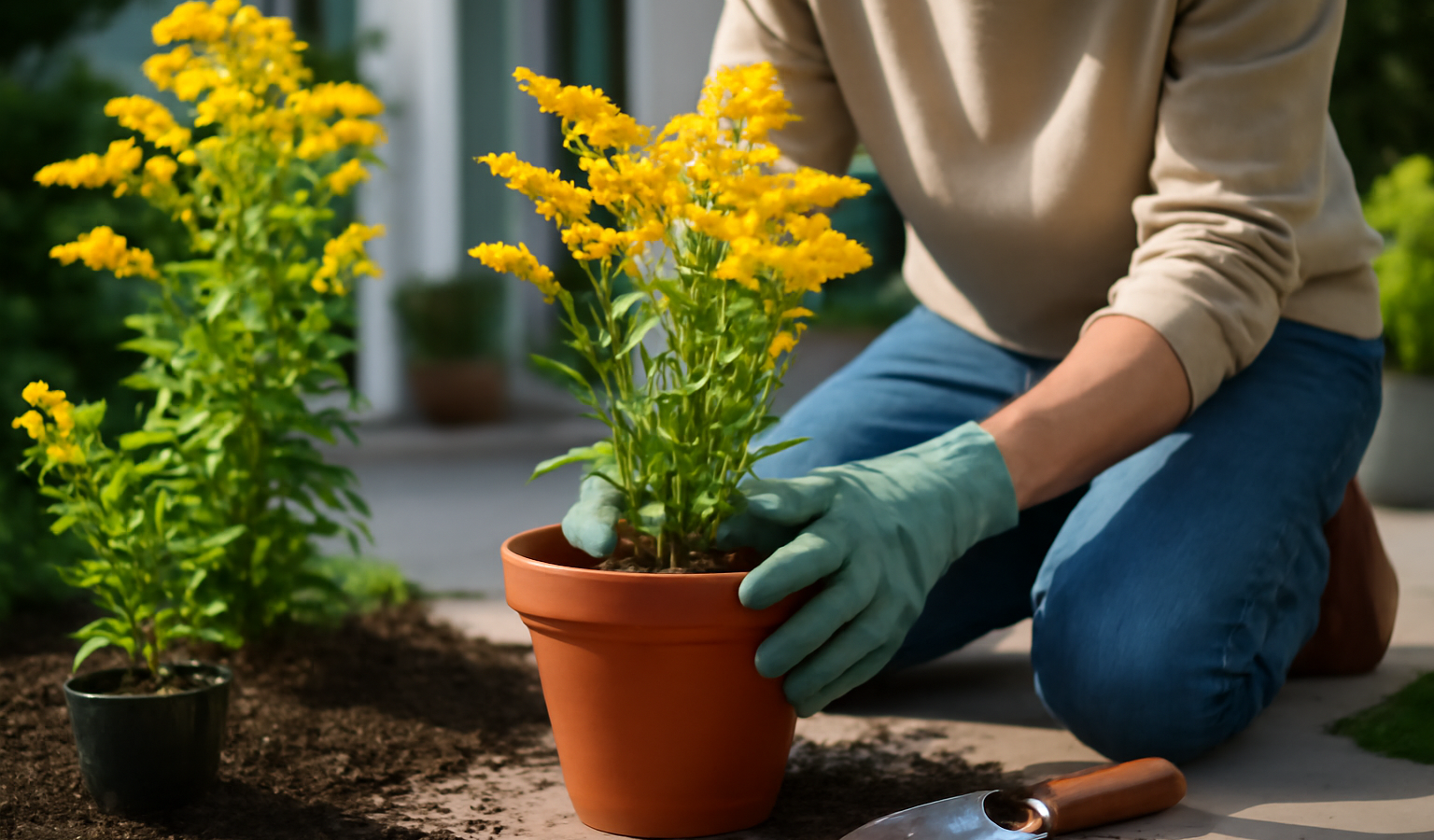
Goldenrod (Solidago) is one of the most valuable plants you can add to a North American garden, and one of the most unfairly maligned. Its arching plumes and sprays of tiny golden flowers light up the late-summer and fall border just as most perennials are fading, and at exactly that moment it becomes a lifeline for pollinators — bees, butterflies, and migrating monarchs feast on it before winter. Tough, drought-tolerant, and native across most of the continent, goldenrod thrives where fussier plants give up. This guide covers everything you need to grow it well: hardiness zones, planting, spacing, care, dividing, wildlife value, choosing well-behaved garden varieties, and clearing up the hay-fever myth that has given this plant an undeserved bad name.
Key Takeaways
- Zones: Hardy and easy in USDA zones 3–9; native across most of North America.
- Light & soil: Full sun and average to poor, well-drained soil. Rich soil makes it flop and spread aggressively.
- Bloom: Golden plumes from late summer into fall, exactly when pollinators need food most.
- Wildlife: A pollinator powerhouse — bees, butterflies, beneficial insects, and migrating monarchs. A keystone native plant.
- Behavior: Wild species spread by rhizome; choose clumping garden cultivars (like ‘Fireworks’ or ‘Little Lemon’) for borders.
- Hay fever: Goldenrod does NOT cause hay fever — that’s ragweed, which blooms at the same time. Goldenrod pollen is heavy and insect-carried.
Zones, Light, and Where to Plant
Goldenrod is remarkably adaptable, hardy across USDA zones 3 through 9, with native species suited to nearly every region of North America. It is a true sun lover: give it full sun — at least six hours of direct light a day — for the sturdiest stems and the heaviest bloom. It will grow in part shade but tends to stretch, flower less, and flop over.
Here is the counterintuitive part: goldenrod prefers lean, average, even poor soil. In rich, fertile garden beds it grows lush and tall, flops under the weight of its own plumes, and spreads far more aggressively. Plant it in ordinary or sandy soil that drains well and it stays more compact and better behaved. It tolerates drought, clay, rocky ground, and roadside conditions with ease, which is why you see it thriving in untended fields and ditches. Good drainage matters more than fertility — it dislikes soggy, waterlogged ground. This toughness makes it perfect for meadow plantings, naturalized areas, pollinator gardens, and the back of a sunny border.
Planting Goldenrod
Plant goldenrod in spring or early fall so the roots establish before extreme heat or cold. You can start from nursery transplants, divisions, or seed.
For transplants, dig a hole as deep as and twice as wide as the root ball, set the plant at the same depth it grew in its pot, backfill, and water in well. Space plants according to the variety: compact cultivars 12–18 inches apart, taller species 18–24 inches apart, to allow good airflow and room to fill in. From seed, goldenrod germinates best with a period of cold, moist stratification — sow outdoors in late fall and let winter do the work, or cold-stratify seed in the refrigerator for a few weeks before spring sowing. Press the tiny seeds onto the soil surface and barely cover them, as they need light to germinate. Seed-grown plants usually bloom in their second year.
Water new plantings regularly through their first season to establish a strong root system. After that, goldenrod is genuinely drought-tolerant and rarely needs supplemental water except in prolonged dry spells.
Care Through the Season
Goldenrod is about as low-maintenance as perennials come. Do not fertilize — extra nutrients only encourage floppy, oversized, aggressive growth. Skip the rich compost too. Established plants need watering only during extended drought.
To keep taller types more compact and bushy, you can use the “Chelsea chop” — cut the stems back by about one-third in late spring or early summer (around the time of the Chelsea Flower Show, late May to early June). This delays and shortens the bloom slightly but produces a sturdier, more branched plant that is far less likely to flop, often eliminating the need for staking. If you grow tall species in rich soil and skip the chop, you may need to stake or support them.
After bloom, you have a choice. Deadheading spent flowers can encourage a bit of rebloom and prevents the prolific self-seeding that some species do. But many gardeners leave the seed heads standing through winter — they feed finches and other seed-eating birds and add structure to the dormant garden. Cut the whole plant back to the ground in late winter or early spring before new growth emerges. Every three to four years, divide clumps in spring to keep them vigorous (see below).
Wildlife Value: A Pollinator Powerhouse
If you plant goldenrod for one reason, let it be wildlife. Because it blooms in late summer and fall, when very little else is flowering, it provides critical late-season nectar and pollen when pollinators are stocking up for winter or migration. Native bees of dozens of species, honeybees, butterflies, beneficial wasps, soldier beetles, and other beneficial insects swarm a goldenrod stand on a sunny autumn day.
Goldenrod is also a keystone native plant: it supports a huge number of butterfly and moth caterpillars, which in turn feed nesting birds. For migrating monarch butterflies, goldenrod is one of the most important fall fuel sources on their journey south. The seed heads later feed finches and sparrows. Pairing goldenrod with fall asters — its classic native companion — creates a purple-and-gold pollinator buffet that is as beautiful as it is ecologically rich. For more on building habitat, see our Outdoor Living and landscaping guides.
The Hay Fever Myth
Goldenrod’s worst reputation is completely undeserved. It is not the cause of late-summer hay fever. The real culprit is ragweed (Ambrosia), an inconspicuous green-flowered weed that blooms at the exact same time. Ragweed produces vast amounts of tiny, lightweight, wind-borne pollen that travels through the air and into your sinuses.
Goldenrod, by contrast, has heavy, sticky pollen designed to be carried by insects, not the wind. It does not become airborne in any meaningful quantity. Because goldenrod’s showy yellow plumes are obvious while ragweed’s flowers are easy to overlook, goldenrod gets blamed for ragweed’s crimes. Plant goldenrod with a clear conscience — your allergies are safe, and the pollinators will thank you.
Choosing Garden-Friendly Varieties
The one legitimate concern with goldenrod is that some wild species spread aggressively by underground rhizomes and self-seeding, which is fine in a meadow but can overwhelm a tidy border. The solution is to choose well-behaved, clump-forming garden cultivars bred for the perennial bed:
- ‘Fireworks’ — a popular Solidago rugosa selection with arching, fountain-like sprays of gold; clumping and well-behaved, about 3 feet tall.
- ‘Little Lemon’ — a dwarf, compact cultivar around 12–18 inches with soft lemon-yellow plumes; excellent for the front of a border or containers.
- ‘Golden Fleece’ — a low, mounding goldenrod for edging and ground cover, around 18 inches.
- ‘Wichita Mountains’ — an upright, sturdy selection with dense golden spikes.
These named cultivars give you all the golden color and pollinator value without the runaway spread of the roadside species. For naturalized meadows and pollinator plots where spreading is welcome, the wild species like Solidago canadensis are perfect — just give them room. To keep any goldenrod in check, divide clumps every few years and pull up unwanted rhizome spread in spring. For more on naturalized and small-space plantings, browse our Urban Gardening guides.
Dividing and Propagating
Goldenrod clumps benefit from division every three to four years to keep them vigorous and contained. In early spring, just as new growth appears, dig up the clump, split it into sections with a spade or sharp knife (each with roots and several shoots), and replant the healthy outer sections at the same depth, discarding the woody, exhausted center. Water the divisions in well. Division is the fastest way to make more plants and to control spread at the same time. Goldenrod also self-seeds and can be grown from collected seed with cold stratification, as described above.
Frequently Asked Questions
Does goldenrod cause hay fever?
No. Goldenrod has heavy, sticky pollen spread by insects, not the wind, so it does not trigger allergies. The real cause of late-summer hay fever is ragweed, which blooms at the same time but has inconspicuous flowers, so goldenrod gets blamed unfairly.
Is goldenrod invasive in the garden?
Some wild species spread aggressively by rhizomes and seed, which suits meadows but not tidy borders. Choose clump-forming garden cultivars like ‘Fireworks’ or ‘Little Lemon’ for beds, plant in lean soil, and divide every few years to keep it in check.
What growing conditions does goldenrod need?
Full sun and average to poor, well-drained soil. Avoid rich, fertile soil and fertilizer, which make it flop and spread. It is drought-tolerant once established and hardy in USDA zones 3–9.
When does goldenrod bloom?
Late summer into fall, typically from late August through October depending on species and region — exactly when most other perennials are finished and pollinators need food most.
Is goldenrod good for pollinators?
Exceptionally so. It is a keystone native plant providing crucial late-season nectar and pollen for bees, butterflies, and beneficial insects, and it is a vital fuel stop for migrating monarchs. It also supports many caterpillars and feeds birds with its seed.
Give goldenrod full sun and lean soil, choose a clumping cultivar for the border, and otherwise leave it alone — no fertilizer, little water, just a spring cut-back and a division every few years. In return you get weeks of glowing golden plumes when the rest of the garden is winding down, and a feeding station for the bees, butterflies, and migrating monarchs that need it most. Pair it with fall asters and let the seed heads stand for the birds, and goldenrod earns its place as one of the hardest-working natives you can grow.