

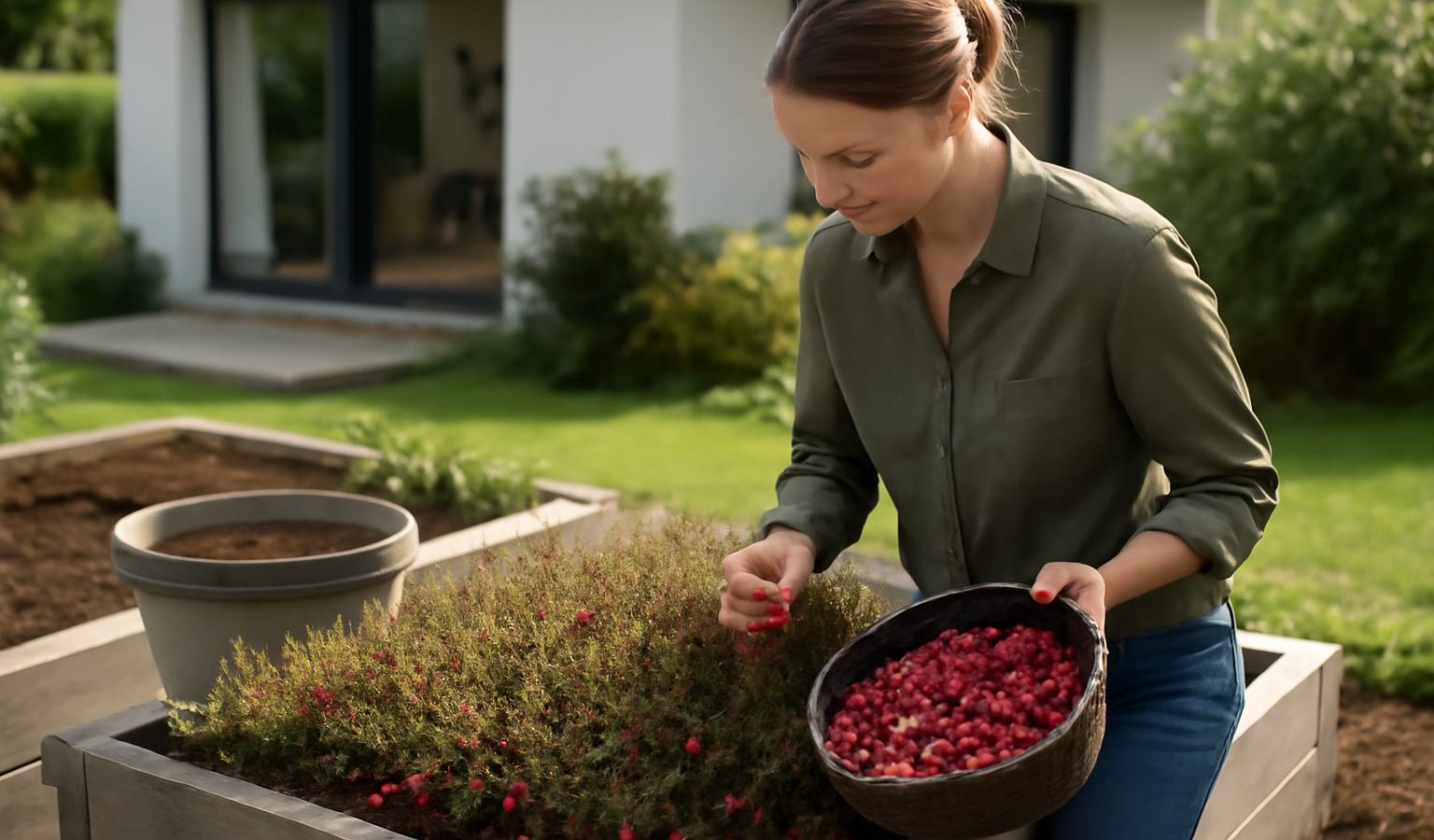
Cranberries do not actually grow underwater in flooded bogs, despite the famous harvest images; those floods are just a clever picking trick. The plant itself is a low, creeping, evergreen perennial that grows in acidic, peaty, consistently moist soil, the same kind of conditions blueberries love taken a step further. You can absolutely grow cranberries in a backyard bed or container in USDA zones 2 through 7 if you give them the two things they insist on: very acidic soil and steady moisture. Plants are self-fertile, slow to mature, and remarkably long-lived. Here is how to build the right conditions and grow your own tart red berries.
Key Takeaways
- Hardy in USDA zones 2-7; they need a cold winter dormancy to fruit.
- Demand strongly acidic soil, pH 4.0-5.5, high in organic matter (peat).
- Need constant moisture but NOT standing water; the harvest “flood” is only for picking.
- Self-fertile and pollinated by bees; a single bed will fruit, no second variety required.
- Grow as a low evergreen groundcover spreading by runners; build a dedicated bog bed or container.
- Patient crop: little fruit until year three or four, then decades of production.
Understanding the Cranberry Plant
Cranberries (Vaccinium macrocarpon) are native to the cool, acidic wetlands of northern North America. The plant is a wiry, evergreen, mat-forming groundcover only 6 to 8 inches tall that spreads by horizontal stems called runners. Those runners produce short upright shoots, and it is the uprights that bear the flowers and fruit. Knowing this matters because managing the balance between runners and uprights is the heart of cranberry care: too many runners and not enough uprights means lots of vine and little fruit.
Like their blueberry relatives, cranberries need cold. They require a winter dormancy with sustained chilling to fruit properly, which is why they suit cool-climate zones 2 through 7 and struggle in hot southern regions. Where they share the most with blueberries is soil chemistry, and the same acid-loving requirement that makes blueberries fussy applies here in spades, much as it explains why blueberries turn out sour when conditions are wrong.
The Two Non-Negotiables: Acid Soil and Moisture
Strongly Acidic Soil
Cranberries demand a soil pH between 4.0 and 5.5, considerably more acidic than ordinary garden soil. At higher pH the plants cannot take up iron and other nutrients, yellow, and fail. The classic medium is peat-based: a mix heavy in sphagnum peat moss with sand, which mimics the native bog. If your existing soil is not naturally that acidic, do not try to grow cranberries in the open ground; instead build a dedicated bed where you control the medium. You can lower and maintain acidity over time with elemental sulfur and by mulching with acidic materials like pine needles or sawdust.
Constant Moisture, Not Standing Water
This is the most misunderstood part of growing cranberries. The plants do not grow submerged. They want soil that stays consistently and evenly moist, never drying out, because their shallow roots have no tolerance for drought. Commercial growers flood their beds only to float and gather the berries at harvest, and to protect plants from winter freeze and pests, then they drain the water away. In your garden you simply need to keep the peaty medium reliably damp, which a built bog bed makes easy.
Choosing a Variety
Home growers usually plant named cultivars of the large American cranberry, Vaccinium macrocarpon, chosen for berry size, color, and ripening time. Stevens is the most widely available and a sound all-rounder, producing large, deep-red berries and reliable yields, which is why it dominates commercial acreage and home catalogs alike. Pilgrim and Ben Lear are popular for slightly earlier ripening, useful in shorter-season northern gardens, while Howes and Early Black are old heirloom types prized for keeping quality and intense color. For a small bed any single cultivar will fruit on its own, since cranberries are self-fertile, but planting two cultivars can lengthen the harvest window and modestly boost set.
Do not confuse the American cranberry with the lowbush lingonberry or the so-called “highbush cranberry” (a Viburnum), which are different plants with different needs. When buying, look specifically for Vaccinium macrocarpon to be sure you are getting the true cranberry suited to the bog-bed method described here.
Building a Backyard Cranberry Bed
The reliable home method is a contained, sunken bog bed that holds moisture and keeps the acidic medium separate from your regular soil. Dig out an area roughly 2 to 4 feet wide and about 8 to 12 inches deep. Line it with landscape fabric or perforated plastic, punching a few small drainage holes so it stays wet but not stagnant. Fill the lined pit with a planting mix that is about two-thirds sphagnum peat moss and one-third coarse sand, then acidify and moisten it thoroughly. A large container, a half-barrel, or a child’s rigid sandbox liner works the same way for a small planting and makes moisture control even easier.
Site the bed in full sun, which cranberries need for good fruiting and color, ideally six or more hours a day. Because the whole point is a contained, moisture-retentive environment, raised-bed and small-space techniques transfer well here; if you garden on a patio or balcony, the urban gardening approach to containers applies neatly to a cranberry tub.
Planting Cranberries
Plant rooted cuttings or young plants in spring once the soil is workable. Set them about 1 foot apart in the bed; they look sparse at first but will knit together into a dense mat within two to three seasons as the runners spread and root. Press each plant firmly into the moist peat-sand mix and water in. Keep the bed continuously damp from the start, as new plantings are especially intolerant of drying out. A topdressing of coarse sand over the bed every couple of years, mimicking the natural sanding commercial bogs receive, encourages the runners to root down and produces more fruiting uprights.
Pollination, Watering, and Feeding
Cranberries are self-fertile, so a single bed will fruit; the pink, swept-back flowers (said to resemble a crane’s head, hence the name) are pollinated mainly by bees in early summer. Encourage pollinators and avoid spraying during bloom. Watering is the daily reality of cranberry care: never let the bed dry out, checking often in hot weather. Feed sparingly with an acid-forming fertilizer formulated for azaleas, rhododendrons, or blueberries, applied lightly in spring and again after bloom. Too much nitrogen produces a jungle of runners and almost no fruit, the single most common mistake, so go light.
Pruning and Winter Care
Once the bed has filled in, usually after a couple of years, prune in early spring before growth starts. Rake or trim back the long, leggy runners that crisscross the surface; this redirects the plant’s energy into producing fruiting uprights instead of more vine, and it is the key to good yields from an established bed. Leave the upright shoots intact. In cold zones, protect the evergreen plants over winter by mulching with a few inches of pine straw or, if you can, briefly flooding and freezing a layer of ice over them, which is how commercial bogs prevent winter desiccation. Remove protection as growth resumes in spring.
Harvesting
Be patient: a new bed yields little until its third or fourth year, after which it produces for decades. Berries ripen in fall, typically September into October, turning from white to a deep, even red. They are ripe when fully colored and firm; a classic test is that a ripe cranberry bounces when dropped. For a small home bed the simplest approach is to hand-pick the berries dry. You do not need to flood your garden bed to harvest, that is purely a commercial labor-saving technique. Cranberries store for weeks in the refrigerator and freeze exceptionally well, retaining their quality for a year or more.
Pests and Problems
In a small backyard bed cranberries are largely trouble-free, but a few issues are worth watching. The most common cause of failure is not a pest at all but soil chemistry: if the pH creeps above 5.5, the leaves yellow between the veins as the plants lose access to iron, and growth stalls. Test the bed yearly and refresh acidity with elemental sulfur or an acidic mulch as needed. Birds will pick at ripening berries in fall, so light netting helps protect the crop in the final weeks. In damp, crowded plantings, fungal fruit rots can appear; good airflow, full sun, and the periodic sanding that keeps growth open all reduce the risk. Insect pests such as cranberry fruitworm and tipworm trouble commercial bogs more than home beds, and hand-picking or removing affected tips usually keeps a small planting clean without spraying.
Storing and Using the Harvest
One of cranberries’ best traits is how well they keep. Their naturally high acidity and firm flesh mean fresh-picked berries hold for several weeks in the refrigerator, far longer than soft berries like raspberries, and they freeze superbly with no preparation at all. Spread them on a tray to freeze, then tip them into bags, and they will keep their quality for a year or more, ready to drop straight into sauces and baking. Discard any soft, shriveled, or off-colored berries before storing, as a single rotting fruit can spoil its neighbors. Beyond the obvious sauce, homegrown cranberries shine in breads, muffins, chutneys, and dried as a tart alternative to raisins, so even a modest bed earns its space at the back end of the season when little else is ripening.
Frequently Asked Questions
Do cranberries grow underwater?
No. Cranberry plants grow in moist, acidic soil, not submerged. Commercial growers flood the beds only to float and gather the berries at harvest, then drain the water; the plants themselves are not aquatic.
What soil pH do cranberries need?
Strongly acidic soil between pH 4.0 and 5.5, even more acidic than blueberries. The standard medium is sphagnum peat moss mixed with sand, kept constantly moist.
Can I grow cranberries in a container?
Yes, and it is one of the easiest ways to control the acidic, moist conditions they need. Use a wide, lined container or half-barrel filled with peat and sand, keep it consistently damp, and place it in full sun.
How long until cranberries produce fruit?
A new planting needs about three to four years to fill in and begin fruiting well. Once established, a cranberry bed remains productive for decades with minimal renewal.
Do I need more than one cranberry plant?
For pollination, no; cranberries are self-fertile. You will, however, want several plants to fill a bed and form the dense mat of runners and uprights that produces a worthwhile harvest.
Why are my cranberry leaves turning yellow?
The usual cause is a soil pH that has drifted too high, which locks up iron and other nutrients. Cranberries need a strongly acidic pH of 4.0 to 5.5. Test the bed and lower the pH with elemental sulfur or an acidic mulch such as pine needles.
How do I store homegrown cranberries?
Fresh cranberries keep for several weeks in the refrigerator thanks to their high acidity, and they freeze beautifully for a year or more with no preparation. Remove any soft or discolored berries first, since one rotting fruit can spoil those around it.
Cranberries ask for unusual conditions, acidic peat and steady moisture, but once you build the right bed they are tough, long-lived, and almost ornamental as an evergreen groundcover. Keep the soil sour and damp, prune the runners, and be patient, and you will harvest your own Thanksgiving berries. Find more acid-loving fruit guides in the Plants and Flowers collection.