

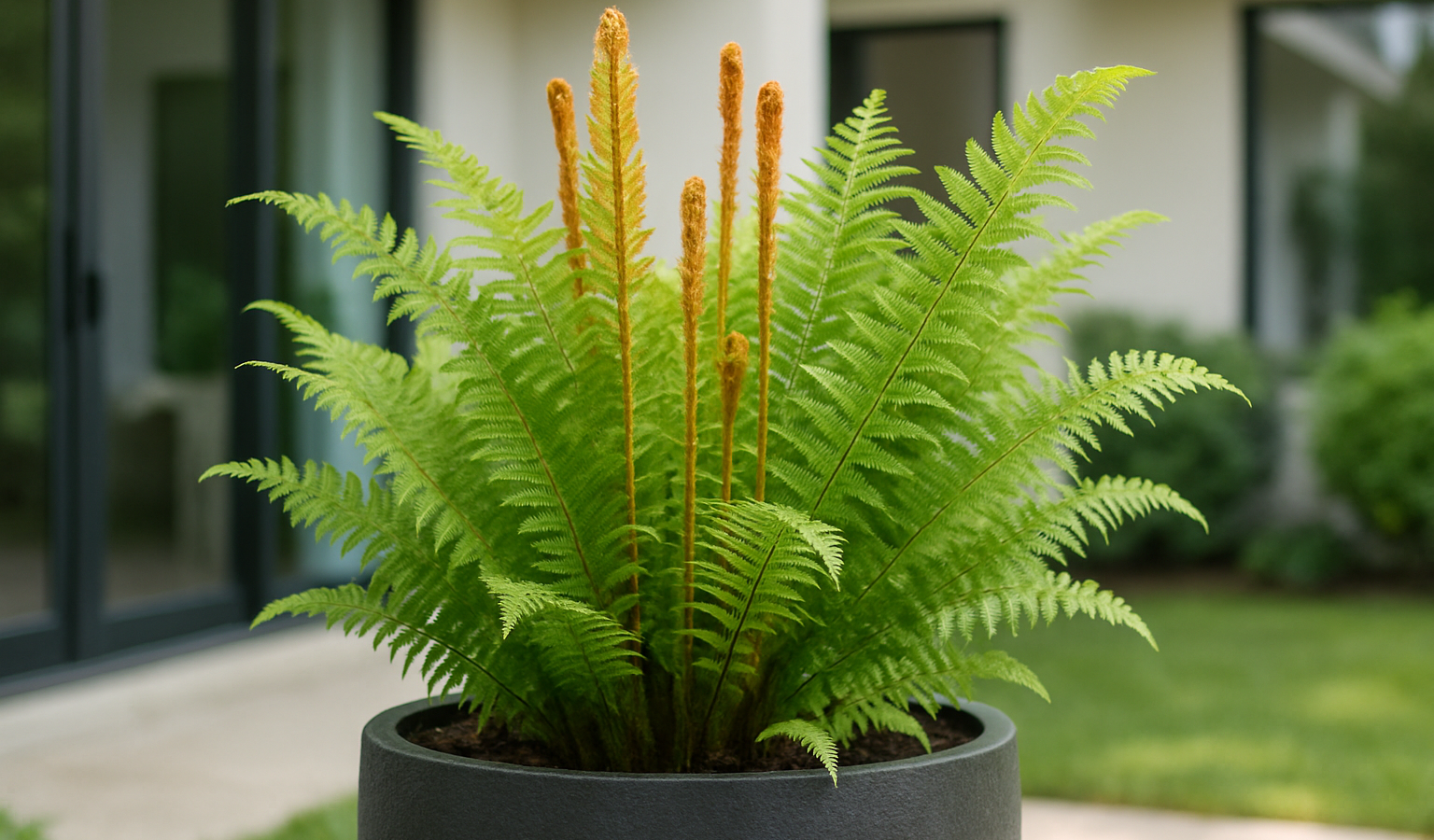
Cinnamon fern (Osmundastrum cinnamomeum) is a stately North American native that brings drama and a sense of place to wet, shady gardens. It forms a large, vase-shaped clump of bright green sterile fronds, 2 to 5 feet tall, and in the center, in spring, it sends up distinct fertile fronds that begin green and quickly turn a rich cinnamon-brown, standing upright like spikes or candles and giving the plant its name. Those cinnamon spires are unmistakable and make this one of the easiest native ferns to identify and one of the most ornamental. A true wetland plant, cinnamon fern is the answer for a soggy, shaded spot where little else thrives, along a pond, in a rain garden, or in a low, damp woodland. This guide covers planting cinnamon fern, the wet soil and shade it needs, its native range and value, the role of those fertile fronds, and its easy seasonal care.
Key Takeaways
- Cinnamon fern is a tall native wetland fern (USDA zones 3 to 9) growing 2 to 5 feet in a vase shape.
- It produces upright cinnamon-colored fertile fronds in the center each spring, the source of its name.
- It thrives in wet, boggy soil and part to full shade; it tolerates standing water and pond edges.
- An excellent choice for rain gardens, pond margins, and damp woodland where other plants fail.
- It is a clump-former that does not run aggressively; it is low-maintenance, deer-resistant, and long-lived.
About Cinnamon Fern
Cinnamon fern is a deciduous, clump-forming native fern of swamps, bogs, streambanks, and wet woodlands across eastern North America and beyond, hardy in roughly USDA zones 3 to 9. It grows from a stout, slowly expanding rootstock into a symmetrical vase of arching, light-green sterile fronds that can reach 2 to 5 feet tall in rich, wet ground, with the tallest clumps in the wettest, most fertile sites. Its defining feature is the separate fertile fronds: in spring, narrow, erect spikes rise from the center of the clump, green at first, then quickly turning the warm cinnamon-brown that names the plant, before withering away by summer once they have released their spores. As a native, it supports local ecosystems and offers cover for wildlife, and it slots naturally into the native and naturalistic plantings featured across the Plants & Flowers hub.
Planting Cinnamon Fern
Plant cinnamon fern in spring or early fall from container plants or bare-root divisions. Choose a consistently moist to wet, shaded or partly shaded site; the margin of a pond or stream, a boggy low spot, a rain garden that catches runoff, or a damp woodland edge are all ideal, and the wetter the ground, the happier the fern. Enrich the soil with plenty of compost or leaf mold before planting, since cinnamon fern thrives in acidic, humus-rich soil. Dig a hole as wide as and no deeper than the root ball, set the crown at the soil surface, backfill, and water in thoroughly. Bare-root rootstocks should be planted with the growing tip just at or slightly below the surface.
Space plants 2 to 3 feet apart to give each developing clump room to reach its full vase-shaped size. Mulch generously after planting with shredded leaves or bark to conserve moisture and keep the soil cool and acidic as it breaks down, and water faithfully through the first season; in any spot that is not naturally wet, plan to irrigate regularly because this fern simply will not tolerate drying out. Established clumps are long-lived and become more impressive each year.
Wet Soil and Shade
Cinnamon fern is a genuine wetland plant, and constant moisture is the key to growing it well. It thrives in wet, boggy, even waterlogged soil and tolerates standing water at its base, which is exactly why it is so valuable for problem spots that stay soggy. In drier garden soil it struggles, staying stunted and browning at the edges, so unless you can keep the ground reliably damp it is not the fern for a dry bed. The ideal soil is acidic, rich in organic matter, and permanently moist; mulch and compost help hold that moisture and maintain the acidity the plant likes.
For light, cinnamon fern prefers part to full shade, the dappled or filtered light of a woodland or pond edge. Interestingly, where its feet are kept truly wet, it tolerates more sun than most ferns, sometimes even full sun in cool, boggy conditions, but in average gardens shade plus moisture is the safe combination. In too much sun with insufficient water it scorches quickly. Match the exposure to the moisture: more water buys more sun tolerance, but the default is moist shade.
The Fertile Fronds and Native Value
The cinnamon-colored fertile fronds are both the plant’s signature and a brief seasonal event. They emerge in spring from the heart of the clump as upright, spore-bearing spikes, green at first and then turning the rich rusty cinnamon that gives the fern its common name; after releasing their spores in late spring they wither and the plant carries on with just its green sterile fronds for the rest of the season. There is no need to remove them, though you can snip the spent brown spikes once they have finished if you prefer a tidier look. In spring, the emerging fronds are also covered in soft, woolly fibers, historically gathered for various uses.
As a native plant, cinnamon fern earns its keep ecologically as well as ornamentally. Its dense clumps provide shelter and nesting material for birds and cover for amphibians and other wildlife in wet habitats, and it forms part of healthy native wetland communities. Pairing it with other moisture-loving natives builds a resilient, low-input planting that supports local biodiversity. For a wet, shaded corner, it combines beautifully with the equally moisture-loving ostrich fern to create a lush, tiered native fernery.
Seasonal Care and Problems
Cinnamon fern is deciduous and dies back in fall, the green fronds turning yellow then brown before collapsing; cut the spent foliage to the ground in late fall or leave it through winter and tidy up in early spring, either works. Beyond keeping the soil wet, it needs very little: mulch annually, topdress with compost in spring to maintain fertility and acidity, and water in any dry spell. It is a slow-spreading clump-former rather than an aggressive runner, so it stays where you put it and only gradually enlarges, and you can divide an established clump in early spring if you want more, though its tough rootstock makes division harder work than with smaller ferns.
Problems are few. The single most common issue is drought: if the soil dries out, the fronds brown, crisp, and the plant declines, so insufficient moisture is almost always the culprit behind a struggling cinnamon fern. It is otherwise notably free of pests and diseases, and deer and rabbits generally avoid it, making it dependable in wet, wooded, wildlife-rich settings. Give cinnamon fern the wet, shaded, acidic conditions it craves and it will reward you for decades with bold, architectural foliage and those unmistakable cinnamon spires each spring.
Frequently Asked Questions
Why is it called cinnamon fern?
For its fertile fronds. In spring, upright spore-bearing spikes rise from the center of the clump, emerging green and quickly turning a rich cinnamon-brown, like clusters of rusty candles, before withering by summer. These cinnamon-colored spikes against the surrounding green sterile fronds are unmistakable and give the plant its common name.
Does cinnamon fern need wet soil?
Yes, cinnamon fern is a true wetland plant that thrives in wet, boggy, even waterlogged soil and tolerates standing water at its base. That makes it ideal for pond edges, rain gardens, and soggy low spots where other plants fail. In dry garden soil it struggles and browns, so it must have consistently moist to wet ground.
How tall does cinnamon fern get?
In rich, wet soil cinnamon fern forms a vase-shaped clump 2 to 5 feet tall, with the tallest specimens in the wettest, most fertile sites. In drier or leaner conditions it stays shorter. The bold, upright habit makes it a striking architectural plant for the back of a damp shade border or the edge of a pond.
Does cinnamon fern grow in sun or shade?
It prefers part to full shade, the dappled light of a woodland or pond edge. Where its roots stay truly wet, it tolerates more sun than most ferns, occasionally even full sun in cool, boggy conditions. In average gardens, moist shade is the safe choice; more sun requires correspondingly wetter soil to prevent scorching.
Is cinnamon fern invasive?
No. Cinnamon fern is a slow-spreading clump-former that grows from a stout rootstock and gradually enlarges rather than running aggressively, so it stays where you plant it. It is a well-behaved native, valuable for wetland and rain gardens, and you can divide an established clump in early spring if you want more plants.