

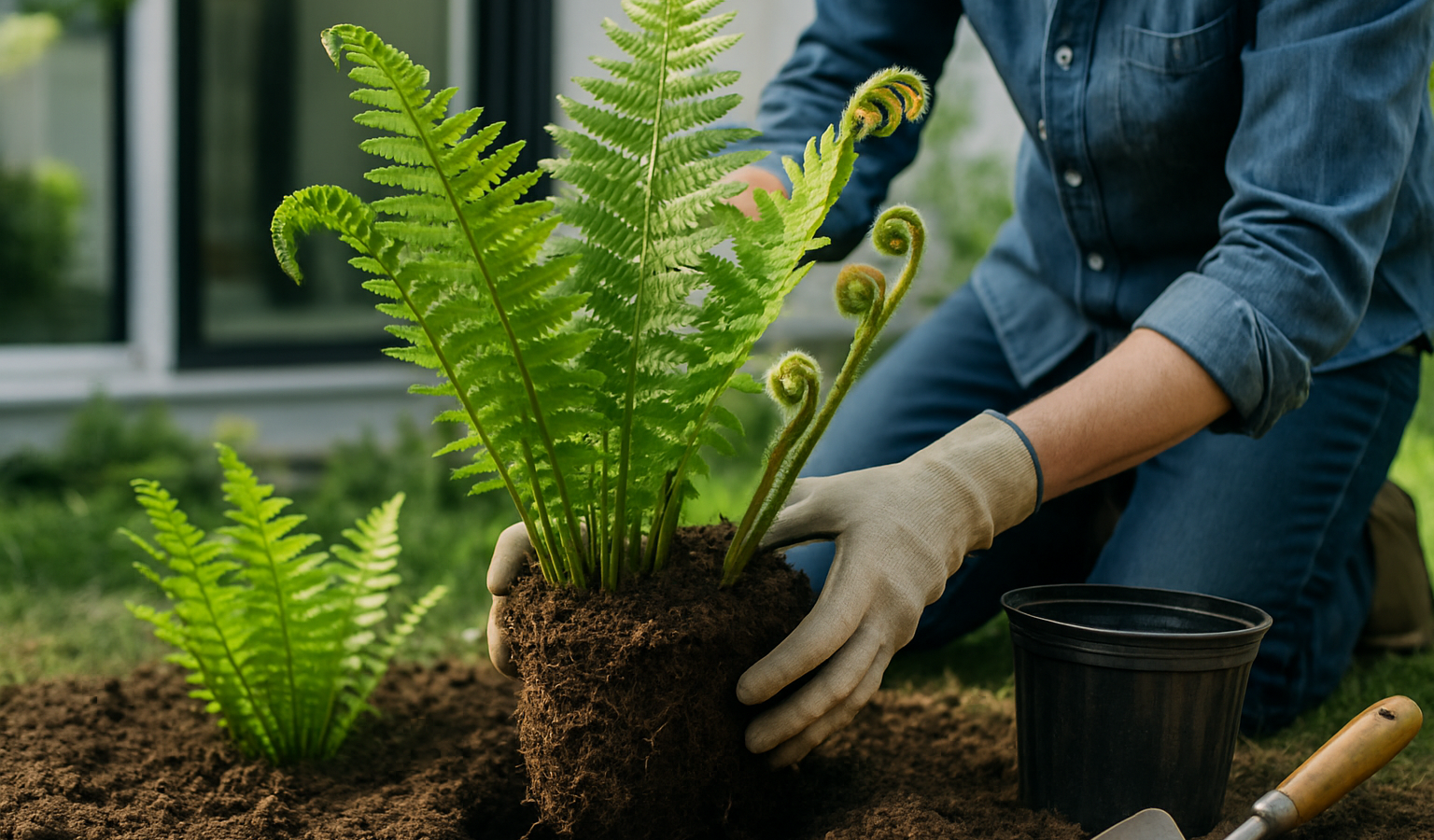
Ostrich fern (Matteuccia struthiopteris) is the giant of the shade garden, a bold, architectural native that sends up clusters of arching, feathery fronds in the classic shuttlecock or vase shape that gives the plant its name. In rich, moist soil it can reach 3 to 6 feet tall, forming dramatic green fountains that fill shady corners no flowering plant can match. It is also the source of the prized edible fiddleheads sold at farmers markets each spring, the tightly coiled young fronds harvested before they unfurl. Hardy, vigorous, and genuinely easy where it has the moisture and shade it craves, ostrich fern spreads by underground runners to form sweeping colonies, which makes it superb for naturalizing along a stream, in a low woodland, or under trees, but something to site thoughtfully in a small bed. This guide covers planting ostrich fern, the shade and moisture it needs, spacing, harvesting fiddleheads safely, and keeping its spread in bounds.
Part of our Houseplants & Container Gardening guide →
In this guide
Key Takeaways
- Ostrich fern is a tall, hardy native perennial fern (USDA zones 3 to 7) reaching 3 to 6 feet in rich soil.
- It needs part to full shade and consistently moist soil; it tolerates wet ground and even brief flooding.
- It produces the edible fiddleheads sold each spring, harvested as tight coils before they unfurl.
- It spreads by runners into colonies, so give it room or contain it; space crowns 2 to 3 feet apart.
- The vase-shaped fronds go dormant by late summer in dry heat; keep it watered to hold foliage longer.
About Ostrich Fern
Ostrich fern is a deciduous, clump-forming fern native to moist woodlands and floodplains across the northern United States, Canada, and Eurasia. Each crown produces a ring of sterile green fronds, the tall, plumy ones, arranged in an upright vase, plus shorter, stiff brown fertile fronds in the center that emerge later and persist through winter, releasing spores. The plant is hardy in roughly USDA zones 3 to 7 and actively dislikes hot, dry climates, where it tends to scorch and go dormant early. What sets ostrich fern apart from most ferns is its scale and its running habit: established plants throw out stolons just below the soil surface, and new shuttlecocks pop up a foot or more from the parent, gradually knitting into a colony. That habit makes it a first-rate plant for filling a difficult shady, damp spot, and it pairs beautifully with other woodland shade lovers featured across the Plants & Flowers hub.
Planting Ostrich Fern
Plant ostrich fern in spring or early fall from bare-root crowns or container plants. Choose a shaded or partly shaded site with rich, moisture-retentive soil; the edge of a pond, a low spot that stays damp, or a north-facing bed under trees are all ideal. Dig in plenty of compost or leaf mold before planting, since this fern feeds heavily on organic matter and the humus-rich, woodland-type soil it evolved in. Set bare-root crowns with the growing tip, the dormant brown nub at the center, right at the soil surface; planting it too deep can cause it to rot, while planting too shallow leaves it to dry out. For container plants, dig a hole as wide as and no deeper than the root ball, set it at the same depth it grew in the pot, backfill, and water in thoroughly.
Space crowns 2 to 3 feet apart, knowing they will run and fill the gaps over a few seasons; for a fast colony, plant closer, and for a controlled clump, give each more room and be ready to remove runners. After planting, mulch with 2 to 3 inches of shredded leaves or bark to lock in moisture and keep the roots cool, and water regularly through the first season while the plant establishes. The first year is mostly about root and rhizome growth; expect the real height and spread to show in years two and three.
Shade, Soil, and Water
Shade and moisture are the two non-negotiables. Ostrich fern grows best in part to full shade; some morning sun is fine in cool climates, but hot afternoon sun, especially combined with dry soil, will brown and crisp the fronds and send the plant into early dormancy. Soil should stay consistently moist and never bake out. This is one of the few garden plants that genuinely tolerates wet, boggy ground and even short periods of standing water, which is why it thrives along streams and in floodplains. In drier gardens you will need to water deeply and regularly, particularly in summer, and a thick organic mulch is essential to hold that moisture.
The richer the soil, the taller and lusher the fern; in lean, dry conditions plants stay small and may scorch. A spring topdressing of compost feeds the plant and improves moisture retention at once. If your fronds reliably brown out and collapse by midsummer, the cause is almost always too much sun or too little water rather than disease. Move the plant to deeper shade or improve irrigation and it will hold its foliage far longer into the season.
Harvesting Fiddleheads
Ostrich fern is the species whose fiddleheads are traditionally eaten, harvested in spring as the new fronds emerge as tight, coiled spirals before they unfurl. Pick them when they are 1 to 2 inches above the crown and still tightly curled, snapping or cutting them off cleanly. Take no more than a few fiddleheads from each crown, leaving the majority to grow into fronds, or you will weaken and eventually kill the plant; the fronds are the fern’s food factory for the year. Look for the papery brown scales and the smooth, deep U-shaped groove on the inside of the stem that distinguish true ostrich fern fiddleheads from other ferns, some of which are not edible.
Importantly, ostrich fern fiddleheads must be cooked thoroughly before eating, never raw or lightly cooked, as raw or undercooked fiddleheads have been linked to foodborne illness. Boil or steam them for at least 10 to 15 minutes, then sauté or use as you like. This guide is horticultural rather than a foraging authority, so positively identify the species and follow current food-safety advice before eating any wild-style green. If you are growing ostrich fern mainly for its looks, simply leave the fiddleheads to grow and enjoy the show as they unfurl.
Managing Spread and Care
The same vigor that makes ostrich fern so good at filling space can make it pushy in a small bed. It spreads by underground runners, sending up new crowns around the parent, and in ideal moist, rich conditions it can travel a foot or more a year. To keep a colony in bounds, slice through and lift unwanted runners and crowns in spring with a sharp spade, which is also the easiest way to propagate it; the divisions transplant readily. A buried edging or a naturally confined spot, hemmed in by a path, wall, or dry ground it will not cross, helps contain it. In a large woodland or rain garden, just let it roam.
Beyond moisture, ostrich fern is low-maintenance and largely pest- and disease-free; deer and rabbits generally leave it alone, another point in its favor for shady, wooded properties. In late fall the green fronds die back, and you can cut them down or leave them; the stiff brown fertile fronds remain standing through winter and add quiet structure before you trim them in early spring. For more shade-garden combinations, pair ostrich fern with the colorful foliage of coral bells at its feet. Give it shade, steady moisture, and room to spread, and ostrich fern will reward you with one of the most striking, trouble-free displays in the shade garden.
Frequently Asked Questions
How big does ostrich fern get?
In rich, moist, shaded soil ostrich fern reaches 3 to 6 feet tall, forming dramatic vase-shaped clumps of arching fronds. Height depends heavily on conditions: lush, well-watered plants in humus-rich soil reach the upper range, while plants in drier or sunnier spots stay smaller and may scorch and go dormant early in summer.
Are ostrich fern fiddleheads edible?
Yes, ostrich fern is the species whose fiddleheads are traditionally eaten, harvested in spring as tight coils before they unfurl. They must be cooked thoroughly, boiled or steamed at least 10 to 15 minutes, never raw, as undercooked fiddleheads can cause illness. Take only a few per crown so the plant keeps enough fronds to grow.
Does ostrich fern spread?
Yes, ostrich fern spreads by underground runners, sending up new crowns around the parent and forming colonies over time. In moist, rich shade it can travel a foot or more a year. Give it room to naturalize, or contain it by slicing off runners in spring with a spade, which also gives you easy divisions to transplant.
Why are my ostrich fern fronds turning brown in summer?
Almost always too much sun or too little water. Ostrich fern wants part to full shade and consistently moist soil; hot afternoon sun and dry ground scorch the fronds and trigger early dormancy. Move it to deeper shade, water deeply and regularly in summer, and mulch heavily with organic matter to hold moisture and keep roots cool.
Will ostrich fern grow in wet soil?
Yes, ostrich fern is one of the few garden plants that genuinely thrives in wet, boggy ground and even tolerates short periods of standing water, which is why it grows wild along streams and in floodplains. It is an excellent choice for a rain garden, pond edge, or low spot that stays damp, as long as it also has shade.