

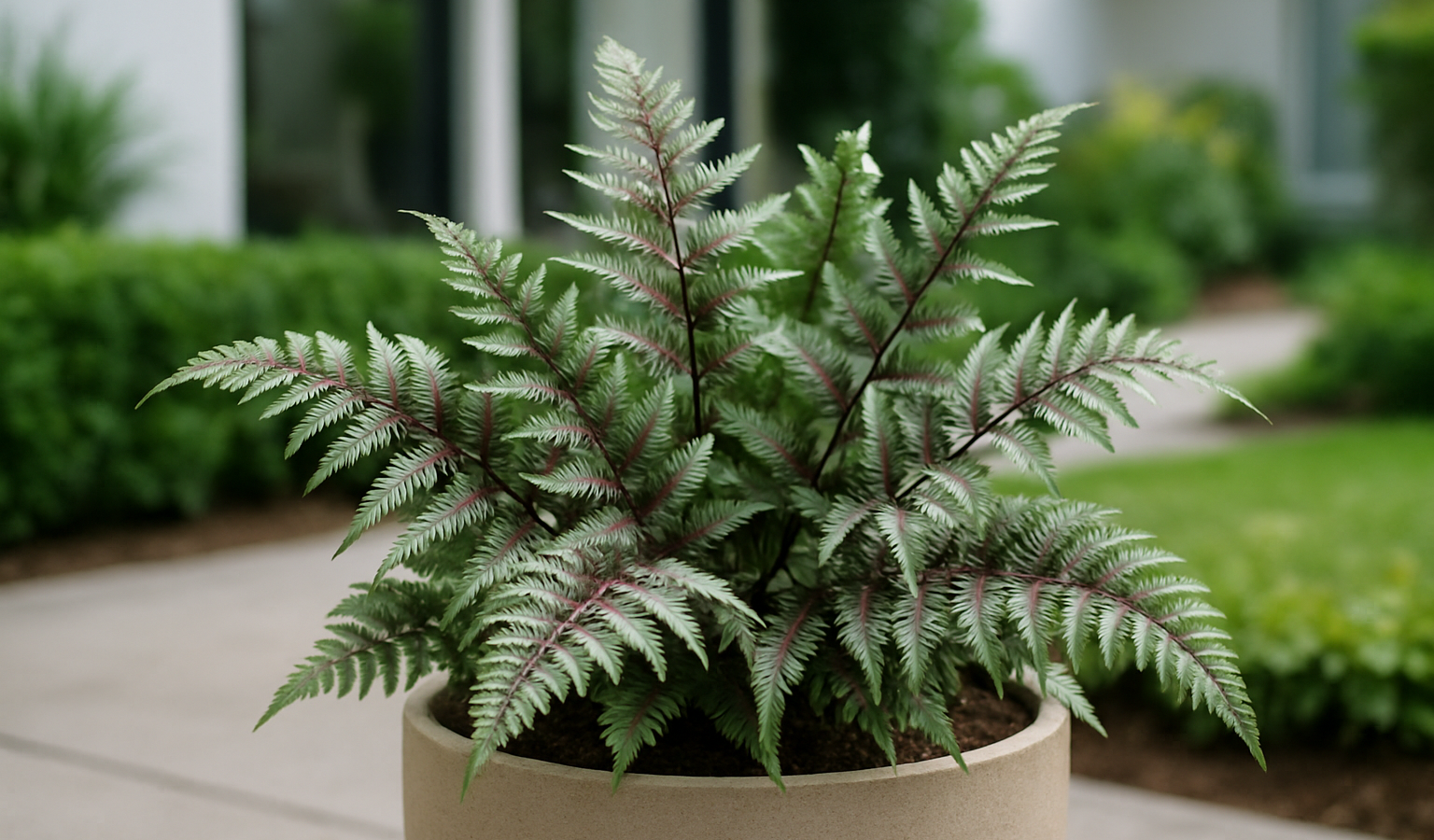
Japanese painted fern (Athyrium niponicum var. pictum) is the most colorful hardy fern you can grow, and one of the most beautiful foliage plants for shade, period. Where most ferns offer only green, this one paints its arching fronds in cool metallic silver, soft gray-green, and deep wine-red to burgundy, with the color concentrated along the central rib and bleeding out toward the tips. The effect is luminous in a shady bed, lighting up dark corners and weaving between hostas, heucheras, and other woodland plants. It is also genuinely easy: hardy, low-maintenance, slow to spread, and notably untroubled by the slugs that disfigure so many shade plants. This guide covers planting Japanese painted fern, the part shade and moist soil it needs, how to bring out its best color, watering and care, and why it shrugs off slug damage.
Key Takeaways
- Japanese painted fern is a hardy, colorful fern (USDA zones 3 to 8) with silver, gray, and burgundy fronds.
- It thrives in part shade with moist, humus-rich, well-drained soil; a little light deepens its color.
- It is slug-resistant and largely pest-free, unusual among shade plants.
- Compact at 12 to 18 inches tall, it is a slow-spreading clump-former, not invasive.
- It is deciduous, dying back in winter; cut old fronds in late winter before new growth.
About Japanese Painted Fern
Japanese painted fern is a deciduous, clump-forming fern native to eastern Asia, hardy across roughly USDA zones 3 to 8 and prized as one of the finest variegated foliage plants for shade. It grows into a low, spreading mound about 12 to 18 inches tall and a little wider, with triangular fronds arching outward from a central crown. The coloring is its glory: metallic silvery-gray overlaid on the fronds with burgundy or maroon flushing the stems and midribs, and the intensity varies through the season and with light levels. Named selections like ‘Pictum’, ‘Silver Falls’, ‘Pewter Lace’, and the hybrid ‘Ghost’ (a cross with lady fern) push the silver or upright habit further. Unlike running ferns, it forms a slowly expanding clump that mixes politely with companions, making it a designer’s favorite in the shade combinations seen throughout the Plants & Flowers hub.
Planting Japanese Painted Fern
Plant Japanese painted fern in spring or early fall from container plants. Choose a site in part shade with moist, well-drained, humus-rich soil; dappled light under high trees, a bed that gets morning sun and afternoon shade, or the cool side of the house all work well. Improve the soil first with plenty of compost or leaf mold, since this fern, like most, wants the moisture-retentive, organic woodland soil it evolved in. Dig a hole as wide as and no deeper than the root ball, set the crown level with the soil surface, backfill, and water in thoroughly.
Space plants about 18 inches apart so each low mound can spread and the colors can knit together into a drift; closer for a quicker carpet, wider as accents among larger plants. Mulch after planting with 2 to 3 inches of shredded leaves or bark to lock in moisture, moderate soil temperature, and feed the soil as it breaks down. Water regularly through the first season while the plant roots in. Because it is compact and slow-spreading, Japanese painted fern is a superb edging or front-of-border plant and an ideal partner for shade perennials.
Light, Soil, and Getting the Best Color
Part shade is the sweet spot. Unlike ferns that demand deep shade, Japanese painted fern actually colors best with some light: in too much shade the silver and burgundy mute toward plain green, while a bit of morning sun or bright dappled light intensifies the metallic sheen and wine tones. The catch is moisture, hot direct sun, especially in the afternoon, will scorch and fade the fronds, so the goal is bright but indirect light with consistently moist soil. In cooler climates it tolerates more sun; in hot regions, give it more shade and extra water.
For soil, aim for the fern ideal: moist, rich in organic matter, slightly acidic to neutral, and well-drained. It dislikes both dry, lean soil, which dulls the color and browns the edges, and heavy, soggy ground that can rot the crown. A spring topdressing of compost keeps the soil rich and moisture-retentive and supports strong color. If your painted fern looks washed out and greenish, the usual cause is too little light or too dry a soil; nudge it toward brighter dappled light and steadier moisture and the silver and burgundy return.
Watering, Pests, and Slug Resistance
Keep Japanese painted fern consistently moist, particularly during establishment and summer dry spells; even, steady moisture gives the lushest growth and best color. Water deeply rather than little and often, and rely on mulch to hold moisture between waterings. Established plants in good shade and soil are reasonably forgiving and need supplemental water mainly in drought. As with all ferns, avoid waterlogged soil, which causes crown rot, and avoid letting it bake dry, which browns the delicate fronds.
One of this fern’s quiet superpowers is that it is slug- and snail-resistant, where hostas and many shade plants get shredded. Ferns in general are rarely a slug favorite, and Japanese painted fern is reliably left alone, so you can plant it freely in damp, shady, slug-prone spots without the nightly battle. It is also largely free of other pests and diseases and is generally ignored by deer and rabbits, adding to its low-maintenance appeal. That toughness makes it a perfect companion to slug-magnet hostas: the fern stays pristine alongside them and provides color contrast.
Seasonal Care and Dividing
Japanese painted fern is deciduous, dying back to the ground in winter, so unlike evergreen autumn fern it disappears in the cold months and returns each spring. The only real maintenance is to cut away the old, collapsed fronds in late winter or early spring, just before the new fiddleheads unfurl, to tidy the clump and make way for fresh growth. Beyond that, mulch annually, water in dry spells, and topdress with compost in spring, and the plant looks after itself.
The clump expands slowly over the years and can be divided in early spring as growth resumes if you want more plants or to rejuvenate an old crown: lift it, split it into sections each with roots and several growing points, and replant. Division is the way to keep named selections true. Because it is colorful, compact, hardy, slug-proof, and easy, Japanese painted fern is one of the most useful plants in the shade garden, and it shines next to the coppery evergreen fronds of autumn fern for a rich, layered foliage planting. Give it part shade, moist soil, and a yearly cut-back, and it will glow in your darkest corners.
Frequently Asked Questions
How do I get the best color on Japanese painted fern?
Give it part shade with some bright, indirect or morning light, not deep shade. A little light intensifies the silver sheen and burgundy tones, while in heavy shade the fronds fade toward plain green. Keep the soil consistently moist and rich in organic matter; dry or too-dark conditions dull the color. Avoid hot afternoon sun, which scorches the fronds.
Is Japanese painted fern slug-resistant?
Yes, and that is one of its best features. Where slugs and snails shred hostas and many shade plants, ferns are rarely a favorite, and Japanese painted fern is reliably left alone. You can plant it in damp, shady, slug-prone spots without the usual battle, and it makes a pristine companion to slug-magnet plants like hostas.
How big does Japanese painted fern get?
It stays compact, forming a low, arching mound about 12 to 18 inches tall and a little wider. It is a slow-spreading clump-former, not a runner, so it never becomes invasive. This modest size makes it ideal as an edging, a front-of-border plant, or a colorful weaver between larger shade perennials like hostas and astilbes.
Is Japanese painted fern evergreen?
No, it is deciduous, dying back to the ground each winter and returning in spring, unlike evergreen autumn fern. The only maintenance this requires is cutting away the old, collapsed fronds in late winter or early spring, just before the new fiddleheads emerge, to tidy the clump and make room for fresh, colorful growth.
How much sun does Japanese painted fern need?
It does best in part shade and actually needs some light to color well, more than deep-shade ferns. Morning sun with afternoon shade, or bright dappled light, is ideal. Hot, direct afternoon sun scorches and fades the fronds, so pair any sun with consistently moist soil. In hot climates lean toward more shade and extra water.