

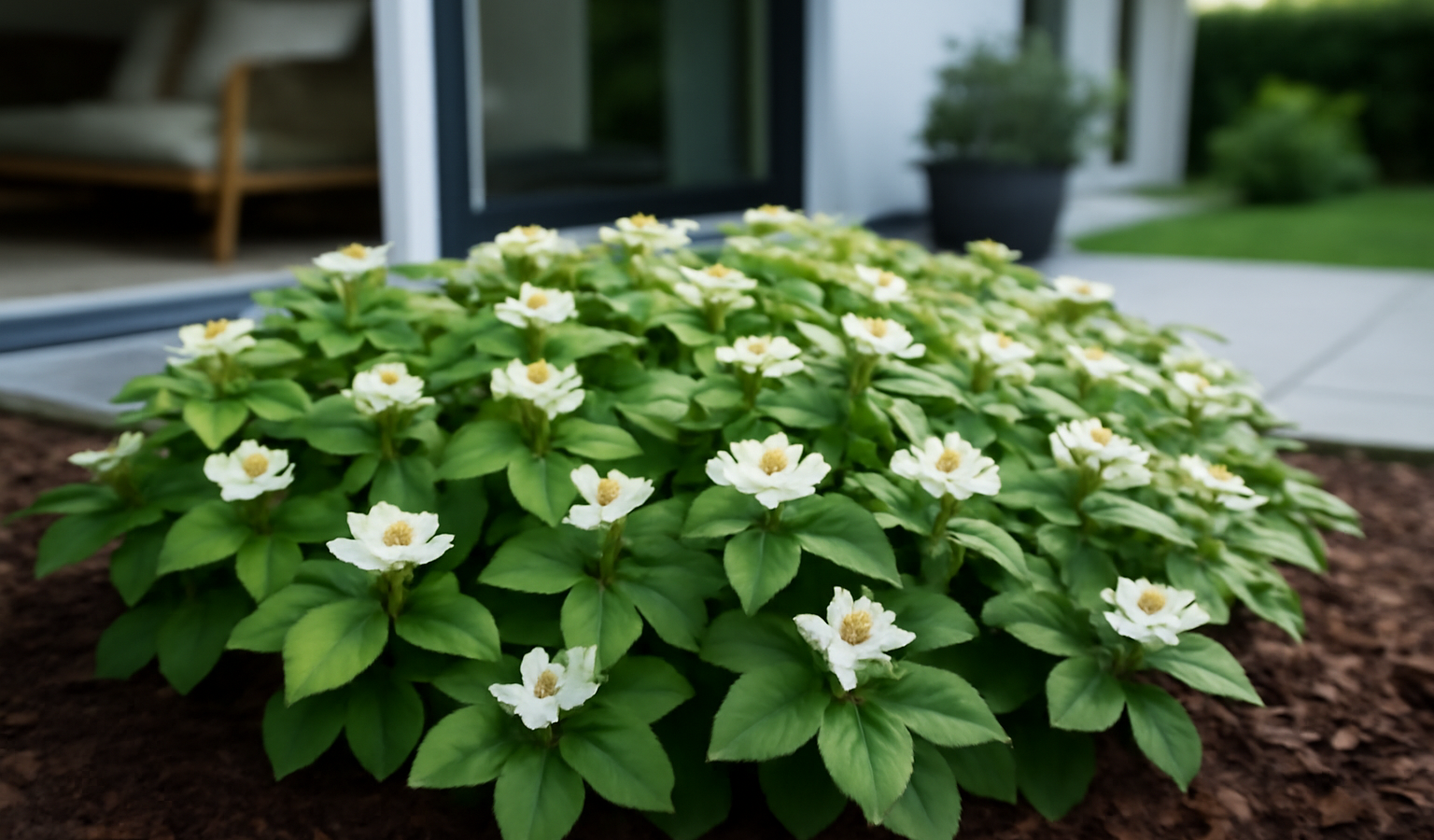
Bunchberry (Cornus canadensis) is a creeping, ground-hugging member of the dogwood family that brings the look of a flowering dogwood tree down to ankle height, carpeting the cool, acidic forest floor with whorls of glossy leaves topped by what appear to be small white dogwood flowers in late spring. Those showy white “petals” are actually bracts surrounding a tight cluster of tiny true flowers, and by late summer each cluster ripens into a bunch of bright scarlet berries, giving the plant its name. A circumboreal native of cool northern and montane forests, bunchberry is hardy in USDA zones 2 through 7 and grows just 3 to 8 inches tall, spreading slowly by underground rhizomes into a low, weed-suppressing mat. It is a spectacular native groundcover for the right spot, but it is particular: it demands cool temperatures, consistent moisture, and acidic, humus-rich, woodland soil, and it resents heat and dryness. Match those conditions, especially in cooler climates, and bunchberry rewards you with three-season interest from spring flowers through summer berries to red-tinged fall foliage.
Key Takeaways
- Native creeping dogwood groundcover, hardy in USDA zones 2-7; grows just 3-8 in tall and spreads by rhizomes.
- White dogwood-like spring flowers (really bracts) followed by clusters of bright red berries and red fall color.
- Demands cool conditions, consistent moisture, and acidic, humus-rich woodland soil; struggles in heat and dry ground.
- Best in part to full shade in cool climates; plant in spring, mulch heavily, and keep soil moist while establishing.
- Slow to establish but a superb low, weed-suppressing native carpet for woodland and shade gardens once settled.
What Bunchberry Is and Why Grow It
Bunchberry, also called creeping dogwood or dwarf dogwood, is a low perennial groundcover in the genus Cornus, the dogwoods, which makes it a diminutive relative of the familiar flowering dogwood trees. It grows wild across the cool forests of the northern hemisphere, from Canada and the northern United States through to northeastern Asia, typically as a carpet on the acidic, mossy floor of coniferous and mixed woods. From creeping underground rhizomes it produces upright stems just a few inches tall, each topped by a neat whorl of four to six oval, deeply veined leaves. In late spring, a cluster of tiny greenish true flowers appears at the center of the leaf whorl, ringed by four showy white bracts that read exactly like the petals of a dogwood blossom. The flowers are botanically remarkable, snapping open explosively to fling pollen, but to the gardener the effect is simply a scattering of small white dogwood blooms across the carpet.
By late summer those flower clusters mature into the tight “bunches” of glossy scarlet berries that give the plant its name, edible if rather bland and much enjoyed by birds. In autumn the foliage often flushes burgundy and red before dying back for winter. You grow bunchberry for this long season of interest packed into a plant only a few inches tall, and for its value as a native, low-maintenance, weed-suppressing groundcover beneath trees and shrubs in a cool climate. Where it is happy, it forms a dense, even mat that needs no mowing and almost no care. The honest caveat is that it is fussy about its conditions and slow to establish, so it is a plant for the gardener willing to match its needs rather than a quick fix. It belongs in the same cool, shaded, acidic plantings as ferns and other woodland natives; for more shade groundcover ideas, see the Plants & Flowers hub.
Where and When to Plant
Hardiness, climate, and light
Bunchberry is very cold-hardy, thriving in USDA zones 2 through 7, but its real limit is heat, not cold. As a plant of cool northern and montane forests, it struggles or fails where summers are hot and humid, which makes it best suited to cooler climates, higher elevations, and the northern parts of its range. If you garden where summer nights stay cool, you have a good chance; in hot-summer regions it is difficult and often short-lived. For light, give it part to full shade. Dappled or filtered shade beneath deciduous or coniferous trees mimics its forest home; deep shade is tolerated, and it will take more sun only in the coolest, dampest, most northern gardens. The shade also helps keep the roots cool, which is essential.
Soil and the acidity requirement
Soil is make-or-break for bunchberry. It needs acidic, humus-rich, consistently moist but well-drained soil, the cool, peaty, leaf-littered floor of an evergreen or mixed wood. The acidity matters: aim for a soil pH around 4.5 to 6.0, distinctly on the acidic side, the same range that suits rhododendrons, blueberries, and ferns. Bunchberry will languish in neutral or alkaline ground. Before planting, work in generous amounts of acidic organic matter such as composted pine bark, peat-free ericaceous compost, leaf mold, or composted conifer needles, both to acidify and to create the moisture-retentive, humus-rich texture the plant demands. The soil must stay reliably moist, never drying out, yet it should not be a stagnant bog, so good organic structure that holds moisture while draining freely is the goal. This combination, cool, moist, acidic, and humus-rich, is the single biggest factor in success.
When to plant
Plant bunchberry in spring, once the soil has warmed and the danger of hard frost has passed, which gives the plant the full cool, moist season ahead to establish its rhizomes before facing winter. In milder zones early autumn planting also works, allowing roots to settle in cool, damp conditions. Avoid planting in the heat of summer, when a freshly set plant is most vulnerable to the heat and dryness it already dislikes. Buy nursery-propagated plants, as bunchberry is notoriously difficult to establish from seed and slow from any source, so starting with healthy plugs or pots gives you the best footing.
Planting Bunchberry
Spacing and technique
Because bunchberry spreads slowly, plant it fairly close together if you want a carpet within a reasonable time: space plants 6 to 12 inches apart, the closer spacing for faster cover. Dig each planting hole in the prepared acidic, humus-rich bed, set the plant at the same depth it was growing in its pot so the crown sits level with the soil surface, backfill gently, and firm in. Water thoroughly after planting to settle the soil. The rhizomes run just below the surface, so do not plant deeply. If you are establishing a larger area, work the whole bed to the right acidic, humus-rich condition rather than just the individual holes, since the rhizomes will be running through all of it as the colony knits together.
Mulching at planting
Immediately after planting, apply a 2 to 3 inch mulch of an acidic, organic material such as pine needles, shredded leaves, composted bark, or peat-free ericaceous mulch over the bed, keeping it just clear of the stems. This mulch is not optional with bunchberry; it keeps the all-important roots cool and moist, suppresses competing weeds while the slow-growing colony fills in, maintains the acidity as it breaks down, and replicates the leaf-and-needle litter of the forest floor. Refresh it every year. Pairing the new planting with the cooling shade of nearby shrubs or ferns also helps shelter it through the establishment period.
Care and Maintenance
Watering
Consistent moisture is essential and non-negotiable, especially while the plant is establishing in its first couple of seasons and during any warm or dry spell. The soil should never dry out; bunchberry has no drought tolerance and will brown, wilt, and die back quickly if it goes dry, particularly in warmth. Water regularly and deeply in the absence of rain, and use the mulch and shade to reduce how fast the soil dries. Rainwater is preferable to hard tap water where possible, since hard water is alkaline and can gradually raise the soil pH against the plant’s acidic preference. Even established colonies need a reliably moist, cool root run to persist.
Feeding and keeping the soil acidic
Bunchberry is not a heavy feeder; the steady breakdown of an acidic organic mulch usually supplies what it needs. If growth is weak or the leaves pale, an annual feed with a fertilizer formulated for acid-loving (ericaceous) plants in spring gives a gentle boost without raising the pH. Avoid lime and alkaline amendments entirely. If your soil or water tends toward alkaline and you notice yellowing leaves with green veins (a sign of iron deficiency brought on by high pH), top-dress with more acidic organic matter and use an ericaceous feed to bring conditions back into range. Maintaining that acidic, humus-rich environment year after year is the core of long-term care.
Spreading, weeding, and seasonal care
Be patient: bunchberry establishes slowly and may sit and sulk for a season or two before its rhizomes begin to run and the carpet thickens. During that time, weed by hand to keep competition down, since the low, slow mat is easily overrun by faster weeds until it closes up. Once established and knitted into a dense cover, it largely suppresses weeds itself. There is little routine maintenance beyond keeping it moist, mulched, and acidic. The plant dies back over winter and re-emerges in spring; simply let the old foliage and any fallen leaves contribute to the mulch layer. If a patch outgrows its space or you wish to propagate, you can carefully divide rooted sections of the rhizome mat in spring and replant them into prepared acidic soil, keeping them well watered until they take.
Design and Companion Planting
Bunchberry is a natural for the cool woodland or shade garden, where its low carpet ties together the feet of larger plants and the bare ground beneath trees. It is the perfect companion for the acid-loving woodland shrubs and perennials that share its conditions: underplant rhododendrons, azaleas, blueberries, and pieris, where the soil is already acidic and the shrubs cast the cool shade bunchberry needs. It mingles beautifully with ferns, whose fronds provide overhead shade and textural contrast, and with other cool-climate woodland natives. Use it as a living mulch and groundcover beneath specimen trees, along shaded woodland paths, or spilling over the cool, moist edge of a shaded rock garden. The white spring bracts, scarlet summer berries, and red fall foliage give a long season of low-level interest. For other shade-loving natives and groundcovers to grow with it, our guides to woodland plants like trillium cover excellent companions for the same cool, humus-rich beds.
Pests, Problems, and Troubleshooting
When grown in the right conditions, bunchberry is largely free of serious pests and diseases, and its troubles are almost entirely about climate and soil rather than bugs. The overwhelming reasons gardeners fail with it are heat and dryness: in hot-summer regions, or where the soil dries out, the foliage scorches, browns, and the plant declines, and there is often no remedy except to garden it only in cool climates, deep shade, and reliably moist ground. The second great pitfall is the wrong soil pH; in neutral or alkaline soil bunchberry grows poorly and shows iron-deficiency yellowing, fixed only by acidifying the soil with ericaceous organic matter and avoiding hard water. In suitably cool, moist, shaded sites, occasional fungal leaf spots may appear in stagnant, overcrowded, poorly ventilated conditions, managed by not overcrowding and removing affected foliage, but these are minor. Slugs and snails may graze the low foliage in damp shade. Deer tend to leave it alone. In short, bunchberry has few pest enemies; its success or failure is decided almost entirely by whether you can give it the cool temperatures, steady moisture, and acidic, humus-rich woodland soil it absolutely requires. Get those right, be patient through a slow start, and you will have one of the most charming native groundcovers a cool shade garden can grow.
Frequently Asked Questions
Why is bunchberry so hard to grow?
Bunchberry is a cool-forest native that demands cool temperatures, constant moisture, and acidic, humus-rich soil. It struggles in heat, dryness, and neutral or alkaline ground. Match those exact conditions, especially in a cool climate, and it succeeds; miss them and it declines.
Does bunchberry need acidic soil?
Yes. It needs distinctly acidic soil, roughly pH 4.5 to 6.0, the same range that suits rhododendrons and blueberries. In neutral or alkaline soil it grows poorly and shows iron-deficiency yellowing. Amend with ericaceous compost and avoid lime and hard water.
Are bunchberry berries edible?
Yes, the bright red berries are edible, though fairly bland and seedy, and were eaten by Indigenous peoples and are popular with birds. They are not toxic, but most gardeners grow bunchberry for its flowers, berries, and foliage rather than for eating.
How fast does bunchberry spread?
Slowly. It spreads by underground rhizomes and often sits for a season or two before knitting into a carpet. Plant 6 to 12 inches apart for quicker cover, keep it moist and weeded while young, and be patient as the mat fills in over a few years.
Can bunchberry grow in hot climates?
Generally no. It is a cool-climate plant that suffers in hot, humid summers and is best in zones 2-7, higher elevations, and cooler northern gardens. In hot regions it is difficult and often short-lived even with deep shade and steady moisture.