

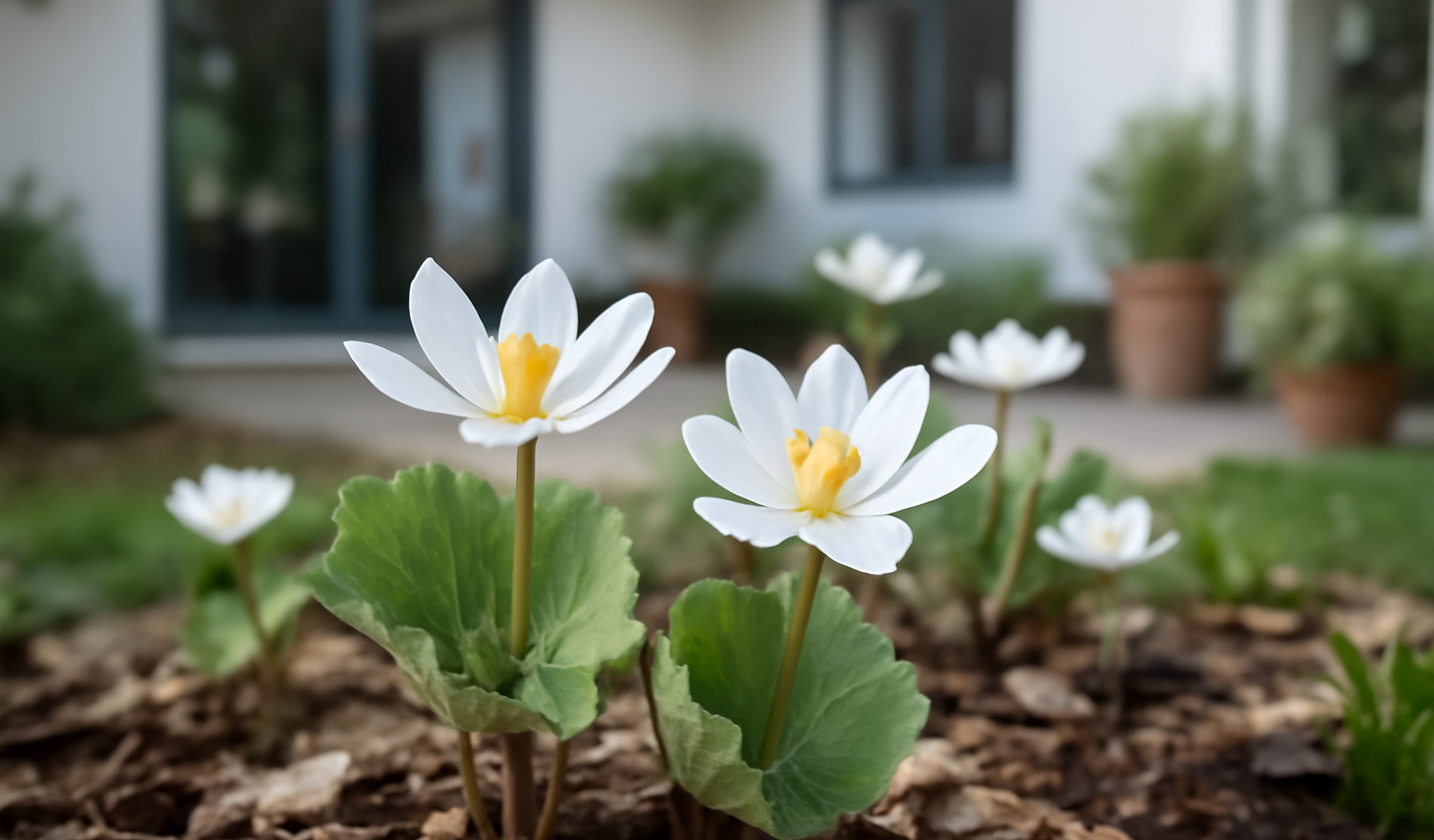
Bloodroot (Sanguinaria canadensis) is one of the first and loveliest native wildflowers of the eastern woodland spring, pushing up pristine white, daisy-like blooms in early spring just as the snow retreats, each flower cradled by a single distinctively lobed leaf wrapped around its stem. It is a spring ephemeral: it flowers, sets seed, and then, by midsummer, its foliage yellows and disappears entirely, the plant going dormant underground until the next spring. Hardy in USDA zones 3 through 8 and standing only 6 to 10 inches tall, bloodroot is a treasure for the shade and woodland garden, spreading slowly by its thick orange-red rhizome into colonies that carpet the ground beneath deciduous trees. The common name comes from that rhizome, which bleeds a red-orange sap when cut. Give it the rich, moist, humus-laden soil and dappled shade of its native forest floor, plant it where its summer dormancy will not leave an awkward gap, and leave it undisturbed; bloodroot is a slow, long-lived, low-maintenance native that rewards patience.
Key Takeaways
- Native eastern woodland wildflower, hardy in USDA zones 3-8; white spring blooms on 6-10 in plants.
- A spring ephemeral: it flowers early, then the foliage dies back and the plant goes dormant by midsummer.
- Wants part to full shade and rich, moist, humus-rich woodland soil; mimics the deciduous forest floor.
- Spreads slowly into colonies by its orange-red rhizome; plant rhizomes in fall, divide in summer dormancy.
- Plant alongside ferns and later perennials to fill the gap when bloodroot goes dormant; the sap is toxic, so handle and site with care.
What Bloodroot Is and Why Grow It
Bloodroot is a low-growing perennial in the poppy family, native to the rich deciduous woodlands of eastern North America, from Canada down through the Appalachians and Midwest. It grows from a stout, branching rhizome that lies just below the soil surface and is filled with a startling red-orange sap, the source of both its common and botanical names (sanguinaria from the Latin for blood). In very early spring, each growing point sends up a single flower bud sheathed in a furled, blue-green leaf; the leaf unwraps from around the stem as the bud opens into a clear white flower of eight to twelve narrow petals around a boss of golden stamens. The flowers are fleeting, often lasting only a few days to a week and closing at night and in dull weather, but they are exquisite, among the very first blooms of the woodland year. After flowering, the rounded, deeply lobed leaf expands and persists for a while, then the whole plant yellows and vanishes by early to midsummer.
You grow bloodroot for that early, pure-white moment and for its value as a native that supports the spring woodland ecosystem; its seeds carry a fatty appendage called an elaiosome that ants collect and carry off, dispersing the plant. It is a connoisseur’s woodland plant, slowly forming colonies that carpet shady ground beneath trees, and the double-flowered form, Sanguinaria canadensis f. multiplex ‘Plena’, is especially prized because its sterile, many-petaled blooms last considerably longer than the single type. As an ephemeral that disappears for half the year, bloodroot is a plant to weave among companions that will cover its absence, and it sits naturally among other shade-loving natives. If you garden in the shade beneath trees, it belongs in the same plantings as ferns, trilliums, and other woodland wildflowers, and you can find more shade plant ideas on the Plants & Flowers hub.
Where and When to Plant
Hardiness and light
Bloodroot is hardy across USDA zones 3 through 8, comfortable with cold winters, which it needs for dormancy. The right light is part to full shade, replicating its life on the deciduous forest floor. In the wild it flowers in the bright window of early spring before the tree canopy leafs out, then spends its dormant summer in deep shade, so a spot beneath deciduous trees or on the north or east side of a building or larger shrubs is ideal: bright in spring, shaded in summer. It tolerates more sun in spring in cooler zones if the soil stays moist, but hot, dry sun will scorch the foliage and shorten its already brief season. Deep, dense evergreen shade is too dark; dappled woodland light is perfect.
Soil
The single most important thing for bloodroot is woodland soil: rich, moist, well-drained, and loaded with organic matter, exactly the leaf-litter humus of a forest floor. Before planting, work in plenty of compost or leaf mold to create that loose, humus-rich, moisture-retentive but never waterlogged texture. The plant prefers a slightly acidic to neutral pH, in keeping with its woodland origins, though it is adaptable. Good drainage matters because the shallow rhizome can rot in heavy, soggy ground, yet the soil must not dry out in spring while the plant is in growth, so the leaf-mold richness that holds moisture without staying sodden is exactly right. An annual mulch of leaf litter mimics nature and keeps these conditions year after year.
When to plant
The best time to plant bloodroot rhizomes is in autumn, while the plant is dormant, giving the rhizome time to settle and root before spring growth. You can also plant or move it in summer once the foliage has died back and the plant is dormant. Potted plants from a nursery, often sold in spring while in leaf or flower, can be planted then with care, keeping them well watered until they go dormant. Always buy nursery-propagated stock rather than wild-collected plants, as bloodroot is over-collected in some areas; responsible sources propagate it sustainably.
Planting Bloodroot
Planting rhizomes
Bloodroot rhizomes are thick, knobbly, and orange-red inside. Plant them shallowly, just 1 to 2 inches below the surface, laid horizontally with any visible growing points or buds facing up. The rhizome naturally lies near the surface in the wild, so resist planting too deep. Space rhizomes or plants about 6 to 12 inches apart to allow the slow-spreading colony room to fill in over the years. Settle them into the enriched, humus-rich soil, firm gently, cover with a layer of leaf-mold mulch, and water in well. Handle the rhizomes with a little care, as the red sap can stain and is toxic and irritating to skin; gloves are sensible.
Planting potted plants and placement
Set potted plants at the same depth they were growing in the container, in soil prepared the same way. The most important placement decision with bloodroot is planning for its disappearance. Because the entire plant vanishes by midsummer, leaving bare ground, position it among companions whose foliage expands to fill the gap, such as ferns, hostas, wild ginger, and other later-emerging shade perennials, or where its summer absence beneath shrubs simply will not be noticed. Avoid putting it in a prominent spot where the midseason blank will bother you. Mark the colony’s position so you do not dig into the dormant rhizomes later in the year.
Care Through the Year
Watering and mulch
Keep the soil consistently moist during the spring growing and flowering season; bloodroot must not dry out while it is in active growth, or the foliage will yellow and collapse prematurely, cutting short the period when it recharges the rhizome. In a naturally moist woodland setting, spring rain and the leaf-litter mulch usually suffice, but water in any dry spring spell. Once the plant goes dormant in summer, it needs far less water and tolerates the drier conditions of a summer woodland floor, though it should not bake to dust. A 2 to 3 inch mulch of shredded leaves or leaf mold, refreshed each autumn, is the single best thing you can do for bloodroot: it conserves spring moisture, keeps the soil cool and humus-rich, and replicates the forest-floor conditions the plant evolved in.
Feeding and seasonal cycle
Bloodroot is not a hungry plant and the annual leaf-mold mulch generally supplies all the gentle nourishment it needs as it breaks down. There is no call for heavy fertilizing; if growth seems weak, a light top-dressing of compost in early spring is plenty. The key to long-term success is to respect the plant’s natural cycle. After flowering, let the leaves stay as long as they remain green, feeding the rhizome, then let them yellow and die back on their own; do not cut them off prematurely. Once the plant is dormant, simply leave the ground undisturbed and mulched. The colony returns and slowly expands each spring with no intervention.
Dividing and propagating
Bloodroot spreads slowly on its own, but if you want to propagate it or rejuvenate a clump, division is the surest method. Do it in summer when the plant is dormant, or in early autumn. Lift the rhizome carefully with a fork, and cut it into sections with a clean knife, making sure each piece has at least one growing bud or eye and a portion of root. Replant the divisions immediately at the shallow 1-to-2-inch depth, water them in, and mulch. They will establish over the dormant period and emerge the following spring. Bloodroot also self-sows where happy, its ant-dispersed seeds producing new plants nearby over time, so a contented colony will gently extend itself.
Design and Companion Planting
Bloodroot is a quintessential plant for the native woodland or shade garden, and it shines when combined with other spring ephemerals and shade companions that share its rich, moist, dappled conditions. Plant it with trilliums, Virginia bluebells, hepatica, and Dutchman’s breeches for a tapestry of early native blooms, then rely on ferns, hostas, wild ginger, foamflower, and sedges to carry the planting through summer once the ephemerals retreat underground. The white flowers glow against the dark, just-emerging woodland floor and pair beautifully with the blue of bluebells and the fresh fronds of unfurling ferns. The longer-lasting double ‘Plena’ form is worth seeking out for a more substantial spring display. For more woodland natives to grow with it, see our guides to companions like trillium and Virginia bluebells, which thrive in exactly the same setting.
Pests, Problems, and a Word of Caution
Bloodroot is remarkably free of serious pests and diseases, one of the benefits of growing a well-adapted native in conditions it is suited to. Deer and rabbits generally avoid it, thanks to the toxic compounds in its sap. The few problems that arise are cultural: foliage that yellows and disappears unusually early in the season usually means the soil dried out during the spring growth period, so increase moisture and mulch; and rhizome rot can occur if the plant sits in heavy, waterlogged ground, which the rich-but-well-drained woodland soil is designed to prevent. Slugs and snails may nibble the foliage in damp conditions but rarely do significant harm. The most important caution is about the plant itself rather than its pests: all parts of bloodroot, and especially the red sap of the rhizome, are toxic if ingested and can irritate skin, so site it thoughtfully away from where children or pets might dig and chew, wear gloves when handling the rhizomes, and do not be tempted by historical folk uses of the sap, which are genuinely dangerous. Treat it as the ornamental woodland native it is: plant it in rich, moist, dappled shade, mulch it with leaf mold, respect its summer dormancy, and leave it alone to slowly form one of the most beautiful early-spring carpets a shade garden can offer.
Frequently Asked Questions
Why does my bloodroot disappear in summer?
That is completely normal. Bloodroot is a spring ephemeral: it flowers early, then its foliage yellows and dies back, and the plant goes dormant underground by midsummer. It returns the following spring. Plant it among ferns or later perennials to cover the gap.
Is bloodroot poisonous?
Yes. All parts of bloodroot are toxic if eaten, and the red-orange sap of the rhizome can irritate skin. Wear gloves when handling the rhizomes, site it away from where children or pets might dig and chew, and never use the sap medicinally.
How fast does bloodroot spread?
Slowly. It expands gradually by its branching rhizome and by ant-dispersed self-sown seed, forming wider colonies over several years. It is not aggressive or invasive, so be patient; a happy planting will steadily thicken into a woodland carpet over time.
What soil does bloodroot need?
Rich, moist, well-drained, humus-rich woodland soil, like a forest floor full of leaf mold. Work in plenty of compost or leaf mold before planting, keep it slightly acidic to neutral, and mulch with shredded leaves each autumn to maintain those conditions.
When and how do I divide bloodroot?
Divide during summer dormancy or early autumn. Lift the rhizome, cut it into sections each with a growing bud and some roots, then replant immediately just 1 to 2 inches deep, water in, and mulch. The divisions emerge the following spring.