

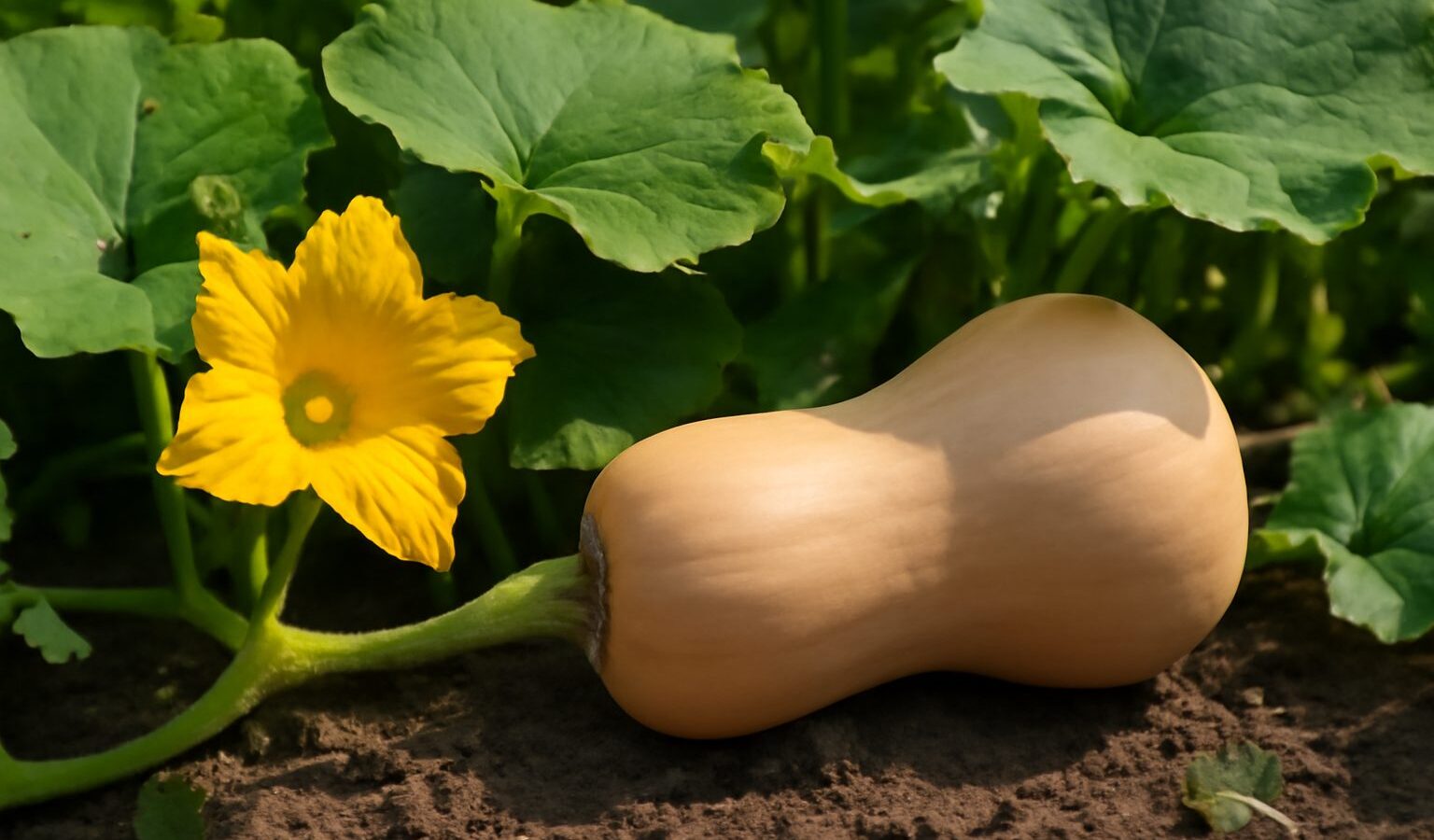
Butternut squash is the winter squash worth dedicating space to. The vines are sprawling and the season is long, but the payoff is a crop of dense, sweet, nutty-fleshed squash that store for months in a cool pantry—often well into the following spring. Butternut is also one of the easier winter squashes to grow well, because its hard, smooth skin resists the squash vine borer better than thinner-skinned types. This guide covers the whole arc: when and how to sow, how much room the vines really need, keeping the plants watered and fed through a long season, navigating pollination and the two pests that matter most, and the often-misunderstood business of harvesting and curing for long storage.
Key Takeaways
- Long warm season: 90–110 days to maturity; sow after frost when soil hits 65–70°F.
- Give it room: vines run 10–15 feet—space hills 4–6 feet apart, or trellis to save space.
- Rich, well-drained soil: squash are heavy feeders; work in compost or aged manure before planting.
- Deep, steady water: 1–1.5 inches per week at the roots; avoid wetting the leaves.
- Pollination matters: separate male and female flowers; hand-pollinate if fruit isn’t setting.
- Cure before storing: harvest when the rind is hard and tan, then cure 10–14 days for months of storage.
Choosing a Variety
Butternut (Cucurbita moschata) comes in several reliable varieties. ‘Waltham Butternut’ is the classic open-pollinated standard—uniform, productive, and a good keeper—maturing in about 100–105 days. ‘Early Butternut’ is a hybrid that finishes in around 85–90 days, useful for short-season northern gardens. ‘Butterscotch’ and ‘Honeynut’ are smaller, intensely sweet selections; Honeynut produces little single-serving squash and matures earlier, making it a favorite for small gardens. If your growing season is short, choose an early variety and start seeds indoors to bank a few extra weeks.
When to Plant Butternut Squash
Butternut is a heat-loving, frost-tender crop with a long season, so timing is about giving the vines enough warm days to ripen fruit before fall frost. Wait until all danger of frost has passed and the soil has warmed to at least 65–70°F—usually 2–3 weeks after your last frost date. In zones 5–7 that is typically late May to early June; warmer zones can plant earlier.
Because butternut needs 90–110 frost-free days, gardeners in short-season areas should count back from the first fall frost and, if the window is tight, start seeds indoors 3–4 weeks before the last frost in biodegradable pots. Squash hate root disturbance, so peat or paper pots that go straight into the ground are essential. In most of the country, though, direct sowing into warm soil is simpler and the plants quickly catch up to transplants.
Soil and Site Preparation
Squash are heavy feeders that thrive in rich, fertile, well-drained soil with a pH of 6.0–6.8 and full sun—8 or more hours a day. Before planting, work several inches of compost or well-rotted manure into the bed. The traditional method is to build “hills”: low, wide mounds of enriched soil about 12 inches across, which warm faster, drain well, and give the roots a deep pocket of fertility. Space hills 4–6 feet apart, with 6–8 feet between rows, because the vines will sprawl 10–15 feet in every direction.
If garden space is tight, butternut can be trained up a strong trellis or arch—the vines climb readily with a little guidance, and the fruit, being smaller than pumpkins, can be supported with slings made from old pantyhose or mesh once it sizes up. Vertical growing also improves airflow, which reduces disease. For sturdy support that can carry a vining crop, see our walkthrough on building a garden trellis.
How to Sow and Space
Sow seeds 1 inch deep, planting 3–4 seeds per hill. Once seedlings have a couple of true leaves, thin to the two strongest plants per hill by snipping the others at soil level rather than pulling, which protects the remaining roots. For row planting, sow seeds 2–3 inches apart and thin to one plant every 18–24 inches. Germination takes 7–10 days in warm soil; cold soil slows it dramatically and risks rotting the seed, which is why patience early pays off.
A black plastic or fabric mulch laid before planting warms the soil and speeds early growth in cooler climates, and it suppresses the weeds that are hard to control once the vines spread. In warm regions, an organic straw mulch keeps roots cool and conserves moisture instead.
Watering and Feeding
Butternut squash needs consistent moisture—about 1–1.5 inches of water per week—delivered deeply at the base of the plants. Deep, infrequent watering encourages deep roots and steadier growth than frequent shallow sprinkling. Keep water off the foliage, because wet leaves are the gateway to powdery mildew and other fungal problems; drip irrigation or a soaker hose is ideal. The vines often wilt dramatically in midday heat even with adequate moisture—check the soil before reacting, as they usually recover by evening.
As heavy feeders, squash benefit from feeding through the season. Side-dress with compost or a balanced fertilizer when the vines begin to run, then switch to a lower-nitrogen, higher-phosphorus-and-potassium feed once flowering and fruit set begin. Too much nitrogen later in the season produces rampant leafy vines at the expense of fruit. Late in the season, taper off watering as the squash mature to concentrate the sugars and toughen the rind for storage.
Pollination
Squash produce separate male and female flowers on the same plant. Male flowers appear first, often a week or more before any females, which can alarm new gardeners who see flowers but no fruit—this is normal. Female flowers are easy to spot: they have a tiny immature squash (the swollen ovary) at the base, while males sit on a plain straight stem. Bees and other pollinators transfer pollen between them, and a well-pollinated female swells into a fruit while poorly pollinated ones shrivel and drop.
If you see female flowers withering without setting fruit, hand-pollinate in the early morning when flowers are open: pick a fresh male, peel back its petals, and brush the pollen-laden stamen directly onto the center of several female flowers. This is also a reason to protect pollinators—avoid spraying insecticides when flowers are open, and grow nearby blooms to draw bees in. A nearby pollinator garden noticeably improves fruit set on all your cucurbits.
Pests and Diseases
The squash vine borer is the most feared pest, a moth larva that tunnels into the stem and causes a vine to wilt suddenly and collapse. Butternut’s hard, solid stems make it more resistant than zucchini or pumpkins, but it is not immune. Watch for the moth’s flight in early summer, look for sawdust-like frass near the stem base, and protect young plants with row cover (removing it at flowering for pollination). If a borer is inside, you can sometimes slit the stem lengthwise, remove the larva, and bury the wound to encourage new roots.
Squash bugs are the other major pest—gray-brown shield-shaped insects that suck sap and can kill young plants. Crush their bronze egg clusters on leaf undersides, handpick adults in the morning, and clear plant debris where they overwinter. Cucumber beetles feed on leaves and spread bacterial wilt. On the disease front, powdery mildew is nearly inevitable late in the season—a white powder on the leaves; improve airflow, water at the soil line, and apply a preventive spray of potassium bicarbonate or diluted neem at the first sign. Downy mildew and bacterial wilt are managed through rotation, resistant varieties, and pest control.
When and How to Harvest
Butternut is ready to harvest 90–110 days after sowing, when the rind has turned a deep, solid tan with no green streaks and is hard enough that you cannot dent it with a fingernail. The stem will dry and begin to cork, and the vine near the fruit often starts to die back. Harvest before the first hard frost—a light frost may not hurt mature fruit, but freezing damages the flesh and ruins its keeping quality.
Cut each squash from the vine with a sharp knife or pruners, leaving a 2–3 inch stem attached. That stem is important: squash harvested without a stem, or with the stem broken off, rot quickly because the wound is an entry point for decay. Never carry the squash by the stem, which can snap it off.
Curing for storage
Curing is what turns a freshly picked squash into one that stores for months. After harvest, set the squash in a warm, dry, well-ventilated spot at about 80–85°F for 10–14 days. Curing hardens the rind, heals minor wounds, and concentrates the sugars, deepening the flavor. After curing, store in a cool, dry place around 50–55°F with good airflow. Properly cured butternut keeps 3–6 months, sometimes longer, and the flavor actually improves over the first month or two in storage. Inspect occasionally and use any with soft spots first.
Butternut is the perfect anchor for a three-sisters planting with corn and beans. To complete the combination, see our guide to growing green beans, or browse the Plants & Flowers hub for more vegetable how-tos.
Frequently Asked Questions
How long does butternut squash take to grow?
Butternut needs 90–110 days from sowing to harvest, depending on variety. Early hybrids like ‘Early Butternut’ finish in about 85–90 days, while standards like ‘Waltham’ take 100–105 days. Count back from your first fall frost to be sure you have enough warm season.
How do I know when butternut squash is ripe?
The rind turns a solid deep tan with no green, becomes hard enough that a fingernail won’t dent it, and the stem dries and corks. The vine near the fruit often starts dying back. Harvest before a hard frost, leaving a 2–3 inch stem attached.
Why is my butternut squash flowering but not fruiting?
Male flowers appear first and there is often a week’s gap before female flowers (the ones with a tiny squash at the base) open—this is normal. If females still aren’t setting fruit, pollination is the issue; hand-pollinate in the morning and encourage bees by avoiding insecticides during bloom.
Do you have to cure butternut squash?
For long storage, yes. Curing at 80–85°F for 10–14 days hardens the rind, heals wounds and concentrates the sugars. Cured squash stored at 50–55°F keeps for 3–6 months, and the flavor improves. Uncured squash is fine to eat right away but won’t store well.
Can you grow butternut squash vertically?
Yes. The vines climb a sturdy trellis or arch with a little guidance, which saves space and improves airflow. Support the developing fruit with slings of mesh or old pantyhose once they size up so their weight doesn’t tear them off the vine.