

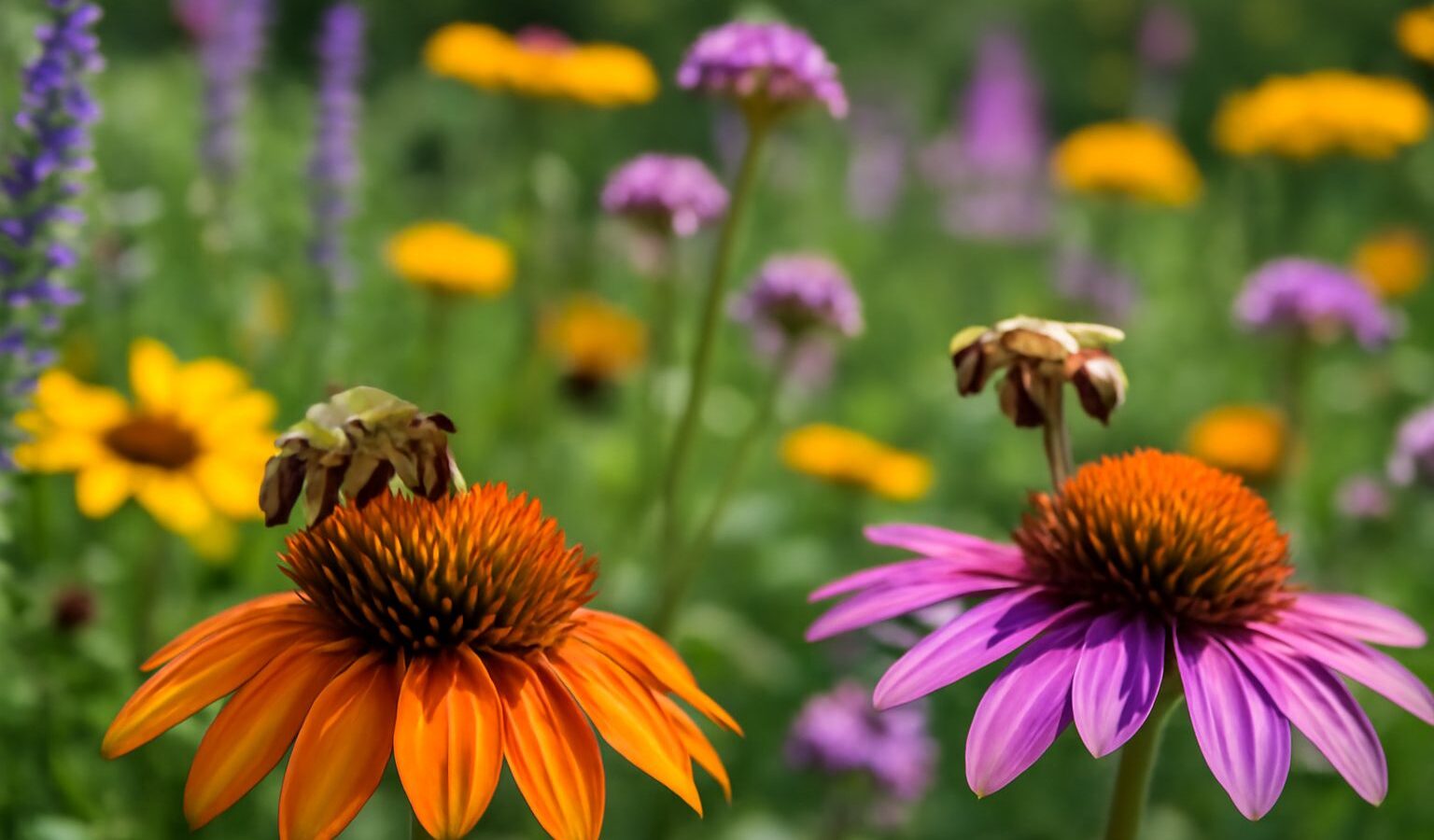
A great pollinator garden does one thing exceptionally well: it offers nectar and pollen continuously from early spring to hard frost, so bees, butterflies and hummingbirds always have something to eat. That continuity—plus native plants, undisturbed nesting spots, and a strict no-pesticide policy—matters far more than the size of the bed. You can support dozens of pollinator species in a few square feet of the right plants. This guide gives you a season-by-season plant list, a planting layout that pollinators actually use, the native choices that outperform showy hybrids, and the common mistakes that quietly turn a flower bed into a dead zone.
Key Takeaways
- Aim for continuous bloom—at least three pollinator plants flowering in each of spring, summer and fall—so food never runs out.
- Choose native plants first; they co-evolved with local pollinators and feed specialists that hybrids can’t.
- Plant in clumps of the same species (drifts of 3–5+), not singles, so foraging insects find and work them efficiently.
- Include host plants, not just nectar—milkweed for monarchs is the classic example—and let part of the garden go a little wild for nesting.
- Skip pesticides entirely, including neonicotinoid-treated nursery plants, and provide a shallow water source.
The Core Principle: Bloom All Season
Pollinators are active from the first warm days of spring through fall, and many—like native bees emerging early and monarchs migrating late—depend on food being available at the shoulders of the season when little else flowers. A garden that’s spectacular in June but bare in April and September starves them at the hardest times. So the first design rule is overlapping bloom: select plants so that at any given week from spring to frost, several species are in flower. Build the plant list season by season and you’ll automatically achieve it.
Plants by Season (Choose for Your Region)
Spring Bloomers
Early food is the most limiting and most important. Reliable spring choices include wild columbine (Aquilegia canadensis, also a hummingbird magnet), golden Alexanders (Zizia aurea), creeping phlox (Phlox subulata), wild geranium (Geranium maculatum), foxglove beardtongue (Penstemon digitalis), lupine, and early-flowering bulbs like crocus and grape hyacinth. Spring-flowering native shrubs and trees—serviceberry, redbud, willows—are huge early nectar sources too.
Summer Bloomers
The heart of the season offers the most options. Top performers: purple coneflower (Echinacea purpurea), black-eyed Susan (Rudbeckia), bee balm (Monarda, excellent for bees and hummingbirds), blazing star (Liatris), anise hyssop (Agastache foeniculum, a bee favorite), mountain mint (Pycnanthemum, one of the very best for sheer number of insect visitors), milkweed (Asclepias—both nectar and monarch host), yarrow, catmint (Nepeta), lavender, and coreopsis. Native herbs like oregano and thyme left to flower are pollinator gold.
Fall Bloomers
Late nectar fuels migrating monarchs and the final generation of native bees. Essentials: New England aster (Symphyotrichum novae-angliae) and other asters, goldenrod (Solidago—it does not cause hay fever, that’s ragweed), Joe-Pye weed (Eutrochium), sedum ‘Autumn Joy’, helenium, and late-blooming sunflowers. A garden with strong aster and goldenrod is doing the most good in the year’s final weeks.
Why Native Plants Come First
Native plants co-evolved with local pollinators over millennia, and many native bees and butterflies are specialists that can only use specific native species. Squash bees need squash flowers; monarch caterpillars eat only milkweed; many native bees collect pollen from a single plant family. Showy nursery hybrids, by contrast, are often bred for big double blooms that physically block insects from the nectar, or are sterile and produce little pollen at all—pretty but empty calories. Prioritize regional natives, then fill gaps with proven non-invasive performers (lavender, catmint, oregano, zinnias, and single-flowered—not double—cultivars). Avoid known invasives like butterfly bush in regions where it spreads. Your state Extension or a native-plant society can give you a regionally accurate list.
Layout: How to Arrange the Bed
Pollinators forage most efficiently when a flower type is grouped, so plant in drifts—clumps of 3, 5, or more of the same species at least a couple of feet across—rather than dotting singles around. A bee will work a patch of bee balm methodically; one lone plant gets passed over. Site the garden in full sun (six-plus hours) where most nectar plants and basking butterflies thrive, and pick a spot sheltered from strong wind. Layer by height: tall Joe-Pye weed and sunflowers at the back, mid-height coneflower and bee balm in the middle, low catmint and creeping phlox at the front edge. Repeat key species through the bed to create a rhythm of bloom and color. Even a cluster of containers on a balcony works if you keep the same drift-planting and season-spanning logic.
Beyond Nectar: Host Plants, Water and Shelter
Nectar feeds adults, but butterflies need host plants to lay eggs and feed caterpillars: milkweed for monarchs, parsley/dill/fennel for swallowtails, violets for fritillaries, and native grasses and trees for many others. Tolerate the chewed leaves—those holes mean it’s working. Provide water with a shallow dish or birdbath holding pebbles or marbles so insects can land and drink without drowning. For shelter and nesting, leave some bare, undisturbed ground (most native bees nest in soil), keep a few hollow stems and a small brush or log pile, and—critically—leave the leaves and stems standing over winter rather than cutting everything back in fall; countless pollinators overwinter as eggs, larvae or adults in that debris. Do your cleanup in late spring instead.
Knowing Who You’re Feeding
Designing well is easier when you know the players. Honeybees are generalists that visit almost anything, but they’re a managed, non-native species; the bigger conservation win is supporting the roughly 4,000 species of native bees in North America—bumblebees, mason bees, leafcutter bees, sweat bees, mining bees and squash bees. Most are solitary, don’t sting readily, and nest either in the ground (bare, undisturbed soil) or in hollow stems and old wood. Butterflies need both nectar plants and larval host plants, and they bask on flat warm surfaces—a sunny stone or open patch helps. Hummingbirds chase tubular red and orange flowers like bee balm, columbine, salvia and cardinal flower. Moths (many of them important night pollinators) are drawn to pale, fragrant evening bloomers like evening primrose. The more of these niches you cover—ground nests, stem nests, host plants, tubular flowers, night bloomers—the more diverse your garden’s visitors.
A Sample Small-Garden Plan
To make this concrete, here’s a layout for a roughly 6-by-10-foot sunny bed that covers all three seasons. Along the back (tallest), plant a drift of Joe-Pye weed and a clump of New England aster for late-summer and fall nectar. In the middle band, group three to five each of purple coneflower, bee balm, anise hyssop and a stand of milkweed as a monarch host—this is your summer powerhouse. Tuck a few black-eyed Susans and mountain mint among them for sheer visitor volume. At the front edge, plant low drifts of creeping phlox and wild columbine for early-spring food, with catmint spilling over the border for a long bloom season. Add a flat stone for butterfly basking and a shallow pebble-filled dish for water. That single bed will feed pollinators continuously from April through October and needs almost no maintenance beyond a late-spring cutback.
Mistakes That Kill Pollinators
The fastest way to ruin a pollinator garden is pesticides—even “lawn-safe” insecticides drift onto blooms, and systemic neonicotinoids persist in nectar and pollen for weeks. Go pesticide-free, and ask nurseries whether their plants were treated with neonics before buying (or grow from untreated seed). Other common errors: planting only summer bloomers and leaving spring and fall bare; choosing double-flowered hybrids that lock out insects; over-mulching and leaving no bare ground for ground-nesting bees; and tidying the garden flat every fall, which destroys overwintering pollinators. Avoid these and even a small bed becomes a genuine refuge.
Once your pollinator bed is thriving, it pairs naturally with related projects. A dedicated butterfly garden goes deeper on host plants and basking spots, and a native plant garden expands the same native-first philosophy to your whole landscape. Get the soil right before you plant by reading how to read a soil test report, and find more design ideas in our outdoor living guides.
Frequently Asked Questions
What is the best plant for a pollinator garden?
There’s no single best, but mountain mint, anise hyssop, bee balm and purple coneflower for summer, plus asters and goldenrod for fall and native columbine for spring, are standouts. The real key is variety with continuous bloom—native species that flower across all three seasons.
How big does a pollinator garden need to be?
It can be tiny—even a few containers or a small bed supports many species if the plants offer season-long bloom and you skip pesticides. Quality and continuity of food matter far more than size. Larger gardens simply host more individuals and species.
Why should I use native plants?
Native plants co-evolved with local pollinators, and many native bees and butterflies are specialists that can only feed on specific natives—monarch caterpillars eat only milkweed, for example. Showy hybrids are often bred with blocked or sterile blooms that offer little usable nectar or pollen.
Should I cut back my pollinator garden in fall?
No—leave the stems, seedheads and leaf litter standing through winter. Many pollinators overwinter as eggs, larvae or adults inside hollow stems and debris, and seedheads feed birds. Wait to cut everything back until late spring once temperatures have warmed.
Do pollinator gardens attract too many bees or wasps?
Foraging bees on flowers are focused on nectar and rarely sting—they’re far less aggressive than the yellowjackets near food and trash. A pollinator garden mostly draws gentle native bees and butterflies, and the ecological benefit far outweighs the minimal risk. Provide water and they’ll keep to the flowers.