

Bermuda is a fantastic warm-season turf for most of the summer, but the moment soil temperatures fall and the first hard frost arrives, it shuts down and turns a uniform straw-brown that holds until spring. If you garden anywhere in the South or the transition zone and you want a lawn that stays green through the cooler months, overseeding dormant bermuda with ryegrass is the proven, decades-old answer. Done at the right time and at the right rate, you get a dense emerald lawn from October through April, then let the bermuda reclaim it as the soil warms. Done at the wrong time, you either smother the bermuda or get patchy, weak germination. This guide walks through every step: timing, prep, seed choice, rates, watering, the first mow, winter care, and the all-important spring transition back to bermuda.
Key Takeaways
- Overseed when daytime highs drop to around 70°F and soil temperature falls to roughly 70°F — typically late September through October in the South, about 4–6 weeks before your first expected frost.
- Scalp the bermuda down to about 1 inch and bag the clippings so seed reaches bare soil; loose thatch blocks germination.
- Annual (Italian) ryegrass is cheap and coarse; perennial ryegrass is finer, darker, and transitions out more cleanly in spring.
- Sow annual ryegrass at roughly 5–10 lbs per 1,000 sq ft, perennial ryegrass at about 6–10 lbs per 1,000 sq ft.
- Keep the seedbed consistently moist with light watering 1–2 times daily until germination at 5–10 days, then taper.
- In spring, mow the rye low and withhold water to push it out so bermuda can green up unhindered.
Why Overseed Bermuda at All?
Bermudagrass is a warm-season species. It thrives when soil temperatures are above roughly 65°F and grows most aggressively in the heat of summer. As nights cool in fall and the first frost hits, bermuda enters dormancy: the blades brown out, growth stops, and the lawn essentially goes to sleep until spring warmth wakes it again. The plant is alive underground, but on the surface it is brown for months.
Overseeding solves the cosmetic problem by sowing a cool-season grass — almost always ryegrass — over the top of the dormant bermuda. Ryegrass germinates fast, grows actively in cool weather, and gives you a lush green lawn exactly when the bermuda has checked out. It is a temporary cover crop: it lives through the winter, then dies off or is forced out as the heat returns and the bermuda resumes control. If you live where winters are mild enough that the ground rarely freezes solid — much of the Gulf Coast, the Southeast, Texas, the desert Southwest, and the transition zone — overseeding is the standard way to keep curb appeal year-round.
One honest caveat: overseeding does add stress to your bermuda. The ryegrass competes for light, water, and nutrients in early spring, which can delay green-up if you do not manage the transition. If a perfect bermuda lawn is your top priority, weigh that trade-off. If you simply cannot stand a brown lawn for five months, overseeding is well worth it.
When to Overseed: Timing Is Everything
The single most common mistake is overseeding too early. If you sow while the bermuda is still actively growing, the bermuda outcompetes the rye seedlings and you get thin, disappointing results — or the dense rye smothers bermuda that is trying to harden off for winter. Wait too long, and cold soil slows germination to a crawl.
The sweet spot is when daytime highs consistently drop to around 70°F and soil temperatures fall to roughly 70°F and trending down. The bermuda should be visibly slowing — needing less frequent mowing — but not yet fully dormant. Practically, that means about 4 to 6 weeks before your first expected frost.
- Deep South / Gulf Coast / desert Southwest: Mid-October into early November.
- Southeast and mid-South: Late September through October.
- Transition zone: Mid-September to early October — you have a shorter window before cold soil stalls germination.
Watch the forecast rather than the calendar. A soil thermometer pushed 2–3 inches into the lawn is the most reliable tool you have. When it reads steadily around 70°F at the warmest part of the day and is falling, it is time to seed.
Preparing the Lawn
Ryegrass seed needs contact with soil to germinate well, and a dense bermuda canopy plus thatch will keep most of your seed suspended above the dirt where it dries out and fails. Good prep is what separates a thick overseed from a sparse one.
Scalp and Bag
Drop your mower to its lowest practical setting and scalp the bermuda down to about 1 inch — lower than you would ever mow during the growing season. Critically, bag the clippings or rake them off. You want the green blades cut away and the canopy opened so seed can fall through to the soil surface. Removing clippings also prevents a mat that would block germination.
Dethatch if Needed
If your bermuda has a thick thatch layer (more than about half an inch of spongy material between green grass and soil), run a dethatcher or a vigorous rake to break it up and expose soil. Bag the debris. On a healthy, lightly-thatched lawn a hard scalping plus a stiff rake is often enough. The goal is simple: you should be able to see bare soil between the bermuda runners after prep.
Choosing Your Ryegrass
You have two main options, and the right one depends on your budget and how much you care about texture and spring transition.
- Annual (Italian) ryegrass: Inexpensive, germinates extremely fast, and is the traditional choice. The trade-off is a coarser, lighter-green blade and a clumpier growth habit. It dies off readily in spring heat, which actually makes the transition back to bermuda easier — one of its underrated advantages.
- Perennial ryegrass: Finer-textured, darker green, and denser — it simply looks more like a premium lawn. It costs more and can be slightly more stubborn to push out in spring, but with proper transition management it leaves cleanly. Many people consider the appearance worth the extra effort.
- Intermediate ryegrass: A middle-ground option bred to look better than annual rye while still dying out reliably in spring. A good compromise if you can find it.
For most homeowners who want the best appearance, perennial ryegrass is the pick. If you are overseeding a large area on a budget or want the simplest spring transition, annual ryegrass does the job. Many of the same warm- vs. cool-season principles that drive this choice are covered in our comparison of fescue vs. bermuda grass.
Seeding Rates
Overseeding rates are higher than you would use to establish a new lawn from scratch, because you want a dense, instantly-green stand. Use these as a working guide:
- Annual (Italian) ryegrass: about 5–10 lbs per 1,000 sq ft. Use the higher end for a thick, showy lawn; the lower end is fine for general cover.
- Perennial ryegrass: about 6–10 lbs per 1,000 sq ft. Because the seed is finer, the higher rate gives the dense, carpet-like look it is known for.
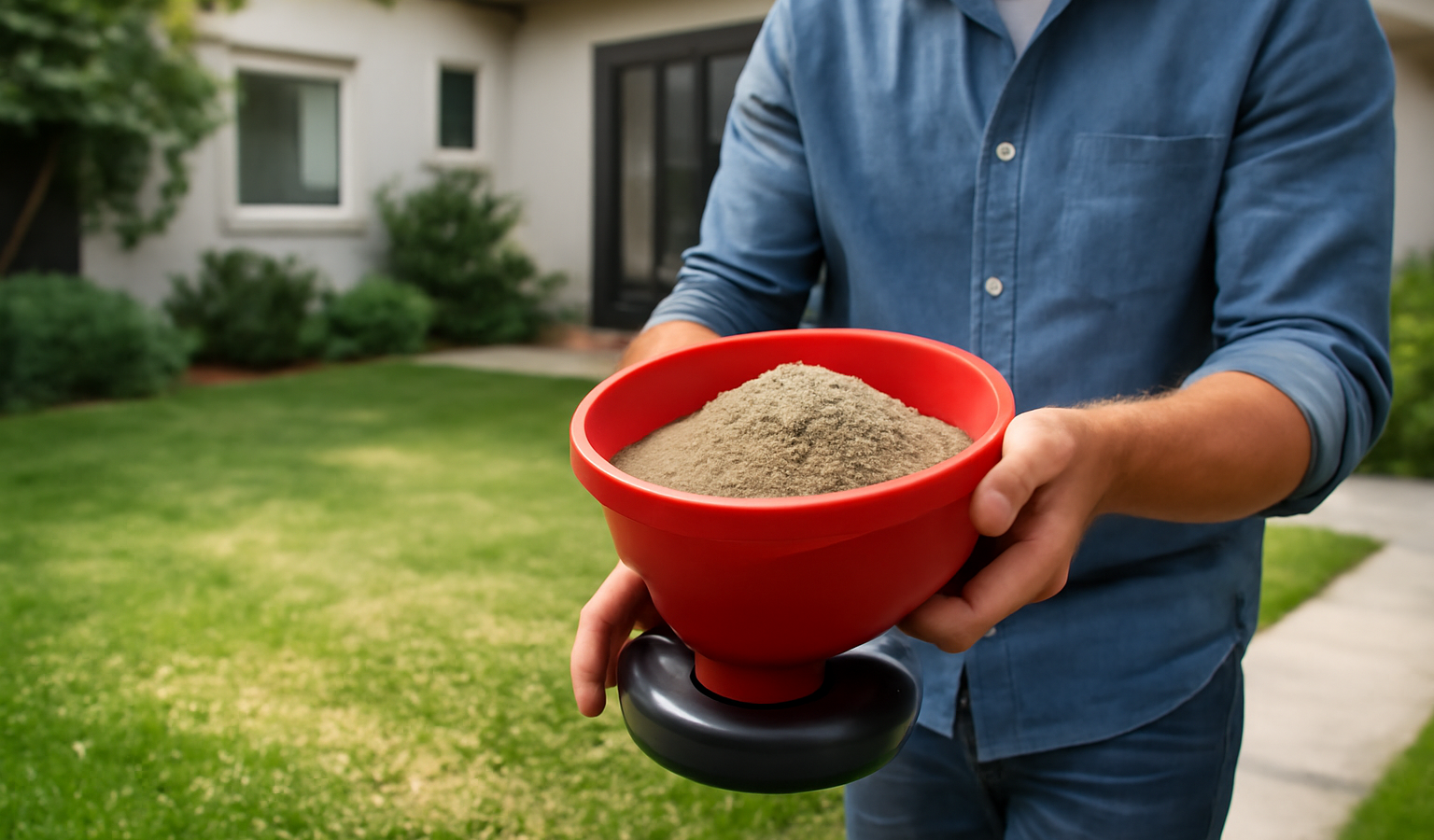
Spread the seed with a broadcast or drop spreader for even coverage. Split your total into two passes at right angles (north-south, then east-west) at half-rate each to avoid streaks. After spreading, drag a rake lightly or run a roller to improve seed-to-soil contact, then water in.
Watering for Germination
Newly sown ryegrass must stay consistently moist until it germinates — a single dry-out can kill the seedlings. The watering pattern is light and frequent, not deep and infrequent.
- Immediately after seeding, water lightly to settle the seed.
- For the first 7–10 days, water 1–2 times daily — just enough to keep the top quarter-inch of soil damp without puddling or causing runoff.
- Ryegrass germinates fast: expect to see green in 5–10 days, often sooner in warm fall soil.
- Once seedlings are up and rooting, taper to fewer, deeper waterings to encourage roots to chase moisture downward.
Morning watering is best so blades dry before evening, reducing disease risk. If you are seeing patchy germination, inconsistent moisture is almost always the culprit. If you are battling bare or thin spots that simply will not fill, our guide on why grass is not growing covers the usual causes.
The First Mowing and Winter Care
Resist the urge to mow too soon. Let the ryegrass establish and reach about 2 to 2.5 inches tall before the first cut, then mow it down to roughly 1.5 to 2 inches. Use a sharp blade — young grass tears easily under a dull one. Never remove more than a third of the blade height in a single mowing.
Through winter, mow as needed to keep the rye at 1.5–2.5 inches. It will grow whenever temperatures are mild. Water deeply but infrequently — established ryegrass in winter needs far less water than the seedling stage; roughly an inch per week including rainfall is plenty, and less when it is cold and overcast. A light feeding of a nitrogen fertilizer about a month after germination keeps the color rich, but do not overdo nitrogen in late winter or you will fuel the rye right when you want it to fade.
Spring Transition Back to Bermuda
This is the step people forget, and it is what determines whether your bermuda comes back strong. As soil warms in spring (climbing back toward 65–70°F), bermuda begins to wake up. The lingering ryegrass now becomes a competitor, shading the bermuda and stealing water and nutrients right when the bermuda is most vulnerable. Your job is to tip the balance back toward the bermuda.
- Mow the rye lower. Gradually drop your mowing height to stress the ryegrass and let sunlight reach the bermuda crowns and runners at soil level.
- Withhold water. Ryegrass hates heat and drought; bermuda loves both. Cutting back on irrigation as temperatures rise pushes the cool-season rye out while the bermuda thrives.
- Hold the nitrogen until bermuda is active. Feeding too early just feeds the rye. Wait until the bermuda is genuinely greening up, then fertilize to power its takeover.
- Be patient with annual rye. Annual (Italian) ryegrass usually dies out on its own with the first real heat, which is exactly why it is the easier choice for a clean transition.
If a perennial-rye overseed refuses to leave, some homeowners use a transition herbicide labeled for the purpose, but for most lawns aggressive low mowing plus heat and reduced water does the job. The principle is the same one behind choosing the right turf in the first place — see zoysia vs. bermuda grass for how warm-season grasses behave through the seasons, and explore more lawn projects on our outdoor living hub. If you have a sloped lawn, the same overseeding principles apply, but read how to grow grass on a slope first to handle erosion.
Frequently Asked Questions
When is the best time to overseed bermuda with ryegrass?
Overseed when daytime highs consistently drop to around 70°F and soil temperature falls to roughly 70°F and trending down — about 4 to 6 weeks before your first expected frost. In most of the South that means late September through October. Use a soil thermometer rather than the calendar for the most reliable timing.
Should I use annual or perennial ryegrass?
Annual (Italian) ryegrass is cheaper, germinates fast, and dies out cleanly in spring, making the transition back to bermuda easier — but it is coarser and lighter green. Perennial ryegrass is finer, darker, and denser for a premium look, though it costs more and takes a little more effort to push out in spring. Choose perennial for appearance, annual for budget and easy transition.
How much ryegrass seed do I need per 1,000 square feet?
Sow annual ryegrass at about 5 to 10 lbs per 1,000 sq ft and perennial ryegrass at about 6 to 10 lbs per 1,000 sq ft. Use the higher end of the range for a thick, showy winter lawn. Split the application into two perpendicular passes for even coverage.
Will overseeding hurt my bermuda grass?
It can add some stress, mainly in spring when the ryegrass competes with the bermuda as it tries to green up. Manage this by mowing the rye low, withholding water, and delaying nitrogen until the bermuda is active. Done correctly, the bermuda recovers fully; done carelessly, green-up can be delayed.
How soon will the ryegrass turn green?
Ryegrass germinates quickly — usually within 5 to 10 days in warm fall soil, sometimes sooner. The key is keeping the seedbed consistently moist with light watering once or twice daily until germination, then tapering to deeper, less frequent watering as the seedlings root.