

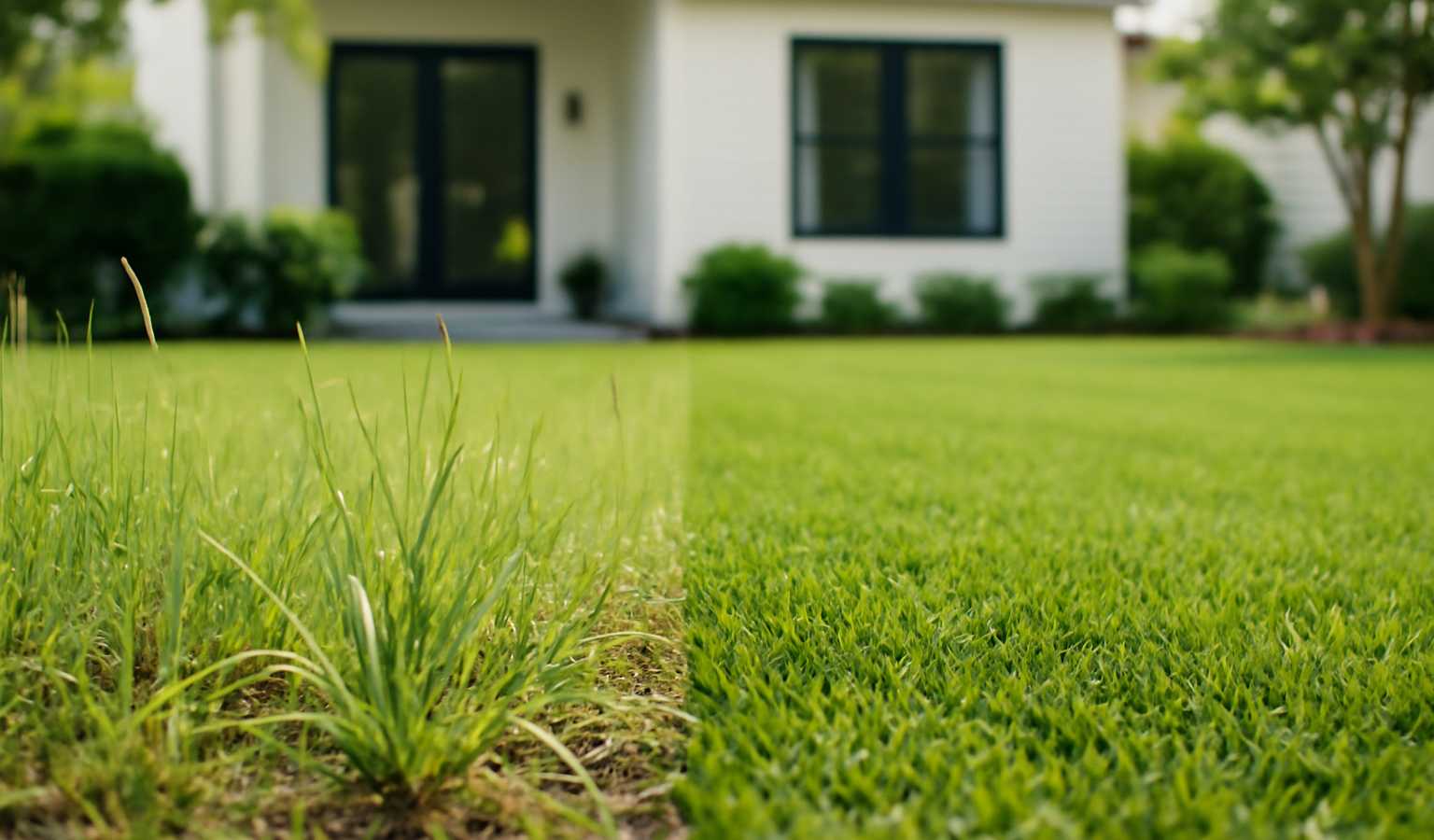
Bahia and Bermuda are both warm-season grasses built for the heat of the South, but they suit very different homeowners. Bahiagrass is the low-maintenance, drought-tough survivor — deep-rooted, happy in poor sandy soil, content with little water or fertilizer, and forgiving of neglect, at the cost of a coarser, more open, less manicured look. Bermudagrass is the lush, dense, golf-course green that handles foot traffic beautifully and recovers fast, but it demands full sun, frequent mowing, regular feeding and water, and it spreads aggressively into beds and neighbors’ yards. In short: choose Bahia if you want a tough, hands-off lawn on tough soil, and Bermuda if you want a thick, premium turf and don’t mind the work. Here’s how they compare in detail.
Key Takeaways
- Bahia is low-maintenance and extremely drought- and poor-soil-tolerant but looks coarse and open; Bermuda is dense and lush but high-maintenance.
- Both are warm-season grasses for zones 7–10 (USDA), thriving in full sun and going dormant/brown in winter.
- Bermuda needs frequent mowing (1–2 inches, sometimes weekly) and regular feeding; Bahia tolerates mowing at 3–4 inches and minimal fertilizer.
- Bermuda handles heavy foot traffic and self-repairs fast; Bahia tolerates moderate traffic and recovers slower.
- Bermuda spreads aggressively and can become invasive in beds; Bahia stays more contained but throws tall, fast seed stalks.
| Trait | Bahiagrass | Bermudagrass |
|---|---|---|
| Maintenance | Low | High |
| Drought tolerance | Excellent | Good |
| Appearance | Coarse, open | Dense, fine, lush |
| Soil preference | Sandy, poor, acidic OK | Fertile, well-drained |
| Mowing height | 3–4 inches | 1–2 inches (frequent) |
| Foot traffic | Moderate | Excellent |
| Spread/invasiveness | Contained, seeds heavily | Aggressive |
Bahiagrass: The Tough, Low-Maintenance Survivor
Bahiagrass (Paspalum notatum) is the grass for hard places. It develops an exceptionally deep, extensive root system that lets it survive drought, poor sandy soils and low fertility where other grasses fail — which is exactly why it blankets so much of Florida and the Gulf Coast. It tolerates acidic soil, needs little fertilizer or irrigation, and resists most pests and diseases. For a homeowner who wants a green lawn without a maintenance routine, Bahia is hard to beat.
The trade-off is appearance and habit. Bahia grows in an open, coarse-textured pattern that never looks as carpet-like as Bermuda, and it sends up tall, V-shaped seedheads on fast-growing stalks that can make a lawn look untidy between mowings. Establish it from seed (it’s one of the few warm-season grasses commonly seeded) in late spring once soil is warm, mow at 3–4 inches, and feed lightly once or twice a season. It tolerates moderate foot traffic but recovers more slowly than Bermuda from heavy wear.
Where Bahia Excels
Bahia is the right call for large lots, rural properties, sandy coastal soils, slopes needing erosion control, and anyone who wants to mow occasionally and otherwise leave the lawn alone. It also handles partial shade better than Bermuda. Its main quirks are those rapid seedheads (so you mow to keep it tidy, not because it needs cutting low) and a tendency to look yellowish in alkaline soil, where it can struggle to take up iron. For lawn moisture problems, see our guide on how to fix a muddy yard.
Bermudagrass: The Lush, High-Performance Turf
Bermudagrass (Cynodon dactylon) is what most people picture as a premium Southern lawn: dense, fine-textured, deep green and able to take a beating. It spreads by both above-ground stolons and below-ground rhizomes, which makes it self-repairing — bare or worn spots fill in quickly. That toughness under traffic is why it’s the standard for sports fields, golf courses and busy family yards. Mowed low and fed well, it forms a thick, weed-suppressing carpet.
The price of that lushness is work. Bermuda demands full sun — it thins badly in shade — and wants frequent mowing at 1–2 inches, often weekly in summer, ideally with a reel mower for the best finish. It needs regular fertilizing through the growing season and consistent watering to look its best (though it survives drought by going dormant). It’s also aggressive: those same stolons and rhizomes that repair the lawn also invade flower beds, gardens and adjacent lawns, requiring edging and barriers to contain.
Keeping Bermuda Looking Its Best
To get the carpet look, mow frequently and never remove more than a third of the blade at once, fertilize with nitrogen during the active growing season, and dethatch periodically since Bermuda builds thatch quickly. Overseed with ryegrass in fall if you want green through winter dormancy. Install a physical edging barrier along beds to keep it from spreading where you don’t want it. If your lawn already feels spongy underfoot, our piece on why a lawn turns spongy covers thatch fixes, and the outdoor living hub has more lawn-care guides.
Establishing and Caring for Either Grass
Both grasses are warm-season turfs, so the calendar works the same way: establish and feed them during the warm growing months (late spring through summer), not in fall or winter when they’re heading into dormancy. Bahia is one of the few warm-season grasses commonly started from seed, sown in late spring once soil reaches 65–70°F and kept moist until it germinates over two to four weeks. Bermuda can be seeded too (common Bermuda), but the finer hybrid varieties are established from sod, plugs or sprigs because they don’t come true from seed.
Mowing is where the two diverge most in daily practice. Bahia is mowed high, at 3–4 inches, and mainly to remove its tall seedheads rather than to control height, so a sharp blade and occasional cutting suffice. Bermuda is mowed low and often — 1–2 inches, sometimes weekly in peak summer — and rewards a reel mower with that tight, carpet-like finish. With either grass, follow the one-third rule: never remove more than a third of the blade height in a single mowing, which keeps roots strong and the lawn from scalping.
Fertilizing, Watering and Weed Control
Their feeding needs reflect their personalities. Bermuda is hungry — it wants regular nitrogen through the growing season to maintain density and color, which is part of why it stays lush. Bahia gets by on far less, often just one or two light feedings a year, and over-fertilizing it is mostly wasted effort. Both should be fed during active growth and never pushed in late fall, which can invite winter damage. On water, Bermuda looks best with about an inch a week but survives drought by going dormant; Bahia’s deep roots let it ride out dry spells with minimal irrigation, which is its signature strength.
Both brown out and go dormant in winter, turning straw-colored after the first hard cold — neither stays green year-round in their northern range, and overseeding with ryegrass is the only way to keep winter color. For weeds, a dense, well-fed Bermuda lawn crowds most out on its own, while the more open Bahia may need spot weed control. Time any pre-emergent herbicide for early spring before weed seeds germinate, and be careful matching products to your grass type — some broadleaf herbicides that are fine on one warm-season grass can injure another, so always read the label for Bahia and Bermuda specifically.
The Verdict: Which Should You Choose?
The decision comes down to how much effort you’ll put in and what you need the lawn to do. Match the grass to your situation.
- Low effort, tough conditions: Bahia. Sandy or poor soil, drought, large or rural lots, and a hands-off owner all favor it.
- Premium look and high traffic: Bermuda. Kids, pets, sports and a desire for a dense green carpet make the maintenance worth it.
- Full sun all day: Either works, but Bermuda truly needs it; Bahia is more flexible.
- Some shade: Bahia tolerates partial shade better; Bermuda thins out.
- Water restrictions or no irrigation: Bahia, with its deep roots and excellent drought tolerance.
- You dislike frequent mowing: Bahia (mow at 3–4 inches, less often) over Bermuda (1–2 inches, often weekly).
Both are zone 7–10 warm-season grasses that brown out in winter, so neither will stay green year-round without overseeding. If you want a showpiece lawn and enjoy the routine, plant Bermuda. If you want green that survives on its own with minimal fuss, plant Bahia. Be honest about how much weekend time you’ll actually spend on the lawn — that single answer points you to the right grass.
Frequently Asked Questions
Which grass needs less maintenance, Bahia or Bermuda?
Bahia, by a wide margin. It tolerates poor soil and drought, needs little fertilizer or water, and is mowed less often at a taller height. Bermuda demands frequent mowing, regular feeding, full sun and edging to stay lush and contained.
Will Bermuda grass take over my flower beds?
It can. Bermuda spreads aggressively via stolons and rhizomes, which is great for self-repair but invasive around beds and neighboring lawns. Install a physical edging barrier and edge regularly to keep it contained. Bahia stays more in place but reseeds via tall seed stalks.
Can I grow either grass in shade?
Bahia tolerates partial shade reasonably well. Bermuda needs full sun and thins out badly in shade. If your yard has significant shade, Bahia is the better warm-season option, though neither thrives in deep shade.
Why does my Bahia lawn have so many tall seed stalks?
That’s normal — Bahia sends up fast-growing, V-shaped seedheads, especially in summer. They make the lawn look untidy, so most people mow to remove them rather than because the grass needs cutting. Frequent mowing during peak season keeps it neat.
Do these grasses stay green in winter?
No. Both are warm-season grasses (zones 7–10) that go dormant and turn brown in cool weather. For winter color you can overseed with annual or perennial ryegrass in fall, which is more commonly done with Bermuda lawns.