

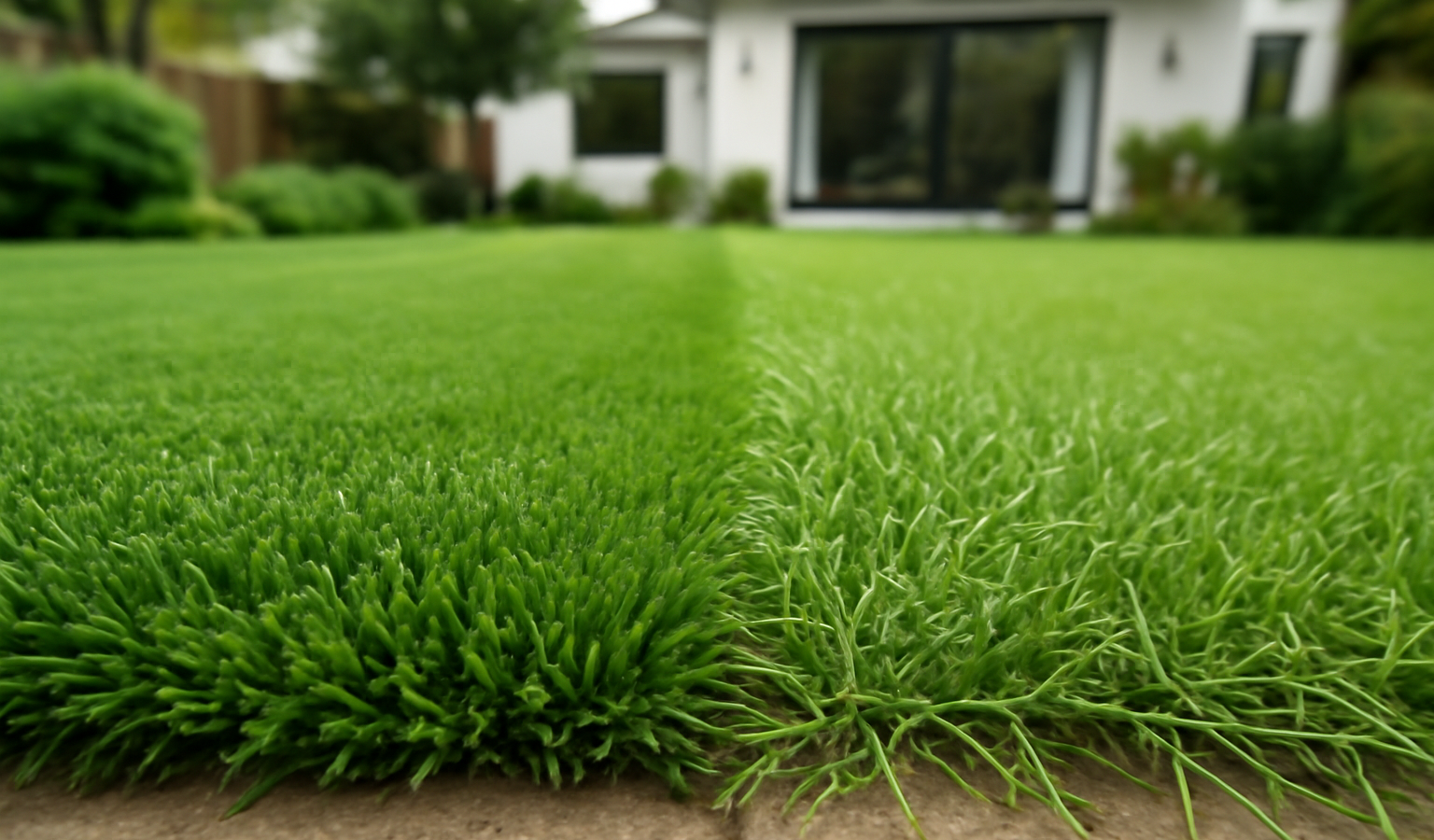
Zoysia and Bermuda are the two heavyweight warm-season lawn grasses, and homeowners across the south and transition zone agonize over which to plant. Both love heat, both go dormant brown in winter, and both make a dense, attractive lawn when managed well. But they behave differently in ways that matter day to day: Bermuda is the fast, aggressive sun-lover that recovers from anything, while zoysia is the slower, denser, more refined grass that tolerates a little shade and asks for less mowing. Choose wrong and you will either fight an aggressive spreader you cannot contain, or babysit a slow lawn that takes years to fill in.
The decision usually comes down to three things: how much sun your yard gets, how much traffic the lawn takes, and how patient you are during establishment. This guide compares the two across every factor that counts, then gives a clear verdict by situation.
Key Takeaways
- Both are warm-season grasses that thrive in heat and go dormant brown below about 55 degrees F.
- Bermuda grows and recovers faster, handles heavy traffic best, but needs full sun and frequent mowing.
- Zoysia grows slowly, tolerates light shade, needs less mowing, and forms a thick, cushiony turf, but is slow to establish and slow to repair.
- Bermuda is more drought tolerant; zoysia is more cold tolerant and pushes a little further north.
- For a low-maintenance, somewhat shaded yard, choose zoysia. For a high-traffic, full-sun yard you want filled in fast, choose Bermuda.
| Factor | Zoysia Grass | Bermuda Grass |
|---|---|---|
| Type | Warm-season spreading grass | Warm-season spreading grass |
| Best USDA zones | 6-10 (more cold hardy) | 7-10 |
| Sun needs | Full sun to light shade (4-6 hrs) | Full sun only (6+ hrs) |
| Mowing height | 1 to 2.5 inches | 1 to 2 inches |
| Mowing frequency | Lower (slow growth) | Higher (fast growth) |
| Water per week | 0.5 to 1 inch | 0.5 to 1 inch |
| Drought tolerance | Good | Excellent |
| Traffic tolerance | Good (slow to repair) | Excellent (fast repair) |
| Establishment speed | Slow (sod/plugs best) | Fast (seed, sod, sprigs) |
| Feel underfoot | Thick, cushiony | Firm, fine |
Zoysia Grass: The Dense, Low-Mow Lawn
Zoysia (Zoysia species, most commonly Z. japonica and Z. matrella) is prized for its dense, carpet-like turf and its relatively low maintenance once mature. It spreads by both stolons and rhizomes like Bermuda, but far more slowly. That slow growth is the heart of zoysia’s appeal: an established zoysia lawn needs mowing less often than Bermuda, and its density chokes out most weeds without much help.
Zones and shade
Zoysia performs across USDA zones 6 through 10, edging slightly more cold-hardy than Bermuda, which lets it survive farther into the transition zone and lower Midwest. Its other real advantage is shade tolerance. While no warm-season grass is a true shade grass, zoysia holds up under about 4 to 6 hours of sun, where Bermuda would thin out. For a yard with some tree cover but hot summers, zoysia is often the only warm-season option that works.
The establishment trade-off
The price of zoysia’s good manners is patience. It is slow to establish, especially from seed, and most homeowners install it from sod or plugs. A plugged zoysia lawn can take two to three full seasons to knit together completely. That same slowness means damage repairs slowly too, so heavy wear spots linger longer than in Bermuda. Zoysia can also build thick thatch over time and may need periodic dethatching.
Water and mowing
Water needs are similar to Bermuda, around 0.5 to 1 inch per week, with good drought tolerance once roots are deep. Mow zoysia at 1 to 2.5 inches. Its dense, somewhat tough blades dull mower blades faster, so keep them sharp and a reel mower gives the cleanest finish on lower-cut zoysia.
Bermuda Grass: The Fast, Tough Performer
Bermuda grass (Cynodon dactylon) is the speed-and-toughness champion of warm-season lawns. It establishes quickly, can be grown affordably from seed, and recovers from traffic, drought, and damage faster than almost any turf. This is why it dominates athletic fields and golf fairways across the south. For a family yard that takes a beating, Bermuda’s self-repair is a genuine asset.
Zones, sun and heat
Bermuda is happiest in USDA zones 7 through 10 and demands full sun, at least 6 hours, to stay dense. It is the most drought tolerant of the common lawn grasses, going dormant rather than dying when water runs short. Like zoysia, it browns out in winter dormancy below about 55 degrees F, and southern homeowners often overseed it with ryegrass to keep winter color.
The maintenance cost of speed
Bermuda’s vigor cuts both ways. It grows fast, so you mow often, sometimes twice a week in peak summer, and it is a heavy feeder wanting monthly nitrogen during the growing season. It is also genuinely aggressive: it spreads into beds, under fences, and across walkways, and once established it is hard to remove. If you value a tidy, low-effort lawn, Bermuda will keep you busier than zoysia.
Common problems
Bermuda’s biggest maintenance headache is thatch combined with its tendency to escape into beds and walkways; left unchecked it scalps easily and demands edging vigilance. It is relatively disease-resistant in full sun but suffers quickly in shade, where it thins and invites weeds. Its other weakness is that, as a low-mowed, fast-growing grass, it punishes neglect: skip a week of mowing in peak summer and you scalp it badly on the next pass, opening the canopy to crabgrass.
Zoysia Grass: The Dense, Low-Mow Lawn, Continued
Zoysia’s slow growth gives it a different set of problems. Its dense canopy is excellent at smothering weeds, which is one of its best selling points, but that same density means it builds thatch over several seasons and benefits from periodic dethatching or light vertical mowing. Zoysia is generally disease-resistant, though large patch (a fungal disease favored by cool, wet conditions in spring and fall) can appear, especially on overwatered lawns. Because the grass is slow to recover, any disease scar or wear spot lingers, so prevention matters more than with fast-healing Bermuda.
One underrated zoysia advantage is its uniform, manicured appearance. Because it grows slowly and evenly, a zoysia lawn tends to look tidy between mowings, where Bermuda can look shaggy within days of a cut. For homeowners who want a refined lawn without constant mowing, that even growth is a major quality-of-life benefit.
Water, Drought and Climate Range
Both grasses are drought tolerant once mature, but Bermuda edges out zoysia in the extreme. In a prolonged dry spell, Bermuda will go dormant and brown to survive, then bounce back fast when water returns, which is why it dominates the hot, dry southwest. Zoysia is also drought hardy, surviving on 0.5 to 1 inch of water a week, but its slow recovery means a drought-stressed zoysia lawn takes longer to look good again afterward. If you garden where summer water is scarce and you want the most bulletproof option, Bermuda has the edge.
Cold tolerance tips the other way. Zoysia is the more cold-hardy of the two, which lets it push further north into the cooler transition zone, zone 6, where Bermuda may struggle to overwinter reliably. Zoysia also tends to green up a little later in spring and hold green slightly later into fall in some climates, but both follow the same warm-season pattern of full winter dormancy. If you sit at the northern edge of warm-season territory, zoysia is often the safer long-term bet, while Bermuda is the better fit deeper south where heat and drought are the dominant pressures.
Cost and Establishment Compared
This is where the two diverge sharply. Bermuda is the budget-friendly, fast option: it grows readily from inexpensive seed, and even sod or sprigs fill in quickly within a single season. If you want a lawn established this year on a tight budget, Bermuda is hard to beat. Zoysia is the premium, patient option. Seeded zoysia is unreliable and slow, so most homeowners install sod or plugs, which costs more upfront, and plugs can take two to three seasons to knit into a solid lawn.
Over the long run the math can flip. Once established, zoysia’s slow growth means fewer mowings and its density means less weed control, lowering ongoing labor and herbicide costs. Bermuda’s vigor translates to frequent mowing, monthly summer feeding, and ongoing edging to keep it out of beds. So zoysia costs more to start and less to maintain, while Bermuda costs less to start and more to keep. Your budget and your patience, more than anything, tip the decision here.
Which Should You Choose?
Both make excellent lawns in the right yard. Let sun, traffic, and your patience decide.
Choose zoysia if…
- Your yard has some light shade (4 to 6 hours of sun) where Bermuda would thin.
- You want a lower-maintenance, low-mow lawn with a thick, cushiony feel.
- You live in the cooler edge of the warm-season range (zone 6 transition) and want more cold hardiness.
- You are willing to wait two or three seasons for sod or plugs to fill in.
Choose Bermuda if…
- Your yard is full sun and you want it green and filled in fast.
- The lawn takes heavy traffic from kids, dogs, or sports and needs to self-repair.
- You want the cheapest establishment option (seed) and strongest drought tolerance.
- You do not mind frequent mowing and regular feeding.
In short, zoysia is the choice for the homeowner who wants a refined, low-effort lawn and has some shade or patience; Bermuda is the choice for the full-sun, high-use yard you want bulletproof and fast. Both browning out in winter is unavoidable for warm-season grass, so if a green winter lawn is non-negotiable, look at our comparison of fescue vs Bermuda grass or read up on cool-season vs warm-season grass. More lawn-care guides live on our Outdoor Living hub.
Frequently Asked Questions
Which grass feels better to walk on barefoot?
Most people find zoysia more comfortable. Its dense growth and slightly softer blades create a cushiony, carpet-like feel, while Bermuda is firmer and finer underfoot.
Is zoysia really lower maintenance than Bermuda?
Once established, yes. Zoysia’s slow growth means less mowing and its density crowds out weeds. But it is slower and more expensive to install, and it can build thatch that needs periodic dethatching.
Will zoysia choke out Bermuda, or the reverse?
In full sun, aggressive Bermuda usually outcompetes zoysia over time. In partial shade, zoysia holds its ground because Bermuda weakens. Neither blends well long term, so commit to one.
How long does zoysia take to fill in from plugs?
Expect two to three full growing seasons for plugs spaced a foot apart to knit into a solid lawn. Closer spacing and good fertility speed it up; shade and drought slow it down.
Do both grasses turn brown in winter?
Yes. Both are warm-season grasses and go dormant, turning straw-brown when soil cools and nights drop below about 55 degrees F. Overseeding with ryegrass in fall keeps either one green through winter.