


Peppers are one of the most rewarding crops to start from seed, because seed packets open up dozens of varieties you’ll never find as nursery transplants: chocolate and purple bells, Italian frying peppers, lunchbox minis and a whole ladder of hot peppers. They’re also slow, needing 8 to 10 weeks indoors before they’re ready to plant out, so choosing seed in winter is part of the job. Our top pick for most gardeners is the Sow Right Seeds bell pepper collection, which covers red, yellow, orange, green, purple and chocolate bells in separate packets. For heat lovers, the Verdant Vigor 10-variety hot and bell kit is the best sampler on the shelf. Below are seven picks and a quick guide to starting pepper seeds successfully.
Part of our Vegetable Gardening & Raised Beds guide →
In this guide
- 1. Sow Right Seeds Bell Pepper Collection — Best Overall
- 2. Sweet Yards Organic Sweet Pepper Variety Pack — Best Organic Mix
- 3. Verdant Vigor 10-Variety Hot and Bell Pepper Kit — Best Hot and Sweet Sampler
- 4. Sow Right Seeds California Wonder — Best Classic Single Bell
- 5. KVITER Mini Sweet Peppers — Best for Containers and Snacking
- 6. SVI Emerald Giant Bell Pepper — Best Compact Green Bell
- 7. Survival Garden Seeds Bell Pepper 5-Pack — Best for Seed Saving
- What to Look for in Pepper Seeds
- How to Start Pepper Seeds Indoors
- Frequently Asked Questions
Disclosure: Urban Lotus Project earns a commission from qualifying Amazon purchases made through links on this page, at no extra cost to you.
How we compared: we compared 17 current Amazon listings for pepper seeds on what each listing states about varieties, seed quantity, germination guidance, plant size and days to maturity. We did not test or handle the products, and availability changes.
Key Takeaways
- Start pepper seeds indoors 8 to 10 weeks before your last spring frost; hot peppers benefit from the longer end.
- Pepper seed germinates best at 75 to 85 degrees F soil temperature, so a seedling heat mat makes a big difference.
- Colored bells (yellow, orange, red, purple, chocolate) are green bells left to ripen, which adds 2 to 4 weeks.
- Compact varieties such as mini sweets and Emerald Giant suit containers and raised beds.
- Every pick here is listed as non-GMO, and most are open-pollinated heirlooms you can save seed from.
| Product | Best for | Key features | Buy |
|---|---|---|---|
| Sow Right Bell Pepper Collection | Best overall bell pepper pack |
| Buy now →Check current price |
| Sweet Yards Organic Sweet Peppers | Best organic sweet pepper mix |
| Buy now →Check current price |
| Verdant Vigor 10-Pepper Kit | Best hot and sweet sampler |
| Buy now →Check current price |
| Sow Right California Wonder | Best classic single bell |
| Buy now →Check current price |
| KVITER Mini Sweet Peppers | Best for containers and snacking |
| Buy now →Check current price |
| SVI Emerald Giant Bell | Best compact green bell |
| Buy now →Check current price |
| Survival Garden Bell Pepper 5-Pack | Best for seed saving |
| Buy now →Check current price |
Prices change often; check Amazon for today’s price. As an Amazon Associate we earn from qualifying purchases.
1. Sow Right Seeds Bell Pepper Collection — Best Overall

Separate packets of rainbow bell peppers, from California Wonder red to Purple and Chocolate Beauty.
Check price on AmazonWhy We Like It
- Widest color range of any bell pack here
- Separate packets keep varieties labeled
- Clear indoor start timing on the listing
- Seller states it will make bad germination right
| Specification | Details |
|---|---|
| Varieties named | California Wonder, Sunbright, Emerald Giant, Purple Beauty, Chocolate Beauty, Orange Sun |
| Packets | 5 packets per size field (listing names six varieties) |
| Seed per packet | 300 mg, about 50 seeds |
| Start indoors | Under lights 8 weeks before planting out |
| Seed type | Non-GMO heirloom, Safe Seed Pledge |
Sow Right Seeds bell pepper collection — compressed specs
A rainbow of bell peppers is one of the best reasons to grow your own, since colored bells are among the priciest items in the produce aisle. This collection covers the full spectrum, with classic California Wonder, yellow Sunbright, orange Orange Sun, the big green Emerald Giant, and the darker Purple Beauty and Chocolate Beauty. All are blocky, thick-walled stuffing peppers. About 50 seeds per packet is far more than a home garden needs, so you can share or save the rest for next year.
One quirk: the listing describes five varieties and the size field says five packets, yet it names six varieties, so check the contents when it arrives. Compared with the Survival Garden five-pack, this one has more seed per packet stated and a germination make-good; Survival Garden’s advantage is that it states its seed is untreated and open-pollinated.
Pros
- Six bell colors named
- Stated seed weight and count per packet
- Clear start timing
- Germination support from seller
Cons
- Packet count and variety list don’t match
- Sweet bells only, no hot peppers
- Not certified organic
Check Sow Right Bell Pepper Collection price on Amazon
2. Sweet Yards Organic Sweet Pepper Variety Pack — Best Organic Mix

Five organic sweet pepper packets, mixing bells with Italian Marconi and Corno di Toro frying peppers.
Check price on AmazonWhy We Like It
- Only organic-listed multi-variety sweet pack
- Adds two Italian frying peppers to the bells
- Seeds packed for the 2026 season
- 30-day refund if seeds don’t germinate
| Specification | Details |
|---|---|
| Varieties | Cal Wonder, Golden Cal Wonder, Purple Beauty, Marconi Red, Dulce Corno di Toro |
| Packets | 5 individual packets |
| Seed type | Listed as organic, non-GMO |
| Season | Packed for 2026 |
| Packaging | Reusable zipper pouch with instructions |
| Seed count | Not stated in listing |
Sweet Yards organic sweet pepper pack — compressed specs
Marconi and Corno di Toro are long, tapered Italian sweet peppers that ripen to red and are excellent for frying, roasting and grilling. They often ripen earlier and set more reliably than big bells in short or cool summers, so including them in a mix is a smart hedge. The other three packets cover green-to-red, yellow and purple bells.
This is the pick for organic gardeners who want variety. The listing doesn’t state a seed count, which is the main thing it lacks compared with the Sow Right collection.
Pros
- Organic-listed seed
- Mix of bells and Italian frying types
- Fresh-season packing stated
- Clear refund guarantee
Cons
- Seed count not stated
- No hot peppers
- Fewer bell colors than our top pick
Check Sweet Yards Organic Sweet Peppers price on Amazon
3. Verdant Vigor 10-Variety Hot and Bell Pepper Kit — Best Hot and Sweet Sampler

Ten pepper varieties from mild bell and cubanelle up to cayenne and ghost pepper, with plant markers.
Check price on AmazonWhy We Like It
- Covers zero heat to superhot in one kit
- Over 600 seeds across 10 varieties
- Ten plant markers to keep rows straight
- Open-pollinated for seed saving
| Specification | Details |
|---|---|
| Varieties | 10, including ghost, cubanelle, cayenne, California Wonder, jalapeno, cherry, Anaheim, Big Jim |
| Seed count | 600+ |
| Heat range | 0 to 1,000,000 Scoville heat units |
| Seed type | Heirloom, non-GMO, open-pollinated |
| Extras | Growing guide and 10 plant markers |
Verdant Vigor hot and bell pepper kit — compressed specs
Most of this shelf is sweet bells, so this kit stands out as the one pick that brings in real heat. Jalapeno, cayenne, Anaheim and Big Jim cover salsa, drying and roasting, cubanelle and cherry peppers are mild, and ghost pepper is for the brave. It’s a good way to find out which hot peppers you actually use before buying larger packets. Our sweet vs hot peppers guide explains how the two groups differ in growing needs.
Superhots like ghost pepper are slow: start them at least 10 weeks before your last frost, keep them warm, and expect germination to take longer than for bells. Label everything; hot and sweet seedlings look the same, and the markers included here help.
Pros
- Broadest variety range on the shelf
- Includes both hot and sweet types
- Plant markers included
- Seed-saving friendly
Cons
- Not every listed variety is named
- Superhots need a long, warm season
- Only one bell variety named
Check Verdant Vigor 10-Pepper Kit price on Amazon
4. Sow Right Seeds California Wonder — Best Classic Single Bell
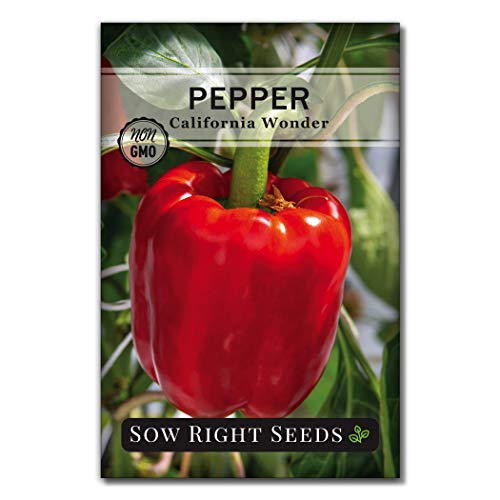
The standard thick-walled green-to-red bell pepper, with full germination and spacing details.
Check price on AmazonWhy We Like It
- Most complete growing specs on the shelf
- Proven, widely grown heirloom bell
- Listed for USDA zones 3 to 12
- Thick walls and deep chambers for stuffing
| Specification | Details |
|---|---|
| Variety | California Wonder |
| Seed per packet | Minimum 300 mg, about 50 seeds |
| Germination | 8 to 15 days at 75 to 85 F soil |
| Plant size | 24 to 30 in tall, 18 to 24 in spread |
| Maturity | 75 to 90 days |
| Spacing | 18 to 24 in, full sun |
Sow Right California Wonder — compressed specs
If you want one dependable bell pepper, California Wonder is the safe choice: it’s been a garden standard for generations, produces large, blocky fruit that starts green and ripens red, and adapts to a wide range of climates. Several California Wonder listings appear on this shelf, from KVITER, RDR Seeds and Raw Earth Colors among others; we picked Sow Right’s because it gives the clearest germination temperature, plant size, spacing and maturity information.
For full growing details from transplant to harvest, see our guide to growing bell peppers.
Pros
- Detailed, practical growing data
- Reliable heirloom variety
- Wide zone range listed
- Germination support from seller
Cons
- Single variety only
- Larger plants than compact bells
- Slow to ripen fully red
Check Sow Right California Wonder price on Amazon
5. KVITER Mini Sweet Peppers — Best for Containers and Snacking

Compact plants loaded with thick-walled baby bell peppers for lunchboxes, salads and patio pots.
Check price on AmazonWhy We Like It
- Compact plants suit pots and raised beds
- Listing claims 30+ peppers per plant
- Zero heat, sweet snacking peppers
- Fast 7 to 10 day germination stated
| Specification | Details |
|---|---|
| Type | Mini sweet (lunchbox) bell peppers |
| Seed count | 50 |
| Plant size | 20 to 30 in tall, 18 to 24 in wide |
| Start indoors | 6 to 8 weeks before frost, 1/4 in deep |
| Zones | 4 to 13 listed |
| Heat | 0 Scoville |
KVITER mini sweet peppers — compressed specs
Mini sweet peppers are the most productive peppers for a patio. Small fruits ripen faster than full-size bells, so you get color sooner, and compact plants fit a 5-gallon container. They’re the peppers kids actually eat. This listing gives useful plant dimensions for planning container spacing; see our guide to growing peppers in containers for pot size and watering.
At 50 seeds it’s a smaller packet than most here, but that’s still plenty for a few containers each year. The KVITER Sweet Pepper Collection on the same shelf includes a Mini Belle mix alongside full-size bells if you want both.
Pros
- Compact, container-friendly plants
- Quick-ripening small fruits
- Sweet, kid-friendly flavor
- Clear plant size guidance
Cons
- Smaller seed count
- Fruits too small for stuffing
- Yield claim is the seller’s
Check KVITER Mini Sweet Peppers price on Amazon
6. SVI Emerald Giant Bell Pepper — Best Compact Green Bell

Thick-walled green bell on compact plants, with listed tobacco mosaic virus resistance.
Check price on AmazonWhy We Like It
- Listing states tobacco mosaic virus resistance
- Compact 18 to 24 inch plants
- Grows in 5-gallon buckets per listing
- Sweet, thick-walled fruit
| Specification | Details |
|---|---|
| Variety | Emerald Giant |
| Seed count | 100 (per title) |
| Plant size | 18 to 24 in tall, 12 to 18 in wide |
| Maturity | About 77 days from transplant |
| Germination | 7 to 10 days; start 6 to 8 weeks before last frost |
| Disease resistance | Tobacco mosaic virus |
SVI Emerald Giant bell pepper — compressed specs
Emerald Giant is a large green bell that also ripens red, and it’s a bit more compact than California Wonder. Its listing is the only single-variety bell here that states disease resistance, which matters if tobacco mosaic virus has been a problem in your garden (it can be carried on hands and tools from tobacco products). Closer 12 to 18 inch spacing lets you fit more plants in a raised bed.
Pros
- Stated virus resistance
- Compact for beds and buckets
- Good seed count
- Full start and spacing details
Cons
- Only one variety
- Green-to-red only, no rainbow colors
- Less well-known seller
Check SVI Emerald Giant Bell price on Amazon
7. Survival Garden Seeds Bell Pepper 5-Pack — Best for Seed Saving

Five open-pollinated, untreated heirloom bells in yellow, orange, red, purple and chocolate.
Check price on AmazonWhy We Like It
- States seed is open-pollinated and untreated
- Five colors including Sweet Chocolate
- Listed for containers, beds and in-ground
- Family-owned US seller
| Specification | Details |
|---|---|
| Varieties | California Wonder, Purple Beauty, Sweet Chocolate, Yellow Bell, Orange Bell |
| Packets | 5 |
| Seed type | Heirloom, non-GMO, open-pollinated, untreated |
| Zones | 4 to 11 |
| Seed count | Not stated in listing |
Survival Garden Seeds bell pepper 5-pack — compressed specs
If you want to save your own pepper seed, start with open-pollinated varieties, and this pack makes that explicit. Grow one variety per bed or isolate them, since peppers can cross when insects move pollen between plants; seed from a crossed fruit won’t come true next year. Let a few of the best fruits ripen fully, scoop out the seeds, and dry them on a plate for a week before storing.
It overlaps heavily with our top pick in colors. Choose this one if untreated, open-pollinated seed is your priority, or the Sow Right collection if you want a stated seed count and more varieties.
Pros
- Untreated, open-pollinated seed
- Good color range
- Adaptable to many growing setups
Cons
- Seed count not stated
- Sweet bells only
- Overlaps our top pick
Check Survival Garden Bell Pepper 5-Pack price on Amazon
What to Look for in Pepper Seeds
Days to maturity vs your season
Pepper maturity dates are usually counted from transplanting, not sowing, and they refer to the first usable (often green) fruit. Fully colored bells take a few weeks longer. In short-season areas (zones 3 to 5), favor varieties listed at 75 days or less, mini sweets and Italian frying peppers, and use black plastic mulch or a wall-of-water to warm the soil. In long, hot Southern seasons, nearly any pepper works, though big bells may drop flowers in extreme heat.
Sweet, mild or hot
Bells and Italian sweet peppers have zero heat. Mild options include cubanelle, Anaheim and poblano. Jalapeno and serrano are medium; cayenne and Thai chilies are hot; habanero, ghost pepper and other superhots are extremely hot and slower to germinate and ripen. If you’re new to hot peppers, a sampler kit is the cheapest way to explore.
Plant size and space
Check stated plant height and spread. Compact varieties, around 18 to 24 inches, fit containers and close raised-bed spacing. Larger bells reach 30 inches or more and benefit from a short stake or cage once fruit sets.
Seed count and freshness
A home garden rarely needs more than 6 to 12 plants of a variety, so 50 seeds is plenty. Pepper seed typically stays viable for about two to three years when stored cool and dry, with germination dropping after that. Sow two or three seeds per cell and thin to the strongest.
How to Start Pepper Seeds Indoors
- Time it. Sow 8 to 10 weeks before your average last frost; transplant outdoors 1 to 2 weeks after it, when nights stay above 55 degrees F.
- Use a sterile seed-starting mix in cells or small pots, moistened before sowing. Our seed starting kit roundup covers trays, domes and heat mats.
- Sow 1/4 inch deep and cover with a humidity dome.
- Keep the mix at 75 to 85 degrees F with a heat mat. At cooler temperatures, pepper germination can take weeks or fail.
- Give strong light as soon as sprouts appear. Remove the dome, and run grow lights 14 to 16 hours a day a few inches above the seedlings.
- Pot up into larger containers when seedlings have two to three sets of true leaves, and begin a diluted fertilizer.
- Harden off over 7 to 10 days before planting out.
For troubleshooting leggy or yellowing seedlings, see how to care for pepper seedlings, and for the season ahead our vegetable gardening guide covers bed prep and crop rotation. If you’re planning a fall garden too, our roundup of the best kale seeds covers cold-season greens.
Frequently Asked Questions
When should I start pepper seeds indoors?
Start them 8 to 10 weeks before your last spring frost. Superhot varieties such as ghost peppers and habaneros benefit from 10 to 12 weeks, because they germinate and grow more slowly than bells.
Why are my pepper seeds not germinating?
The most common cause is cold soil. Pepper seed germinates best at 75 to 85 degrees F; at room temperature in a cool house it can take three weeks or longer. Use a heat mat, keep the mix evenly moist but not soggy, and check that seed is fresh.
Are colored bell peppers different varieties from green ones?
Green bells are unripe fruit. Most bells ripen to red, yellow, orange, purple or brown depending on the variety. Some varieties are bred for specific mature colors, which is why seed collections list several types.
Can I save seeds from my peppers?
Yes, if the variety is open-pollinated or heirloom. Peppers can cross-pollinate, so grow varieties apart or isolate a few flowers if you want seed to come true. Save seeds from fully ripe fruit and dry them for about a week before storing.
How many pepper plants should I grow?
For a family that eats peppers regularly, 4 to 6 bell plants and 1 to 3 hot pepper plants is a good start. Bells produce several to many fruits per plant over the season depending on variety and climate; mini sweets and hot peppers produce more but smaller fruit.