

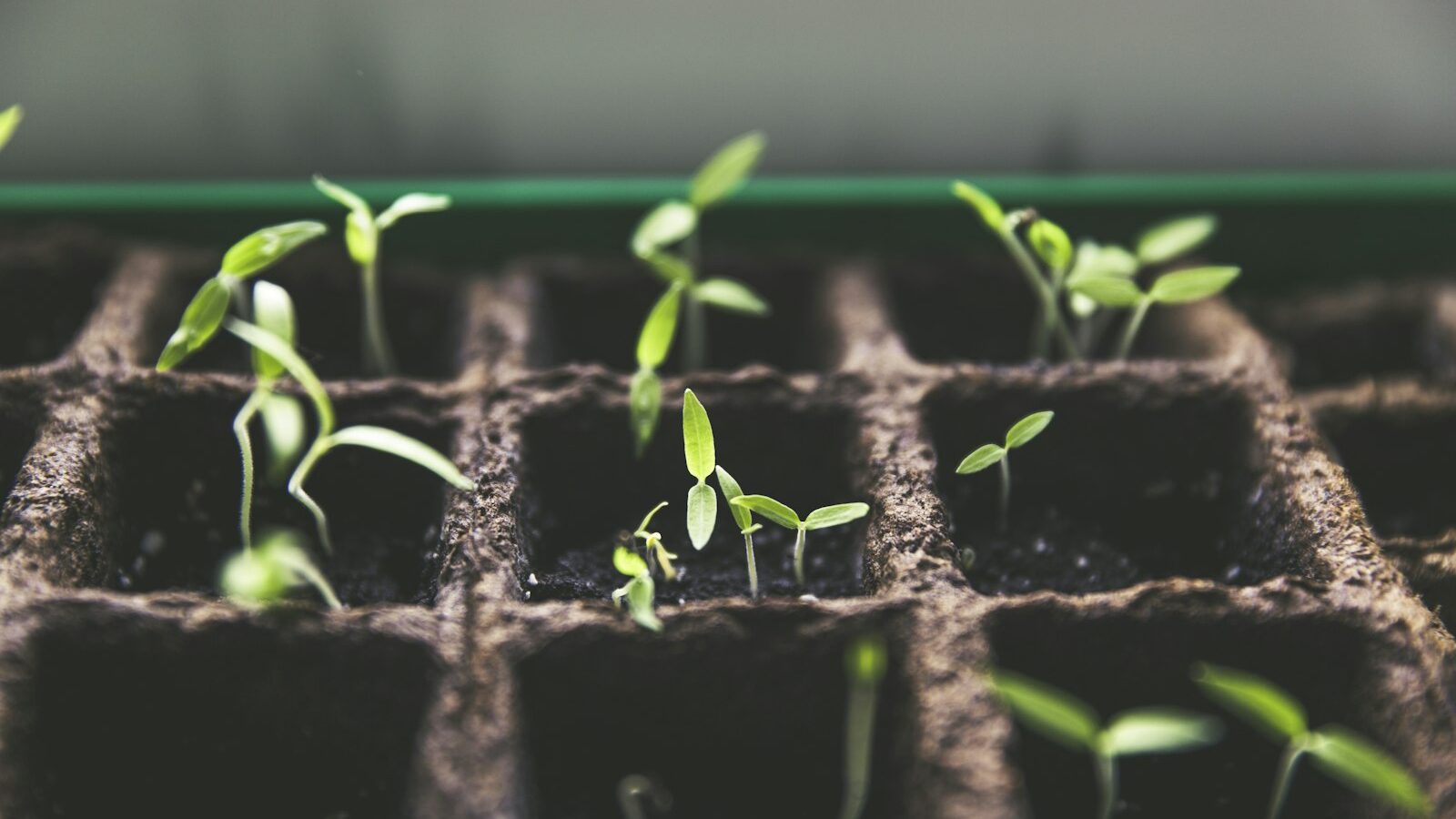
Starting seeds indoors is the single cheapest way to multiply your garden, but the right kit makes the difference between leggy, damped-off seedlings and stocky, transplant-ready starts. After comparing dozens of trays, domes, heat mats and grow-light setups, we narrowed the field to seven kits that genuinely earn their shelf space in 2026. Whether you want a one-box solution, bulletproof bulk trays, or a self-watering system you can leave for a weekend, there’s a pick below for your bench.
As an Amazon Associate we earn from qualifying purchases.
Our top picks
- Best overall kit: VIVOSUN Seedling Combo Kit (Trays + Heat Mat)
- Best with grow light: Jump Start T5 Grow Light System
- Best with heat mat: VIVOSUN Heating Seedling Germination Kit
- Best self-watering: Gardener’s Supply GrowEase Seed Starter Kit
- Best large/bulk trays: Bootstrap Farmer 1020 Extra Strength Trays
- Best biodegradable/peat: Jiffy 72 Peat Pellet Greenhouse
- Best budget: MIXC 240-Cell Seed Starter Tray Kit
| Kit | Cells | Includes | Best for |
|---|---|---|---|
| VIVOSUN Seedling Combo | Up to 240 | 6 trays, domes, base, heat mat | Best overall |
| Jump Start T5 System | N/A (light stand) | T5 fixture, bulb, adjustable stand, cord | Best with grow light |
| VIVOSUN Heating Germination Kit | 1 large tray | Tray, 5″ vented dome, heat mat | Best with heat mat |
| Gardener’s Supply GrowEase | 24 | Tray, capillary mat, reservoir, dome | Best self-watering |
| Bootstrap Farmer 1020 (5-pk) | Open flats | 5 heavy 2.0mm 1020 trays | Best large/bulk |
| Jiffy 72 Peat Pellet Greenhouse | 72 | Base tray, dome, 72 peat pellets | Best biodegradable |
| MIXC 240-Cell Kit | 240 | 6 trays, domes, bases, tools, labels | Best budget |
The 7 best seed starting kits for 2026
VIVOSUN Seedling Combo Kit — best overall seed starting kit
If you want one purchase that covers germination from sowing to transplant, the VIVOSUN Seedling Combo Kit is our top recommendation. It pairs six 40-cell seed starter trays (240 cells total) with watertight base trays, vented humidity domes, and a 10″ x 20.75″ seedling heat mat. The trays are molded from durable PET and PP plastic that stand up to repeated seasons, unlike the flimsy clamshell trays that crack after one use. Each dome has two adjustable air vents so you can dial in humidity during germination and then ramp up airflow to prevent damping-off.
The included heat mat is the part that quietly does the heavy lifting. Far-infrared heating warms the root zone to roughly 10-20°F above ambient, which is exactly what heat-loving seeds like peppers, tomatoes and eggplant need to germinate quickly and evenly. The mat carries an IP67 waterproof rating, so the inevitable spills on your bench aren’t a safety hazard. For most home gardeners juggling a few dozen varieties each spring, this combo hits the sweet spot of capacity, durability and price.
Pros
- Complete system: trays, domes, bases and heat mat in one box
- 240 cells handle a full season’s worth of varieties
- Sturdy PET/PP trays are reusable for years
- Adjustable vents make humidity easy to manage
Cons
- No grow light included; you’ll add one for indoor light
- 40-cell trays have smallish cells for big transplants
- Thermostat is sold separately for precise temp control
Jump Start T5 Grow Light System — best kit with a grow light
Insufficient light is the number one reason indoor seedlings stretch into pale, floppy stems. The Jump Start T5 Grow Light System (from Hydrofarm) solves that with a high-output, full-spectrum 6400K T5 fluorescent fixture mounted on an adjustable stand. A simple toggle clamp lets you raise the light as seedlings grow, keeping the bulb just a few inches off the canopy where it does the most good. During germination you can position it inches from the soil; after sprouting, 3-6″ above the leaves keeps growth compact.
The 4-foot version adds a built-in timer with 12-on/12-off or 18-on/6-off presets, which takes the daily on/off chore off your plate. It runs cool, so there’s no scorch risk even with the light close to tender leaves, and the included stand means you don’t need to rig up chains and shelving. Slide a standard 1020 tray underneath and you have a proper light garden. Pair it with the VIVOSUN trays above and you’ve essentially built a complete propagation station for less than a fancy all-in-one.
Pros
- Full-spectrum 6400K T5 grows stocky, compact seedlings
- Adjustable stand and toggle clamp track plant height
- 4-foot model includes a built-in timer
- Cool-running, so the light can sit close to leaves
Cons
- Light only; you supply trays and dome
- T5 fluorescent uses more power than newer LEDs
- Larger footprint than a clip-on light
VIVOSUN Heating Seedling Germination Kit — best kit with a heat mat
When your main obstacle is cold soil, this compact VIVOSUN germination kit is purpose-built. It bundles a single 10″ x 20″ propagation tray, a 5-inch tall vented humidity dome, and a properly sized seedling heat mat together as one matched set. The taller-than-average dome is the standout feature: 5 inches of headroom means your seedlings can put on real top growth before they hit the lid, which is a common frustration with shallow 2-inch domes. The vents up top let you bleed off humidity as germination finishes.
The heat mat warms the tray evenly and is built to handle the moisture of daily watering. Because it’s a tightly integrated single-tray kit, it’s ideal for gardeners who start in smaller batches, or who want a dedicated warm zone for fussy germinators like peppers while the rest of the bench stays at room temperature. If you already own trays and just want guaranteed bottom heat plus a tall dome, this is the cleanest packaged option we found.
Pros
- Tall 5″ vented dome gives seedlings room to grow
- Correctly matched heat mat for even bottom warmth
- Great dedicated warm station for peppers and tomatoes
- Compact single-tray footprint
Cons
- Single tray limits total capacity
- No cell inserts; you add your own pots or pellets
- No thermostat for exact temperature targeting
Gardener’s Supply GrowEase Seed Starter Kit — best self-watering kit
Over- and under-watering kill more seedlings than any pest, and the GrowEase system removes that worry almost entirely. The 24-cell kit uses a reusable capillary mat that wicks moisture up from a leak-proof reservoir holding 10 cups of water. You fill the reservoir, and the seedlings draw exactly what they need, when they need it. That makes it the rare kit you can leave alone over a long weekend without coming home to a tray of crispy or drowned starts. The 24-cell tray measures about 14¾” x 9¼” and holds roughly 3 quarts of seed starting mix.
A clear germination dome maintains humidity during sprouting, and the whole system is molded from heavy-duty, BPA-free, 100% recycled plastic. The reservoir, platform and cell tray are all dishwasher-safe, so cleanup and seasonal sterilizing are painless. It’s pricier per cell than bulk plastic trays, but the build quality and self-watering reliability make it a kit you’ll reuse for a decade. For beginners or anyone with an erratic watering schedule, this is the most forgiving system on the list.
Pros
- Self-watering capillary mat prevents over/under-watering
- 10-cup reservoir supports multi-day absences
- Heavy-duty 100% recycled, dishwasher-safe plastic
- Beginner-proof and built to last for years
Cons
- Higher cost per cell than basic trays
- Only 24 cells per kit
- No heat mat or grow light included
Bootstrap Farmer 1020 Extra Strength Trays — best large/bulk trays
Serious and high-volume growers eventually graduate to the open 1020 flat, and nobody builds them tougher than Bootstrap Farmer. These USA-made trays use 1.8-2.0mm thick BPA-free polypropylene, roughly double the thickness of the dollar-store flats that crack the first time you lift a wet tray by one end. Bootstrap Farmer’s own testing shows the trays handle over 50 lbs without failing, and they’re backed by a 2-year warranty. The standard flat measures about 21″ x 10.8″ and comes with or without drainage holes, so you can mix bottom-watering bases with drilled inserts.
Bought in a 5-pack (and available by the pallet for market growers), these are the most economical path to large capacity if you drop in your own cell inserts or use them for microgreens and soil blocks. They’re not a complete kit on their own, but they’re the foundation a lot of advanced setups are built on, and the reuse-for-years durability makes the per-season cost trivial. If you tried cheap trays last spring and ended up swearing at a split flat, this is the upgrade.
Pros
- Extra-thick 2.0mm polypropylene survives years of use
- Tested to hold 50+ lbs; 2-year warranty
- Available with or without drainage holes
- Bulk and pallet pricing for high-volume growers
Cons
- Open flats only; cell inserts sold separately
- No dome, mat or light included
- Higher upfront cost than disposable trays
Jiffy 72 Peat Pellet Greenhouse — best biodegradable/peat kit
For gardeners who hate disturbing roots at transplant time, peat pellets are hard to beat, and the Jiffy 72 Peat Pellet Greenhouse is the classic. Each compressed pellet is made from 100% Canadian sphagnum peat that expands to roughly seven times its height when you add water, giving you 72 ready-to-sow plugs in minutes. The pellets are wrapped in a biodegradable mesh net derived from starch: it holds together through the critical seedling stage, then breaks down in the soil so roots pass straight through. You plant the whole pellet, net and all, with zero transplant shock.
The kit includes a sturdy base tray and a clear humidity dome, so it’s a complete germination station out of the box. It’s especially good for crops that resent root disturbance, like cucumbers, squash and many flowers. The trade-off is that pellets are a consumable, so you’ll repurchase each season, and peat is a non-renewable resource that some gardeners prefer to avoid. But for sheer convenience and gentle transplanting, this remains the benchmark peat kit.
Pros
- Plant the whole biodegradable pellet, no root disturbance
- 72 plugs expand from compressed pellets in minutes
- Includes base tray and humidity dome
- Ideal for transplant-sensitive crops
Cons
- Pellets are a consumable you rebuy each year
- Peat is a non-renewable resource
- Pellets can stay soggy if overwatered
MIXC 240-Cell Seed Starter Tray Kit — best budget kit
If you want maximum cells for minimum money, the MIXC 240-Cell Seed Starter Tray Kit is the value champion. You get six 40-cell trays, watertight base trays, vented humidity domes, plus plastic seeding tools and plant labels, all for a price that undercuts nearly everything else on this list. The adjustable dome vents let you control humidity during germination, and the watertight bases mean you can bottom-water without flooding your windowsill or shelf.
The plastic is thinner than the Bootstrap Farmer or VIVOSUN trays, so treat them gently and they’ll give you a few seasons rather than a decade. But for a beginner testing the waters, a teacher running a classroom project, or anyone who needs a lot of cells cheaply, the value is excellent. The included labels and dibber tools are a small but genuinely useful touch that pricier kits often skip. Just add a heat mat or grow light from elsewhere in this guide and you’ve built a capable station on a tight budget.
Pros
- 240 cells for a rock-bottom price
- Includes seeding tools and plant labels
- Watertight bases allow easy bottom-watering
- Adjustable dome vents for humidity control
Cons
- Thinner plastic; fewer seasons of reuse
- No heat mat or grow light included
- Small cells need transplanting up fairly soon
How to choose a seed starting kit
The “best” kit depends entirely on what you’re growing and how you garden. Here’s what actually matters when you compare options.
Cell count and cell size
More cells means more plants per tray, but smaller cells dry out faster and force you to transplant (“pot up”) sooner. High-density 200- and 240-cell trays are great for crops you’ll move into larger pots within a couple of weeks, like lettuce and many flowers. Larger cells (think Burpee’s 2.25″ XL cells) let tomatoes and peppers develop bigger root systems before potting up, which reduces transplant shock. Match cell size to how long the seedling will live in the tray.
Humidity dome
A clear dome traps the warmth and moisture seeds need to germinate. Look for adjustable vents so you can release humidity once sprouts appear, which prevents the fungal “damping-off” that flattens seedlings overnight. Taller domes (5 inches and up, like the VIVOSUN germination kit) give starts room to grow before they touch the lid, so you’re not forced to remove the dome too early.
Heat mat
Bottom heat is the secret weapon for fast, even germination, especially for warm-season crops like peppers, tomatoes, eggplant and basil that want soil around 75-85°F. A heat mat raises root-zone temperature roughly 10-20°F above the room. If you start heat-lovers, prioritize a kit with a mat (or add one), and consider a thermostat for precise control. Cool-season crops like lettuce and brassicas don’t need it.
Grow light
A sunny windowsill almost never provides enough light, which is why indoor seedlings stretch and flop. A full-spectrum grow light kept a few inches above the canopy produces short, stocky, sturdy plants. Look for an adjustable mount so you can raise the light as seedlings grow. Our best grow lights guide breaks down LED versus T5 options if you need a dedicated fixture.
Durability and reuse vs. disposable
Thin plastic trays are cheap but often crack after one season. Heavy 1.8-2.0mm polypropylene trays like Bootstrap Farmer’s cost more upfront but last years, lowering your true per-season cost and cutting waste. Biodegradable peat pellets sit at the other end: they’re consumables you rebuy annually, but they eliminate transplant shock. Decide whether you value low waste and long-term value or maximum convenience.
Drainage
Seedlings hate soggy roots. Cell trays with drainage holes sitting in a watertight base let you bottom-water (fill the base and let the soil wick moisture up), which keeps the soil surface drier and discourages disease. Self-watering kits like GrowEase handle this automatically with a capillary mat and reservoir. Whatever you choose, make sure excess water has somewhere to go.
Once your seedlings are up, the right hand tools make pricking out and potting up far easier; see our guide to essential garden tools. And for the full step-by-step on timing, soil and lighting, read our complete walkthrough on seed starting indoors.
Frequently asked questions
Do I really need a heat mat to start seeds?
Not for everything. Cool-season crops like lettuce, kale and broccoli germinate fine at room temperature. But warm-season favorites such as peppers, tomatoes, eggplant and basil germinate much faster and more evenly with bottom heat around 75-85°F. If you grow those, a heat mat is one of the highest-value upgrades you can make.
Is a grow light necessary, or is a windowsill enough?
Almost every indoor windowsill provides too little light for stocky seedlings, which is why starts on a sill tend to stretch tall and flop over. A full-spectrum grow light kept a few inches above the seedlings produces short, sturdy plants. If you’re starting more than a few seeds indoors, a grow light is strongly recommended.
Can I reuse plastic seed starting trays?
Yes, if they’re built for it. Heavy-duty trays made from 1.8-2.0mm polypropylene (like Bootstrap Farmer’s) can be reused for many years. Wash them and sanitize with a diluted bleach solution between seasons to prevent disease carryover. Thin disposable trays often crack after a season or two, so heavier trays are usually cheaper in the long run.
What’s the difference between peat pellets and cell trays?
Peat pellets are self-contained plugs of compressed peat in a biodegradable net; you plant the entire pellet, which avoids disturbing roots and is great for transplant-sensitive crops. Cell trays hold loose seed-starting mix in reusable plastic cells, are more economical over time, and let you control your own soil blend. Many gardeners use both for different crops.
When should I start seeds indoors?
It depends on your crop and your last frost date. As a rule of thumb, most warm-season vegetables are started 6-8 weeks before your average last frost, while quick growers like cucumbers and squash go in 3-4 weeks before. Check the seed packet for crop-specific timing, then count back from your local frost date.