

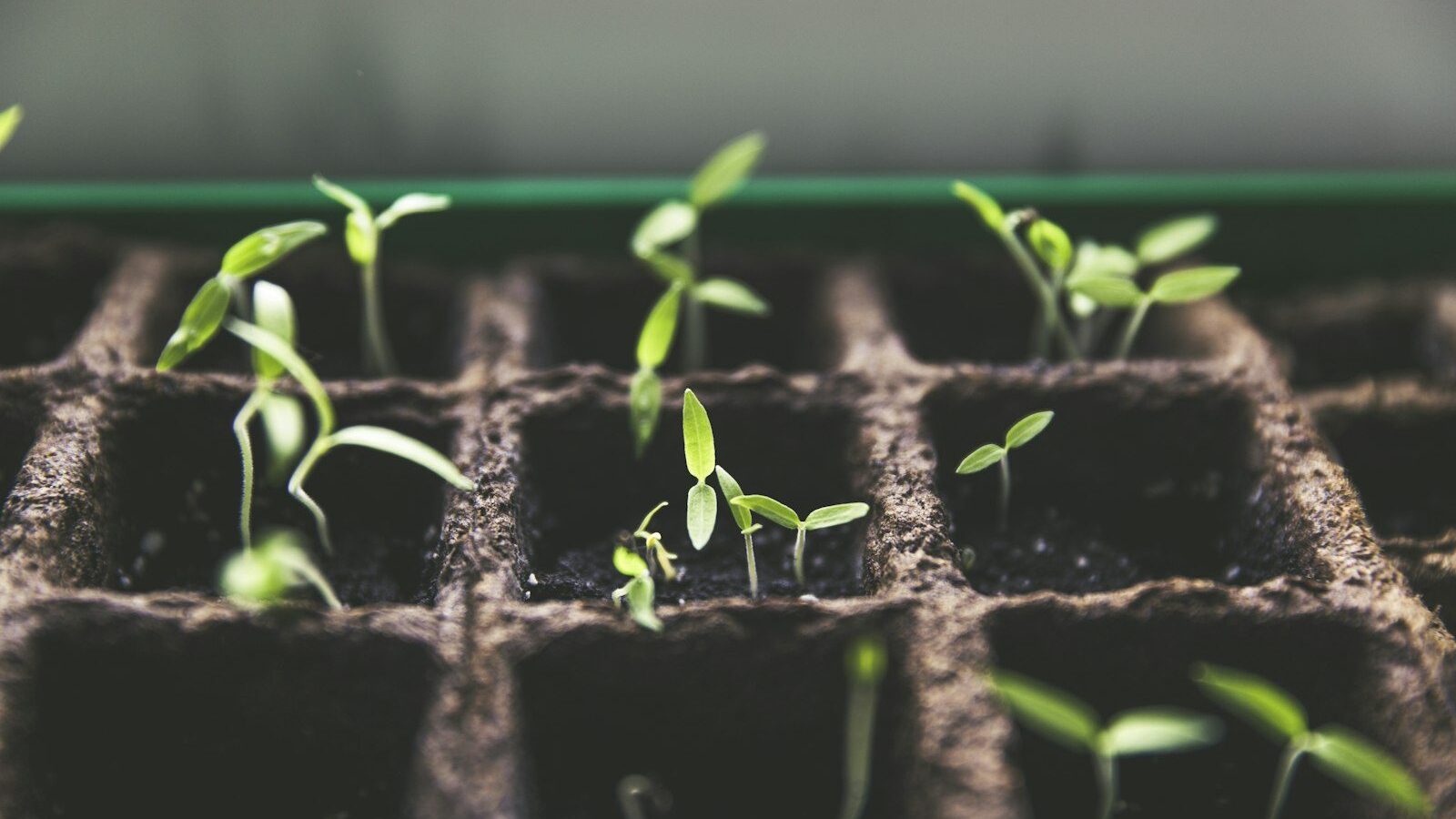
Pepper seedlings need three things more than anything else: warm soil (around 80°F to germinate, 70 to 75°F afterward), strong light for 14 to 16 hours a day, and soil that dries slightly between waterings. Get those right and peppers grow into stocky, dark green transplants in 8 to 10 weeks. Get them wrong and you see the classic problems: seeds that sit for weeks without sprouting, pale leggy stems, damping off, and stalled growth after transplant. This guide takes you from the first sprout to the day you plant out, including when to pot up, how to feed, and how to harden off without shocking a slow-growing, heat-loving crop.
Part of our Vegetable Gardening & Raised Beds guide →
In this guide
- Pepper Seedling Timeline at a Glance
- Germination: Getting Pepper Seeds to Sprout
- Light: The Biggest Factor After Sprouting
- Temperature After Germination
- Watering Pepper Seedlings
- Airflow and Stronger Stems
- Thinning
- Feeding Pepper Seedlings
- Potting Up
- Common Pepper Seedling Problems
- Hardening Off Pepper Seedlings
- Transplanting Out
- Frequently Asked Questions
Key Takeaways
- Start peppers 8 to 10 weeks before your last frost; superhots like habanero and ghost peppers need 10 to 12 weeks.
- Germinate on a heat mat at about 80°F, then remove heat once most seeds sprout.
- Keep LED grow lights 6 to 12 inches above the leaves (check your light’s guidance) for 14 to 16 hours a day.
- Bottom water when the top half inch is dry; constant wetness causes damping off and root problems.
- Pot up when the first true leaves are full size, and harden off over 7 to 14 days once nights stay above 55°F.
Pepper Seedling Timeline at a Glance
| Stage | Typical timing | What to do |
|---|---|---|
| Germination | Days 7 to 21 (superhots up to 4 weeks) | Soil at about 80°F, cover with dome, keep evenly moist |
| Cotyledons open | Week 2 to 3 | Remove dome and heat mat, turn on lights 14 to 16 hours |
| First true leaves | Week 3 to 4 | Thin to one seedling per cell, begin quarter-strength feeding |
| Potting up | Week 4 to 6 | Move to 3- to 4-inch pots, bury stem slightly |
| Growth phase | Week 6 to 9 | Half-strength feed weekly, fan for airflow, raise lights |
| Hardening off | Final 1 to 2 weeks | Gradual outdoor exposure once nights are above 55°F |
| Transplant | 2 or more weeks after last frost | Soil at least 60 to 65°F, nights consistently above 55°F |
Germination: Getting Pepper Seeds to Sprout
Pepper seed is slow and fussy compared with tomatoes. Sow it 1/4 inch deep in a fine, moist seed-starting mix, two seeds per cell, and keep the soil temperature near 80°F. At room temperature in the mid-60s, germination can take three weeks or fail outright; on a heat mat, most sweet peppers sprout in 7 to 10 days. Superhots like ghost peppers and Carolina Reapers are slower still and benefit most from steady heat.
A seedling heat mat with a thermostat controller is the single best investment for peppers. Put the probe in the soil of one cell, not under the tray, so you control actual soil temperature. Our roundup of the best seedling heat mats covers models with controllers. A humidity dome keeps the surface moist; lift it daily to vent and check for sprouts.
Some growers presoak seeds for a few hours in warm water or germinate them in a damp paper towel inside a bag on the heat mat, then plant the sprouted seeds. This is useful with expensive or old seed because you only plant ones that are viable.
Remove the heat and dome on time
Once most seeds have sprouted, take off the dome and turn off the heat mat or lower it to about 70 to 75°F. Warm, humid, still air after germination is the recipe for damping off, a fungal disease that pinches seedlings at the soil line so they topple over. If some cells are still empty, move the sprouted ones off the mat and leave the rest a few more days.
Light: The Biggest Factor After Sprouting
Windowsill light is almost never enough for pepper seedlings in late winter. Weak light makes them stretch, producing thin, pale stems that flop over. Use a full-spectrum LED grow light and run it 14 to 16 hours a day on a timer. Do not run it 24 hours; peppers benefit from a dark period.
- Distance: most LED shop lights and panel lights work well at 6 to 12 inches above the leaves. Higher-wattage lights may need 12 to 18 inches. Follow the manufacturer’s recommendation and adjust based on the plants.
- Too little light: long gaps between leaves, pale green color, stems leaning toward the light.
- Too much light or too close: bleached, white or yellow patches on the top leaves, leaves cupping upward.
- Raise lights as plants grow to keep the distance constant.
For a full walkthrough of light timing and setup, see how to set up grow lights for seedlings, and if your peppers are already stretched, why are my seedlings leggy explains how to recover them.
Temperature After Germination
Grow pepper seedlings at 70 to 80°F during the day and 60 to 70°F at night. A slight drop at night encourages compact growth. Below about 60°F, peppers slow to a crawl and may develop purple-tinged leaves, which is a sign of cold stress limiting phosphorus uptake. Cold basements and unheated rooms are common culprits; a heat mat set to 70°F can help there even after germination.
Watering Pepper Seedlings
Overwatering kills more pepper seedlings than underwatering. Their roots need oxygen, and a constantly soggy mix leads to damping off, fungus gnats and slow growth.
- Water when the top 1/2 inch of mix is dry, or when a cell feels noticeably lighter when lifted.
- Bottom water: pour water into the tray, let the cells soak for 15 to 20 minutes, then pour off the excess.
- Use room-temperature water; cold water chills roots.
- Expect watering frequency to increase as seedlings grow, from every 3 to 4 days to every 1 to 2 days in larger pots under strong light.
Airflow and Stronger Stems
A small oscillating fan on low for a few hours a day does two things: it dries the soil surface and leaves, cutting damping off and mold, and the gentle movement makes stems thicker and sturdier. Aim for a gentle sway, not a gale. Brushing your hand across the tops of seedlings once or twice a day has a similar effect.
Thinning
If two seeds sprouted in one cell, snip the weaker one at soil level with small scissors once the first true leaves appear. Pulling it can damage the roots of the survivor. If you want to save both, carefully separate them when potting up, holding them by the leaves rather than the stems.
Feeding Pepper Seedlings
Most seed-starting mixes contain little or no fertilizer. Once the first true leaves appear, begin feeding with a balanced water-soluble fertilizer, such as a 10-10-10 or a fish and seaweed blend, at quarter strength once a week. After potting up into a mix that contains compost or fertilizer, you can increase to half strength weekly. Pale, yellowing lower leaves on otherwise healthy plants usually mean they need feeding; burnt leaf tips mean you are overdoing it.
Avoid high-nitrogen feeds late in the seedling stage. You want sturdy, compact plants, not lush, soft growth that suffers when moved outdoors.
Potting Up
Pepper seedlings started in small cells outgrow them in four to six weeks. Signs it is time: roots circling the bottom of the cell or poking through drainage holes, the plant drying out within a day, or a seedling that is twice as tall as the cell is wide.
- Water the seedlings an hour before so the root ball holds together.
- Fill 3- to 4-inch pots with a quality potting mix and make a hole.
- Push the seedling up from the bottom of the cell and handle it by the leaves.
- Set it slightly deeper than before. Peppers do not root along buried stems the way tomatoes do, so bury only modestly, up to about the cotyledons at most.
- Firm the mix gently, water in, and keep out of strong light for a day if they wilt.
Long-season superhots may need a second potting up into 1-gallon containers if your planting date is still weeks away.
Common Pepper Seedling Problems
| Symptom | Likely cause | Fix |
|---|---|---|
| Seeds not sprouting after 3 weeks | Soil too cool, old seed | Heat mat to 80°F; test seed viability in a paper towel |
| Seedlings collapse at soil line | Damping off | Remove dome, add airflow, water less, use fresh sterile mix |
| Tall, thin, pale stems | Not enough light | Lower lights, extend to 14 to 16 hours |
| White or bleached patches | Light too close or sunscald outdoors | Raise light; harden off more slowly |
| Purple leaves | Cold stress | Keep above 60°F at night |
| Yellow lower leaves | Nitrogen deficiency or overwatering | Feed at quarter strength, let mix dry slightly |
| Seed coat stuck on leaves | Dry surface or shallow sowing | Mist the coat and wait; remove gently if it softens |
| Tiny flies around soil | Fungus gnats | Let surface dry; use yellow sticky traps |
Hardening Off Pepper Seedlings
Peppers grown under lights have never felt direct sun, wind or cool nights. Moving them straight outdoors leads to sunscald and transplant shock that can stall growth for weeks. Start hardening off about one to two weeks before planting, once daytime temperatures are reliably above 60°F and nights above 55°F.
- Days 1 to 2: 1 to 2 hours outdoors in shade, sheltered from wind.
- Days 3 to 4: 3 to 4 hours, with an hour of morning sun.
- Days 5 to 7: half a day, including more direct sun.
- Days 8 to 10 and beyond: full day, then leave out overnight if nights stay above 55°F.
Water well before each session, since pots dry fast outside, and bring plants in if a cold night or heavy wind is forecast. Our general guide on how to harden off seedlings has a printable schedule.
Transplanting Out
Peppers hate cold soil. Wait until at least two weeks after your average last frost and until soil is 60 to 65°F at planting depth. In cool regions, laying black plastic or landscape fabric over the bed for a week beforehand warms it. Space plants 12 to 18 inches apart, depending on variety, in full sun. Transplant in the late afternoon or on a cloudy day, water in well, and stake larger varieties now so you do not damage roots later. From here, our guide on how to grow peppers covers the growing season, and if you want to keep a plant going under lights inside, see how to grow peppers indoors. For the wider spring planting calendar, browse our vegetable gardening guide.
Frequently Asked Questions
How long do pepper seeds take to germinate?
On a heat mat at about 80°F, most sweet and mild hot peppers sprout in 7 to 14 days. Superhot varieties can take three to four weeks. At cooler room temperatures, germination is slower and less reliable.
How often should I water pepper seedlings?
Water when the top half inch of mix is dry rather than on a fixed schedule. Small cells may need water every 3 to 4 days early on, and larger plants under bright lights may need it daily. Bottom watering helps avoid soggy surfaces.
Should I keep the heat mat on after pepper seeds sprout?
Turn it off or down to around 70 to 75°F once most seeds have sprouted. Continuous high heat combined with a humidity dome encourages damping off and leggy growth.
Why are my pepper seedlings growing so slowly?
The most common causes are cool temperatures, especially below 60°F at night, weak light and overwatering. Peppers are naturally slower than tomatoes, so slow early growth is normal, but warmth and strong light speed them up noticeably.
When can pepper seedlings go outside?
Begin hardening off when days are above 60°F and nights stay above 55°F, and transplant at least two weeks after your last frost once the soil has warmed to 60 to 65°F.