

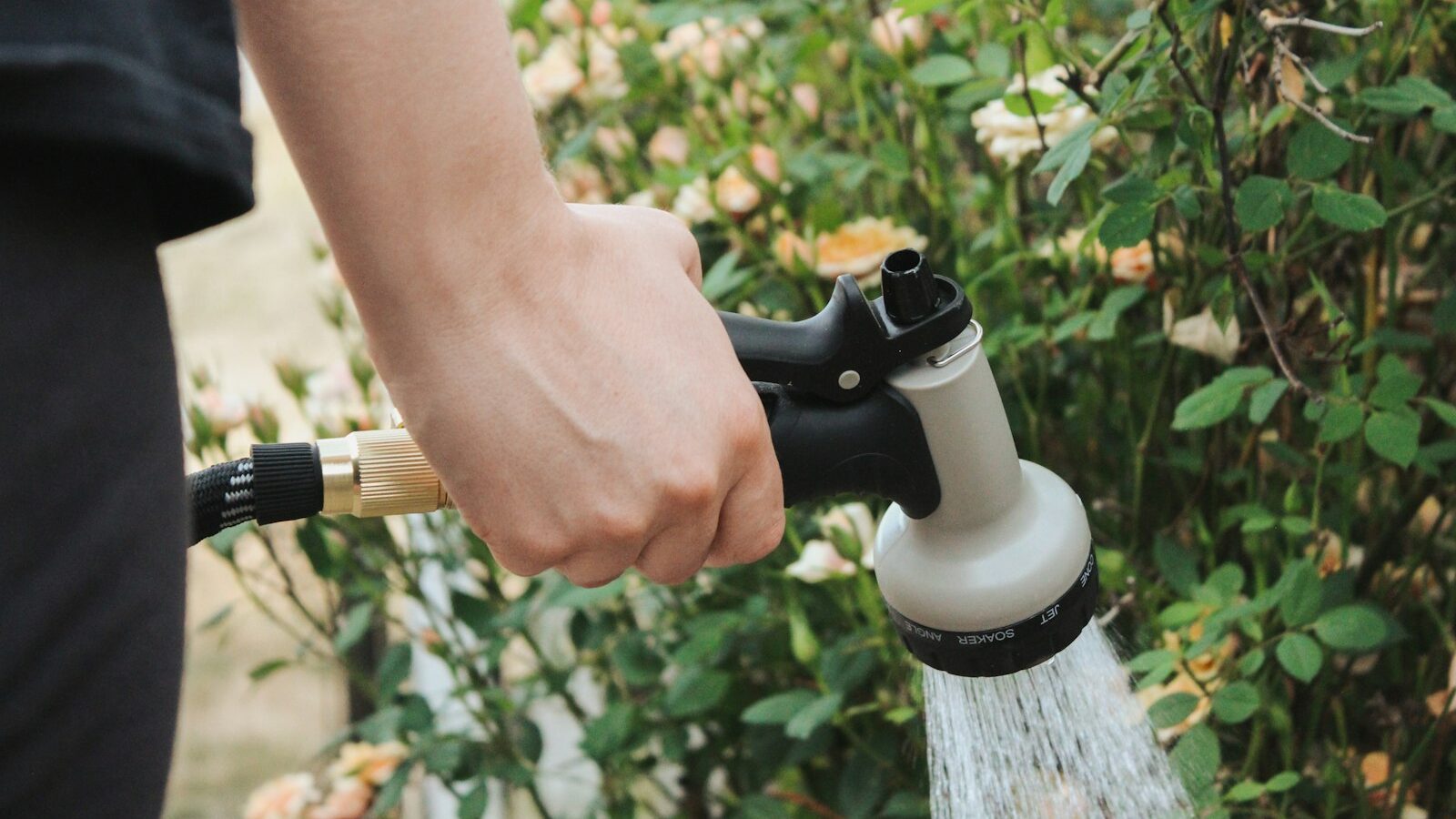
A great garden hose is one of those quiet workhorses you only notice when it fails: it kinks at the spigot, splits in the sun, or leaves a heavy tangle on the lawn. After comparing the most popular hoses across rubber, polyurethane, hybrid polymer, stainless steel, and expandable designs, we have pulled together the picks that hold up season after season. Below you will find a quick comparison table, detailed reviews of eight standout hoses, and a plain-English buying guide to help you choose the right length, diameter, and material for your yard.
Some links in this article are affiliate links. As an Amazon Associate we earn from qualifying purchases, at no extra cost to you.
Key takeaways
- For most yards, a 5/8-inch hybrid polymer or polyurethane hose hits the sweet spot of flow, weight, and kink resistance.
- The Flexzilla Garden Hose is our overall pick: light, flexible, and it lays flat without coiling memory.
- If you want the longest-lasting traditional hose, premium rubber from Continental or Craftsman is hard to beat.
- Expandable hoses like the Flexi Hose are excellent for small spaces and easy storage, but they are not for high-pressure or heavy-duty use.
- Look for lead-free brass fittings and a drinking-water-safe rating if anyone or any pet will drink from the hose.
- Match length to your needs: longer hoses lose pressure and weigh more, so buy the shortest hose that reaches your farthest tap point.
| Hose | Best for | Material | |
|---|---|---|---|
| Flexzilla Garden Hose | Best overall | Hybrid polymer | Check price |
| Eley Polyurethane Garden Hose | Best premium / drinking-water safe | Polyurethane | Check price |
| Continental ContiTech Premium Rubber Hose | Best heavy-duty rubber | Rubber | Check price |
| Zero-G Garden Hose | Best lightweight | Woven fabric | Check price |
| Bionic Steel Pro Garden Hose | Best for durability and pets | 304 stainless steel | Check price |
| Craftsman Professional Grade Rubber Hose | Best value rubber | Rubber | Check price |
| Gilmour Flexogen Heavy Duty Hose | Best reinforced vinyl | Reinforced vinyl | Check price |
| Flexi Hose Expandable Garden Hose | Best expandable | Expandable latex | Check price |
The best garden hoses reviewed
1. Flexzilla Garden Hose — Best for most people
The Flexzilla has earned a near-cult following among gardeners, and it deserves the reputation. It is built from a flexible hybrid polymer that stays supple in cold weather and refuses to hold a coil, so it lays flat across the lawn instead of springing back into loops. That zero-memory design is the single biggest reason it is easier to drag, uncoil, and store than a typical rubber hose, and it makes the day-to-day chore of watering noticeably less frustrating.
It is lightweight without feeling flimsy, the bright green jacket is easy to spot in tall grass, and the anodized aluminum fittings hold up to repeated hand-tightening. It is not the most puncture-resistant hose here, so if you routinely drag it over gravel or sharp edges you may prefer rubber or steel. For the vast majority of yards, though, the Flexzilla is the hose we would hand to a friend without hesitation.
Pros
- Lays flat with no coiling memory
- Stays flexible in cold weather
- Lightweight and easy to maneuver
Cons
- Outer jacket can scuff on rough surfaces
- Bright color is not for everyone
2. Eley Polyurethane Garden Hose — Best premium and drinking-water safe
If you want the best hose money can buy and you are willing to pay for it, the Eley polyurethane hose is the one. Reviewers consistently rank it at or near the top for build quality: the polyurethane wall feels thick and substantial, it actively resists kinking, and it moves an impressive volume of water for its 5/8-inch diameter. Eley is also a U.S. maker best known for its excellent hose reels, and that engineering focus shows in the hose itself.
Two things set it apart for many buyers. First, it is rated drinking-water safe, made with lead-free brass fittings that comply with federal lead-free standards, so it is a sensible choice if children or pets drink from the tap end. Second, it carries a high burst rating relative to its working pressure, which means a generous safety margin. The main downside is simply price, and the polyurethane can feel a touch stiffer in the cold than the Flexzilla.
Pros
- Outstanding build quality and durability
- Drinking-water safe with lead-free brass fittings
- Strong kink resistance and high burst margin
Cons
- Premium price
- Slightly stiffer in cold weather
3. Continental ContiTech Premium Rubber Hose — Best heavy-duty rubber
Continental ContiTech is the modern name behind the rubber hoses many people grew up calling Goodyear, and the lineage shows. This is a traditional all-rubber hose built for longevity rather than light weight. Owners frequently report years of trouble-free use, with no real kinking problems and the kind of heat tolerance that lets it sit on a hot patio without going soft.
Rubber is heavier than polymer or polyurethane, so this is not the hose to choose if hauling weight around a large property is a concern. But if you want a hose that shrugs off abrasion, handles high pressure, and can be left out in tough conditions, premium rubber remains the gold standard for durability, and Continental is one of the most respected names in the category.
Pros
- Extremely durable and long-lasting
- Excellent heat and abrasion resistance
- Handles high water pressure well
Cons
- Heavy compared with polymer hoses
- Less flexible in cold weather
4. Zero-G Garden Hose — Best lightweight
The Zero-G takes a different approach: instead of a thick rubber or polymer wall, it uses a tough woven fabric jacket over a flexible inner tube. The result is a hose that is dramatically lighter than vinyl or rubber, which makes a real difference if you are carrying it up steps, around raised beds, or across a big lawn. It topped a survey of more than 300 homeowners for good reason.
It is kink-resistant, easy to coil, and stores compactly. Just note that it is not an expandable hose, despite the soft feel; it stays at its rated length. The fabric construction is durable for normal use, but it is the kind of hose you want to keep off sharp gravel and away from being run over. For gardeners who value low weight above all, it is the easiest hose here to live with.
Pros
- Very light and easy to carry
- Kink-resistant and coils easily
- Compact for storage
Cons
- Fabric jacket needs gentler handling
- Not as rugged as rubber or steel
5. Bionic Steel Pro Garden Hose — Best for durability and pets
The Bionic Steel Pro wraps a flexible inner tube in a 304 stainless steel outer shell, and that metal jacket is the whole point. It will not kink, it resists punctures and abrasion, and it shrugs off the chewing and clawing that destroy ordinary hoses, which makes it a favorite for households with dogs. Despite the metal construction, it is surprisingly easy to drag across the yard and is actually lighter than many rubber hoses.
The brass fittings include a stabilizer collar to reduce stress at the spigot, where hoses often fail first. The trade-off with any steel hose is that the metal coil can feel less soft in the hand, and you will want to drain it before a hard freeze. If you have wrecked a few hoses on rough surfaces or a curious pet, this is the one built to outlast them.
Pros
- Nearly impossible to kink
- Resists punctures, abrasion, and chewing
- Lighter than it looks for a metal hose
Cons
- Metal jacket feels less soft to handle
- Drain before hard freezes
6. Craftsman Professional Grade Rubber Hose — Best value rubber
The Craftsman Professional Grade hose is the rubber option for buyers who want long-term toughness without paying a premium. It ranked near the top in the same homeowner survey that crowned the Zero-G, and the appeal is straightforward: it is a heavy-duty, durable hose that prioritizes water flow and years of service over light weight.
Like any quality rubber hose it is on the heavy side and stiffer in the cold, but in return you get a hose that handles pressure, resists abrasion, and tends to keep working long after cheaper hoses have split. The crush-resistant couplings make connections easy and leak-free. If you want the reliability of rubber and a familiar, trusted name at a sensible price, this is a smart pick.
Pros
- Durable, heavy-duty rubber build
- Strong water flow and pressure handling
- Good value for the longevity
Cons
- Heavy to move around
- Stiffens in cold temperatures
7. Gilmour Flexogen Heavy Duty Hose — Best reinforced vinyl
The Gilmour Flexogen is a classic reinforced hose that sits between budget vinyl and premium rubber. In testing it proves very difficult to kink, feels solid and durable in hand, and connects easily to spigots and nozzles. Its multi-layer construction gives it more body than a thin big-box vinyl hose while keeping it more manageable than heavy rubber.
It is a dependable all-rounder for general watering, washing the car, and everyday yard chores. It does not have the flat-laying magic of the Flexzilla or the bulletproof feel of steel, but it is a proven, widely available workhorse that holds up to challenging outdoor conditions year after year.
Pros
- Very difficult to kink
- Solid, durable multi-layer build
- Connects easily and widely available
Cons
- Heavier than polymer hoses
- Less flexible than premium picks
8. Flexi Hose Expandable Garden Hose — Best expandable
Expandable hoses solve a specific problem: storage. The Flexi Hose ships as a compact coil and stretches to its full length only when pressurized, then shrinks back down when you turn the water off, so it tucks away in a fraction of the space a rubber hose needs. It is a popular choice for balconies, patios, and small gardens where a heavy hose is overkill.
The Flexi Hose pairs a multi-layer expanding latex core with solid brass fittings, which is exactly what you want, since cheap plastic fittings are the first thing to fail on lesser expandable hoses. Set expectations accordingly: expandable hoses deliver less flow and pressure than a 5/8-inch rubber or polymer hose, they are not made for heavy-duty or high-pressure tasks, and they need to be drained and stored out of harsh sun for the longest life. Within those limits, this is the easiest hose here to store.
Pros
- Extremely compact for storage
- Very lightweight and easy to handle
- Solid brass fittings
Cons
- Lower flow and pressure than standard hoses
- Not for heavy-duty or high-pressure use
How to choose a garden hose
The right hose depends on the size of your yard, how you store it, and how rough you are on gear. Here is how to weigh the factors that actually matter.
Length
Buy the shortest hose that comfortably reaches your farthest watering point. Common lengths run from 25 to 100 feet. Longer hoses cost more, weigh more, and lose water pressure over distance, so an oversized hose makes everyday watering harder than it needs to be.
- 25 to 50 feet: balconies, patios, small gardens, and townhomes.
- 50 to 75 feet: most suburban yards.
- 100 feet: large properties, though expect more weight and a slight pressure drop.
Diameter: 5/8 inch vs 1/2 inch
Diameter controls how much water the hose delivers. The 5/8-inch size is the do-everything standard, balancing strong flow with manageable weight. A 1/2-inch hose is lighter and easier to coil, which suits small spaces and container gardens, but it moves less water and is a poor match for long runs or sprinklers. A 3/4-inch hose moves the most water but is heavy and usually reserved for commercial use.
- 5/8 inch: best all-around choice for most yards.
- 1/2 inch: light-duty watering and tight spaces.
- 3/4 inch: maximum flow for large or commercial jobs.
Material: rubber vs vinyl vs expandable vs hybrid
Material is the single biggest factor in how a hose feels and lasts.
- Rubber: the most durable and heat-resistant, but heavy. Best for high pressure and rough use.
- Vinyl: lightweight and inexpensive, but kinks more easily and degrades faster in the sun. Reinforced vinyl like the Gilmour Flexogen is a step up.
- Polyurethane: lighter than rubber, very durable, and often drinking-water safe. A premium middle ground.
- Hybrid polymer: light, flexible, and resistant to coiling memory, as seen in the Flexzilla.
- Expandable: ultra-compact and easy to store, but lower flow and not for heavy-duty tasks.
Burst pressure
Burst pressure is the point at which a hose will fail, and it should comfortably exceed your home’s water pressure plus any spikes from a sprayer or shut-off valve. A higher burst rating relative to working pressure gives you a safety margin. Quality hoses publish a burst rating; very cheap hoses often do not, which tells you something.
Fittings: brass vs plastic
The fittings, or couplings, are where hoses most often fail. Brass fittings are stronger, seal better, and resist cross-threading and crushing far better than plastic. Plastic fittings keep a hose light and cheap but strip and leak more easily over time. Where it matters, look for lead-free brass, and a stabilizer collar at the spigot end helps prevent kinking and stress at the connection.
Kink resistance
A hose that kinks every time you move it is a daily annoyance. Kink resistance comes from material flexibility, wall thickness, and diameter. Hybrid polymer, polyurethane, and stainless steel hoses tend to resist kinks best, while thin vinyl hoses are the worst offenders. If you hate fighting your hose, prioritize this feature.
Drinking-water safe
Standard garden hoses are not designed for drinking and can leach material into the water that sits inside them. If you fill pet bowls, kiddie pools, or drinking containers, choose a hose explicitly labeled drinking-water safe with lead-free fittings, such as the Eley polyurethane hose. It is a small detail that matters for anything you or your animals will actually drink.
A good hose pairs well with the rest of your kit. For more on building out your shed, see our guide to essential garden tools, browse the full tools & gear category, or read up on the best pruning shears to keep your plants in shape.
Frequently asked questions
What size garden hose is best?
For most homeowners, a 5/8-inch diameter hose is the best all-around choice. It delivers strong water flow while staying light enough to handle comfortably. Choose 1/2 inch for light-duty watering in small spaces, and reserve 3/4 inch for large properties or commercial tasks that need maximum flow.
Are expandable hoses any good?
Yes, for the right use. Expandable hoses are excellent for small gardens, patios, and balconies because they store in a fraction of the space and weigh very little. The trade-off is lower flow and pressure, and they are not built for heavy-duty or high-pressure jobs. Look for solid brass fittings, like those on the Flexi Hose, since cheap plastic fittings are the usual failure point.
What is the most durable type of garden hose?
Premium rubber and stainless steel hoses are the most durable. Rubber, like the Continental and Craftsman picks, resists heat and abrasion and lasts for years. Stainless steel hoses, like the Bionic Steel Pro, resist kinks, punctures, and even pet chewing, though they need draining before a hard freeze.
How do I keep my hose from kinking?
Choose a kink-resistant material such as hybrid polymer, polyurethane, or stainless steel, and pick a hose with a stabilizer collar at the spigot. Store it coiled loosely or on a reel rather than crammed into a bucket, and avoid sharp bends at the connection where kinks usually start.
Is it safe to drink from a garden hose?
Not from a standard hose. Ordinary garden hoses can leach materials into water that sits inside them, especially in the heat. If you need safe drinking water for people or pets, buy a hose specifically rated drinking-water safe with lead-free brass fittings, such as the Eley polyurethane hose.
How should I store a garden hose over winter?
Drain the hose completely, disconnect it from the spigot, and coil it loosely for storage somewhere protected from freezing and direct sun. Draining is especially important for stainless steel and expandable hoses, which can be damaged if water freezes inside them.