

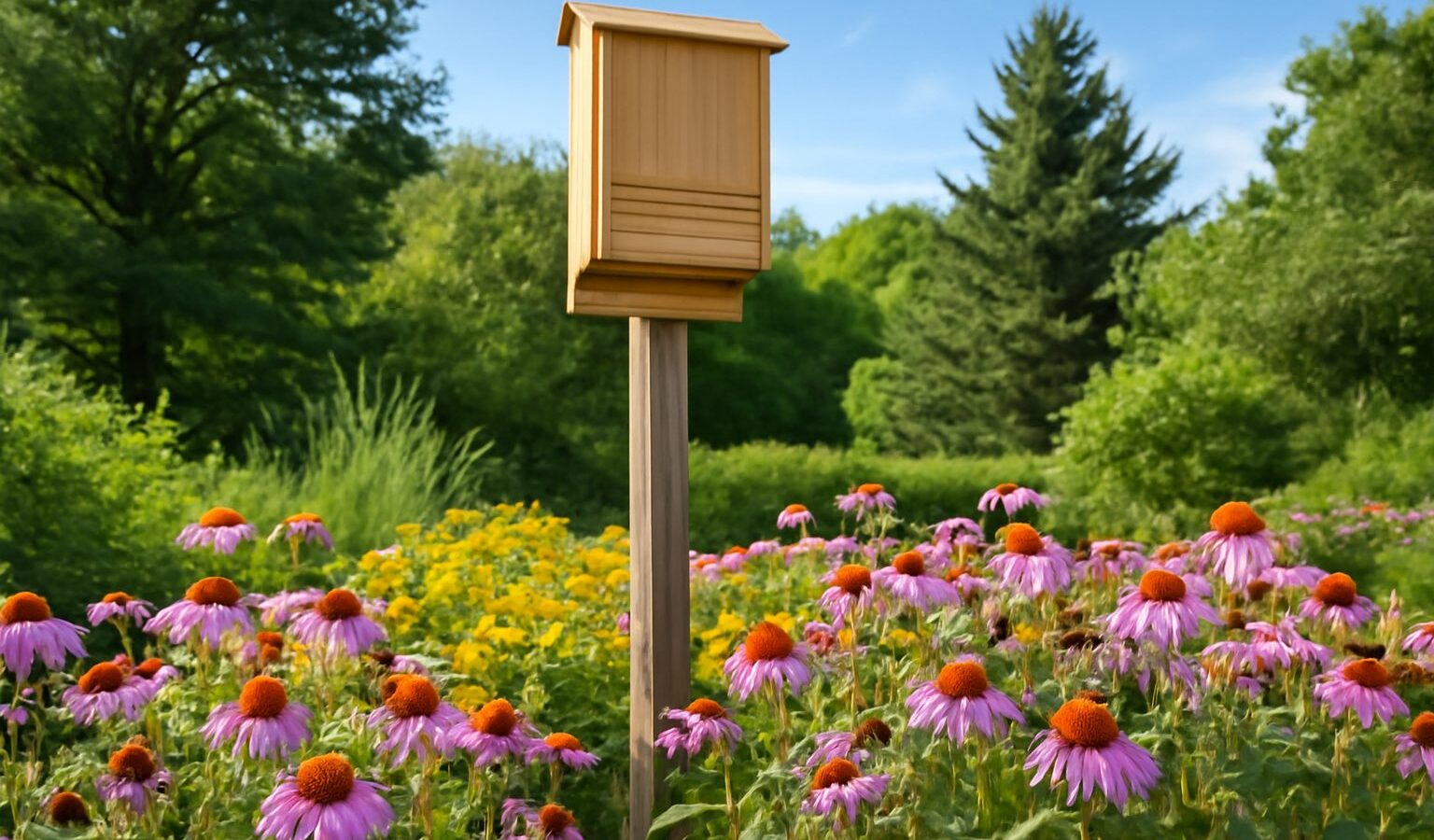
A single little brown bat can eat hundreds of mosquitoes and other flying insects in an hour, and a healthy colony works through agricultural and garden pests every night for free. A bat house gives those bats a warm, narrow roost to raise pups in, which is exactly what they lose when dead trees and old barns disappear. The catch is that bats are picky tenants: the box has to be the right size, sealed against drafts, mounted high, and oriented for solar heat, or it will hang empty for years. The seven houses below are the ones built to those specs, plus the buyer’s guide that explains why each detail matters.
As an Amazon Associate we earn from qualifying purchases. This page contains affiliate links at no extra cost to you.
Key Takeaways
- Bigger and multi-chamber is better: triple-chamber cedar houses hold larger colonies and buffer temperature swings.
- Mount 12 to 20 feet high on a pole or building wall — never on a tree, which exposes bats to predators and shade.
- Face the house south or southeast for 6+ hours of sun; bats need a warm roost, often 85 to 100°F internally.
- The Nature’s Way triple-chamber cedar house is the best all-round pick; Audubon’s single-chamber box is the budget starter.
- Occupancy can take one to two seasons — patience and correct placement matter far more than the brand.
| Product | Best For | Key Spec |
|---|---|---|
| Nature’s Way Triple Chamber Cedar Bat House | Overall colony roost | Cedar, 3 chambers, holds 100+ bats |
| Audubon (Woodlink) Bat House | Budget starter | Single chamber, inexpensive |
| VIREESR Wooden Castle Bat House | Large colonies | Three-chamber wood design |
| Mezchi Cedar Bat House | Easy mounting | Cedar with mounting kit |
| Big Bat Box Cedar Roost (WildYard) | Premium handcrafted | Eco-friendly cedar, handmade |
| Nature’s Way Single Chamber Cedar House | Small yards | Cedar, single chamber |
| Mixxidea Wooden Bat House | Value multi-chamber | Multi-chamber wood box |
Nature’s Way Triple Chamber Cedar Bat House
Nature’s Way builds its triple-chamber bat house from kiln-dried cedar with three internal roosting chambers, which is the configuration conservation groups generally recommend. Multiple chambers give bats a range of temperatures to move between as the day heats and cools, and the larger volume can host a colony of a hundred bats or more once established. The grooved landing area and rough interior surfaces let bats grip and climb without added mesh.
Cedar resists rot and insects naturally, so this house holds up for years without chemical treatment. Caulk any seams before mounting, paint the exterior a dark color in cooler climates to absorb heat, and mount it 12 to 20 feet up on a pole or south-facing wall. Get those basics right and this is the house most likely to actually attract a maternity colony.
Pros
- Three chambers buffer temperature swings
- Holds a large colony once established
- Durable kiln-dried cedar
Cons
- Heavy — needs solid mounting
- May need exterior painting in cold zones
Audubon (Woodlink) Bat House
The Audubon-branded bat house, made by Woodlink, is the inexpensive way to find out whether bats will move into your yard before committing to a larger box. It is a single-chamber design — smaller and less thermally stable than a triple chamber — but it carries the trusted Audubon name and a price low enough that a first-timer can experiment without much risk.
A single chamber works fine for a small bachelor group or in milder southern climates where temperature swings are less extreme. In hot regions it can overheat, and in cold ones it struggles to hold warmth, so placement and orientation matter even more here than with a multi-chamber house. Treat it as a starter and upgrade to a triple chamber if you get occupancy.
Pros
- Lowest cost in the roundup
- Trusted Audubon brand
- Good low-risk starter box
Cons
- Single chamber overheats in hot climates
- Holds a smaller colony
VIREESR Wooden Castle Bat House
VIREESR’s wooden castle bat house is a large three-chamber design aimed at gardeners who want capacity for a sizable colony from the start. The deep multi-chamber interior gives bats roosting choices across a temperature gradient, and the bigger footprint suits properties with real mosquito or moth pressure where you want to host as many bats as possible.
As with any large box, weight and mounting are the practical considerations — plan for a sturdy pole or a well-anchored wall bracket. Inspect the seams and seal any gaps so the interior stays draft-free, and rough up or confirm the interior climbing surfaces before mounting. Done right, it is a high-capacity roost at a friendlier price than handcrafted premium options.
Pros
- Three-chamber, high-capacity design
- Good value for the size
- Suits properties with heavy insect pressure
Cons
- Large and heavy to mount
- Seams may need sealing out of the box
Mezchi Cedar Bat House
Mezchi’s cedar bat shelter stands out for shipping with a mounting kit, which removes one of the most common barriers to actually getting a bat house up where it belongs. Cedar construction gives it the same natural rot resistance as the pricier options, and the included hardware means you are not improvising brackets after the box arrives.
It is a solid mid-range choice for a gardener who wants a workable house without research paralysis. Follow the universal rules — mount high, face it toward the sun, seal drafts — and the included kit makes a wall or pole installation straightforward. The convenience of a ready-to-mount package is worth a lot when the alternative is a separate hardware run.
Pros
- Includes mounting kit
- Rot-resistant cedar
- Beginner-friendly package
Cons
- Fewer chambers than top picks
- Mounting hardware is basic
Big Bat Box Cedar Roost (WildYard)
Big Bat Box sells premium cedar bat houses handcrafted by WildYard, and they sit at the quality end of this list. These are eco-friendly, hand-built boxes made specifically to bat-conservation specifications, with careful joinery, proper chamber spacing, and rough interior climbing surfaces. If you want a house that follows best-practice design without you having to verify every dimension, this is it.
You pay for that craftsmanship and the conservation-minded sourcing, so it is not the budget option. But for a gardener serious about establishing a long-term colony — especially as part of a broader habitat with a pond and native plantings — the build quality justifies the cost. Pair it with proper mounting and you have a roost meant to last decades.
Pros
- Handcrafted to conservation specs
- Eco-friendly cedar sourcing
- Built to last decades
Cons
- Premium price
- Often made to order, longer wait
Nature’s Way Single Chamber Cedar Bat House
For small yards or a first attempt with a quality build, Nature’s Way also offers a single-chamber cedar house. It shares the brand’s kiln-dried cedar construction and proper landing pad with the triple-chamber model, just in a smaller, lighter package that mounts easily on a fence post or shed wall and suits a modest bachelor group.
The single-chamber tradeoff is thermal stability: less internal volume means the temperature swings more with the weather, so orientation and a dark exterior color matter. In a mild climate with good south-facing sun it is a fine, lower-cost step up from the budget Audubon box, with cedar durability the cheaper option lacks.
Pros
- Quality cedar at a lower price
- Light and easy to mount
- Good for small yards
Cons
- Single chamber is less thermally stable
- Smaller colony capacity
Mixxidea Wooden Bat House
Mixxidea rounds out the list with a multi-chamber wooden bat house aimed at the value buyer who still wants more than a single chamber. The extra chambers give bats temperature options the cheapest single-chamber boxes cannot, at a price point below the premium handcrafted roosts, making it a reasonable middle ground.
As with any value box, do the prep work: confirm the interior surfaces are rough enough to climb, caulk the seams, and mount it high facing the sun. The hardware and finish are basic, but the core design follows the multi-chamber principle that matters most. Pair it with a water source and night-blooming plants to make your yard attractive to foraging bats.
Pros
- Multi-chamber at a value price
- Better thermal range than single chamber
- Lightweight to mount
Cons
- Basic hardware and finish
- May need seam sealing and roughing
What to Look For in a Bat House
Chambers and size. Multi-chamber houses outperform single-chamber boxes because they give bats a range of temperatures to shift between through the day. Bigger is generally better — larger volume buffers heat and holds more bats. A triple chamber is the safe default for most climates.
Material and construction. Untreated cedar or cypress resists rot without chemicals. The interior must be rough or grooved so bats can climb and grip, and the seams must be sealed so the chamber stays draft-free. Avoid pressure-treated or chemically finished wood.
Mounting height and orientation. Mount the house 12 to 20 feet above the ground on a pole or the side of a building — never on a tree, where shade and predators discourage bats. Face it south or southeast for at least six hours of direct sun. In cooler zones, paint the exterior a dark color to absorb heat.
Patience and habitat. Even a perfect house can take one to two full seasons to attract bats. A nearby water source and a yard rich in night-flying insects help enormously. A garden pond is a strong draw — our water gardens and ponds hub covers building one, and the outdoor living hub has more on backyard habitat. For other pollinator and wildlife gear, see the tools and gear hub.
Frequently Asked Questions
How long does it take bats to use a new bat house?
Often one to two full seasons. Bats are cautious about new roosts, so occupancy depends heavily on correct placement, height, and sun exposure rather than the brand. Patience is essential.
How high should a bat house be mounted?
Mount it 12 to 20 feet above the ground on a pole or building wall. Higher is generally better for giving bats a clear drop-and-fly approach and keeping them away from ground predators.
Should I put a bat house on a tree?
No. Trees create shade that keeps the box too cool and give predators easy access. Always mount bat houses on a freestanding pole or the side of a structure in full sun.
Which direction should a bat house face?
South or southeast, with at least six hours of direct sunlight. Bats need a warm interior, often 85 to 100°F, so in cooler climates also paint the exterior a dark color to absorb heat.
Do bat houses really control mosquitoes?
Bats eat large numbers of flying insects, including mosquitoes, moths, and beetles, so an active colony meaningfully reduces pests. They are most effective as part of a broader chemical-free pest-management approach rather than a sole mosquito fix.