

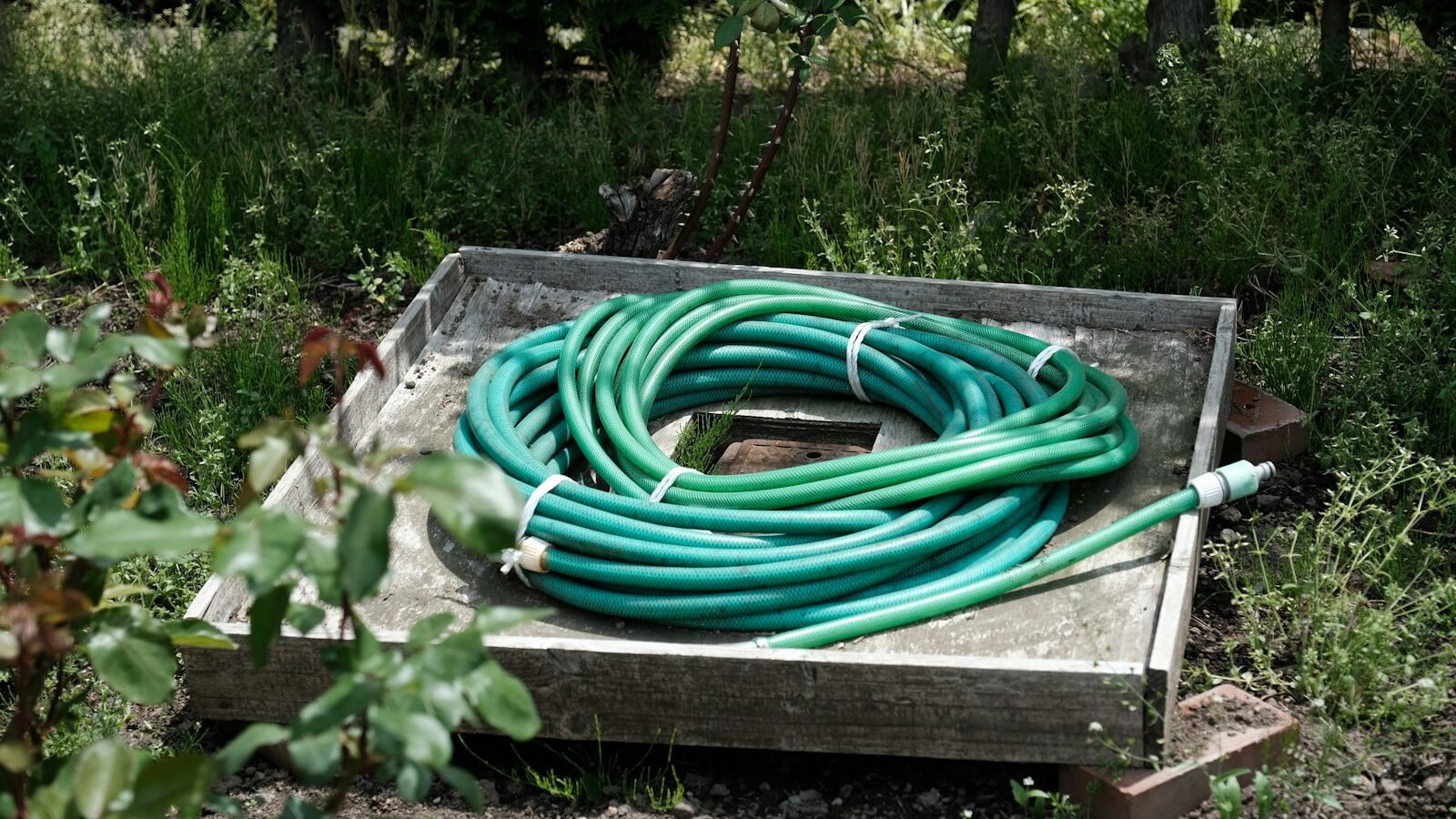
If you are tired of dragging a sprinkler around, watching half the water blow away or run off your beds, a soaker hose is the simplest upgrade you can make this season. These porous and perforated hoses weep water slowly along their entire length, soaking it straight into the root zone where plants actually use it. Below are seven soaker hoses worth buying in 2026, each chosen for a specific job, plus a buyer’s guide to help you match the right hose to your garden.
As an Amazon Associate we earn from qualifying purchases.
Our top picks
- Best overall: Rocky Mountain Goods Heavy-Duty Soaker Hose (50 ft, 5/8″)
- Best for garden beds: Gilmour Flat Soaker Hose (50 ft)
- Best flat / lay-flat: Melnor Flat Soaker Hose (50 ft)
- Best short / raised-bed: Raindrip 1/4″ Soaker Tubing (50 ft)
- Best heavy-duty rubber: Aoboco Cuckoo Soaker Hose (50 ft, 5/8″)
- Best customizable kit: Swan Miracle-Gro Soaker System (50 ft, 3/8″)
- Best budget: Miracle-Gro 50′ Garden Soaker Hose
| Product | Length | Material | Best for |
|---|---|---|---|
| Rocky Mountain Goods Soaker Hose | 50 ft (also 25/75) | Recycled rubber, 5/8″ | Best overall |
| Gilmour Flat Soaker Hose | 50 ft (also 25) | Flat recycled vinyl | Garden beds & rows |
| Melnor Flat Soaker Hose | 50 ft (25/75 too) | Flat porous poly | Flat / under-mulch |
| Raindrip 1/4″ Soaker Tubing | 50 ft | Recycled rubber, 1/4″ | Raised beds & planters |
| Aoboco Cuckoo Soaker Hose | 50 ft | Heavy rubber, 5/8″ | Heavy-duty round |
| Swan Miracle-Gro Soaker System | 50 ft (also 100) | Recycled rubber, 3/8″ | Customizable kit |
| Miracle-Gro 50′ Soaker Hose | 50 ft | Recycled rubber, 5/8″ | Budget |
The 7 best soaker hoses of 2026
Rocky Mountain Goods Heavy-Duty Soaker Hose — best overall
The Rocky Mountain Goods soaker hose is the one I reach for when someone wants a single, do-everything answer. It is a round 5/8-inch hose made from recycled rubber, and that thicker wall is what sets it apart from the flimsy hoses that kink and split after one summer. The rubber weeps water evenly from end to end rather than gushing at the spigot and going dry at the far end, which is the most common complaint people have about cheaper hoses. The manufacturer claims it saves up to 70% of the water you would use with overhead sprinkling, and in practice the slow, root-level delivery does dramatically cut evaporation and runoff.
With more than 4,100 Amazon reviews it is also one of the most-bought soaker hoses in the vegetable garden category, so you are not gambling on an unknown. The reinforced fittings hold pressure without spraying at the connection, and an end cap is included so you can daisy-chain a second hose for a longer run. It comes in 25, 50, and 75-foot lengths, with 50 feet being the sweet spot for most beds. If you only buy one hose this year, make it this one.
Pros
- Thick recycled-rubber wall resists kinks and splitting
- Even weeping along the full length, even on longer runs
- Reinforced fittings and included end cap for chaining
- Proven track record with thousands of reviews
Cons
- Heavier and stiffer than flat hoses to coil up
- Best results need a pressure reducer on high-pressure spigots
Gilmour Flat Soaker Hose — best for garden beds
For straight rows of vegetables and tidy flower beds, the Gilmour Flat Soaker Hose is hard to beat for the money. The flat profile is the key feature here: it lies down and stays put between rows instead of rolling around, and it tucks neatly under a layer of mulch so you barely see it. Because it is flat it also stores compactly, rolling up tight at the end of the season. At roughly $17 for 50 feet it is one of the most affordable ways to put a whole bed on slow, deep watering.
It has earned close to 8,750 Amazon reviews at around 4.1 stars, which is a lot of real-world feedback for a budget hose. The porous surface delivers a gentle, even soak directly to the root zone, and the flat shape means you can run it in long, straight lines along beans, tomatoes, peppers, or a perennial border. It is best laid out in straight runs rather than snaked tightly around individual plants, where the flat shape resists sharp curves. Pair it with a timer and you have a nearly hands-off bed.
Pros
- Flat profile stays put and hides under mulch
- Excellent value for 50 feet of coverage
- Rolls up small for off-season storage
- Huge, mostly positive review base
Cons
- Does not like tight curves around individual plants
- Thinner wall than premium rubber hoses
Melnor Flat Soaker Hose — best flat / lay-flat
If you specifically want a flat hose that lies dead-flat and is extremely flexible for placement, the Melnor Flat Soaker Hose is the pick. Melnor designed this one to wrap easily around the base of trees, shrubs, flowers, and vegetables, and it is happy under a thin layer of soil or mulch. The porous poly body releases water slowly along its whole length for a deep, thorough soak rather than a quick surface wetting. It comes in 25, 50, and 75-foot lengths, so you can size it to a raised bed, a foundation planting, or a long border.
What separates the Melnor from other flat hoses is the flexibility combined with a sensible 2-year limited warranty, which is reassuring for a category where many no-name hoses come with no support at all. The flat design also rolls up tightly into a small footprint for winter storage. It is ideal for shrubs, raised beds, and vegetable gardens where you want soft, gentle, low-waste watering. If your beds are slightly curved or you like to snake the hose around plantings, the Melnor’s flexibility gives it an edge over stiffer flat hoses.
Pros
- Very flexible — bends around plants and beds easily
- Three lengths (25 / 50 / 75 ft) to fit any space
- Backed by a 2-year limited warranty
- Stores compactly thanks to the flat profile
Cons
- Poly body is less rugged than thick rubber over many seasons
- Output can drop on the far end of long, high-pressure runs
Raindrip 1/4″ Soaker Tubing — best short / raised-bed
Standard 5/8-inch hoses are overkill for a single raised bed or a row of planters, and they are too stiff to snake between closely spaced plants. That is where the Raindrip 1/4-inch soaker tubing shines. This slim, flexible line is purpose-built for short runs on flat surfaces — vegetable gardens, borders, and the area around small plants — and it slowly waters the soil for complete root-zone hydration without flooding the bed. Raindrip has been the trusted name for landscapers since 1972, so the brand pedigree is real.
The tubing is made from recycled rubber tires treated with UV inhibitors to resist fading and cracking, and it can be cut to length and bent around curves, which makes it perfect for a tidy loop inside a 4×4 raised bed. It connects to a 1/2-inch or larger supply line with a simple 1/4-inch micro fitting, so it slots neatly into a larger drip layout if you want to expand later. Raindrip backs it with a one-year, 100% satisfaction guarantee. For raised beds and container clusters, nothing in this roundup is more flexible.
Pros
- Thin and flexible — ideal for raised beds and planters
- Cut to length and bend around tight curves
- UV-treated recycled rubber resists cracking
- Integrates into a larger 1/2″ drip system
Cons
- Not meant for large open beds or long single runs
- Needs a 1/2″ supply line and micro fitting to connect
Aoboco Cuckoo Soaker Hose — best heavy-duty rubber
When you want the most rugged round hose you can get without paying a premium, the Aoboco Cuckoo soaker hose delivers. It is a 50-foot, 5/8-inch heavy-duty rubber hose built specifically for garden and flower beds, and like the other premium rubber options it is rated to save roughly 70% of the water you would waste with overhead watering. The thicker rubber wall is what makes it heavy-duty: it shrugs off the abrasion of being dragged across gravel and soil, and it holds up to repeated coiling without the cracking you see on cheaper economy hoses.
The large 5/8-inch diameter means it can move more water along its length, so it keeps the far end weeping even on a full 50-foot run, and it pairs well with longer beds and foundation plantings. The trade-off for all that durability is weight and stiffness — this is not a hose you will gently curl around a tiny planter — but for big beds, hedges, and a foundation soak it is exactly the kind of tank you want. If longevity is your top priority and you do not mind the heft, this is the heavy-duty workhorse.
Pros
- Thick 5/8″ rubber wall built to last seasons
- Moves plenty of water for even far-end output
- Great for large beds, hedges, and foundations
- Saves up to ~70% versus overhead watering
Cons
- Heavy and stiff — awkward around tight plantings
- Overkill for a small raised bed
Swan Miracle-Gro Soaker System — best customizable kit
Some gardens do not want a single straight hose — they want a network that bends around beds, jumps over paths, and reaches a few separate planting areas. The Swan Products Miracle-Gro Soaker System is the answer. It is a 3/8-inch soaker hose that you cut to fit your exact layout, then rejoin with push-on fittings that snap together and can be swapped out whenever you rearrange the garden. That modularity is what makes it the best “kit” pick: you build the shape your garden needs instead of forcing your beds to match a hose.
The hose is made with 65% recycled materials and, like the rest of the field, claims up to 70% less water use than a standard hose when you bury it just under the topsoil or mulch. It is sold in 50-foot and 100-foot configurations, so you can scale it from a couple of beds up to a whole backyard. Reviews are a little mixed — some users report uneven output or the occasional leaky fitting if connections are not seated firmly — so take your time pushing each fitting fully home. Done right, it is the most flexible system here for an irregularly shaped garden.
Pros
- Cut-and-connect design fits any garden layout
- Reusable push-on fittings for easy reconfiguring
- Made with 65% recycled materials
- Available in 50 ft and 100 ft
Cons
- Fittings can leak if not pushed fully together
- Some reports of uneven output across long runs
Miracle-Gro 50′ Garden Soaker Hose — best budget
If you just want to put a bed on slow watering for as little money as possible, the standard Miracle-Gro 50-foot garden soaker hose is the no-fuss choice. It is a simple round recycled-rubber hose with a main connection and an end cap — no kit, no fittings to fuss with — and it does the one job a soaker hose needs to do: weep water slowly into the root zone so you stop wasting it on the air and the path. For the price of a fast-food lunch or two, you can convert a vegetable row or a flower border to deep, efficient watering.
Because it is made from recycled rubber it is also an environmentally friendlier pick than virgin-plastic hoses, and it delivers the same up-to-70% water savings claim as the pricier options when buried under mulch. It will not have the bombproof wall thickness of the Rocky Mountain Goods or Aoboco hoses, so treat it gently and drain it before winter, but for a first soaker hose or for putting several beds on watering without breaking the bank, it is the obvious budget buy.
Pros
- Lowest cost of entry to soaker-hose watering
- Made from recycled rubber
- Simple plug-and-play — no fittings to assemble
- End cap allows chaining a second hose
Cons
- Thinner wall than premium rubber hoses
- Needs winter draining to avoid cracking
How to choose a soaker hose
Soaker hoses look identical on the shelf, but small differences in length, material, and shape make a big difference in how evenly your garden gets watered. Here is how to match a hose to your space.
Length and water pressure
Length is the single biggest factor in even watering. The longer the run, the more pressure drops off before the water reaches the far end, which is why people complain that “the start is soaked and the end is dry.” For most home gardeners, 50 feet is the practical maximum for a single hose; beyond that, output gets uneven. If you need more reach, chain two 25 or 50-foot hoses using the end cap, or split the line so each branch is short. Soaker hoses are also designed for low pressure — most household spigots put out far more than a soaker hose wants. Adding an inexpensive pressure reducer (typically 10–25 psi) keeps the hose weeping gently instead of ballooning, spraying at the fittings, or wearing out early.
Rubber vs. flat
Round rubber hoses (like the Rocky Mountain Goods and Aoboco) are the most durable and tend to weep most evenly, but they are heavier and stiffer, so they resist tight curves. Flat hoses (like the Gilmour and Melnor) lie down and stay put, hide under mulch, and roll up small for storage, but their thinner walls are generally less rugged over many seasons. Thin 1/4-inch tubing (Raindrip) is the most flexible of all and perfect for raised beds, but it is meant only for short runs. Pick round rubber for longevity and big beds, flat for tidy rows, and 1/4-inch for small, curvy spaces.
Layout and placement
Lay the hose so it runs within a few inches of the plant stems you want to water, since the water spreads only 6–12 inches to either side in most soils. Snake it down vegetable rows or loop it around a perennial border. Burying it under an inch of mulch cuts evaporation even further and protects the hose from UV. Avoid running it up steep slopes, where the uphill end will starve; instead run hoses along the contour. For an irregular garden, a customizable system like the Swan Miracle-Gro kit lets you build branches that reach every bed. For a deeper look at when soaker hoses beat sprinklers, see our guide on drip vs sprinkler irrigation.
Pairing with a timer
A soaker hose plus a mechanical or digital hose-end timer is the closest thing to set-and-forget watering you can get without a buried irrigation system. Set it to run early in the morning for 30–60 minutes a few times a week, and your beds get a deep, consistent soak even when you are away. Timers also prevent the most common soaker-hose mistake — leaving it running for hours and waterlogging the roots. If you are building out a fuller automated setup, our roundup of the best drip irrigation kits covers timers, manifolds, and emitters that pair neatly with these hoses.
Longevity and winter care
The fastest way to kill a soaker hose is to leave water in it through a freeze. At the end of the season, disconnect the hose, lift it, and let it drain fully before coiling it loosely for storage somewhere out of direct sun. Thick recycled-rubber hoses with UV inhibitors last the longest; thinner flat and poly hoses appreciate being stored indoors. During the season, flushing the hose occasionally (run it wide open for a minute with the end cap off) clears sediment that can clog the pores and cause uneven output. Treat any soaker hose this way and it will give you many seasons of efficient watering. A timer, a pressure reducer, and a hose connector or two round out the kit — see our list of essential garden tools for the rest of what belongs in the shed.
Frequently asked questions
How long should I run a soaker hose?
Most gardens do well with 30–60 minutes a few times per week, but it depends on your soil and weather. The goal is a deep soak that wets the root zone, not a daily light sprinkle. Check the soil 4–6 inches down after watering; if it is moist, you have run it long enough. Sandy soil needs shorter, more frequent runs; clay needs longer, less frequent ones.
Do soaker hoses really save water?
Yes. By weeping water directly into the soil at the root zone, soaker hoses eliminate the evaporation, wind drift, and runoff that waste so much water with overhead sprinklers. Most manufacturers cite savings of up to around 70% versus traditional watering, and pairing the hose with a timer and a layer of mulch maximizes that efficiency.
Should I bury the soaker hose or leave it on top?
For most gardens, lay it on the soil surface and cover it with about an inch of mulch. That protects the hose from UV damage, reduces evaporation, and keeps it hidden. Burying it deeper in soil is possible but makes clogs harder to find and the hose harder to inspect, so a shallow mulch layer is the sweet spot.
Do I need a pressure reducer?
It is strongly recommended. Household spigots usually deliver 40–60 psi, while soaker hoses are designed for roughly 10–25 psi. Too much pressure makes the hose spray at the fittings, water unevenly, and wear out faster. An inexpensive inline pressure reducer solves this and noticeably improves even weeping along the hose.
Can I connect two soaker hoses together?
Yes, many soaker hoses (including the Rocky Mountain Goods and budget Miracle-Gro picks) include an end cap that you can remove to chain a second hose. Just keep total runs reasonable — about 50 feet of soaker hose per branch — so pressure stays high enough to water the far end evenly. For longer reaches, split into branches rather than one very long line.