

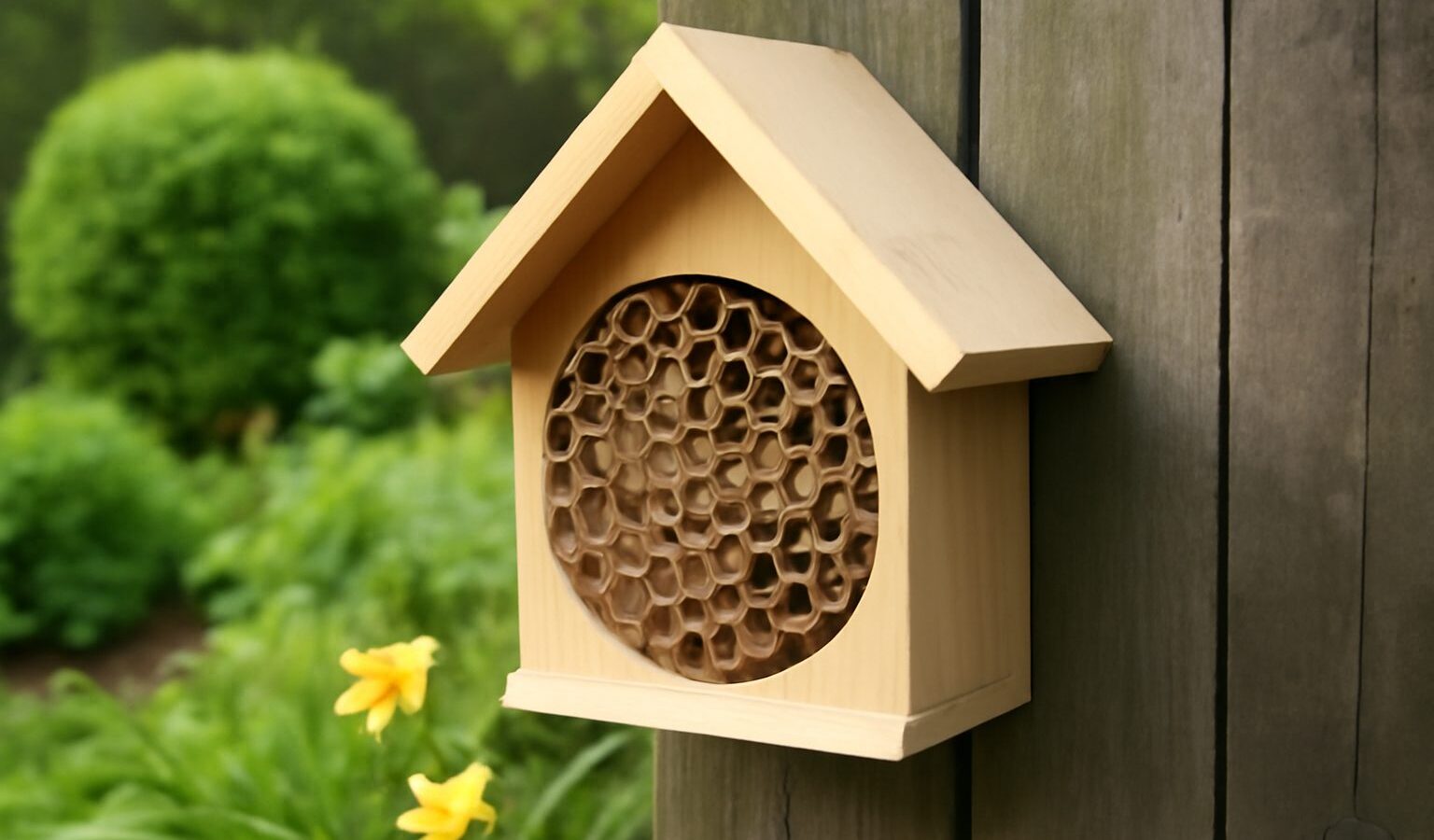
Mason bees are pollination powerhouses: a few dozen of these gentle, solitary natives will out-pollinate a whole hive of honeybees in an orchard, and they rarely sting. To host them you need a bee house with the right nesting cavities, about 6 millimeters across and several inches deep, placed in morning sun facing east or southeast. The catch most buyers miss is that a good bee house is one you can open and clean, because dirty, never-harvested tubes breed mites and disease that wipe out your bees over a few seasons.
Unlike honeybees, mason bees (genus Osmia) are solitary: every female is a queen who builds and provisions her own nest with no colony to defend, which is exactly why they are so docile. A female forages for pollen and nectar, packs it into the back of a tube, lays an egg, seals off the chamber with a wall of mud, and repeats until the tube is full, capping the end with a thick mud plug. Each larva spins a cocoon and develops over the summer, overwintering as an adult inside the cocoon and emerging the following spring. That tidy life cycle is what lets you harvest and clean cocoons every fall, the single practice that separates a thriving multi-year colony from a one-season novelty. The seven houses and house styles below all suit mason bees; the difference is capacity, build quality, and how easy each one is to open and maintain.
As an Amazon Associate we earn from qualifying purchases. This page contains affiliate links at no extra cost to you.
Key Takeaways
- Mason bees need nesting holes about 6mm wide and 6 inches deep; too short and they raise mostly males.
- Buy a house with removable tubes, reeds, or trays so you can clean or replace nesting material each year, not a sealed drilled block.
- Mount it 4 to 7 feet up, in morning sun, facing east or southeast, against a solid surface that does not sway.
- A roof overhang keeps rain off the cavities and dramatically improves survival.
- Harvest cocoons in fall and clean the house to control pollen mites and parasitic wasps.
- Mason bees are docile and nearly stingless, making bee houses safe around kids and patios.
Mason Bee House Comparison
| Product | Best For | Key Spec |
|---|---|---|
| Crown Bees Chalet | Serious mason bee keeping | Cedar, 150 tubes / 48-hole tray |
| Crown Bees Tower | Large colonies | Cedar, hundreds of cavities |
| Crown Bees Cabin | Lightweight starter | Paulownia, removable tubes |
| Crown Bees Cocoon Hatchery House | Beginners | Cedar, includes hatchery |
| Reusable wood tray bee house | Easy cleaning | Stackable observation trays |
| Bamboo tube bee house | Budget option | Natural tubes, roof |
| Natural reed bee house | Disease control | Splittable reeds for harvest |
Crown Bees Chalet Bee House
Crown Bees is the specialist brand for native bees, and the Chalet is its do-everything model. Measuring roughly 10 by 10 by 9 inches and handcrafted in Washington from sustainably sourced Pacific Northwest cedar, it accommodates 150 cardboard bee tubes, 125 natural reeds, or a 48-hole 8mm wooden tray for mason bees. That flexibility lets you run whichever nesting material you prefer and swap it out each year.
A protective roof overhang shields the cavities from rain, and the design is built for bees rather than looks, which is exactly the priority that keeps colonies healthy. For a gardener serious about building a productive mason bee population, the Chalet is our top pick.
Pros
- Accepts tubes, reeds, or wooden trays
- Handcrafted cedar with rain-shedding roof
- High capacity for a real colony
Cons
- Higher price than generic houses
- Nesting material is a recurring cost
Crown Bees Tower Bee House
The Tower is Crown Bees’ largest design, built for gardeners who want to host hundreds of nesting bees, both spring mason bees and summer leafcutter bees. Handcrafted in Washington from cedar, it holds a large quantity of nesting material so a growing colony has room to expand year over year rather than running out of cavities and dispersing.
If you have an orchard, a big vegetable garden, or a pollinator-focused landscape, the extra capacity pays off in dramatically better fruit set. Like all Crown Bees houses it is designed around the bees’ biology, with room for the removable tubes and reeds that make annual harvesting practical.
Pros
- Largest capacity for big colonies
- Hosts both mason and leafcutter bees
- Durable cedar construction
Cons
- Overkill for small gardens
- More nesting material to buy and manage
Crown Bees Cabin Bee House
The Cabin is a lighter, more affordable Crown Bees option, with sides, roof, and floor made from paulownia wood, which is strong yet very light. That makes it easy to mount on a fence post or wall without heavy hardware, and it still uses the removable tubes and reeds that let you clean and harvest each year. It is a good step up from a generic big-box bee house without the price of the flagship Chalet.
For a gardener starting a modest mason bee colony who wants quality nesting material and a roof overhang but a smaller footprint, the Cabin strikes a nice balance of price, weight, and proper design.
Pros
- Lightweight paulownia, easy to mount
- Removable tubes and reeds for harvesting
- More affordable Crown Bees option
Cons
- Smaller capacity than Chalet or Tower
- Lighter wood less rugged over many years
Crown Bees Cocoon Hatchery Bee House
Many Crown Bees houses include a built-in cocoon hatchery, a small chamber where you place harvested or purchased cocoons in spring so emerging bees can crawl out and find the fresh nesting tubes nearby. This beginner-friendly setup gives you a population from day one rather than hoping wild bees discover the house. The cedar body and roof overhang protect the cavities just like the larger models.
Pairing the house with a starter pack of mason bee cocoons is the fastest way to get pollination going in a new garden. The integrated hatchery removes the guesswork that stalls a lot of first-time bee hosts.
Pros
- Built-in hatchery jump-starts a colony
- Cedar with protective roof overhang
- Great for first-time bee hosts
Cons
- You also need to source cocoons
- Moderate capacity
Reusable Wood Tray Bee House
Stackable wooden tray (or “book”) bee houses are the choice for gardeners who take disease control seriously. Instead of fixed tubes, the house holds grooved wooden trays that pull apart so you can open every nesting channel, observe the cocoons, remove pollen mites, and scrub the wood clean before reassembling for the next season. That level of access is impossible with a sealed drilled block.
Trays cost a bit more and take a few minutes to clean each fall, but they are the gold standard for keeping a colony healthy long-term. If your goal is a thriving population over many years rather than a one-season novelty, trays are worth the effort.
Pros
- Open fully for cleaning and mite control
- Reusable year after year
- Lets you observe and harvest cocoons
Cons
- More expensive upfront
- Requires annual cleaning effort
Bamboo Tube Bee House
The classic bamboo-tube bee house, a wooden frame with a roof packed full of cut bamboo canes, is the affordable, widely sold entry point. It looks attractive on a fence and the natural tubes appeal to mason bees as long as the bore size is right, around 6mm. It is a fine, low-cost way to test whether bees will nest in your yard.
The honest caveat: fixed bamboo tubes are hard to clean, so to keep bees healthy you should treat the canes as replaceable and swap them out yearly rather than leaving them to accumulate mites and mold. Used as disposable nesting material it works well; used as a permanent sealed block it can become a disease trap.
Pros
- Inexpensive and attractive
- Natural bamboo appeals to mason bees
- Good for testing if bees will nest
Cons
- Fixed tubes hard to clean
- Must replace canes yearly to avoid disease
How to Choose a Mason Bee House
Get the cavity size and depth right. Mason bees want holes about 6 millimeters in diameter and roughly 6 inches deep. Cavities that are too shallow lead the bee to lay mostly male eggs near the front, skewing your population, while holes much wider or narrower attract the wrong species or none at all. Reputable native-bee brands size their tubes and trays correctly; cheap decorative houses often do not.
Insist on cleanable nesting material. The single biggest predictor of long-term success is whether you can open the nest each year to harvest cocoons, remove pollen mites, and replace or sterilize the material. Removable cardboard tubes, natural reeds that split open, and stackable wooden trays all allow this. A solid drilled block that cannot be opened breeds disease and eventually kills your colony, so avoid sealed designs.
Mount it correctly. Fix the house 4 to 7 feet off the ground against a solid, non-swaying surface like a wall or fence, with the openings facing east or southeast so morning sun warms the bees and prompts them to fly. A roof overhang that keeps rain out of the cavities is essential. Place it near early-blooming flowers and fruit trees, the pollen sources mason bees rely on in spring.
Provide a mud source. Mason bees get their name from the wet clay-rich mud they use to wall off each egg chamber and cap the tube. Without mud within about 25 feet of the house, females will struggle to nest no matter how perfect the cavities are. If your soil is sandy or your yard is heavily mulched, set out a shallow dish or dig a small patch of bare clay soil and keep it damp through the nesting weeks. This one detail is overlooked constantly and is a common reason a well-placed house sits empty.
Plant for them. A bee house only thrives if there is food nearby. Early-spring blooms like fruit blossoms, willows, redbud, and native wildflowers feed emerging mason bees, while later flowers support summer leafcutters that may also use the house. Aim for a succession of blooms so there is always something flowering during the active weeks. Pesticide-free gardening is non-negotiable for healthy pollinators; even garden-safe insecticides and many systemic treatments can poison developing larvae through contaminated pollen. For planting ideas, see our cut flower garden guide and the broader Plants & Flowers hub.
A well-chosen mason bee house is one of the highest-impact, lowest-effort additions you can make for a productive, pollinator-friendly garden. Buy a quality cedar house with removable, cleanable nesting material, mount it in morning sun, and harvest the cocoons each fall, and you will build a gentle, sting-free workforce that boosts fruit and vegetable yields year after year. For more wildlife and garden-gear guides, browse our Tools & Gear hub.
Frequently Asked Questions
Do mason bees sting?
Very rarely. Mason bees are solitary natives with no hive to defend, so they are extremely docile. Females have a weak stinger they use only if trapped or squeezed, and the sting is mild. They are safe to host around children, patios, and walkways.
Where should I mount a bee house?
Fix it 4 to 7 feet up against a solid, stable wall or fence with the holes facing east or southeast for morning sun. Make sure a roof overhang keeps rain off the cavities, and place it near early-spring flowers and fruit trees that supply pollen.
How do I keep mites and disease out of the nest?
Use a house with removable tubes, splittable reeds, or wooden trays so you can open the nest in fall, harvest the cocoons, and clean or replace the material. Never leave the same sealed tubes in place for years, as pollen mites and parasites build up and devastate the colony.
When are mason bees active?
Spring, typically for about six to eight weeks once temperatures stay above roughly 50 to 55 degrees Fahrenheit and fruit trees bloom. After laying their eggs they die, and the next generation develops in the cavities over summer to emerge the following spring.
Do I need to buy bees or will they find the house?
Wild mason bees may discover a well-placed house on their own, but it can take a season or two. To start faster, buy mason bee cocoons and place them in or beside the house in spring; a house with a built-in cocoon hatchery makes this especially easy.