

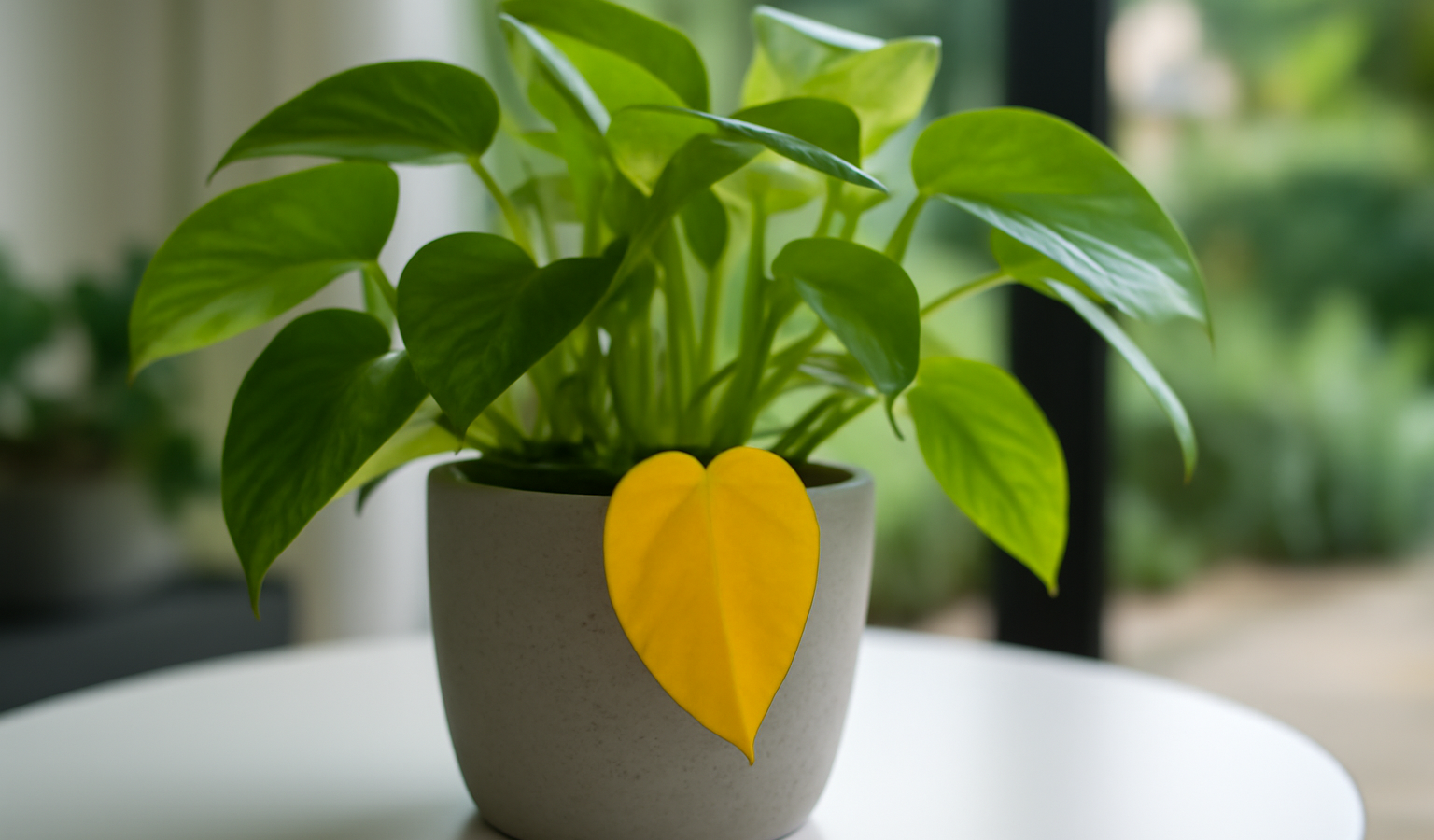
A yellow leaf on a pothos is not automatically a crisis. Pothos (Epipremnum aureum) is one of the toughest houseplants you can own, and a single old leaf yellowing at the base of the plant is just routine turnover. The problem starts when yellowing spreads, climbs up the vine, or shows up on several leaves at once. That pattern almost always points to a watering or root issue, and the good news is that pothos recovers fast once you correct the cause. This guide walks through the five reasons pothos leaves turn yellow, how to tell them apart, and exactly what to do for each one.
Key Takeaways
- Overwatering is the number-one cause of yellow pothos leaves — soggy soil suffocates roots.
- Check the soil moisture before anything else; pothos wants to dry out to about 2 inches deep between waterings.
- Yellowing plus soft black roots and a sour smell means root rot — repot into fresh, dry mix and trim the damage.
- A single yellow leaf low on the plant is normal aging, not a problem to fix.
- Too little light, too much direct sun, and depleted soil can all cause yellowing once watering is ruled out.
Cause 1: Overwatering (the most common culprit)
If your pothos is yellowing on multiple leaves and the soil feels wet, overwatering is almost certainly the reason. Pothos roots need oxygen, and waterlogged soil drives the air out of the pore spaces. Starved of oxygen, the roots stop taking up water and nutrients, and the leaves respond by yellowing — often the whole leaf at once, sometimes with soft, limp texture rather than the crispiness you get from drought.
How to diagnose it
Push a finger 2 inches into the soil. If it’s damp or wet and you watered within the last few days, the plant is sitting too long in moisture. Other tells: the pot feels heavy, the soil surface stays dark and shiny, and yellow leaves feel soft and floppy rather than dry. Lift the pot — if it’s caked with sodden mix and there’s water pooling in the saucer, you’ve found your problem.
How to fix it
Stop watering immediately and let the top 2 inches dry out completely before the next drink. Empty any standing water from the saucer or cachepot — never let the pot sit in it. Move the plant somewhere with good airflow and bright indirect light to speed evaporation. Going forward, water only when the top 2 inches are dry; for most homes that’s roughly every 7 to 10 days in summer and every 10 to 14 in winter. Make sure the pot has drainage holes. If it doesn’t, that single fix solves most chronic yellowing. Remove the yellow leaves once they’re more than half discolored — they won’t turn green again, and pinching them off lets the plant redirect energy.
Cause 2: Root rot from sustained sogginess
When overwatering continues for weeks, fungal and bacterial rot sets into the roots. This is the more serious version of cause 1, and it needs hands-on intervention. Yellowing usually spreads quickly, leaves may also brown at the tips, and the whole plant can wilt even though the soil is wet — a confusing combination that fools a lot of people into watering more, which makes it worse.
How to diagnose it
Slide the plant out of its pot and look at the roots. Healthy pothos roots are firm and white or light tan. Rotted roots are brown or black, mushy, and slip apart when you pinch them. A sour, swampy smell from the soil is a dead giveaway. If more than half the root mass is mush, the plant is in trouble but often still salvageable — pothos roots readily.
How to fix it
Rinse the soil off the roots under lukewarm water. With clean scissors, cut away every brown, mushy root back to firm white tissue. Sterilize the blades between cuts with rubbing alcohol so you don’t spread the rot. Discard the old soil entirely — it’s contaminated. Repot into fresh, fast-draining mix (a houseplant or aroid blend cut with perlite and orchid bark) in a pot only slightly larger than the remaining root ball. Water lightly, then hold off until the top inch dries. If the rot was severe, take a few healthy vine cuttings as insurance — node-down in water, they’ll root in two to three weeks and give you a backup plant. For an easy backup, this is the same approach covered in our guide on propagating trailing houseplants.
Cause 3: Natural aging of old leaves
Not all yellowing is a warning sign. Pothos continually grows new foliage at the vine tips and sheds the oldest leaves at the base. A leaf that has been on the plant for a year or more will eventually yellow, then drop, no matter how perfect your care is. This is the plant budgeting its resources, pulling nutrients out of a spent leaf to fuel new growth.
How to diagnose it
Look at where the yellow leaf is. If it’s a single leaf at the very base or oldest section of a vine, and the rest of the plant looks vigorous with healthy new growth, this is normal. Aging leaves yellow uniformly and slowly, with no soft rot, no spreading pattern, and no soil problems behind them.
How to fix it
Nothing to fix — just tidy up. Pinch or snip the yellow leaf off where it meets the stem. If you’d like the plant to look fuller rather than leggy, this is a good moment to prune the longest vines back to a node; pothos branches readily below a cut, and the trimmings root easily for propagation.
Cause 4: Too little or too much light
Pothos tolerates low light, but it doesn’t thrive in it forever. In a dim corner, the plant can’t photosynthesize enough to support all its leaves, so it sheds the lower ones — yellowing them first. At the opposite extreme, hot direct sun scorches pothos foliage, bleaching and yellowing the leaves that catch the most light, especially behind south or west windows in summer.
How to diagnose it
Low-light yellowing shows up on the leaves farthest from the window, paired with long, sparse, stretched-out vines (a sign the plant is reaching for light). Sunburn yellowing shows up on the leaves nearest a bright window, often with pale, crispy, or bleached patches rather than uniform color. Variegated pothos like Marble Queen are more prone to both — they need brighter light to hold their variegation but burn faster in direct sun.
How to fix it
Aim for bright, indirect light: a spot a few feet back from an east or north window, or filtered light through a sheer curtain at a brighter exposure. If your plant is in a dark corner, move it closer to a window or add a small LED grow light on a timer for 10 to 12 hours a day. If it’s getting blasted by direct sun, pull it back a foot or two or filter the light. Rotate the pot a quarter turn each week so all sides get even light and the plant grows symmetrically.
Cause 5: Nutrient deficiency or depleted soil
A pothos that has lived in the same pot for a couple of years has likely used up the nutrients in its soil. Nitrogen deficiency is the classic cause of slow, broad yellowing — the plant cannibalizes nitrogen from older leaves to build new ones, so the lower foliage pales to yellow while new growth stays small and light green. An iron or magnesium shortfall causes yellowing between the veins while the veins themselves stay green.
How to diagnose it
This one is a diagnosis by elimination: the soil drains and dries normally, the light is right, and you’ve ruled out rot — yet older leaves keep yellowing and new growth looks weak or undersized. Check the calendar. If you haven’t fertilized in six months or more, or the plant has been in the same tired soil for two-plus years, nutrients are the likely gap.
How to fix it
Feed during the growing season (spring through early fall) with a balanced liquid houseplant fertilizer, diluted to half strength, every four to six weeks. Don’t overdo it — excess fertilizer salts burn roots and cause their own yellowing and brown tips, so flush the soil with plain water every couple of months if you feed regularly. If the plant is badly pot-bound and the soil is exhausted, repot into fresh mix one size up; that alone refreshes the nutrient supply. Hold off on feeding in winter when growth slows.
How to prevent yellow pothos leaves
Prevention comes down to a few consistent habits. Water only when the top 2 inches of soil are dry, and always use a pot with drainage holes — these two rules eliminate the overwatering and root-rot problems that cause most yellowing. Give the plant bright, indirect light and rotate it weekly. Feed lightly through the growing season and refresh the soil every two years. Check the underside of leaves now and then for pests, and wipe dust off the foliage so it can breathe and photosynthesize. Finally, accept that an occasional yellow leaf at the base is just the plant doing its thing. Pothos is forgiving — correct the cause, remove the spent leaves, and healthy green growth follows quickly. For more on building a low-maintenance indoor collection, see our Plants & Flowers guides, and if mushy roots turn out to be your issue, our overwatering and root-rot rescue steps for string of pearls apply to pothos too.
Frequently Asked Questions
Should I cut off yellow pothos leaves?
Yes, once a leaf is more than about half yellow it won’t turn green again, so removing it lets the plant redirect energy to healthy growth. Snip it off where it meets the stem. Leaving a few mostly-green yellowing leaves is fine if you’d rather not over-prune.
Can a yellow pothos leaf turn green again?
No. Once chlorophyll breaks down and a leaf yellows, that leaf is spent. You can keep new leaves green by fixing the underlying cause, but the existing yellow leaf will not recover.
How often should I water a pothos to avoid yellowing?
Water only when the top 2 inches of soil are dry — roughly every 7 to 10 days in summer and every 10 to 14 days in winter, depending on light and humidity. Always feel the soil first rather than watering on a fixed schedule.
Why is my pothos yellowing even though I barely water it?
Underwatering can cause yellowing too, usually with dry, crispy edges and limp vines. But more often the cause is poor light, depleted soil, or a pot with no drainage trapping water. Check the soil, light, and last feeding date before assuming it’s thirst.
Does tap water cause yellow leaves on pothos?
Rarely the main cause, but chlorine, fluoride, and mineral buildup from hard tap water can contribute to leaf-tip browning and occasional yellowing over time. Letting water sit out overnight or using filtered water helps sensitive plants, though pothos usually tolerates tap water fine.