

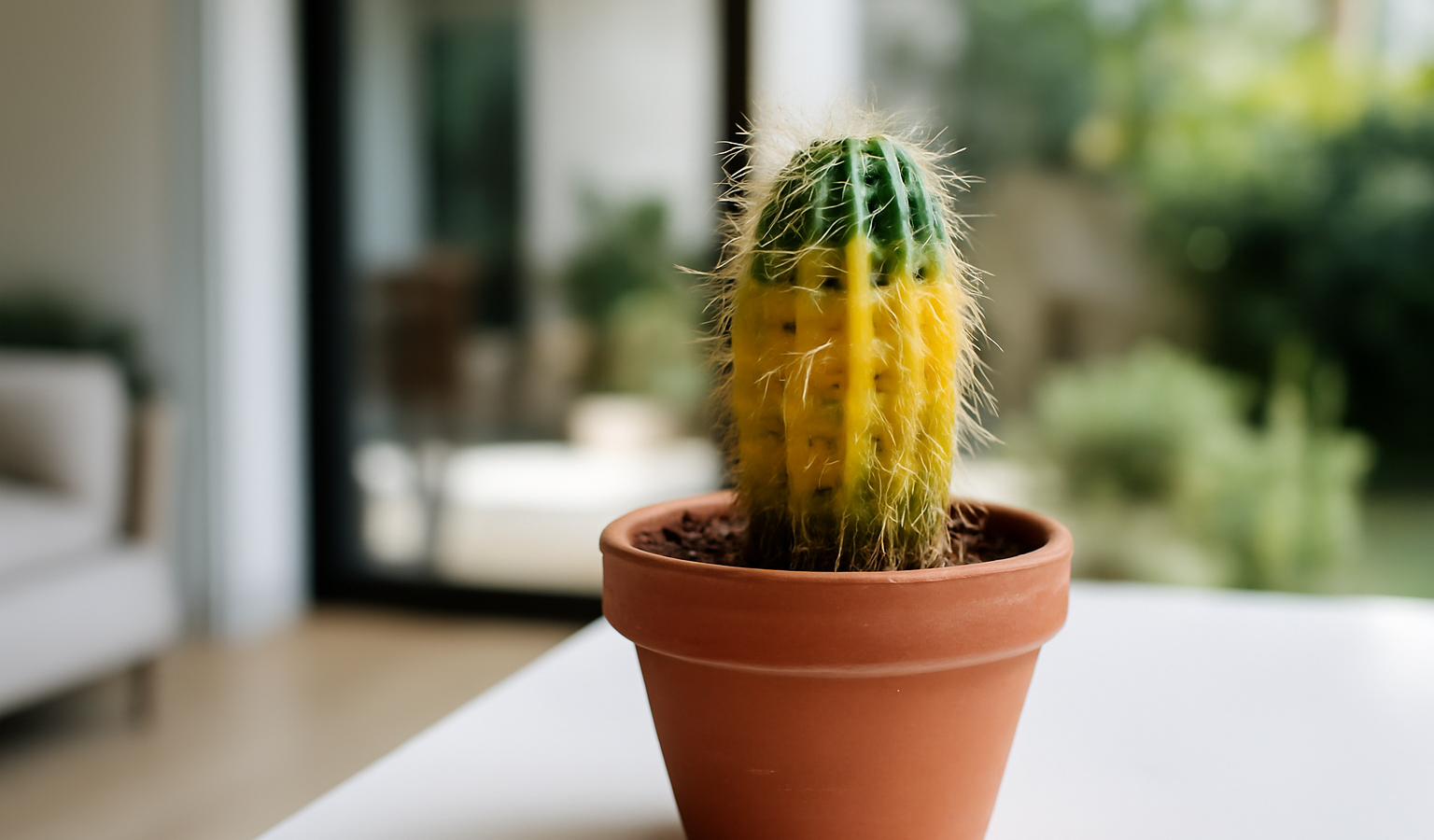
A cactus that turns yellow is telling you something is wrong at the roots, in the light, or in the watering can. The good news: yellowing is almost always reversible if you catch it before the tissue goes soft and mushy. The bad news: most people guess wrong, assume the plant is thirsty, and water a dying cactus straight into the grave. The single most common reason a healthy green cactus shifts to a dull, sickly yellow is the opposite of thirst — it is sitting in soil that stays wet far too long, and the roots are starting to rot. But sunburn, cold damage, nutrient shortages, and natural aging all produce yellow too, and each one needs a different response. This guide walks through every realistic cause, how to diagnose which one you actually have, and exactly what to do about it.
Key Takeaways
- Soft, mushy yellow that starts at the base = overwatering and root rot. Stop watering immediately and check the roots.
- Bleached, tan-yellow on the sun-facing side = sunburn from too much sudden direct light. Move it to bright indirect light.
- Slow, pale, overall yellowing with weak new growth = nutrient deficiency (often nitrogen or iron). Feed a dilute cactus fertilizer in the growing season.
- Yellow only on the lowest, oldest segments = normal aging — nothing to fix.
- Repot in fast-draining mineral mix, use a pot with a drainage hole, and water only when the soil is bone dry.
Overwatering and Root Rot (the #1 Cause)
If your cactus is turning yellow and feels soft, squishy, or looks translucent — especially low on the stem near the soil line — you almost certainly have overwatering and the root rot that follows it. Cacti store water in their tissue, so they tolerate drought for weeks but cannot tolerate soggy roots for more than a few days. When soil stays saturated, the roots suffocate, fungal and bacterial rot moves in, and the plant can no longer take up water or nutrients. The stem yellows, then browns or blackens, then collapses.
How to diagnose it
Press gently on the yellow area. Healthy cactus tissue is firm; rotting tissue gives way like an overripe tomato. Lift the plant from its pot and look at the roots — healthy roots are firm and pale, while rotting roots are brown, black, slimy, and smell sour. Check the drainage: if the pot has no hole, or the mix is dense potting soil that holds water, overwatering is almost guaranteed. Also ask yourself how often you have been watering. More than once a week, or watering on a fixed schedule regardless of how dry the soil is, is a classic recipe for rot.
How to fix it
Stop watering at once. Remove the cactus from its pot and brush away the wet soil so the roots can breathe. With a clean, sharp knife sterilized in rubbing alcohol, cut away every mushy yellow or brown section until you reach firm, healthy green or white tissue — rot spreads, so leave none behind. Let the cut surfaces callus over in a dry, shaded, airy spot for three to seven days before repotting. Replant into fresh, dry, fast-draining cactus mix in a pot with a drainage hole, and do not water for at least a week to ten days. From then on, water only when the soil is completely dry to the bottom and never let the pot sit in a saucer of standing water. If rot has reached most of the stem, take a healthy cutting from the top, callus it, and start over — sometimes that is the only rescue.
Sunburn From Too Much Direct Light
Cacti love light, but they can still burn — especially when a plant grown indoors or in a shop greenhouse is suddenly moved into intense, direct afternoon sun. Sunburn shows up as pale, bleached yellow or tan patches, usually on the side that faces the window or the sun. Unlike rot, the tissue stays firm and dry; it just loses color. Severe scorch can leave permanent white or corky scars.
How to diagnose it
Look at where the yellowing is. If it is concentrated on one side — the side that gets the harshest light — and the tissue is firm rather than mushy, sunburn is the culprit. Think back to any recent changes: did you just move the plant outdoors for summer, set it on a hot south-facing windowsill, or buy it from a dim store and put it in full sun? Cacti need to be acclimated to strong light gradually, and skipping that step is what causes the burn.
How to fix it
Move the cactus to bright but indirect light, or shade it during the hottest part of the day, while the scorched tissue recovers. Existing bleached patches will not turn green again, but they will stop spreading and the plant will push healthy new growth from the top. To prevent future burns, acclimate plants over one to two weeks: start with morning sun or filtered light, then increase exposure a little each day until the cactus tolerates full sun. A sheer curtain on a south window is an easy buffer indoors.
Cold Damage and Temperature Stress
Most common houseplant and desert cacti are not frost-hardy. A night below about 50°F can stress them, and freezing temperatures cause the water-filled cells to burst. Cold-damaged tissue first looks yellow or pale, then turns mushy and brown — looking very similar to rot, which is why the two get confused.
How to diagnose it
Timing is the giveaway. If the yellowing or mushiness appeared right after a cold snap, a frosty night, or after leaving the plant near a freezing window or in a cold garage, suspect cold damage. It often affects the tips and outermost surfaces first — the parts most exposed to the chill — rather than starting at the soil line the way rot does.
How to fix it
Move the cactus somewhere warm and stable, away from drafty windows and unheated rooms. Do not water cold, damaged tissue — wet plus cold accelerates rot. Wait and watch: minor cold stress may recover on its own, while badly frozen, mushy sections need to be cut back to firm tissue just as you would with rot. Going forward, keep cacti above 50°F and bring outdoor plants in well before the first frost.
Nutrient Deficiency
Cacti are slow, light feeders, but a plant that has sat in the same exhausted soil for years can run short on nutrients. Nitrogen shortage causes overall pale, yellow-green color and weak, stunted new growth. Iron deficiency — common when the soil is too alkaline or constantly wet — causes yellowing between the ribs while the tissue stays generally firm.
How to diagnose it
Nutrient yellowing is gradual and usually uniform, not patchy or one-sided, and the tissue stays firm. Ask when you last repotted or fed the plant. If it has been more than two or three years in the same pot with no fertilizer, and you have ruled out water and light, a deficiency is likely. New growth that comes in pale and thin is a strong clue.
How to fix it
During the active growing season (spring through early fall), feed with a fertilizer formulated for cacti and succulents, or a balanced houseplant feed diluted to half strength, no more than once a month. Do not fertilize in winter when the plant is dormant, and never feed a cactus you suspect has root rot. If the soil is old and compacted, repot into fresh cactus mix — that alone often restores healthy color over the next growing season. Many of the same principles apply to other houseplants, so if you are also troubleshooting tropical plants, our guide on why a peace lily droops covers related watering and feeding issues.
Pests and Disease
Sap-sucking pests can drain a cactus enough to cause yellow stippling or spotting. Spider mites leave fine webbing and tiny pale speckles, usually near the top and growing tips. Mealybugs look like little white cottony tufts tucked into the ribs and crevices. Scale appears as small brown or tan bumps. As they feed, the cactus loses color and vigor.
How to diagnose it
Inspect closely, ideally with a magnifier. Look for webbing, white fluff, or hard bumps in the grooves and around the base of the spines. Pest yellowing often comes as fine speckles or a dusty, mottled look rather than a solid block of color, and you can usually find the culprits if you search carefully.
How to fix it
Isolate the plant so pests do not spread to your collection. Wipe off mealybugs and scale with a cotton swab dipped in rubbing alcohol. For spider mites and stubborn infestations, spray thoroughly with insecticidal soap or a diluted neem oil solution, repeating every five to seven days for a few weeks to catch newly hatched generations. Improve airflow, since stagnant, humid conditions favor mites.
Natural Aging
Sometimes yellowing is nothing to fix. The oldest, lowest portions of a cactus — or the bottom pads on a prickly pear — naturally corky up, yellow, and brown over time as the plant matures. This is gradual, limited to the oldest growth, and the rest of the plant looks healthy and green with strong new growth on top.
To diagnose, check that the yellowing is confined to the oldest tissue and is not spreading upward into new growth. If so, there is nothing wrong — it is the cactus equivalent of bark forming. You can leave it alone, or remove badly discolored old pads for appearance using clean tools. Just confirm the tissue is firm and dry, not soft, so you are not mistaking aging for rot.
How to Prevent a Yellow Cactus
Prevention is mostly about getting the basics right and then leaving the plant alone. First, drainage: always use a pot with a drainage hole and a gritty, fast-draining cactus or succulent mix — ideally cut with extra perlite, pumice, or coarse sand so water runs straight through. Second, watering discipline: water deeply but only when the soil is completely dry to the bottom, which may mean every two to four weeks in summer and barely at all in winter. When in doubt, wait longer; a thirsty cactus recovers, a waterlogged one rots. Third, light: give bright light but acclimate to direct sun gradually to avoid scorch. Fourth, temperature: keep most cacti above 50°F and away from frost and cold drafts. Finally, feed lightly during the growing season and refresh the soil every two to three years. Get those right and yellowing rarely shows up at all. If you are building out a low-water indoor collection, our roundup of why a jade plant drops leaves tackles a closely related succulent watering problem, and the broader Plants & Flowers hub has more care guides.
Frequently Asked Questions
Can a yellow cactus turn green again?
It depends on the cause. Tissue yellowed by nutrient shortage or mild stress can green up once you fix the problem and the plant puts out healthy new growth. Tissue damaged by sunburn, rot, or freezing will not recover its color — but if you remove the dead parts and correct the conditions, the plant will grow fresh green tissue from healthy areas.
Should I water a yellow cactus more?
Usually no. The most common cause of a yellow cactus is overwatering, so adding more water often kills it faster. Check the soil and the firmness of the tissue first. Only water if the soil is bone dry and the yellowing is paired with shriveling, which points to actual drought rather than rot.
How do I tell sunburn from root rot?
Feel the tissue. Sunburned cactus stays firm and dry with bleached, tan-yellow patches on the sun-facing side. Root-rotted cactus turns soft, mushy, and often translucent, typically starting low at the soil line, and the roots smell sour when you unpot it.
Why is my cactus yellow and mushy at the base?
That is the classic signature of overwatering and root rot. The base sits closest to the wet soil, so it rots first. Stop watering, unpot the plant, cut away all soft tissue back to firm green, let it callus, and repot in dry, fast-draining mix.
How often should I water a cactus to avoid yellowing?
There is no fixed schedule — water only when the soil is completely dry to the bottom of the pot. In practice that is often every two to four weeks in the warm growing season and as little as once a month or less in winter dormancy. The dryness of the soil, not the calendar, decides.